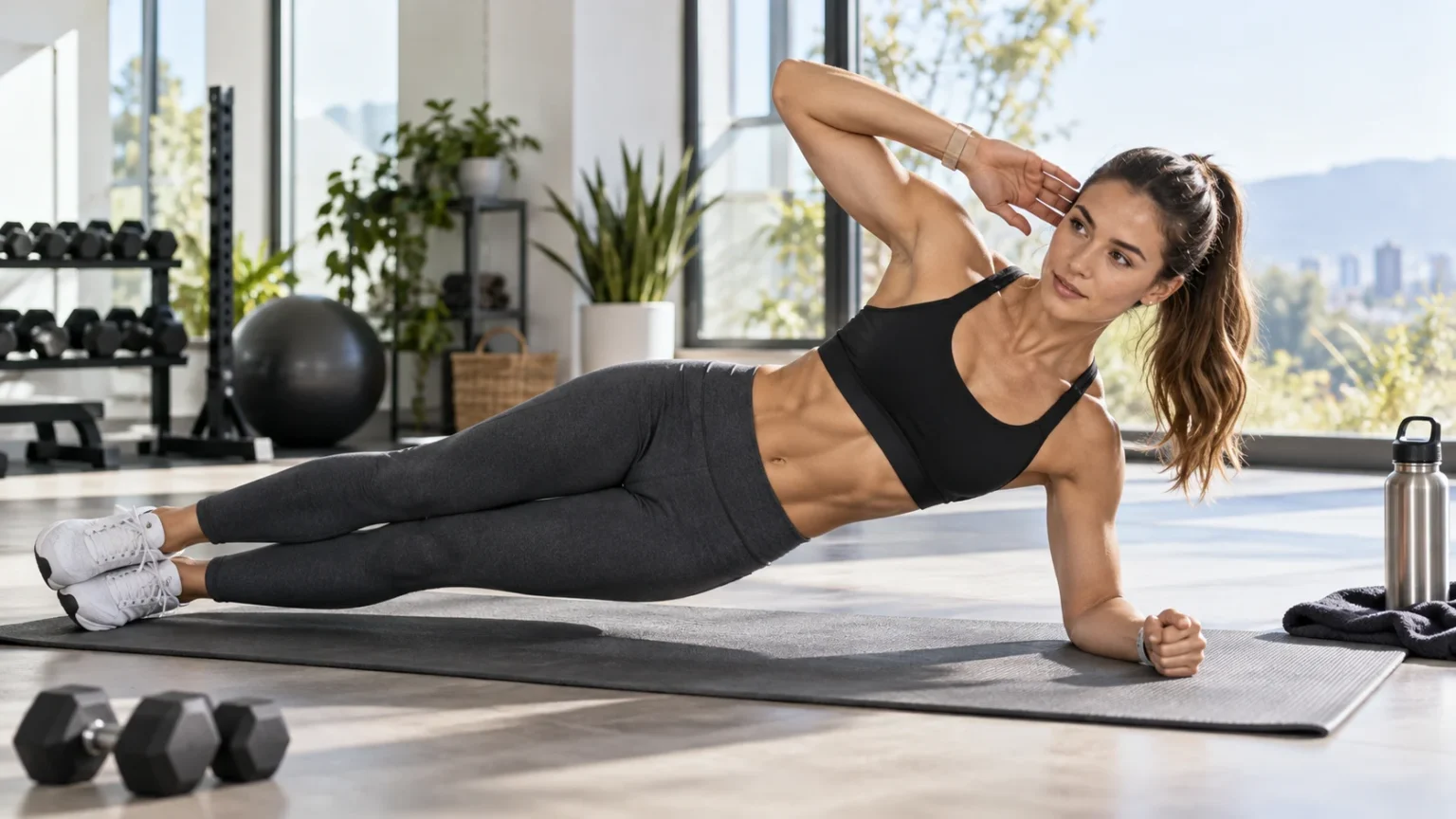

The oblique muscles play an important role in core strength, trunk rotation, side bending, posture, and stability during everyday movement. Strong obliques can support activities such as walking, lifting, reaching, running, and changing direction. Training them properly can improve overall core control without requiring complicated equipment or extremely intense workouts.
Effective oblique exercises should combine controlled rotation, anti-rotation, side stabilization, and full-body movement. The goal is not simply to perform as many twisting repetitions as possible. Choosing suitable exercises, using proper form, and progressing gradually can strengthen the sides of your core while reducing unnecessary strain on the lower back, hips, and surrounding muscles.
What Are the Oblique Muscles?
The obliques are abdominal muscles located along the sides of your torso. They include the external obliques, which sit closer to the surface, and the internal obliques underneath them. Together, these muscles help rotate and bend the trunk while supporting the spine and maintaining control during movement.
Your obliques also help resist unwanted rotation. When carrying a heavy bag on one side, walking, running, or performing a single-arm exercise, the trunk must remain stable even when forces pull it in different directions. The obliques work with deeper abdominal muscles, the lower back, hips, and diaphragm to maintain that control.
Because the obliques contribute to both movement and stability, they should be trained in several ways. Exercises that involve side support, controlled rotation, and resisting rotation can all be useful. A balanced core routine is usually more effective than relying only on side crunches or repeated twisting movements.
Benefits of Oblique Exercises
Oblique exercises can improve trunk stability during everyday tasks and athletic activities. Stronger side abdominal muscles help control the relationship between the rib cage and pelvis when you walk, lift, push, pull, or change direction. Better control may make these movements feel more coordinated and efficient.
Training the obliques can also support sports that involve rotation. Golf, tennis, baseball, swimming, boxing, and many other activities require the torso to transfer force between the upper and lower body. Strengthening the core does not guarantee improved performance by itself, but it can contribute to a stronger foundation for movement.
Oblique training can also improve overall core endurance. Instead of thinking about the core only as the front abdominal muscles, it is useful to strengthen the body from multiple directions. Side stability and rotational control complement exercises for the abdominal wall, hips, glutes, and lower back.
Side Plank for Oblique Strength
The side plank is one of the most direct exercises for training the obliques without repeated spinal rotation. Lie on one side with your elbow positioned underneath your shoulder and your legs stacked or slightly staggered. Lift your hips so your body forms a relatively straight line from your head to your feet.
Keep your ribs and pelvis aligned instead of allowing the hips to rotate forward or backward. Breathe steadily and avoid shrugging the supporting shoulder toward your ear. Hold the position only as long as you can maintain control, because a shorter high-quality hold is more useful than a long hold with collapsing posture.
Beginners can modify the exercise by keeping the lower knee on the floor. More advanced versions may involve longer holds, lifting the top leg, or performing controlled hip movements. Progress only when the standard version feels stable and does not create shoulder, hip, or lower-back pain.
Bicycle Crunches for Controlled Rotation
Bicycle crunches combine abdominal flexion with trunk rotation, making them a popular oblique exercise. Lie on your back with your hands lightly supporting the head and your knees bent. Bring one knee toward the torso while rotating the opposite shoulder toward it, then switch sides with controlled movement.
Avoid pulling your head forward with your hands or rushing through the exercise. The rotation should come from the torso rather than simply moving the elbows. Keep the movement smooth and maintain comfortable control of the lower back instead of allowing excessive arching as the legs extend.
If the full bicycle crunch feels difficult, keep the legs higher or reduce the range of motion. You can also practice slower alternating rotations before adding the leg extension. Quality matters more than speed, especially if your goal is to strengthen the obliques rather than simply increase repetition numbers.
Russian Twists and How to Perform Them Safely
Russian twists train rotational control through the trunk and can be performed with or without additional weight. Sit with the knees bent and feet supported, then lean back slightly while keeping the torso long. Rotate gently from side to side without collapsing the chest or rounding excessively through the lower back.
The exercise does not require touching the floor beside you with every repetition. A smaller, controlled rotation can be enough to challenge the obliques, especially when you move slowly. Avoid using momentum to swing the arms because this reduces muscular control and may place unnecessary stress on the spine.
Beginners should usually start without weight and keep the feet on the floor. Additional resistance can be introduced once the movement feels stable. If twisting causes back pain or radiating symptoms, choose another oblique exercise such as a side plank or anti-rotation movement instead of forcing the rotation.
Standing Woodchops for Functional Core Training
Standing woodchops train the core while the hips, legs, and upper body work together. Use a resistance band or cable positioned above or beside you, then pull diagonally across the body with controlled rotation. Keep your knees slightly bent and allow the hips and torso to move naturally together.
The movement should not come entirely from the arms. Think about guiding the resistance with your torso while maintaining balance through your feet. Avoid aggressively twisting the lower back while the hips remain fixed, because coordinated movement through the hips and trunk usually feels more natural and controlled.
Woodchops can be performed from high to low or low to high depending on your training goals and equipment. Start with light resistance so you can learn the pattern. Increase the load gradually only when you can maintain steady breathing, controlled rotation, and stable positioning throughout each repetition.
Anti-Rotation Exercises for Core Stability
Not every oblique exercise needs to involve twisting. Anti-rotation exercises strengthen the core by asking you to resist a force that tries to turn the torso. The Pallof press is a common example and can be performed with a resistance band or cable attached to one side.
Stand sideways to the resistance source and hold the handle near your chest. Press your hands forward while preventing your torso from rotating toward the anchor point. Hold briefly, return your hands toward the chest, and repeat while maintaining a stable pelvis and relaxed breathing.
Anti-rotation exercises are useful because many everyday tasks involve resisting movement rather than intentionally creating it. Carrying groceries, lifting objects, or holding something with one arm can challenge rotational stability. These exercises can therefore complement traditional twisting movements and create a more balanced core-strengthening routine.
Best Practices for Proper Oblique Exercise Form
Good form begins with choosing a movement you can control. Keep the rib cage, pelvis, and spine reasonably organized instead of forcing extreme bending or twisting. The core should feel active, but you should still be able to breathe normally rather than holding your breath through every repetition.
Avoid treating the obliques as isolated muscles. The hips, glutes, abdominal wall, and lower back all contribute to trunk control. If you are also working on pelvic or lower-body stability, these SI joint exercises can provide additional ideas for strengthening the hips, pelvis, and surrounding core muscles.
Move slowly enough to notice whether one side is doing more work than the other. Uneven strength is common, but repeatedly compensating through the shoulders or hips can reduce exercise quality. Use a smaller range, lighter resistance, or easier variation until both sides can perform the movement with reasonable control.
How Often Should You Train Your Obliques?
For many people, training the obliques two or three times per week is enough to build strength and endurance. The exact frequency depends on exercise intensity, total workout volume, and your overall training program. Oblique work can often be included alongside other core, lower-body, or full-body exercises rather than trained separately every day.
Recovery matters because the obliques are muscles like any other part of the body. High-volume twisting or side-bending every day may create unnecessary soreness without improving results. Allow enough time between harder sessions for the muscles to recover, particularly when using external resistance or challenging plank variations.
You can progress by increasing repetitions, hold duration, resistance, or exercise difficulty. Change only one or two factors at a time so you can tell how your body responds. Consistent moderate training usually produces better long-term results than performing extremely difficult workouts occasionally and then needing several days to recover.
Common Oblique Exercise Mistakes
One common mistake is using momentum instead of muscular control. Fast twisting, swinging weights, or bouncing through repetitions may make an exercise look more difficult without actually improving core engagement. Slowing down usually makes the obliques work harder while helping you notice when your technique begins to break down.
Another mistake is assuming that hundreds of side crunches are the best way to train the obliques. A complete routine should include different movement patterns such as side stabilization, rotation, and anti-rotation. Variety helps train the core for the different forces it encounters during exercise, sport, and daily activity.
Ignoring pain is also a mistake. Normal muscle fatigue is different from sharp pain, burning, numbness, or discomfort that travels into the hip or leg. Stop the exercise if symptoms feel unusual and consider professional assessment when pain repeatedly returns during several different movements.
When to Modify or Stop Oblique Exercises
Modify an exercise when you cannot maintain controlled form or when the movement repeatedly causes discomfort. For example, keep your knees down during a side plank, reduce the range of a twist, or use lighter resistance. Easier variations can still strengthen the obliques effectively when they are performed consistently.
Stop exercising and seek medical advice if core training causes severe pain, significant weakness, persistent numbness, or neurological symptoms. Abdominal or back pain that follows a major injury also deserves professional assessment. Continuing to train through serious symptoms may delay appropriate diagnosis or treatment.
People recovering from surgery, pregnancy-related conditions, hernias, significant back problems, or other medical issues may need individualized exercise guidance. A physical therapist, physician, or qualified rehabilitation professional can help determine which movements are appropriate. Exercise selection should match your current health and ability rather than simply following a generic routine.
Conclusion
Oblique exercises can improve core strength, trunk stability, rotational control, and overall movement quality. Side planks, bicycle crunches, Russian twists, woodchops, and anti-rotation exercises each challenge the obliques in different ways. Combining several movement patterns creates a more balanced approach than relying on one exercise alone.
Good technique matters more than the amount of weight lifted or the number of repetitions completed. Move with control, breathe normally, and use a range of motion that feels comfortable. Gradual progression helps the muscles adapt while reducing the likelihood of unnecessary strain through the lower back, hips, or shoulders.
Train the obliques consistently as part of a complete core and full-body strength program. Modify exercises when needed and stop movements that produce sharp or radiating pain. With proper form and sensible progression, oblique training can become a practical way to build stronger, more stable movement for everyday life and exercise.
FAQs
What are the best exercises for the obliques?
Side planks, bicycle crunches, woodchops, Pallof presses, and controlled Russian twists can effectively train the obliques. Using several exercise types helps develop rotation, anti-rotation, and side stability.
How often should I do oblique exercises?
Two or three sessions per week are enough for many people. Training frequency should depend on workout intensity, recovery, total core volume, and whether oblique exercises are included within full-body sessions.
Do side planks work the obliques?
Yes. Side planks strongly challenge the obliques because these muscles help prevent the torso and pelvis from collapsing toward the floor. Easier knee-supported versions are suitable for beginners.
Can oblique exercises help strengthen the core?
Yes. The obliques are an important part of the core and contribute to trunk rotation, side bending, and stability. They should ideally be trained alongside other abdominal, hip, and back muscles.
Can oblique exercises cause lower-back pain?
Poor technique, excessive resistance, aggressive twisting, or inappropriate exercise selection may aggravate the lower back. Stop movements that cause sharp or radiating pain and seek professional advice if symptoms persist.