
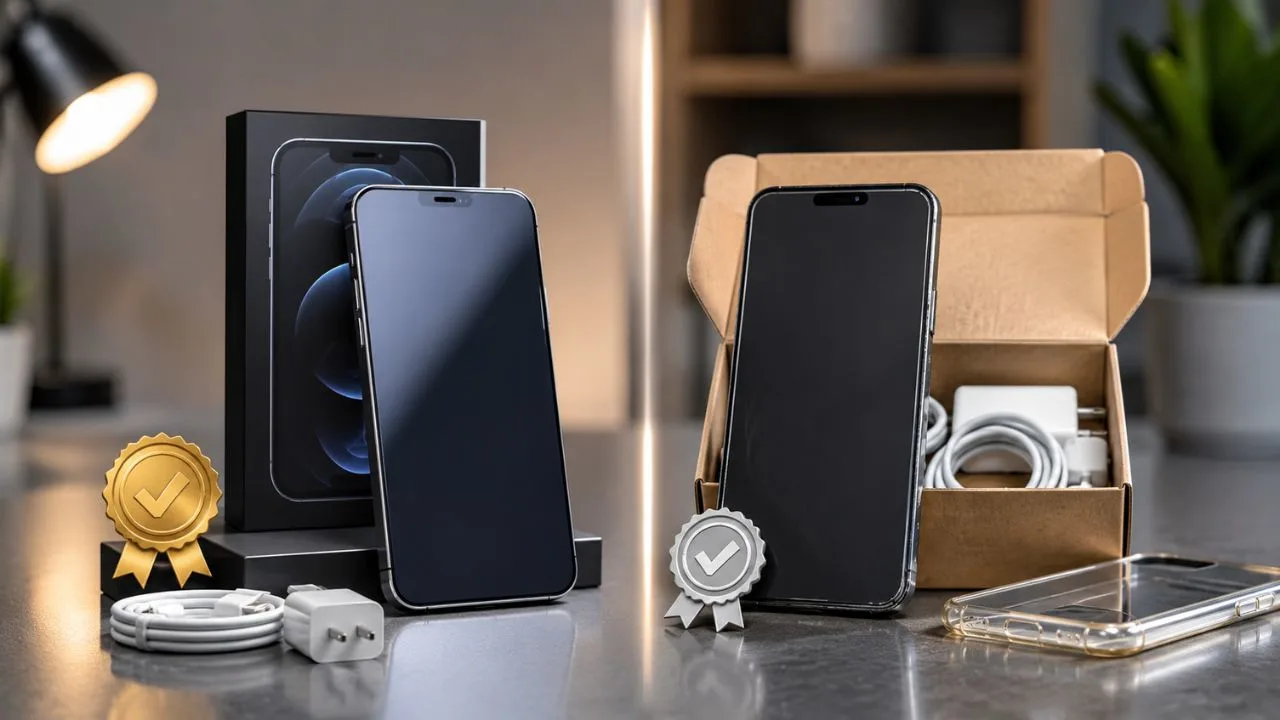

Buying a smartphone is a significant decision, especially when flagship models can cost hundreds of pounds. While a brand-new phone offers the latest technology and complete peace of mind, a refurbished phone can deliver similar everyday performance at a noticeably lower price. The challenge is understanding exactly what you receive with each option.
A refurbished phone is not necessarily an old, damaged device being sold without checks. Reputable sellers inspect, test, clean, repair, and reset their phones before reselling them. However, refurbishment standards differ considerably, so a manufacturer-certified device can offer a very different experience from an inexpensive handset listed by an unknown marketplace seller.
New phones generally provide the longest software support, a fresh battery, an untouched body, and a complete manufacturer warranty. Refurbished smartphones can offer better value, reduce electronic waste, and allow buyers to choose a higher-end model without exceeding their budget. Each option has advantages that suit different users.
This refurbished vs new phones comparison explains the differences in cost, condition, battery life, performance, security, warranty, accessories, software support, and resale value. It will help you determine whether a renewed smartphone is a sensible bargain or whether paying more for a new device is the safer long-term decision.
Quick Verdict: Is a Refurbished or New Phone Better?
A professionally refurbished phone is usually the better option for buyers who want strong performance without paying the full price of a new model. A recent flagship that has been properly tested can still provide an excellent display, capable cameras, fast performance, and several years of useful service at a more affordable price.
A new phone is better for users who want the latest features, the longest possible software support, full battery capacity, and minimal uncertainty. It is also the safer choice when the device will be kept for many years or used for demanding tasks such as mobile gaming, professional video creation, or business communication.
The seller matters as much as the phone itself. A manufacturer-certified refurbished phone with a clear battery standard, genuine parts, a meaningful warranty, and a flexible return policy can be a safer purchase than a discounted new phone from an unauthorised or unreliable seller.
For most value-conscious buyers, a certified refurbished phone that is one or two generations old offers the strongest balance of price and performance. Buyers who prioritise longevity, new technology, cosmetic perfection, and predictable battery life will generally receive more value from a brand-new smartphone.
What Is a Refurbished Phone?
A refurbished phone is a previously owned, returned, traded-in, or demonstration device that has been prepared for resale. The refurbishment process should involve inspecting the phone, testing its functions, cleaning it, erasing previous data, installing updated software, and repairing or replacing defective components where necessary.
Some refurbished smartphones were returned shortly after purchase and may have received very little use. Others may have been used for several years before being traded in. Because their histories differ, two refurbished phones of the same model can have different battery conditions, cosmetic marks, replacement parts, and remaining useful lifespans.
Manufacturer-certified refurbished phones are usually processed by the original brand or an authorised facility. They may receive genuine replacement parts, formal quality testing, updated software, new packaging, and warranty coverage. These programmes normally provide greater consistency, although their phones may cost more than products refurbished by independent sellers.
Marketplace-refurbished phones are often inspected and repaired by third-party businesses. Some sellers maintain excellent standards, while others perform only basic checks. Buyers should therefore examine the refurbishment process, product grade, battery guarantee, warranty provider, return terms, customer reviews, and seller history before placing an order.
What Is a New Phone?
A new phone has not been previously owned or activated for regular consumer use. It normally arrives in its original packaging with the included accessories, manufacturer documentation, unused components, and a fresh battery. The device should also be free from scratches, dents, screen marks, or signs of previous repair.
New smartphones are usually sold directly by manufacturers, mobile networks, official retailers, or authorised dealers. Purchasing through a recognised channel helps ensure that the phone is genuine, intended for the local market, compatible with local networks, and covered by the appropriate manufacturer warranty.
A new device normally begins its software-support period with the maximum number of updates remaining. This can be important because modern smartphones depend on security patches, operating system upgrades, application compatibility, and online services. Longer support can allow the phone to remain safe and useful for more years.
However, buying new usually requires a larger initial payment or a longer finance agreement. The value of a new smartphone can also decline quickly after newer models are released. Buyers should consider whether they genuinely need the latest device or would receive similar everyday performance from a slightly older refurbished model.
Refurbished vs Used Phones: Are They the Same?
A used phone is usually sold in its existing condition without undergoing a formal restoration process. The previous owner or seller may reset and clean it, but there may be no detailed testing, repair work, battery standard, or written guarantee. Private sales therefore involve greater uncertainty.
A refurbished phone should have undergone inspection and functional testing before being offered for sale. Depending on the provider, technicians may test the screen, cameras, speakers, microphones, charging port, buttons, sensors, wireless connections, battery, and biometric security features. Defective parts may then be repaired or replaced.
The word “refurbished” does not have one universal quality standard across every retailer. Some sellers use it for devices that have received comprehensive testing, while others apply it to phones that have simply been cleaned and reset. The seller’s written process is more important than the label itself.
If a used phone is significantly cheaper and can be inspected before payment, it may still offer good value. However, a refurbished handset with a warranty and return period is normally more suitable for buyers who want savings without accepting all the risks associated with an informal second-hand purchase.
Refurbished vs New Phones: Key Differences
The biggest difference is price. Refurbished phones usually cost less because they have been previously owned, opened, returned, or used. The amount saved depends on the model’s age, condition grade, storage capacity, seller, warranty, demand, and whether the device has been refurbished by the manufacturer.
Condition is another major difference. A new smartphone should be cosmetically perfect, while a refurbished model may have minor scratches, small marks, or light frame wear. Higher cosmetic grades generally look better but cost more, even when the internal performance is identical to that of a lower-grade device.
New phones come with unused batteries and the longest available software-support period. Refurbished phones may have reduced battery capacity and fewer years of updates remaining. A professionally renewed phone can still provide dependable performance, but buyers must check its battery standard and the model’s remaining update eligibility.
Warranty coverage can also differ. New phones normally include a full manufacturer warranty, while refurbished devices may have manufacturer, retailer, marketplace, or third-party protection. The length of the warranty matters, but buyers should also examine what it covers, who handles repairs, and whether return delivery is included.
Price and Overall Value
Price is the main reason many people consider buying a refurbished phone. A previous-generation premium model may cost less than a brand-new mid-range handset while offering a stronger camera system, better display, faster processor, improved materials, and more premium features. This can make refurbishment an effective way to maximise a limited budget.
For example, a buyer considering a £900 new smartphone may find a professionally refurbished version for around £600, depending on its condition and age. The £300 difference could be used for a protective case, battery replacement, extended coverage, mobile plan, or other important expenses.
The cheapest listing is not always the best value. A very low price may indicate heavy cosmetic wear, weak battery health, missing accessories, limited warranty coverage, carrier restrictions, or poor-quality replacement components. Spending slightly more with a reliable seller can reduce the chance of expensive problems later.
New phones can still provide better long-term value when kept for many years. Their fresh batteries, longer software support, complete warranties, and improved resale potential can spread the higher purchase cost across a longer period. Value should therefore be measured through total ownership rather than the initial price alone.
Condition Grades and Cosmetic Quality
Refurbished phone sellers often use grades such as Excellent, Very Good, Good, Fair, Premium, or Like New. These labels generally describe cosmetic appearance rather than speed or functionality. A lower-grade phone should still work properly, but it may have more visible scratches, dents, or signs of handling.
Unfortunately, grading terms are not standardised across the industry. One retailer’s Excellent device may resemble another seller’s Very Good condition. Buyers should read the detailed grading description instead of relying only on the headline label. Product photographs can also help, although some listings use representative images rather than pictures of the actual phone.
Minor marks on the frame may not matter once the phone is placed in a protective case. Screen condition deserves greater attention because scratches can remain visible during daily use. Deep scratches, damaged camera glass, loose buttons, frame separation, or signs of water exposure should not be accepted unless clearly disclosed.
People purchasing a phone as a gift may prefer a new or top-grade refurbished model because presentation and appearance matter more. Budget-focused buyers can often save additional money by choosing a lower cosmetic grade, provided the seller guarantees that the display, cameras, ports, battery, buttons, and internal functions work correctly.
Battery Life and Battery Health
Every rechargeable phone battery loses capacity as it ages and completes charging cycles. A brand-new phone begins with a fresh battery, giving the buyer predictable daily endurance. A refurbished phone may contain its original battery, a new battery, or a replacement that has already experienced some wear.
Reputable refurbishment programmes should state a minimum battery-health standard or explain whether weak batteries are replaced. Some manufacturer-certified programmes install new batteries or use batteries tested to meet defined performance requirements. Independent sellers may follow different standards, making it important to read the product details carefully.
A phone with reduced battery health may still work normally, but it will require charging more frequently. Battery condition can also affect performance if the device struggles to deliver sufficient power during demanding tasks. Buyers should calculate the likely cost of replacement when comparing an older refurbished phone with a new model.
Heavy users, travellers, gamers, delivery drivers, and people who rely on their phones for work should prioritise strong battery health. Light users may be comfortable with a moderately worn battery, particularly when the price is attractive and affordable replacement service is available through a trustworthy repair provider.
Performance and Everyday Experience
A refurbished smartphone does not automatically perform more slowly because it has been previously owned. If its internal components are working correctly, it should provide performance similar to that of the same model when new. The processor, memory, storage speed, display refresh rate, and camera hardware remain fundamentally unchanged.
Performance differences are more likely to result from the phone’s age than its refurbished status. An older processor may take longer to open demanding applications, process photographs, render games, or run newer artificial intelligence features. Limited memory can also affect multitasking as applications become more resource-intensive.
For ordinary activities such as messaging, calling, web browsing, online banking, navigation, video streaming, and social media, a recent refurbished flagship can feel almost identical to a new mid-range phone. Many users will notice the condition of the battery before they notice a meaningful difference in processing speed.
Power users should compare processor generation, memory, storage, thermal performance, and application requirements rather than focusing only on the refurbished label. A phone that was powerful when released may remain highly capable, but an entry-level model may show its age more quickly as applications and operating systems become more demanding.
Software Updates and Security Support
Software support is one of the most important factors when comparing refurbished and new phones. A smartphone may remain physically functional for years, but losing security updates can make it less suitable for banking, password storage, work accounts, and other activities involving sensitive personal information.
New models generally have the longest update period remaining because their support begins close to the purchase date. A refurbished phone has already used part of its official support window. The older the model, the more carefully buyers should investigate its remaining operating system and security update eligibility.
A recent refurbished iPhone, Samsung Galaxy, Google Pixel, or another well-supported model may still receive updates for several years. However, buyers should not assume that every premium-looking phone has long-term support remaining. A former flagship may be approaching the end of its update period despite having impressive hardware.
Before buying, check the exact model number rather than relying only on the product family name. Regional versions can have different processors, network bands, or update schedules. Choosing a model with substantial security support remaining is often more important than selecting the phone with the lowest possible price.
Cameras, Displays and Modern Features
New phones usually provide the latest camera sensors, image-processing software, display technology, connectivity standards, and artificial intelligence features. These improvements can be valuable for content creators, mobile photographers, gamers, and users who need specialised functions. However, year-to-year changes are not always dramatic for ordinary tasks.
A refurbished flagship from a recent generation may offer better cameras than a new budget or lower mid-range phone. It may also provide optical zoom, stabilised video, a brighter display, stronger speakers, wireless charging, water resistance, and more premium construction that cheaper new phones do not include.
Buyers should identify which features genuinely matter. Paying more for advanced zoom, professional video controls, satellite functions, or on-device artificial intelligence may be unnecessary when the phone is mainly used for calls, messaging, browsing, and social media. Older premium hardware can deliver excellent results for these everyday needs.
New phones remain preferable when access to a particular new feature is essential. A recent processor may be required for advanced gaming, enhanced artificial intelligence tools, newer wireless standards, or specialised accessibility functions. Buyers should compare capabilities directly rather than assuming every newer device provides a noticeably better experience.
Warranty and Return Protection
A new phone normally includes a manufacturer warranty that covers qualifying hardware defects for a defined period. Buyers can usually contact the manufacturer or an authorised service provider when a covered problem occurs. Additional protection against accidental damage may also be available for an extra fee.
Refurbished phone warranties vary widely. Manufacturer-certified devices may receive coverage similar to new products, while independent sellers may provide a shorter retailer warranty. Some marketplace programmes offer a replacement or refund guarantee, but the original manufacturer may not be responsible for repairs.
The return period is especially important because some problems appear only after several days of use. Buyers should test calls, mobile data, Wi-Fi, Bluetooth, charging, cameras, microphones, speakers, buttons, biometric unlocking, GPS, vibration, screen brightness, and battery endurance before the return window closes.
Read the warranty rather than assuming every fault is included. Check whether it covers the battery, display, charging port, camera, replacement parts, labour, and return shipping. Also confirm whether repairs are completed locally or whether the phone must be sent to another city or country.
Accessories, Packaging and Unboxing
A new smartphone usually arrives in its official retail box with the accessories currently included by the manufacturer. Depending on the model, the package may contain a charging cable, documentation, SIM tool, or protective accessories. Many modern phones no longer include a wall charger, even when purchased new.
Refurbished phones may arrive in branded manufacturer packaging, plain recyclable packaging, or a retailer’s box. The included cable or charger may be original, compatible, third-party, or absent. Buyers should read the listing carefully rather than assuming that every accessory shown in promotional images is included.
Poor-quality chargers and cables can create safety, charging-speed, and reliability problems. A cheaper refurbished phone may require the buyer to purchase a trusted charger separately, reducing the apparent saving. Compatibility is especially important when the phone supports fast charging through a particular standard.
Packaging may matter when the device is intended as a gift, but it has little effect on daily performance. Buyers focused on value should prioritise phone condition, battery health, warranty, and seller reliability. A plain box is acceptable when the device is protected properly and all promised accessories are included.
Water Resistance and Replacement Parts
Many new smartphones carry an official water- and dust-resistance rating when they leave the factory. This protection depends on seals, adhesives, frame condition, and correct assembly. It can weaken naturally over time and may also be affected when a phone is opened for repair.
A refurbished phone may have received a new screen, battery, back panel, charging port, camera, or other internal component. Even when the repair is performed correctly, buyers should not assume that the original water resistance remains unchanged unless the refurbisher specifically tests and guarantees it.
Replacement-part quality can also influence the experience. A low-quality display may have weaker brightness, inaccurate colours, poor touch sensitivity, or reduced durability. An unsuitable battery may provide shorter runtime, while an inferior camera component could affect focus or image quality.
Manufacturer-certified programmes are more likely to use genuine or approved parts, although they may cost more. When purchasing from an independent refurbisher, ask whether parts are original, approved, reclaimed, or third-party. A clear and honest answer is a positive sign that the seller understands its products.
Security, Previous Accounts and Device History
A professionally refurbished phone should be completely erased and disconnected from the previous owner’s accounts. Activation Lock, Factory Reset Protection, device-management profiles, and other ownership restrictions must be removed before resale. A phone that remains linked to another account may be impossible to activate properly.
Buyers should also confirm that the device has not been reported lost, stolen, or blocked by a mobile network. A blacklisted IMEI can prevent the phone from connecting to supported networks, even if Wi-Fi functions normally. Reputable sellers should check device status before listing it.
After receiving the phone, perform a factory reset if the seller has not already completed one and install the latest available software. Create a strong screen lock, enable biometric security, activate device-location features, and turn on automatic security updates before transferring personal information or banking applications.
Avoid phones with unexplained configuration profiles, unusual administrator settings, unknown applications, or signs that the operating system has been modified. Businesses should also ensure that former company devices are no longer enrolled in remote management. Return the phone immediately when ownership or security restrictions cannot be removed.
Carrier Compatibility and Network Access
A new phone purchased for the local market should support the country’s commonly used mobile frequencies and services. However, devices sold through mobile networks may be locked to a particular carrier or connected to a finance agreement. Buyers should confirm the exact terms before making payment.
Refurbished phones may originate from another region. An imported handset can work correctly but lack support for certain 4G or 5G bands, eSIM functions, Wi-Fi calling, visual voicemail, or carrier-specific features. Its manufacturer warranty may also be limited outside the original sales country.
An unlocked phone generally offers greater flexibility because it can accept compatible SIM cards from different networks. Still, “unlocked” does not guarantee support for every frequency or feature. Check the exact model number and compare its network specifications with the requirements of your mobile provider.
Buyers should also confirm whether the phone uses a physical SIM, eSIM, or both. This matters when travelling, switching networks, or using multiple numbers. A model designed primarily for another market may have a SIM configuration that differs from locally sold versions.
Resale Value and Long-Term Ownership
New phones generally have a higher resale price because they are newer, have more software support remaining, and may be in better cosmetic condition. However, they also experience a larger initial reduction in value. The difference between the retail price and resale price can be significant after the first few years.
Refurbished phones have already experienced much of their early depreciation. A carefully chosen device may therefore lose less money in absolute terms during ownership. This can benefit users who replace their smartphones regularly rather than keeping the same handset for many years.
Brand, model, storage capacity, battery condition, cosmetic appearance, and software support all influence resale value. Popular flagship phones usually remain easier to sell than uncommon or entry-level models. Keeping the box, receipt, accessories, and repair records can also increase buyer confidence later.
Long-term owners should focus less on resale price and more on durability, updates, battery-replacement options, storage capacity, and repair availability. A device that continues meeting the user’s needs for an additional year can provide more value than a phone chosen mainly for its expected resale performance.
Environmental Impact of Refurbished Phones
Choosing a refurbished smartphone can extend the useful life of a device that has already been manufactured. This delays its entry into the electronic-waste stream and reduces immediate demand for another new handset. Reuse is therefore an important part of more sustainable technology consumption.
Smartphones require metals, plastics, glass, energy, manufacturing facilities, packaging, and global transportation. Keeping an existing device in use for longer can reduce the environmental impact associated with frequent replacement. It also encourages manufacturers, retailers, and repair businesses to develop stronger circular-economy programmes.
Refurbishment does not eliminate environmental impact completely. Replacement parts, testing, packaging, storage, and shipping still require resources. An inefficient older phone may also use more energy than a newer one, although device manufacturing often represents a substantial part of a smartphone’s overall footprint.
The most sustainable option is usually to keep a functional phone for as long as it remains secure and suitable. When replacement becomes necessary, buying refurbished can be a responsible alternative. Consumers can also trade in, donate, recycle, or sell their previous phones instead of storing them unused.
Who Should Buy a Refurbished Phone?
A refurbished phone is ideal for buyers who want a capable device while controlling costs. Students, families, first-time smartphone owners, and people purchasing a secondary phone can often meet their needs without paying the premium required for the latest model.
It also suits people who prefer previous-generation flagship phones. A renewed premium device may provide stronger cameras, displays, speakers, materials, and processing power than a similarly priced new budget model. This approach can deliver a higher-quality experience without increasing the budget.
Parents buying phones for children may appreciate the lower replacement cost if the device is lost or damaged. However, the phone should still receive security updates and have a reliable battery. Parental controls, location features, screen-time tools, and durable accessories should also be considered.
Buyers should choose refurbished only when they can purchase through a reputable provider with clear grading, battery information, warranty coverage, and return protection. People who feel uncomfortable with cosmetic marks, previous repairs, or variable battery condition may be happier paying more for a new phone.
Who Should Buy a New Phone?
A new phone is best for users who want maximum reliability and the longest possible ownership period. Starting with a fresh battery and full software-support window can make the higher price worthwhile for someone who plans to keep the same device for five years or longer.
Professionals who depend on their phones for client communication, content production, payments, authentication, navigation, or emergency contact may prefer the predictability of a new device. Strong manufacturer support and straightforward warranty service can reduce disruption when a hardware problem develops.
Technology enthusiasts may also prefer new phones because they provide access to the latest cameras, processors, displays, connectivity options, artificial intelligence capabilities, and safety features. These improvements may not be essential for everyone, but they can matter to users with specialised requirements.
A new phone is also a better choice when the price difference is small. Promotions, trade-in credit, network discounts, and bundled services can sometimes reduce the cost of a new model. Always compare the final amount rather than assuming a refurbished device is automatically the cheaper option.
How to Buy a Refurbished Phone Safely
Start by selecting a trustworthy seller. Manufacturer-certified programmes, established retailers, recognised network providers, and reputable refurbishment specialists generally offer clearer standards than unknown marketplace accounts. Review recent customer feedback, company contact information, return procedures, and the length of time the seller has operated.
Read the complete listing and identify the exact model, storage capacity, colour, condition grade, network status, battery standard, warranty, and included accessories. Check whether the photographs show the actual phone or a representative example. Avoid listings that use vague descriptions or omit important technical details.
Confirm that the handset is unlocked, free from account restrictions, and compatible with your carrier. Ask whether the IMEI has been checked and whether the seller guarantees that the device is not blacklisted. Imported phones should be examined carefully for regional network, warranty, and SIM differences.
Use a payment method that provides buyer protection and save the listing, receipt, warranty, and correspondence. Do not send money directly to an unknown seller when there is no reliable dispute process. A slightly higher price is reasonable when it provides stronger protection against faults, misrepresentation, or non-delivery.
What to Test After Receiving a Refurbished Phone
Inspect the screen, camera lenses, frame, back panel, buttons, and charging port under good lighting. Compare the physical condition with the seller’s grade and description. Report undisclosed cracks, deep scratches, loose components, gaps, or signs of poor repair before using the device extensively.
Test the touch screen across its entire surface and look for dead pixels, unusual colours, flickering, or image retention. Check the front and rear cameras, flash, speakers, microphones, vibration motor, biometric unlocking, volume buttons, power button, proximity sensor, and automatic screen rotation.
Connect the phone to Wi-Fi, Bluetooth accessories, mobile data, GPS navigation, and a charger. Make a voice call, send a message, record a video, and play audio. Test both wired and wireless charging where supported, and monitor the phone for excessive heat or unexpected restarts.
Review battery health where the operating system provides this information and use the phone normally for several days. Unusual battery drain, rapid percentage changes, random shutdowns, or slow charging may indicate a worn or unsuitable battery. Complete these tests before the return period expires.
Common Refurbished Phone Buying Mistakes
Choosing the cheapest available phone without researching the seller is one of the most common mistakes. An unusually low price may come with weak battery health, non-original parts, network restrictions, short warranty coverage, or an inaccurate condition grade. Price should be compared alongside protection and quality.
Another mistake is buying a model that is too old. A former flagship may look attractive, but limited software support can shorten its safe useful life. Check remaining updates, application compatibility, battery-replacement options, and repair availability before deciding that an older premium phone is a bargain.
Buyers also overlook storage capacity. A low-priced phone with limited storage can become frustrating when photographs, videos, applications, and system files fill the available space. Because many modern devices do not support memory cards, selecting sufficient internal storage at purchase is important.
Finally, some buyers assume that refurbished means manufacturer-certified. Independent renewed devices can still be excellent, but standards differ. Always identify who completed the refurbishment, who provides the warranty, what battery condition is promised, and what happens when the phone fails shortly after purchase.
Final Verdict: Refurbished or New Phone?
A certified refurbished phone is the better choice for many budget-conscious buyers. It can provide premium features, dependable performance, and meaningful warranty protection for less than the price of a comparable new device. The strongest options are usually recent models sold by manufacturers or established refurbishment specialists.
A new phone is worth the extra cost when you want maximum battery life, cosmetic perfection, the latest features, and the longest software-support period. It is also preferable when the device is essential for work, will be kept for many years, or is available through a particularly strong promotion.
Do not compare price alone. Consider battery condition, remaining updates, warranty provider, return policy, replacement parts, network compatibility, storage capacity, and seller reputation. A well-supported refurbished phone can be a safer purchase than a suspiciously cheap new device from an unauthorised source.
For most people, a recent certified refurbished flagship offers the best balance between affordability and quality. Buyers who value certainty and long-term ownership should choose new. Whichever option you select, purchase from a trustworthy seller and test the phone thoroughly while return protection remains active.
Frequently Asked Questions
Are refurbished phones as good as new phones?
A professionally refurbished phone can perform like the same model when new, provided its components and battery meet proper standards. It may still have cosmetic marks and fewer years of software support remaining.
How long does a refurbished phone last?
A recent refurbished phone can last several years when it has a healthy battery, reliable components, and ongoing security updates. Its lifespan depends more on condition and model age than the refurbished label.
Is it safe to buy a refurbished iPhone?
Yes, buying a refurbished iPhone can be safe when it comes from Apple, an authorised retailer, or a reputable specialist. Confirm its battery condition, Activation Lock status, warranty, return policy, and remaining software support.
What battery health is good for a refurbished phone?
Higher battery health generally provides longer daily use and delays the need for replacement. Choose a seller that states a clear minimum standard or confirms that batteries failing its tests are replaced.
What is the biggest disadvantage of a refurbished phone?
The biggest disadvantage is uncertainty because cosmetic condition, battery capacity, repair quality, and replacement parts can vary between sellers. A reliable warranty and return period significantly reduce this risk.