
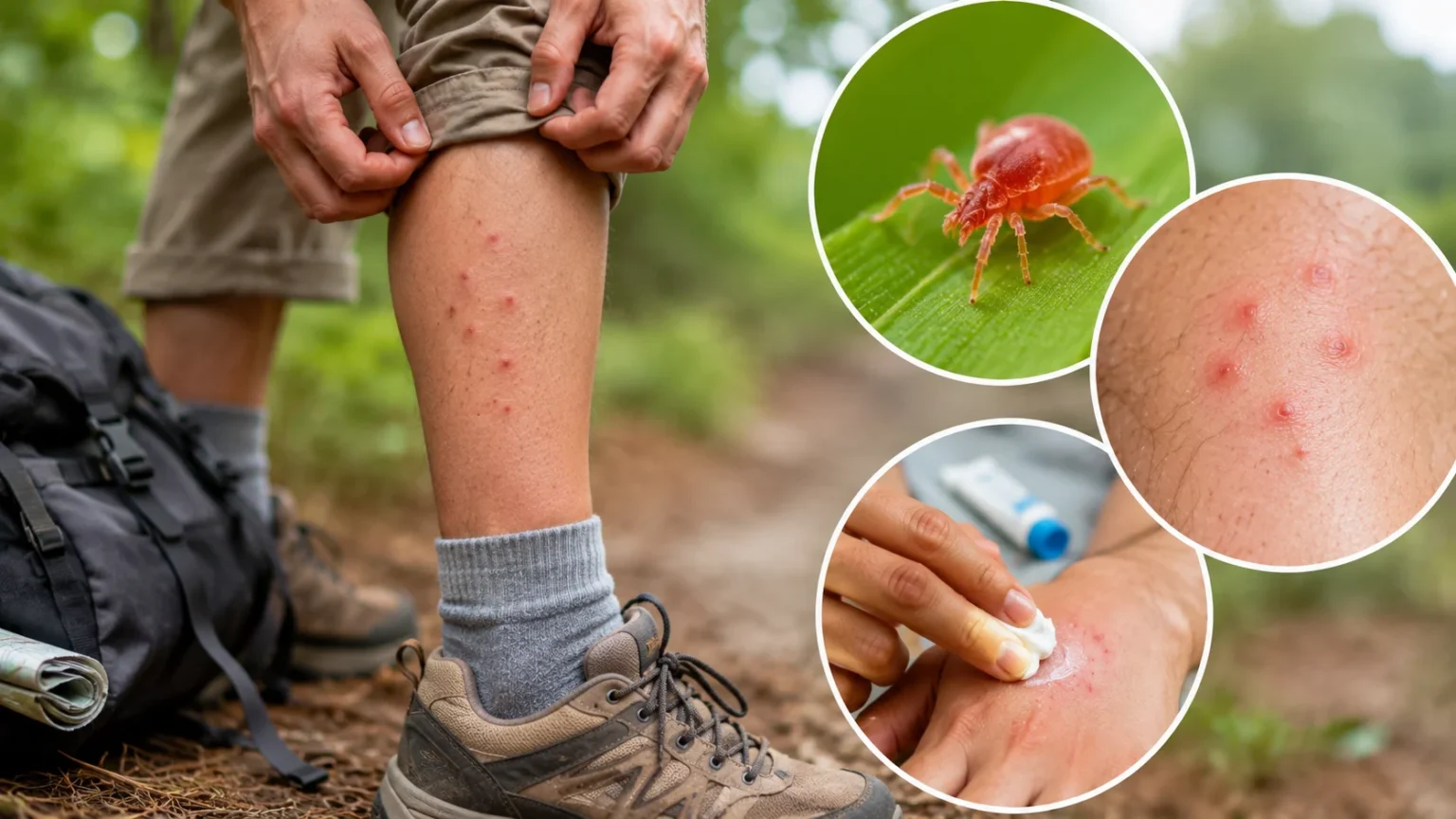

Chigger Bites: Symptoms, Treatment and Fast Relief
Chigger bites can turn an otherwise enjoyable day outdoors into several uncomfortable days of intense itching. Chiggers are extremely small mites commonly encountered in grassy, brushy, or wooded environments. Their bites often appear as clusters of itchy bumps around areas where clothing fits closely, such as the ankles, waist, sock line, groin, or behind the knees. The itching can become surprisingly intense even though the mites themselves are tiny.
A common misconception is that chiggers burrow underneath human skin and remain there until they are somehow removed. They do not. Chigger larvae attach to the skin and feed on skin tissue, creating an inflammatory reaction that produces the characteristic itching and bumps. By the time a person notices intense itching, the chigger may already be gone, so attempting to dig something out of the skin usually causes unnecessary irritation.
Fortunately, most chigger bites are irritating rather than dangerous and can usually be managed with simple measures aimed at controlling inflammation and itching. Cool compresses, appropriate over-the-counter anti-itch treatments, and avoiding scratching can make recovery considerably more comfortable. The bites generally resolve without specialized treatment, although excessive scratching can damage the skin and increase the risk of a secondary bacterial infection.
Knowing what chigger bites look like and how they differ from other insect bites can help you respond appropriately. This guide explains chigger bite symptoms, treatment, fast itch relief, home care, prevention, common myths, possible complications, and when to see a healthcare professional. It also covers practical ways to protect yourself when hiking, gardening, camping, or spending time in environments where these tiny mites commonly live.
What Are Chiggers?
Chiggers are the larval stage of certain mites belonging to the Trombiculidae family. They are so small that most people never actually see them on their skin. Chiggers are commonly associated with warm outdoor environments containing tall grass, weeds, brush, vegetation, or woodland edges, which explains why bites frequently occur after hiking, gardening, camping, or walking through overgrown areas.
Only the larval stage is responsible for the familiar bites associated with people. Chiggers attach themselves to the surface of the skin and feed on skin cells rather than sucking blood like mosquitoes or ticks. Their feeding process causes irritation and inflammation that can result in an intensely itchy rash long after the actual exposure occurred.
Chiggers tend to find locations where they can remain protected against the skin. For that reason, bites frequently develop around sock lines, waistbands, underwear lines, bra lines, skin folds, ankles, groin areas, and behind the knees. A person may notice many bumps concentrated in one region rather than a single isolated bite.
Although people sometimes use “chigger” to describe any tiny biting mite, not every itchy rash after outdoor activity comes from chiggers. Mosquitoes, fleas, ticks, contact dermatitis, poison ivy, heat rash, and other causes can create similar skin reactions. The location of the rash, outdoor exposure history, timing, and pattern of itching can provide clues, but uncertain or unusual rashes may require professional evaluation.
What Do Chigger Bites Look Like?
Chigger bites usually appear as small, raised, intensely itchy bumps. Depending on skin tone and the severity of the reaction, they may look red, pink, darker than surrounding skin, or simply inflamed. Some people develop small blisters or more noticeable areas of irritation, particularly when they experience a stronger reaction to the bites.
The pattern can be one of the most useful clues. Chigger bites often occur in clusters or lines where clothing has created pressure against the body. Someone returning from tall grass may notice many itchy bumps around the ankles where socks ended, around the waistband, or along another tight clothing line rather than randomly distributed across the entire body.
Some bites may develop a small central blister or irritated area. Scratching can quickly change their appearance, making bumps larger, crusted, or broken. This can make identifying the original bite difficult several days later. Photos found online should therefore be treated as general examples rather than reliable tools for diagnosing every unexplained skin rash.
Skin color also affects how inflammation appears. On lighter skin, bites may appear distinctly red, while darker skin may show less obvious redness but still develop bumps, swelling, itching, or changes in pigmentation. Paying attention to the texture, location, itch intensity, and exposure history can be more informative than looking for one specific color.
What Are the Symptoms of Chigger Bites?
The most characteristic symptom is intense itching, which may become much stronger than someone expects from such small bites. The itch often develops after the outdoor exposure rather than immediately and can become particularly bothersome over the following day or two. Cleveland Clinic notes that chigger bites commonly reach peak itchiness approximately 24 to 48 hours after exposure.
Alongside itching, people may develop small bumps, swelling, localized redness or discoloration, and occasionally blisters. Several bites commonly appear together because a person may encounter numerous larvae while walking or sitting in an infested outdoor area. Warm skin folds and regions under tight-fitting clothing are particularly common locations.
The itching itself can become the biggest problem because repeatedly scratching the skin may cause cuts, scabs, bleeding, and increased inflammation. Scratching also transfers bacteria from the hands or underneath the fingernails into damaged skin, potentially creating a secondary infection. Keeping fingernails short and controlling the itch can therefore support healing as well as comfort.
Chigger bites generally cause localized skin symptoms rather than severe illness. If you develop high fever, significant weakness, widespread swelling, breathing difficulties, confusion, or another substantial systemic symptom after an outdoor exposure, do not automatically assume chiggers are responsible. Other infections, allergic reactions, or heat-related illnesses may need to be considered.
Why Do Chigger Bites Itch So Much?
The extreme itching associated with chigger bites comes from the body’s inflammatory response to the mite’s feeding process. Chigger larvae attach to the skin and use digestive substances to break down skin tissue so that they can feed. The resulting irritation triggers an immune response that produces inflammation and a powerful itching sensation.
This explains why a tiny chigger can create discomfort that feels disproportionate to its size. The reaction is not simply the sensation of something biting the skin. Instead, the affected tissue remains irritated after exposure, which means itching can continue even when no mite is present anymore.
The discomfort may also appear to worsen later rather than immediately. A person may walk through tall grass during the afternoon, feel completely normal afterward, and then develop severe itching later that evening or the following day. This delayed reaction sometimes makes people unsure where or when the exposure happened.
Repeated scratching can then intensify the itch-scratch cycle. Scratching may provide several seconds of relief but can increase inflammation and make the skin more sensitive afterward. Breaking this cycle with cool compresses and appropriate anti-itch products is often more effective than repeatedly scratching the affected area.
How Long Do Chigger Bites Last?
Most uncomplicated chigger bites eventually heal on their own. The intense itching may be strongest during the first several days and gradually become less bothersome as the skin reaction settles. Individual recovery varies depending on the number of bites, sensitivity of the person’s skin, and how much scratching occurs.
Visible bumps may remain after the worst itching has improved. Areas that have been scratched aggressively can take longer to heal because the skin must recover from both the original inflammatory reaction and the additional mechanical damage. Scabs or temporary discoloration may therefore remain after the actual chigger reaction has largely resolved.
People sometimes worry that persistent itching means chiggers remain embedded beneath the skin. This is not generally the explanation. The inflammatory response can continue after the larvae are gone, so repeatedly applying harsh substances in an attempt to “kill” hidden mites may irritate the skin without speeding recovery.
If the rash is worsening rather than gradually improving, particularly after several days, consider another explanation or complication. Increasing warmth, swelling, tenderness, pus, red streaks, or spreading redness may signal a bacterial skin infection resulting from scratching and should be evaluated appropriately.
How to Treat Chigger Bites for Fast Relief
The first goal of chigger bite treatment is controlling itching and inflammation. A cool compress placed gently over affected areas can provide relatively fast temporary relief. Cooling decreases the uncomfortable sensation without damaging the skin, making it particularly useful when bites feel hot, swollen, or intensely itchy.
Over-the-counter hydrocortisone cream may help reduce inflammation and itching when used according to the product directions. Calamine lotion and other anti-itch products are also commonly used for itchy mite-related rashes. Oral antihistamines may help some people with substantial itching, although medicines should be used according to labeling and individual medical considerations.
Try not to scratch, even when the urge feels intense. Keeping fingernails short can reduce skin damage if you scratch unconsciously during sleep. Loose, breathable clothing may also be more comfortable than tight fabric repeatedly rubbing against irritated areas around the waist, legs, or groin.
Fast relief does not necessarily mean making every bump disappear immediately. Chigger bites require time for the inflammatory reaction to settle. The most realistic goal is reducing itching enough to prevent repeated scratching while keeping the skin clean and protected so that normal healing can occur without complications.
What Should You Do Immediately After Chigger Exposure?
If you have just returned from tall grass, woodland edges, brush, or another environment where chiggers may be present, changing clothes and washing your skin can be useful. A prompt shower can help remove mites that may still be crawling on the skin before they have had an opportunity to attach and feed.
Wash exposed skin gently with soap and water rather than aggressively scrubbing irritated areas. The objective is to remove potential mites and ordinary outdoor debris, not to scrape the skin. Once a substantial inflammatory reaction has already developed, vigorous scrubbing is more likely to worsen irritation than provide relief.
Change clothing that was worn during the outdoor activity. Chiggers can initially attach to clothing before moving to suitable areas of skin, which is one reason bites often appear beneath waistbands and other tight sections. Washing the clothing before wearing it again is a sensible precaution after suspected exposure.
If itching has already begun, shift the focus toward symptom relief rather than trying to remove mites from individual bumps. Cool compresses, anti-itch treatment, and avoiding scratching are more useful at that stage than attempting to squeeze, scrape, burn, or chemically treat every visible spot.
Best Home Remedies for Chigger Bites
A cool compress is one of the simplest home approaches for an itchy chigger rash. Wet a clean cloth with cool water, gently apply it to affected areas, and repeat when needed. Avoid placing extremely cold ice directly on irritated skin because intense cold can create additional discomfort or tissue irritation.
A cool or lukewarm shower may also provide temporary relief, particularly when numerous areas are affected. After bathing, gently pat the skin dry rather than rubbing it vigorously with a towel. Friction can trigger more itching and irritation, especially when bumps have already been scratched.
Colloidal oatmeal baths are sometimes used for itchy inflammatory skin conditions and can feel soothing when a large area of the body is affected. Likewise, simple fragrance-free moisturizers may reduce dryness that develops around healing bumps. Avoid heavily perfumed skin products if they cause stinging or additional irritation.
Most importantly, choose soothing rather than destructive home remedies. The skin is already inflamed, so treatments that burn, sting, dry, or damage tissue are unlikely to accelerate healing. A home remedy should make the skin more comfortable while protecting the barrier—not create another injury that takes even longer to recover.
Home Remedies You Should Avoid
One enduring chigger myth recommends covering bites with nail polish because chiggers supposedly remain underneath the skin and need to be suffocated. This explanation is incorrect. Chiggers do not establish a long-term burrow beneath human skin, so sealing individual bumps with nail polish does not address the reason they continue itching.
Bleach, gasoline, kerosene, strong disinfectants, and other harsh chemicals should also never be placed onto chigger bites. These substances can irritate or burn the skin and may create a more serious problem than the original rash. The fact that a substance feels strong does not make it medically effective.
Aggressively scraping or digging into bumps is similarly unnecessary. Trying to remove an imaginary mite from underneath the skin can cause open wounds, bleeding, scars, and infection. By the time many people notice severe itching, treatment should focus on the inflammatory reaction rather than removing a parasite.
Stick with gentler approaches such as washing the skin, using cool compresses, avoiding scratching, and considering appropriate anti-itch medication. If these measures do not control symptoms or the reaction is unusually severe, getting medical advice is safer than escalating to increasingly harsh home treatments.
Chigger Bites vs Bed Bug Bites
Chigger and bed bug bites can both create itchy bumps, but the exposure pattern is usually different. Chigger bites generally follow time spent outdoors in grassy, brushy, or wooded locations, whereas bed bug bites are associated with sleeping or resting in environments where bed bugs are present.
Chigger bites frequently cluster around sock lines, waistbands, groin areas, and skin folds where clothing fits tightly. Bed bug bites can occur on areas exposed during sleep, including the arms, legs, face, neck, and other uncovered skin. Patterns overlap enough that location alone cannot always establish the cause.
Timing may also provide useful information. If itching develops after hiking through tall grass, gardening, hunting, or camping, chiggers become a plausible explanation. If new unexplained bites repeatedly appear after sleeping in the same room, especially without recent outdoor exposure, bed bugs or another indoor cause deserves consideration.
The treatment of uncomplicated itchy bites may involve similar symptom-control measures, but prevention is very different. Chigger prevention focuses on avoiding mites in outdoor vegetation, while controlling bed bugs may require addressing an indoor infestation. Correctly identifying the likely exposure therefore matters beyond simply treating the rash.
Chigger Bites vs Flea Bites
Flea bites and chigger bites can both affect the legs and produce itchy red or inflamed bumps. Fleas commonly bite around the lower legs and ankles, while chiggers frequently target ankles as well as areas underneath tight clothing. This overlap means appearance alone can sometimes be misleading.
Flea exposure may be associated with pets, carpets, upholstery, wildlife, or infested indoor environments. Chigger exposure is more strongly linked with outdoor vegetation such as tall grass, weeds, berry patches, and woodland edges. Thinking about what you were doing immediately before the rash appeared can therefore provide valuable clues.
Flea bites may sometimes occur as several small bumps close together, while chigger bites can create groups or lines concentrated around clothing boundaries. Individual skin reactions vary, however, so neither pattern should be treated as a guaranteed diagnostic sign.
If bites continue appearing despite avoiding the outdoor area where you assumed chiggers were present, reconsider the source. Ongoing indoor bites could suggest fleas, bed bugs, another arthropod, or even a non-bite skin condition. Identifying and removing the underlying exposure is necessary if new lesions continue developing.
Chigger Bites vs Mosquito Bites
Mosquito bites often form individual raised, itchy welts on exposed skin, while chigger bites may be smaller and appear in clusters where clothing presses against the body. Chigger itching can also become exceptionally intense, particularly around ankles, waistbands, or other protected locations.
Outdoor conditions can expose someone to both mosquitoes and chiggers simultaneously. A summer evening near vegetation and standing water, for example, could produce several types of bites. It is therefore possible for one person to develop different-looking itchy areas after the same outdoor activity.
Mosquitoes feed directly on blood and typically bite exposed areas they can reach easily. Chigger larvae feed on skin tissue and often move underneath clothing until they reach an area where movement becomes restricted. These different feeding behaviors help explain why the distribution of bites can vary.
In most situations, distinguishing every individual bump is less important than watching the overall reaction. Mild itchy bites from either source often improve with basic symptom management. Unusual fever, significant swelling, spreading illness, or other systemic symptoms deserve medical attention because certain mosquito-borne diseases and other conditions require different evaluation.
Can Chigger Bites Spread From Person to Person?
Ordinary chigger bites themselves are not contagious. You cannot catch someone’s itchy bumps simply by touching them, sleeping beside them, sharing a room, or having ordinary physical contact. The rash represents that person’s inflammatory response to an outdoor mite exposure rather than an infection spreading between people.
This differs from conditions such as scabies, in which mites can infest human skin and spread through close personal contact. Because both conditions involve mites and itching, people occasionally confuse them. Scabies behaves differently and generally requires specific medication prescribed or recommended for eliminating the infestation.
Family members can develop chigger bites at the same time without transmitting them to each other. For example, several people hiking through the same grassy area may all encounter chiggers independently and develop similar rashes later. Their shared exposure—not person-to-person spread—is responsible.
If several household members repeatedly develop new intensely itchy lesions despite no shared outdoor exposure, consider whether another cause may be involved. Scabies, bed bugs, fleas, or another environmental source may need to be investigated rather than assuming an old chigger exposure is somehow spreading.
Can Chigger Bites Become Infected?
The original chigger bite is usually more uncomfortable than dangerous, but secondary bacterial infection can occur when repeated scratching breaks the skin. Fingernails can introduce bacteria into these small wounds, particularly when someone scratches intensely for several days.
Possible signs of infection include increasing warmth, swelling, tenderness, worsening redness or discoloration, pus-like drainage, red streaking, and pain that becomes stronger instead of gradually improving. Fever or chills alongside a worsening skin lesion can also indicate a more significant infection.
Preventing infection is another reason controlling the itch matters. Keeping nails short, gently washing damaged skin, and avoiding repeated scratching can reduce additional injury. Parents may need to watch children particularly carefully because young children can scratch bites aggressively without realizing how much they are damaging the skin.
Do not automatically apply leftover prescription antibiotics or medications intended for another condition. If a bite appears infected, a healthcare professional can determine whether treatment is actually necessary and what type is appropriate. An irritated bite and a bacterial skin infection can look similar without proper evaluation.
Can Chiggers Transmit Disease?
The disease risk associated with chiggers depends strongly on geographic location and the particular mite species involved. In much of the United States, ordinary chigger bites are primarily known for causing intensely itchy skin reactions rather than routinely transmitting infectious disease.
However, certain chiggers in parts of the Asia-Pacific region can transmit scrub typhus, a bacterial infection caused by Orientia tsutsugamushi. The CDC identifies infected larval trombiculid mites as the vector responsible for transmitting scrub typhus to humans.
Symptoms of scrub typhus can include fever, headache, muscle pain, rash, and a dark scab-like lesion known as an eschar at the bite site. Travelers who become significantly ill after possible mite exposure in a region where scrub typhus occurs should tell healthcare professionals about both their travel history and outdoor activities.
This geographic distinction prevents two opposite mistakes: assuming every chigger bite is dangerous or assuming chiggers can never transmit disease anywhere. For most routine bites, itching is the primary concern, but travel-associated illness deserves a more individualized assessment based on location, symptoms, and exposure history.
How to Prevent Chigger Bites Outdoors
Prevention becomes particularly important if you frequently hike, camp, hunt, garden, work outdoors, or spend time in tall vegetation. Wearing long trousers, long sleeves, socks, and closed footwear can reduce the amount of exposed skin available to chiggers and other biting arthropods.
Using an appropriate EPA-registered insect repellent on exposed skin according to label directions can provide additional protection. Repellents should be applied carefully and used exactly as instructed, particularly when they are being used on children. Protective clothing and repellent usually work better together than either strategy used alone.
Clothing and outdoor gear treated with 0.5% permethrin can also protect against chiggers and other arthropods. The CDC advises that permethrin-treated clothing can repel or kill chiggers, ticks, and mosquitoes. Permethrin products intended for treating clothing should be used according to instructions rather than directly applied to skin unless a particular product is specifically labeled for that purpose.
When practical, avoid sitting directly in tall grass or dense vegetation and remain toward the center of maintained paths. After returning indoors, showering and changing clothes promptly can further reduce the chance that mites still on clothing or skin will find suitable places to feed.
When Should You See a Doctor for Chigger Bites?
Most chigger bites do not require a doctor’s visit. Medical advice becomes more appropriate when the itching is extremely severe, covers a substantial portion of the body, interferes significantly with sleep, or does not improve despite appropriate over-the-counter treatment and basic home care.
Contact a healthcare professional if the skin begins showing signs of infection such as increasing pain, warmth, spreading redness or discoloration, pus, red streaks, or substantial swelling. These changes can develop when repeated scratching damages the protective skin barrier and allows bacteria to enter.
Emergency medical attention is appropriate for symptoms of a serious allergic reaction, including trouble breathing, severe swelling of the face or throat, faintness, or rapidly developing widespread symptoms. These reactions are uncommon but should never be treated as ordinary itching from insect bites.
Travel history also matters. If you develop fever, severe headache, rash, significant weakness, or another systemic illness following chigger exposure while traveling in an area where scrub typhus occurs, seek medical evaluation and mention your recent travel and outdoor exposure. Early recognition is important when an infectious illness rather than a simple skin reaction is possible.
The Bottom Line on Chigger Bites
Chigger bites are caused by tiny mite larvae encountered mainly in outdoor vegetation. They commonly produce clusters of extremely itchy bumps around ankles, waistbands, sock lines, groin areas, skin folds, and other locations where clothing fits tightly. The mites feed on skin tissue rather than burrowing permanently beneath the skin.
For most people, treatment focuses on fast itch relief and preventing skin damage. Cool compresses, hydrocortisone or other appropriate anti-itch products, and avoiding scratching can make symptoms more manageable while the inflammatory reaction naturally improves. There is generally no need to dig into bumps or attempt to suffocate hidden chiggers.
Prevention can make a significant difference for people who frequently encounter tall grass, brush, or woodland environments. Protective clothing, appropriate insect repellent, permethrin-treated gear, staying away from dense vegetation when practical, and showering after exposure can substantially reduce opportunities for chiggers to reach the skin.
Most bites heal without complications, but worsening skin infection, severe allergic symptoms, or systemic illness deserves medical attention. Understanding how chiggers actually behave helps replace ineffective myths with practical care and gives you a much better chance of getting comfortable while your skin heals.
Frequently Asked Questions
What kills chiggers on your skin?
Washing with soap and water soon after outdoor exposure can help remove chiggers that are still crawling on the skin. Once itchy bumps appear, treatment mainly focuses on relieving the inflammatory reaction.
What is the fastest way to relieve chigger bites?
Cool compresses and appropriate anti-itch treatments such as hydrocortisone cream can help reduce itching. Avoid scratching because broken skin can prolong healing and increase infection risk.
Do chiggers burrow under your skin?
No. Chiggers attach to the skin surface and feed on skin tissue rather than remaining permanently buried underneath it. The itching can continue after the mite is already gone.
How long do chigger bites itch?
Itching can remain intense for several days and often becomes strongest around 24 to 48 hours after the bite. The exact recovery time varies according to the person’s reaction and whether the skin is repeatedly scratched.
Can chigger bites spread around your body?
The bites themselves do not spread from one area to another or from person to person. Multiple bumps usually result from several mites reaching different areas during the original outdoor exposure.