
Pelvic floor exercises can help improve strength, coordination, and control in the muscles that support the bladder, bowel, and pelvic organs. These muscles play an important role in continence, core stability, sexual function, and everyday movement. However, strengthening them effectively requires more than repeatedly squeezing as hard as possible.
Many people assume pelvic floor training means doing Kegels throughout the day, but the muscles need both contraction and relaxation. Poor technique, excessive repetition, or training already-tight muscles can sometimes make symptoms worse. Learning how to identify, engage, and fully release the pelvic floor is therefore an important part of building functional strength.
This guide explains the best exercises to strengthen the pelvic floor, how to perform them correctly, common mistakes to avoid, and how often to train. It also covers breathing, core coordination, progression, and signs that professional guidance may be useful. The goal is to help you build control gradually rather than forcing results.
What Are the Pelvic Floor Muscles?
The pelvic floor is a group of muscles and connective tissues located at the base of the pelvis. These muscles form a supportive sling underneath the bladder, bowel, and reproductive organs. They help manage pressure inside the abdomen while contributing to continence, stability, posture, and controlled movement.
A healthy pelvic floor should be able to contract when support is needed and relax when tension is no longer necessary. Strength alone is not enough because muscles that remain constantly tight may also cause problems. Good pelvic floor function depends on strength, endurance, coordination, flexibility, and the ability to respond appropriately during different activities.
These muscles work together with the diaphragm, abdominal muscles, back muscles, and hips. When you breathe, lift, cough, walk, or exercise, pressure changes occur throughout your trunk and pelvis. The pelvic floor helps manage these changes, which is why training it often works best when combined with breathing and whole-body movement.
How to Find Your Pelvic Floor Muscles
Before strengthening the pelvic floor, it helps to understand what a correct contraction feels like. Imagine gently trying to stop passing gas while also lifting inward around the openings of the pelvis. The sensation should feel like a subtle lift and closure rather than a hard squeeze involving your entire lower body.
Avoid tightening your buttocks, inner thighs, or abdominal muscles aggressively while learning the movement. These muscles may assist during more advanced exercises, but they should not completely replace the pelvic floor contraction. Try breathing normally while creating a gentle lift, then fully release the muscles before repeating the movement.
Some people are told to stop urine flow as a way to identify the muscles, but this should not become a regular exercise. Repeatedly interrupting urination can interfere with normal bladder emptying. If you cannot tell whether you are contracting correctly, a pelvic health physical therapist can provide individualized assessment and feedback.
Basic Pelvic Floor Contractions
Basic pelvic floor contractions are often the starting point for strengthening. Sit or lie comfortably, relax your shoulders, and take a normal breath. As you exhale, gently lift and tighten the pelvic floor muscles, hold briefly without straining, and then release them completely before starting another repetition.
Begin with a light-to-moderate contraction rather than squeezing at maximum effort. Hold for approximately three to five seconds if comfortable, then relax for at least the same amount of time. A full relaxation period is important because constantly gripping the muscles can create fatigue and may reduce coordination over time.
Start with a small number of quality repetitions, such as five to ten. If you can maintain normal breathing and clearly feel both contraction and relaxation, you can gradually increase the hold time or number of repetitions. Good technique matters more than completing a large number of Kegels quickly.
Quick Pelvic Floor Contractions
Quick contractions train the pelvic floor to respond rapidly when pressure suddenly increases. This may be useful during activities such as coughing, sneezing, laughing, or changing direction during exercise. Instead of holding the contraction, you gently squeeze and lift the muscles for about one second before fully releasing.
Perform each repetition deliberately rather than bouncing rapidly between tension and relaxation. A useful starting point is five to ten quick contractions followed by a longer rest. The muscles should return to a relaxed state after each squeeze instead of remaining partially tightened throughout the set.
Quick contractions and longer endurance holds train slightly different qualities, so both can be useful in a balanced routine. Endurance work helps sustain support, while quick contractions train responsiveness. However, neither should cause pelvic pain, heaviness, cramping, or increasing difficulty relaxing after the exercise.
Bridge With Pelvic Floor Engagement
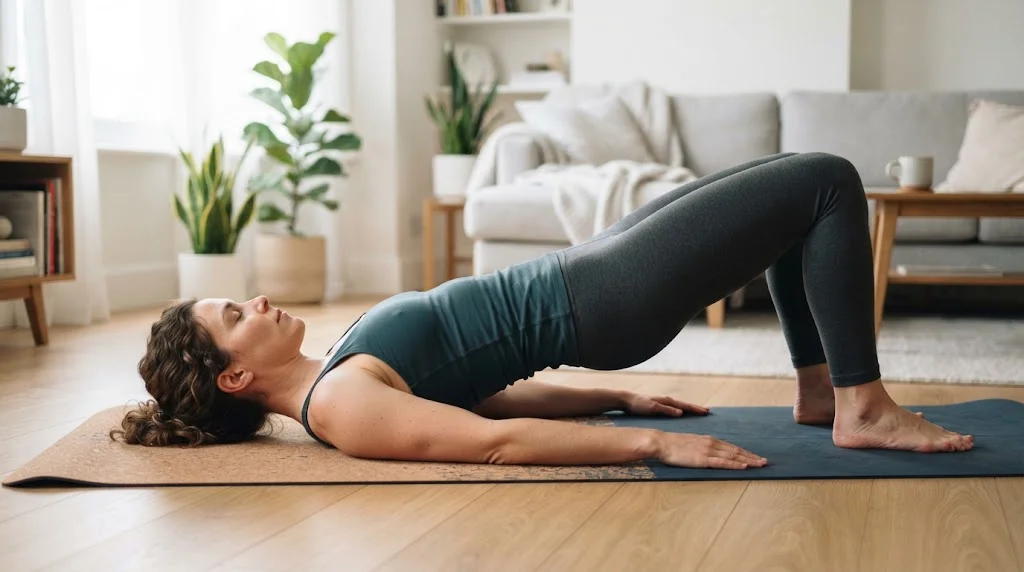
The bridge is a simple exercise that combines pelvic floor activation with glute and hip strength. Lie on your back with your knees bent and feet flat on the floor. Gently engage the pelvic floor, lightly brace your abdomen, and press through your feet as you lift your hips into a comfortable bridge position.
Keep your ribs relaxed and avoid arching your lower back excessively. Hold the top position briefly while breathing, then lower your hips slowly toward the floor. Relax the pelvic floor at the bottom so the muscles experience both contraction and release during each repetition.
Start with eight to twelve controlled repetitions if the exercise feels comfortable. The goal is coordination rather than squeezing your pelvic floor as hard as possible while lifting. If you want more examples of safe foundational movements, this guide to pelvic floor exercises provides additional form and technique considerations.
Heel Slides for Pelvic Floor Control
Heel slides are useful for practicing pelvic floor and deep core coordination without placing much load on the body. Lie on your back with your knees bent and feet supported. Gently engage the pelvic floor and abdomen, then slowly slide one heel away from your body while keeping your pelvis relatively still.
Bring the foot back toward the starting position and relax before switching sides. Avoid holding your breath or aggressively flattening your lower back into the floor. The movement should remain smooth, and your pelvis should not rock significantly as the leg travels away from you.
Heel slides can be especially helpful for beginners because they teach the pelvic floor to stay engaged during limb movement. Start with six to ten repetitions per side. As your control improves, you can increase the distance of the slide while maintaining relaxed breathing and stable positioning.
Bird Dog for Pelvic Floor and Core Strength
The bird dog challenges your core, back, hips, and pelvic floor to work together. Begin on your hands and knees with your spine in a comfortable neutral position. Gently engage the pelvic floor and abdominal muscles, then extend one arm and the opposite leg without twisting your hips.
Pause briefly while maintaining steady breathing, then return your hand and knee to the floor with control. Repeat on the opposite side. Your goal is to prevent excessive movement through the pelvis and lower back rather than lifting your arm or leg as high as possible.
Start with five to eight repetitions per side. If extending both the arm and leg is too difficult, practice moving only one limb at a time. Building stability gradually can make the exercise more effective and reduce the tendency to compensate through the back, shoulders, or hips.
Squats With Pelvic Floor Coordination
Squats can train the pelvic floor in a functional position because they involve the hips, legs, trunk, and changes in abdominal pressure. Stand with your feet around shoulder-width apart and lower into a comfortable squat. Allow the pelvic floor to remain relaxed as you descend instead of constantly squeezing.
As you stand, exhale gently and allow the pelvic floor to engage naturally with the movement. Avoid holding your breath and bearing down heavily. Coordinating the exhale with the rising phase can help manage pressure while teaching the pelvic floor to work with larger muscle groups.
Bodyweight squats are often enough when first learning this technique. Once your breathing and pelvic control remain consistent, you can gradually add resistance if appropriate. If you notice pelvic pressure, leaking, pain, or heaviness, reduce the load and consider whether your technique or exercise choice needs adjustment.
Dead Bug for Pelvic Floor Stability
The dead bug is another useful exercise for integrating the pelvic floor with deep abdominal control. Lie on your back with your hips and knees bent, then gently engage your core and pelvic floor. Slowly lower one heel toward the floor while keeping your ribs and pelvis stable.
Return the leg to the starting position and repeat on the opposite side. Keep breathing rather than holding your breath during the difficult part of the movement. If your lower back arches significantly or you feel excessive abdominal pressure, reduce the range of motion until you can maintain better control.
As you become stronger, you can progress by moving the opposite arm and leg at the same time. The exercise should still feel smooth and manageable rather than strained. Dead bugs are particularly useful for building coordination between the pelvic floor, diaphragm, and abdominal muscles during controlled movement.
Side-Lying Hip Exercises
The muscles around the hips can influence pelvic stability, so strengthening them may complement pelvic floor training. Lie on your side with your knees slightly bent and your body aligned comfortably. Perform a gentle pelvic floor contraction, then lift the top knee or leg without allowing your pelvis to roll backward.
Clamshells and side-lying leg raises are two common options. Keep the movement relatively small and controlled so the hip muscles do the work rather than momentum. Relax your pelvic floor between repetitions instead of maintaining a constant contraction throughout the entire set.
Strong hip muscles do not replace direct pelvic floor training, but they can support better movement mechanics around the pelvis. Combining hip, core, and pelvic floor work may create a more balanced program. Start with light resistance and increase difficulty gradually as your control improves.
Breathing Exercises for Pelvic Floor Strength
Breathing plays an important role in pelvic floor function because the diaphragm and pelvic floor move together during respiration. As you inhale, the diaphragm descends and the pelvic floor normally lengthens slightly. During exhalation, both structures move upward, making the exhale a useful time to practice a gentle pelvic floor contraction.
Lie or sit comfortably and place one hand on your abdomen. Inhale slowly without forcing your stomach outward, then exhale and gently lift the pelvic floor. Release completely during the next inhale and repeat this pattern several times without creating unnecessary tension in your jaw, shoulders, or buttocks.
This breathing practice helps improve coordination rather than raw strength alone. It can also make other pelvic floor exercises feel more natural because you learn to manage pressure instead of holding your breath. Controlled breathing is especially valuable during squats, bridges, lifting, and other movements that challenge the trunk.
Common Pelvic Floor Exercise Mistakes
One common mistake is contracting the pelvic floor too hard during every repetition. Maximum squeezing can lead to fatigue and may make it difficult to feel a complete release. A moderate contraction performed with good control is usually more useful than repeatedly gripping as strongly as possible.
Another mistake is holding your breath while performing Kegels or strength exercises. Breath-holding increases pressure inside the abdomen and may make coordination more difficult. Exhaling during effort and allowing the pelvic floor to respond naturally can help create more efficient movement without excessive downward pressure.
People also sometimes perform many repetitions despite poor technique. More is not automatically better, especially when the muscles already feel tight or irritated. Stop and reassess if exercises cause pelvic pain, urinary urgency, heaviness, difficulty emptying the bladder or bowel, or worsening symptoms.
How Often Should You Strengthen the Pelvic Floor?
Training frequency depends on your starting point, symptoms, and goals. Many people begin with one or two short sessions per day rather than performing contractions constantly. A session might include several endurance holds, quick contractions, and one or two whole-body strengthening exercises.
Like other muscles, the pelvic floor can become fatigued when overloaded. If contractions become weaker, your technique deteriorates, or you struggle to relax afterward, you may be doing too much. Rest and recovery are part of strengthening, especially when you are building endurance from a relatively low starting level.
Consistency is more important than performing a large amount of exercise at once. Practicing a small, manageable routine regularly can improve coordination and make progression easier to track. Over time, the goal is to use the pelvic floor naturally during everyday activities rather than consciously squeezing it throughout the day.
When Pelvic Floor Strengthening May Not Be Appropriate
Not everyone needs stronger pelvic floor muscles. Some people have muscles that are already overactive, tight, or unable to relax effectively. In these situations, adding large numbers of Kegels may increase discomfort, urinary urgency, constipation, pain during intercourse, or a feeling of pressure in the pelvis.
Symptoms such as persistent pelvic pain, difficulty relaxing the pelvic floor, or pain with bowel movements deserve individualized assessment. Treatment may focus more on relaxation, breathing, mobility, and coordination before strengthening begins. This is why symptoms should guide exercise choices rather than assuming weakness is always the problem.
A pelvic health physical therapist can assess muscle strength, tension, coordination, and movement patterns. Professional guidance is also useful during pregnancy, postpartum recovery, after pelvic surgery, or when dealing with persistent bladder and bowel symptoms. An individualized plan can help avoid exercises that are poorly matched to your needs.
How to Progress Pelvic Floor Exercises
Once basic contractions feel comfortable, progression can involve increasing hold time, adding repetitions, or practicing in more demanding positions. You might move from lying down to sitting, then standing, and eventually incorporate pelvic floor control during squats, lifting, or other functional movements. Progress gradually rather than changing everything at once.
Another progression is improving endurance without increasing the intensity of each squeeze. For example, holding a comfortable contraction for eight seconds may be more useful than repeatedly performing very hard three-second contractions. Relax fully between repetitions to maintain quality and prevent unnecessary muscle tension.
Eventually, pelvic floor strength should transfer into everyday movement. The goal is not to spend the entire day thinking about contractions but to develop automatic support when needed. Good training builds strength, relaxation, responsiveness, and coordination rather than teaching the pelvic floor to remain constantly tightened.
Conclusion
Exercises to strengthen the pelvic floor can improve muscular control, endurance, and coordination when performed correctly. Basic contractions, bridges, heel slides, bird dogs, squats, and dead bugs can all play a role depending on your ability and symptoms. The most important starting point is learning how to contract and fully relax the muscles.
Pelvic floor training works best when breathing, core control, hips, and whole-body movement are included rather than focusing only on repeated Kegels. Progress slowly and prioritize quality over quantity. Stop or modify exercises that create pain, pressure, heaviness, or worsening bladder and bowel symptoms.
Remember that not every pelvic floor problem is caused by weakness. Tight or overactive muscles may require relaxation and individualized treatment before strengthening is appropriate. If you are uncertain about your technique or symptoms, a pelvic health professional can help you choose exercises that match your specific needs.
FAQs
What is the best exercise to strengthen the pelvic floor?
Basic controlled pelvic floor contractions are a common starting point. Bridges, squats, bird dogs, and dead bugs can also help by integrating the pelvic floor with the core, hips, and breathing.
How long does it take to strengthen pelvic floor muscles?
Progress varies between individuals, but consistent training over several weeks is often needed to notice meaningful changes. Technique, starting strength, symptoms, and training frequency all influence how quickly improvement occurs.
Can you strengthen your pelvic floor without doing Kegels?
Yes. Squats, bridges, breathing exercises, and core stability movements can all involve the pelvic floor. However, direct contractions may still be useful when weakness is present and the muscles can relax normally.
Can too many pelvic floor exercises cause problems?
Yes. Excessive contractions may contribute to fatigue or increased tightness, especially if the muscles are already overactive. Balance strengthening with full relaxation and stop if symptoms worsen.
Should men do pelvic floor exercises too?
Yes. Men also have pelvic floor muscles that support bladder, bowel, sexual, and core function. The same principles of controlled contraction, complete relaxation, breathing, and gradual progression generally apply.