
What Are Pelvic Floor Exercises?
Pelvic floor exercises are movements designed to improve awareness, coordination, strength, or relaxation of the muscles at the base of the pelvis. These muscles help support the bladder, bowel, reproductive organs, and nearby structures. A well-functioning pelvic floor should be able to contract when needed and relax fully during activities such as urination, bowel movements, and comfortable movement.
Many people immediately think of Kegel exercises when pelvic floor training is mentioned, but pelvic floor exercise involves much more than repeated squeezing. Breathing, posture, hip mobility, core control, and relaxation can all influence how these muscles function. The best exercise depends on whether your pelvic floor needs better strength, endurance, coordination, relaxation, or a combination of these qualities.
Pelvic floor training can be useful for both women and men at different stages of life. However, stronger is not always better because some people already have overly tense or poorly relaxing pelvic floor muscles. Choosing exercises based on your symptoms and muscle function is therefore more helpful than performing large numbers of contractions without considering what your body actually needs.
Benefits of Pelvic Floor Exercises
Consistent pelvic floor exercises may improve bladder and bowel control by helping the muscles respond more effectively when pressure increases. Activities such as coughing, sneezing, lifting, or exercising place extra pressure through the abdomen and pelvis. Better pelvic floor coordination can help manage these changes while supporting comfortable everyday movement and physical activity.
Pelvic floor training can also improve awareness of muscles that many people rarely think about consciously. Learning how to contract and relax them can make it easier to identify unnecessary tension, improve breathing patterns, and coordinate the deep core. This awareness may be especially valuable after periods of inactivity, pregnancy-related changes, pelvic surgery, or changes in exercise habits.
Another benefit is that pelvic floor exercises can be adapted to different abilities and goals. Some people need gentle strengthening, while others benefit more from relaxation and mobility work before adding resistance. A balanced program should focus on comfortable function rather than simply performing stronger contractions or holding pelvic floor squeezes for increasingly long periods.
How to Find Your Pelvic Floor Muscles
Before beginning strengthening exercises, it helps to understand where your pelvic floor muscles are located. Imagine gently stopping gas or lifting the muscles around the openings at the base of the pelvis without squeezing your buttocks strongly. The sensation should feel like a subtle inward and upward movement rather than a forceful tightening of your entire abdomen.
Another useful method is to pay attention to your breathing while lying comfortably on your back. As you inhale, allow your abdomen, ribs, and pelvic floor to soften naturally. During the exhale, you may notice a gentle recoil or lifting sensation through the pelvic floor without deliberately gripping the muscles.
Avoid repeatedly stopping urine flow as a regular exercise because this can interfere with normal bladder emptying. It may occasionally help someone recognize the muscles, but it should not become part of a routine. If you remain unsure whether you are contracting or relaxing correctly, a pelvic health physical therapist can provide individualized assessment and guidance.
Diaphragmatic Breathing for Pelvic Floor Relaxation
Diaphragmatic breathing is one of the simplest ways to improve coordination between the breath, abdomen, and pelvic floor. Lie on your back with your knees bent or sit in a comfortable supported position. Breathe slowly into your lower ribs and abdomen, allowing the belly to expand gently instead of pulling it inward.
As you inhale, imagine the pelvic floor softening and widening slightly downward. During the exhale, allow the muscles to return naturally rather than forcing a strong contraction. This rhythmic movement can help people who habitually hold tension in the abdomen, glutes, or pelvic muscles throughout the day.
Practice for several slow breaths while keeping your jaw, shoulders, and hips relaxed. Diaphragmatic breathing is especially useful before other pelvic floor exercises because it encourages better awareness and reduces unnecessary muscle gripping. It can also be incorporated into stretching, mobility work, and quiet relaxation sessions.
Kegel Exercises for Pelvic Floor Strength
Kegel exercises involve intentionally contracting and lifting the pelvic floor muscles before fully relaxing them. Start in a comfortable lying or seated position and gently tighten the pelvic floor as though preventing gas from passing. Hold the contraction briefly while continuing to breathe normally, then completely release the muscles before beginning another repetition.
Quality matters more than how strongly you squeeze or how many repetitions you perform. Avoid holding your breath, clenching your buttocks, or strongly drawing in your abdomen during each contraction. The movement should remain controlled and should be followed by enough relaxation time for the pelvic floor to return to its resting position.
Kegels are not appropriate for everyone, especially when pelvic pain, difficulty relaxing, or excessive muscle tension is present. Repeated strengthening of an already overactive pelvic floor may worsen symptoms in some people. If contractions increase pain, pressure, urinary difficulty, or discomfort, stop and seek advice from a qualified pelvic health professional.
Quick Pelvic Floor Contractions
Quick contractions can train the pelvic floor to respond rapidly when pressure changes suddenly. Begin with the muscles completely relaxed, then perform a gentle but quick lift followed immediately by a full release. Pause briefly between repetitions so each contraction begins from a relaxed starting position rather than from lingering tension.
These faster contractions may be useful for situations such as coughing, sneezing, laughing, or lifting, when abdominal pressure rises unexpectedly. The goal is not to squeeze as hard as possible but to develop coordinated timing. Practicing a small number of controlled repetitions can be more useful than rapidly tightening the muscles without complete relaxation.
Quick contractions should usually complement slower endurance exercises rather than replace them entirely. The pelvic floor needs both the ability to respond quickly and the endurance to support longer activities. If your muscles become tired, shaky, painful, or difficult to relax, reduce the number of repetitions and allow more recovery between sessions.
Bridge Exercise With Pelvic Floor Coordination
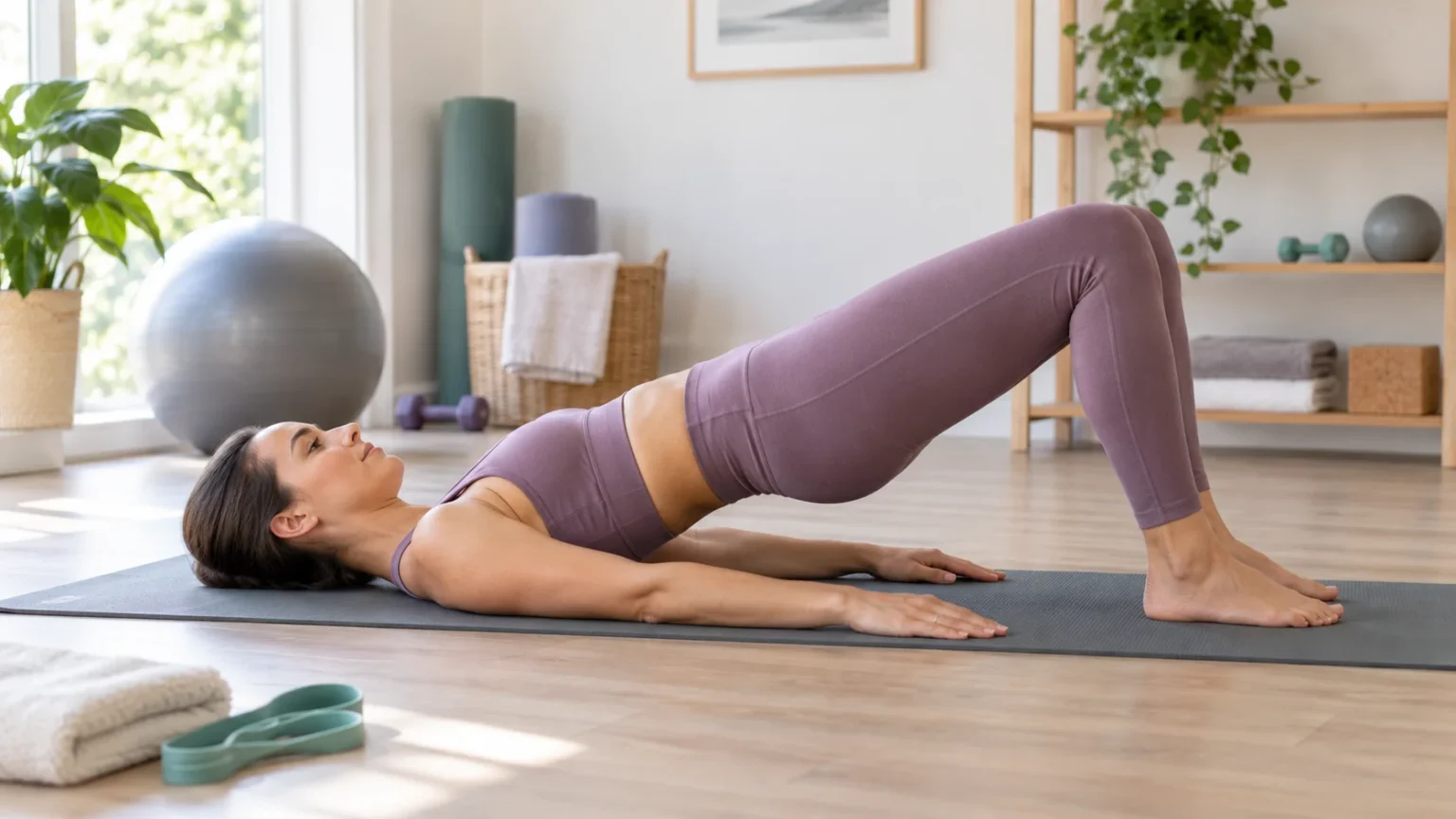
The bridge exercise strengthens the glutes and hips while giving you an opportunity to coordinate breathing with pelvic floor movement. Lie on your back with your knees bent and feet comfortably placed on the floor. Exhale gently as you lift your hips, keeping your ribs relaxed and avoiding excessive arching through the lower back.
You can add a light pelvic floor contraction during the lifting phase if strengthening is appropriate for you. Lower your hips slowly while inhaling and allowing the pelvic floor to relax again. The movement should feel smooth, and your glutes should do much of the work rather than relying entirely on abdominal or pelvic tension.
If bridging causes lower back discomfort, reduce the height of the movement and focus on better control. Persistent tightness elsewhere may affect how comfortably you perform pelvic exercises, so understanding issues such as lower back muscle spasms can also be useful when symptoms occur alongside pelvic or hip tension.
Heel Slides for Deep Core Control
Heel slides are a gentle exercise that trains abdominal control without requiring heavy loading through the pelvis. Lie on your back with both knees bent and breathe naturally before slowly sliding one heel away from your body. Keep your pelvis steady and avoid flattening or excessively arching your lower back as the leg moves.
Exhale gently as the heel travels away, allowing your deep abdominal muscles to support the movement without forcefully bracing. Slide the foot back toward the starting position and repeat on the opposite side. If appropriate, a light pelvic floor contraction can accompany the exhale, followed by relaxation when you return.
This exercise is useful because it teaches coordination rather than isolated muscle squeezing. Begin with a short range of motion and gradually extend the leg farther as control improves. Stop if you experience pelvic pressure, bulging, pain, or difficulty maintaining relaxed breathing throughout the movement.
Bird Dog for Pelvic and Core Stability
Bird dog exercises challenge the pelvic floor, deep core, hips, and back muscles to work together during movement. Begin on your hands and knees with your spine comfortable and your shoulders positioned over your hands. Slowly extend one leg behind you while keeping the pelvis level rather than allowing your body to rotate.
When this feels controlled, you can extend the opposite arm at the same time. Exhale gently during the movement and keep the abdominal wall supported without holding your breath. Focus on stability and length rather than lifting the arm or leg as high as possible.
Return slowly to the starting position and alternate sides while maintaining steady breathing. Bird dog can be progressed gradually by increasing hold time rather than rushing into harder variations. If pressure, pelvic pain, or lower back discomfort appears, shorten the movement and prioritize comfortable alignment before adding difficulty.
Squats With Pelvic Floor Coordination
Squats can help integrate pelvic floor function into a movement commonly used in everyday life. Stand with your feet in a comfortable position and lower your hips while allowing your knees to follow the direction of your toes. Inhale as you descend and allow the pelvic floor to soften rather than tightening excessively.
Exhale as you return to standing and let the pelvic floor recoil naturally or add a gentle contraction if strengthening is appropriate. Avoid forcefully gripping your abdomen or holding your breath during the hardest part of the movement. Starting with a shallow squat can make it easier to maintain control and comfortable breathing.
Squats can be adjusted by holding onto a stable surface, reducing depth, or sitting toward a chair. Gradually increase range only when you can move without pain, pelvic heaviness, or pressure. Functional exercises like squats are valuable because they teach the pelvic floor to coordinate with the hips and trunk during real-life movement.
Child’s Pose for Pelvic Floor Relaxation
Child’s pose can encourage relaxation through the hips, lower back, and pelvic floor when the position feels comfortable. Begin on your hands and knees, then move your hips gently toward your heels while allowing your knees to separate. Rest your upper body forward using pillows or cushions if additional support makes the position easier.
Take slow breaths into the sides and back of your ribs rather than forcing your abdomen inward. On each inhale, imagine the pelvic floor becoming softer and less guarded. Avoid actively pushing downward because pelvic floor relaxation should feel like releasing tension rather than straining or bearing down.
This stretch can be particularly helpful after strengthening exercises when you want to finish with relaxation. Stay only as long as the position remains comfortable, and adjust your knees or hips if necessary. People with knee, hip, or pelvic pain may prefer another supported position that allows relaxed breathing without uncomfortable joint pressure.
Common Pelvic Floor Exercise Mistakes
One common mistake is performing pelvic floor contractions with maximum effort every time. Constantly squeezing as hard as possible can create fatigue and may make it difficult to relax the muscles afterward. Gentle, controlled contractions combined with complete relaxation are usually more useful for developing coordination and endurance.
Holding your breath is another frequent problem because it increases pressure through the abdomen and can interfere with smooth pelvic floor function. Continue breathing during contractions, bridges, squats, and core exercises whenever possible. Also avoid relying heavily on your buttocks, inner thighs, or upper abdominal muscles to compensate for poor pelvic floor control.
Another mistake is assuming that every pelvic floor symptom requires more strengthening. Pelvic pain, painful intercourse, urinary hesitancy, constipation, or a constant feeling of muscle tightness can sometimes be associated with an overactive pelvic floor. In these situations, relaxation and professional assessment may be more appropriate than adding large numbers of Kegel exercises.
How Often Should You Do Pelvic Floor Exercises?
Exercise frequency depends on your starting point, symptoms, and the type of training you are doing. Someone practicing relaxation exercises may benefit from brief daily breathing sessions, while strengthening programs often use controlled contractions performed regularly. More exercise is not automatically better because pelvic floor muscles also need enough recovery between challenging sessions.
Start with a manageable routine that allows you to maintain good technique throughout every repetition. A few high-quality contractions, breathing exercises, and functional movements can be more productive than completing long sessions with poor coordination. Increase duration or repetitions gradually when the exercises feel comfortable and you can fully relax afterward.
Consistency generally matters more than intensity when developing pelvic floor function. Improvements can take time because muscles and movement habits adapt gradually rather than overnight. If symptoms worsen, remain unchanged for an extended period, or interfere significantly with daily activities, individualized guidance may help determine whether your routine needs strengthening, relaxation, or another approach.
Conclusion
The best pelvic floor exercises focus on more than simply squeezing the muscles repeatedly. Breathing, Kegels, heel slides, bridges, bird dogs, squats, and relaxation positions can all support pelvic function when selected appropriately. The right combination depends on whether you need strength, endurance, coordination, mobility, or improved muscle relaxation.
Good form is essential during every pelvic floor exercise. Continue breathing, avoid unnecessary gripping through surrounding muscles, and allow the pelvic floor to relax fully between contractions. Progress gradually and pay attention to symptoms rather than assuming that greater intensity will always lead to better results.
Pelvic pain, heaviness, urinary changes, bowel difficulties, or discomfort during exercise deserve individual attention when they persist. A pelvic health professional can assess how your muscles are functioning and help match exercises to your specific needs. Balanced pelvic floor training should ultimately make everyday movement feel more supported and comfortable, not more tense or painful.
FAQs
What is the best pelvic floor exercise?
There is no single best exercise for everyone. Kegels may help weak muscles, while diaphragmatic breathing and relaxation exercises may be more appropriate when the pelvic floor is overly tight or painful.
How long does it take to strengthen the pelvic floor?
Pelvic floor strength usually develops gradually with consistent, well-performed exercise. Some people notice changes within several weeks, while meaningful improvements in strength, endurance, and coordination may require a few months.
Can I do pelvic floor exercises every day?
Gentle breathing and awareness exercises can often be practiced daily. Strengthening frequency should match your ability and symptoms, allowing adequate relaxation and recovery rather than repeatedly exercising fatigued muscles.
Can pelvic floor exercises help bladder control?
Pelvic floor muscle training can support bladder control in some people by improving muscle strength and timing. Correct technique is important, particularly when leakage occurs during coughing, sneezing, exercise, or other pressure-producing activities.
Can pelvic floor exercises make symptoms worse?
Yes, especially when an already tight or overactive pelvic floor is repeatedly strengthened. Stop exercises that increase pain, pressure, urinary difficulty, or tension and consider assessment from a qualified pelvic health professional.