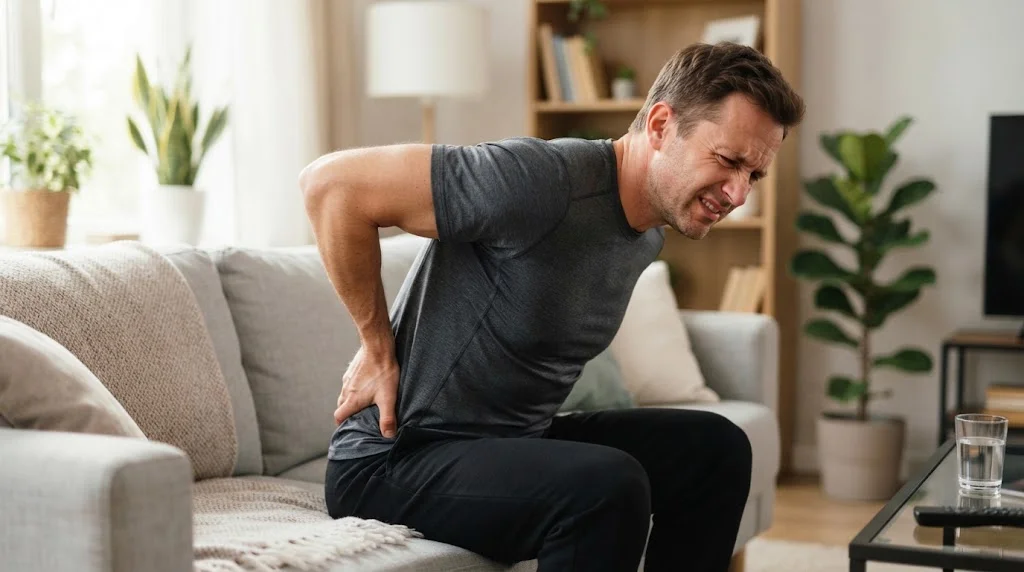

Muscle spasms in the lower back can appear suddenly and make even simple movements feel difficult. The muscles may tighten, twitch, cramp, or feel as though they are locking around the lumbar area. Some episodes last only a few seconds, while others cause soreness and stiffness that can interfere with walking, sitting, sleeping, or everyday activities.
A lower back spasm is often the body’s protective response to irritation, overuse, awkward movement, or muscular fatigue. Although many cases settle with gentle movement and time, recurring or severe spasms can sometimes signal an underlying problem that deserves attention. Understanding possible triggers can help you decide what kind of relief may be appropriate.
This guide explains what lower back muscle spasms feel like, common causes, practical relief options, and ways to reduce the chance of another episode. It also covers warning signs that should not be ignored. The goal is to help you respond calmly while avoiding unnecessary strain or aggressive self-treatment.
What Are Muscle Spasms in the Lower Back?
A muscle spasm is an involuntary tightening or contraction of muscle fibers. In the lower back, spasms may involve muscles surrounding the lumbar spine, pelvis, or nearby hip region. The tightening can happen abruptly and may range from a mild fluttering sensation to intense cramping that temporarily limits your ability to move comfortably.
Some people describe the sensation as their back “grabbing” when they bend, stand, twist, or get out of a chair. Others experience ongoing tightness rather than a sudden painful contraction. The surrounding muscles may remain tender afterward because they have been working hard to stabilize or protect the irritated area.
Back spasms are symptoms rather than a diagnosis by themselves. They can occur after muscular strain, prolonged positioning, physical activity, or irritation involving nearby joints and tissues. Because several conditions may create similar sensations, the pattern, intensity, associated symptoms, and circumstances surrounding the episode all matter when considering the possible cause.
Common Causes of Lower Back Muscle Spasms
Muscle strain is one of the most common reasons for sudden lower back spasms. Lifting something awkwardly, twisting quickly, returning to exercise too aggressively, or performing repetitive physical work can overload muscle fibers. The surrounding muscles may contract protectively after the initial irritation, creating stiffness, soreness, and difficulty moving normally.
Prolonged sitting or remaining in one position can also contribute to muscular fatigue. People who work at desks, drive for long periods, or spend hours in a bent-forward posture may notice their back becoming tight when they finally stand. Limited movement can make certain muscles feel stiff while others become fatigued from maintaining the same position.
Spasms may occasionally be associated with irritation of spinal joints, discs, or nerves rather than a simple muscle problem. The body may tighten surrounding muscles in response to discomfort elsewhere in the lumbar region. That is why persistent spasms, especially when accompanied by neurological symptoms, should not automatically be assumed to be harmless muscle cramps.
What Does a Lower Back Spasm Feel Like?
A lower back spasm may feel like a sudden knot, cramp, twitch, or tightening sensation on one or both sides of the spine. The muscle may become noticeably firm during the episode, and moving in certain directions can temporarily become uncomfortable. Some people feel a sharp grabbing sensation followed by a dull ache afterward.
Spasms can also create a feeling that the back is unstable or difficult to straighten. You may instinctively move more slowly because your body expects another painful contraction. This protective behavior is understandable, although staying completely immobile for long periods can sometimes increase stiffness rather than helping the muscles recover.
The sensation can vary significantly from person to person. Mild episodes may simply feel annoying, while stronger spasms can temporarily interrupt walking, bending, or turning in bed. Paying attention to whether pain stays localized or travels into your leg can provide useful information when deciding whether you need professional evaluation.
Immediate Relief for Lower Back Muscle Spasms
When a spasm occurs, avoid forcing your body through a painful movement. Find a comfortable position and allow the intense contraction to settle before changing position slowly. Gentle breathing can help reduce unnecessary tension because people often hold their breath and tighten additional muscles when sudden back pain catches them by surprise.
Once the strongest discomfort settles, gentle movement may be more helpful than prolonged bed rest. Short walks around the room or comfortable changes in position can keep the area from becoming excessively stiff. The goal is not to stretch aggressively but to introduce movement that feels manageable without repeatedly triggering the spasm.
Some people find temporary comfort from heat applied to tight muscles. A warm shower, heating pad, or warm compress may help the area feel more relaxed, provided the temperature is comfortable and the skin is protected. Heat should be used for comfort rather than as a way to force yourself through movements that remain painful.
Does Stretching Help Lower Back Spasms?
Gentle stretching may help when spasms are related to muscular tightness, but timing and intensity matter. Immediately forcing a painful muscle into a deep stretch can aggravate symptoms rather than relieve them. Wait until the strongest contraction settles and use a comfortable range that creates mild tension without sharp pain.
Simple movements such as gentle knee-to-chest motions, pelvic tilts, or controlled hip mobility may feel helpful for some people. However, there is no single lower back stretch that suits every cause of back pain. If a particular movement repeatedly increases symptoms, stop performing it rather than assuming you need to stretch harder.
Stretching also works best when combined with regular movement and gradual strengthening. Temporary flexibility does not necessarily address the reason a muscle keeps becoming overloaded. Building strength around the trunk and hips can improve your ability to tolerate everyday activities without depending on stretching as the only form of relief.
Heat, Cold, and Other At-Home Relief Options
Heat is commonly used when the lower back feels tight, stiff, or crampy. Warmth may make muscles feel more comfortable and can make gentle movement easier. Apply heat for a limited period, protect your skin from excessive temperatures, and stop if the area becomes irritated or the treatment makes your symptoms feel worse.
Some people prefer a cold pack after a sudden strain, particularly when the area feels irritated after activity. Cold can temporarily reduce sensation and provide comfort, although personal preference varies. Wrap the pack rather than placing ice directly against the skin, and avoid prolonged exposure that could irritate or damage the skin.
Other noninvasive approaches are sometimes used for temporary symptom management. For example, people considering electrical stimulation may want to understand TENS for muscle relaxation before adding it to their routine. These options may help with comfort for some individuals, but they should not replace evaluation when symptoms are severe, persistent, or associated with warning signs.
Can Dehydration Cause Lower Back Muscle Spasms?
Hydration supports normal muscle function, and significant fluid loss can contribute to cramping in some situations. This may be more relevant after prolonged exercise, heavy sweating, hot weather, vomiting, or diarrhea. However, lower back spasms should not automatically be blamed on dehydration simply because drinking water is an easy solution.
Electrolytes such as sodium, potassium, magnesium, and calcium are involved in muscle and nerve function. Major imbalances may contribute to cramping or weakness, but routine back spasms are not always caused by electrolyte deficiency. Taking large amounts of supplements without knowing whether you are deficient is usually unnecessary and can sometimes create other problems.
A practical approach is to maintain regular fluid intake and replace fluids appropriately after strenuous activity or heavy sweating. If spasms occur repeatedly despite normal hydration, consider other factors such as training load, posture, muscle fatigue, sleep, or underlying back problems. Recurrent episodes deserve a broader look rather than focusing on one possible cause.
Can Stress Trigger Lower Back Spasms?
Stress can influence muscle tension throughout the body, including the neck, shoulders, and lower back. During stressful periods, some people unconsciously brace their muscles for long stretches of time. This sustained tension may contribute to fatigue, stiffness, or discomfort, particularly when combined with prolonged sitting and limited physical activity.
Stress can also change breathing patterns and sleep quality, which may affect how sensitive the body feels to discomfort. Poor sleep can reduce recovery, while shallow breathing may encourage continued muscular bracing. This does not mean back spasms are imaginary; physical and psychological factors can interact and influence how tension and pain are experienced.
Relaxation strategies may be useful when stress appears to be one contributor. Slow breathing, short walks, regular movement breaks, and comfortable physical activity may reduce unnecessary tension. However, severe or recurrent spasms should still be assessed based on physical symptoms rather than assuming stress is the entire explanation.
How to Prevent Lower Back Muscle Spasms
Regular strength training can help your back and surrounding muscles tolerate daily demands more effectively. Exercises for the core, glutes, hips, and legs can support the lumbar region during lifting, carrying, and bending. Start with manageable resistance and gradually increase difficulty rather than suddenly performing heavy or unfamiliar workloads.
Movement habits matter as well. If your job requires long periods of sitting, changing positions frequently can reduce the amount of time your muscles remain in one posture. Standing briefly, walking for a few minutes, or adjusting your seated position may be more realistic than trying to maintain one supposedly perfect posture all day.
When lifting objects, keep the load close to your body and avoid sudden twisting when possible. Prepare for heavier tasks by warming up and increasing activity gradually, especially after a period of inactivity. Good recovery, adequate sleep, regular movement, and sensible workload progression can collectively reduce unnecessary strain on your lower back.
Exercises That May Support Lower Back Strength
Core stability exercises can help develop better control around the spine without requiring repeated heavy bending. Bird dogs, dead bugs, modified planks, and controlled carries are common options when performed comfortably. These movements encourage coordinated trunk control, although the most appropriate exercise depends on your current symptoms and overall fitness level.
Glute and hip strengthening can also reduce the amount of work your lower back has to perform during everyday movement. Bridges, bodyweight squats, and gradual hip-hinge exercises can help build strength through the lower body. Technique should remain controlled, and exercises should be modified when they consistently trigger pain or spasms.
Strength training should generally progress slowly after an acute episode. Begin with exercises and resistance levels that feel manageable, then increase volume gradually as your confidence and tolerance improve. Returning immediately to heavy lifting simply because the spasm has stopped may overload muscles that are still sensitive or fatigued.
How Long Do Lower Back Muscle Spasms Last?
Mild spasms caused by temporary muscular fatigue may settle relatively quickly, sometimes within minutes or hours. Residual tenderness and stiffness can remain for several days even after the sudden cramping has stopped. Recovery time depends on what triggered the spasm, the extent of irritation, your activity level, and your general health.
A strained muscle may take longer to feel normal, particularly if everyday activities continue to aggravate the area. Gradual improvement is usually more reassuring than symptoms that remain unchanged or become progressively worse. You do not necessarily need to be completely pain-free before moving, but activity should remain within a tolerable range.
Repeated episodes lasting for weeks or frequently returning without an obvious reason deserve further attention. Persistent muscle spasms can sometimes reflect an underlying mechanical or neurological problem rather than simple temporary fatigue. A clinician can evaluate your movement, symptoms, and medical history to determine whether additional investigation is appropriate.
When Should You Worry About Lower Back Spasms?
Seek prompt medical attention if lower back spasms occur alongside significant weakness, numbness, or loss of sensation in the legs. Changes in bladder or bowel control or numbness around the groin or saddle area are particularly important warning signs. These symptoms require urgent evaluation because they can sometimes indicate serious nerve compression.
Medical assessment is also appropriate when severe pain follows a major fall, collision, or other significant trauma. Unexplained fever, substantial unexplained weight loss, worsening nighttime pain, or a history of certain serious medical conditions may also justify evaluation. These features do not automatically mean something dangerous is occurring, but they should not be ignored.
You should also consider professional advice when spasms keep returning, interfere substantially with daily life, or fail to improve despite reasonable self-care. A healthcare professional can help distinguish muscular strain from conditions involving joints, discs, or nerves. Getting an accurate assessment can prevent weeks of repeatedly trying treatments that do not address the actual problem.
Conclusion
Muscle spasms in the lower back are often caused by muscular strain, fatigue, prolonged positioning, sudden movements, or irritation around the lumbar region. They may feel like cramping, tightness, grabbing, or temporary locking. Many mild episodes improve with comfortable movement, sensible activity modification, and time.
Relief strategies such as gentle walking, heat, controlled mobility, and gradual stretching may help depending on the cause. Prevention often involves improving trunk and hip strength, changing positions regularly, and progressing physical activity gradually. Avoid aggressive stretching or heavy exercise when your back is actively reacting with strong spasms.
Pay attention to symptoms beyond the muscle spasm itself. Pain accompanied by severe weakness, numbness, bladder or bowel changes, significant trauma, or other concerning symptoms needs medical evaluation. Recurring or persistent spasms also deserve assessment so you can identify the underlying cause rather than repeatedly treating only the temporary muscle tightening.
FAQs
What is the fastest way to relieve lower back muscle spasms?
Start by avoiding movements that trigger severe pain and allow the contraction to settle. Gentle movement, comfortable positioning, and heat may help, but the best approach depends on what caused the spasm.
Can lower back spasms happen from sitting too long?
Yes. Prolonged sitting can contribute to stiffness and muscle fatigue, especially when you remain in the same position for hours. Regular movement breaks and position changes may help reduce tension.
Should I massage a lower back muscle spasm?
Gentle massage may feel relaxing for muscular tightness, but aggressive pressure can sometimes increase soreness. Avoid forcing painful areas, particularly when the cause of severe or persistent back pain is uncertain.
Are lower back spasms a sign of a slipped disc?
Not necessarily. Muscle spasms have many possible causes, including simple strain and fatigue. Disc problems can sometimes cause protective muscle tightening, especially when pain, numbness, tingling, or leg symptoms are also present.
Can lower back muscle spasms go away on their own?
Many mild spasms improve with time, gentle movement, and appropriate activity modification. Seek medical advice when symptoms are severe, repeatedly return, worsen, or occur with numbness, weakness, or bladder and bowel changes.