
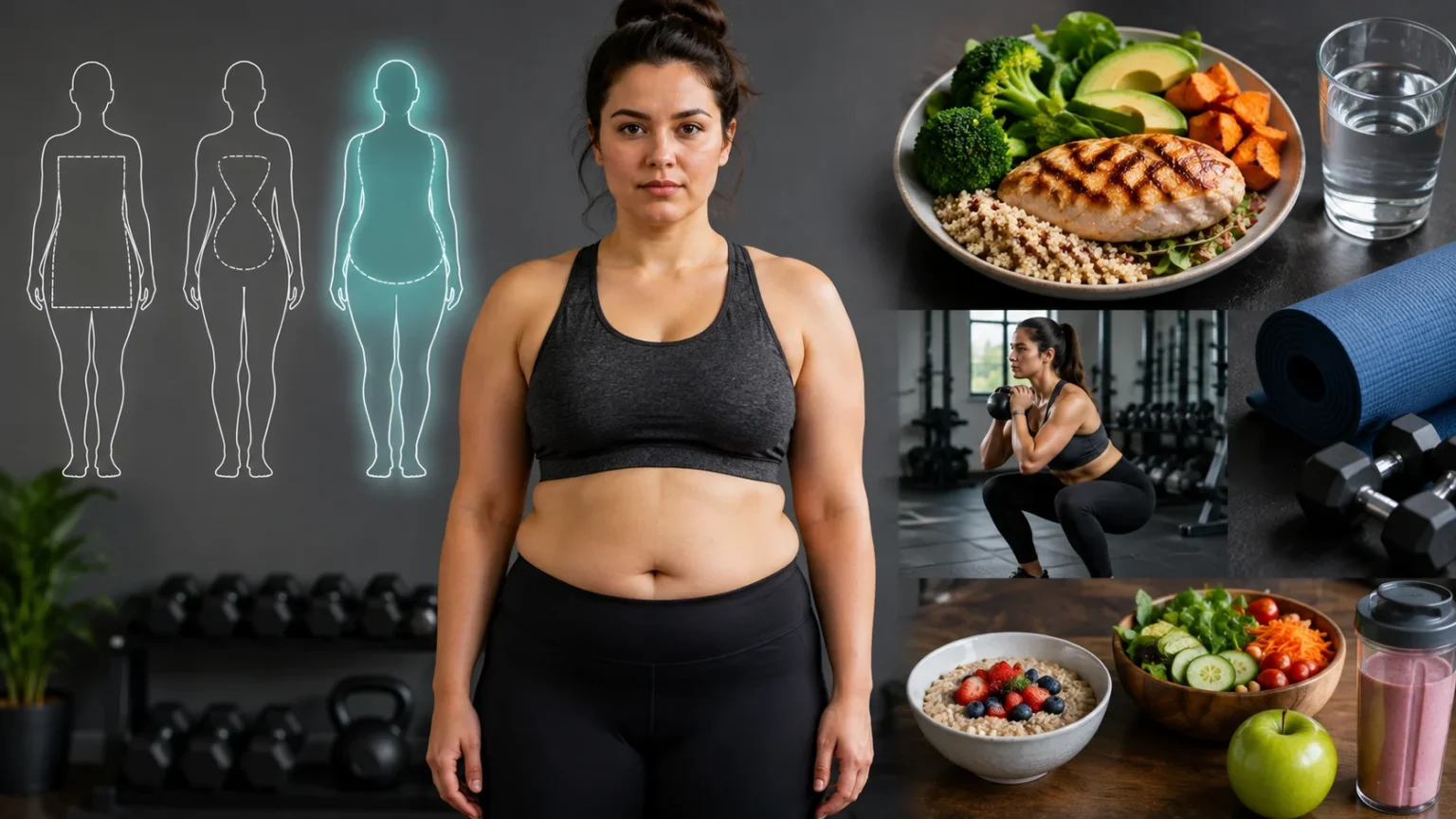

Endomorph Body Type: Traits, Diet & Workout Tips
The term endomorph body type is commonly used to describe people who tend to have a softer, rounder body shape, wider hips or waist, and an easier time gaining body weight. It comes from the traditional somatotype system, which divides body shapes into endomorph, mesomorph, and ectomorph categories. Many fitness programs still use these labels because they provide a simple way to discuss differences in body composition and appearance. However, modern exercise and nutrition science does not consider somatotypes fixed biological categories that determine metabolism or fitness potential. Genetics, age, hormones, activity level, sleep, diet, and lifestyle all influence how someone looks and responds to training. For that reason, an endomorph label should be treated as a description rather than a limitation.
People who identify with endomorph traits often say they gain weight easily and have more difficulty becoming visibly lean. Some may naturally carry more body fat around the abdomen, hips, thighs, or lower body, although fat distribution differs considerably between individuals. They may also have a larger skeletal frame, thicker limbs, or a naturally sturdy appearance. These characteristics do not mean that fat loss is impossible or that someone has a permanently “slow metabolism.” Body composition can change substantially when nutrition, resistance training, cardiovascular exercise, and everyday activity are managed consistently. The most effective strategy is therefore based on individual energy needs and habits rather than body-type rules alone.
The popular “endomorph diet” is often described as a lower-carbohydrate, higher-protein eating plan, but there is no universal macronutrient ratio that every person with an endomorph-shaped body needs to follow. Fat loss still depends largely on maintaining an appropriate calorie deficit over time, while muscle growth requires sufficient protein, resistance training, recovery, and adequate energy. Carbohydrates can remain part of a healthy diet and may support exercise performance, especially during demanding strength or endurance sessions. The quality and quantity of food generally matter more than whether someone completely eliminates a particular macronutrient. A sustainable eating pattern should also include vegetables, fruits, whole grains, lean proteins, healthy fats, and fiber-rich foods. Restrictive diets are rarely necessary simply because someone considers themselves an endomorph.
Exercise recommendations for endomorphs often combine strength training with regular cardiovascular activity. This approach can be effective, but not because endomorphs require a completely different type of physiology-based workout. Strength training helps preserve or build muscle, while cardio increases energy expenditure and supports cardiovascular fitness. Daily movement outside formal workouts, including walking, standing, household activity, and active transportation, can also have a substantial effect on total energy expenditure. The best workout plan is one that progressively challenges the body while remaining realistic enough to maintain consistently. Training volume, intensity, recovery, and exercise selection should reflect fitness level rather than a body-type label.
This guide explains endomorph body type traits, diet strategies, calorie and macronutrient considerations, workout recommendations, cardio options, and practical fat-loss tips. It also separates useful fitness advice from common myths surrounding somatotypes and metabolism. If you recognize yourself in the traditional endomorph description, you can still use the concept as a starting point for understanding your preferences and body-composition goals. You simply do not need to assume that your body has a predetermined ability to gain muscle or lose fat. Sustainable progress comes from habits that match your individual physiology, schedule, health, and goals. The goal is not to fight your natural body but to improve fitness, strength, health, and confidence in a realistic way.
What Is an Endomorph Body Type?
The endomorph body type comes from a somatotype system developed in the twentieth century to classify people according to physical characteristics. Within that system, endomorphs were described as having a softer appearance, relatively higher body-fat levels, a broader waist, and a tendency toward a rounder physique. Mesomorphs were characterized as naturally muscular or athletic, while ectomorphs were described as leaner with narrower frames. These categories became popular in bodybuilding, personal training, and fitness magazines because they offered easy-to-understand labels. However, real human bodies rarely fit neatly into one category. Many people display a combination of characteristics traditionally associated with two or even all three somatotypes.
Someone described as an endomorph may have a naturally wider pelvis, thicker torso, or greater tendency to store visible body fat. Weight may appear to accumulate easily when calorie intake exceeds energy needs, particularly during periods of low physical activity. Some people with these characteristics also gain muscle relatively well when they begin resistance training. This combination can create a strong, powerful appearance even when body-fat levels are higher than the person prefers. Genetics influence skeletal structure, muscle distribution, appetite, and where the body tends to store fat. None of these characteristics means a person is biologically destined to remain at one body weight.
It is also important to distinguish body shape from metabolic health. Someone with a larger or rounder build can have healthy blood pressure, blood sugar, cholesterol, and physical fitness, while a naturally thin person can still have metabolic risk factors. Appearance alone cannot reveal cardiovascular fitness, insulin sensitivity, muscle strength, or overall health. This is one reason modern health professionals generally avoid making recommendations based solely on somatotype labels. Measurements such as waist circumference, body composition, blood tests, fitness level, eating patterns, and medical history provide more useful information. A body-type description can be visually convenient, but it is not a medical diagnosis.
The term endomorph may still be useful when people use it loosely rather than scientifically. For example, someone might say they have an endomorph build because they have a naturally broad frame and tend to gain fat quickly when their eating habits become less structured. That observation can encourage them to pay closer attention to portion sizes, activity, and resistance training. The problem begins when the label becomes an excuse for extreme dieting or the belief that meaningful change is impossible. Metabolism is influenced by body size, muscle mass, hormones, movement, food intake, age, and many other variables. It cannot accurately be predicted from body shape alone.
A practical approach is to use the endomorph concept only as a starting description. If you tend to carry more body fat, your nutrition plan may need enough structure to prevent consistently eating above your energy requirements. If you also build muscle reasonably well, resistance training can become a major advantage when improving body composition. You may prefer certain forms of exercise or notice that your appetite responds differently to different foods. Those observations are valuable because they are based on your actual experience rather than a theoretical category. Individual data, habits, and results should always guide decisions more strongly than the word endomorph.
Common Endomorph Body Type Traits
Traditional endomorph traits include a broader torso, wider hips, thicker limbs, and a naturally softer body composition. Some people may have less visible muscle definition when their body-fat percentage is higher, even if they possess substantial muscle underneath. Weight can also appear to increase quickly during periods of overeating because larger calorie surpluses encourage fat storage regardless of body type. People with shorter limbs or a wider skeletal frame may look more compact than those with narrower frames. These characteristics can influence clothing fit and visual proportions but do not indicate fitness level on their own. Two people with similar body shapes can have very different strength, endurance, and health profiles.
A commonly reported endomorph trait is gaining weight relatively easily. This may reflect appetite, food preferences, reduced daily movement, genetic tendencies, energy expenditure, or a combination of factors rather than an unusually damaged metabolism. Some people naturally move less throughout the day when they eat more, while others spontaneously increase activity without noticing it. Small differences in everyday movement can accumulate into meaningful differences in calorie expenditure. Appetite regulation can also vary substantially between individuals. Understanding these patterns may be more useful than simply saying that an endomorph gains weight easily because of body type.
Fat distribution is another characteristic often associated with the endomorph description. Some people carry proportionally more fat around the abdomen and waist, while others store more around the hips, buttocks, and thighs. Hormones, biological sex, age, genetics, and overall body-fat percentage influence these patterns. Where the body loses fat first during dieting is also largely genetically determined. Performing exercises for one body part cannot selectively force the body to burn fat from that exact location. Abdominal exercises can strengthen the abdominal muscles, but losing belly fat still requires reducing overall body fat.
Muscle-building potential can be a positive characteristic for many people who consider themselves endomorphs. A larger frame and higher starting body mass may allow some beginners to move relatively heavy loads once technique develops. Consistent resistance training can improve strength, preserve lean tissue during fat loss, and gradually create greater muscle definition. Muscle gain should not be confused with rapid scale weight gain, however, because changes in water, glycogen, food intake, and fat can also affect body weight. Progress photos, strength records, measurements, and how clothing fits can provide useful information alongside the scale. Body recomposition often becomes clearer when multiple measurements are considered together.
No checklist can reliably determine whether someone is a “true” endomorph because there is no clinical test for the category. People often change categories visually when they gain or lose substantial amounts of fat and muscle, which demonstrates one limitation of the model. A previously lean person may appear more endomorphic after years of weight gain, while someone who loses fat and develops muscle may appear increasingly mesomorphic. Skeletal proportions remain relatively stable, but body composition can change significantly. This flexibility is encouraging because it means appearance is not permanently determined by a somatotype label. Training and nutrition can meaningfully change how the body performs and looks.
Is the Endomorph Body Type Scientifically Accurate?
The traditional somatotype system is not considered a precise modern method for prescribing diets or exercise programs. Human physiology is far more complex than three body categories, and research does not support the idea that everyone can be assigned a fixed metabolic type based on appearance. Metabolic rate depends heavily on factors such as body size, lean mass, age, sex, genetics, hormones, and daily activity. Food intake and exercise habits also strongly influence body composition over time. Someone who appears endomorphic may have a completely normal metabolic rate for their body size. The label therefore should not be interpreted as evidence of a metabolic disorder.
One of the most misleading claims surrounding endomorphs is that they cannot tolerate carbohydrates. Carbohydrate tolerance varies according to total energy intake, activity level, insulin sensitivity, food quality, meal composition, and individual health. An active person with a broad, endomorph-like build may use substantial amounts of carbohydrate effectively during training. Someone with insulin resistance may need more deliberate carbohydrate planning, but that condition should be assessed medically rather than assumed from body shape. Whole grains, legumes, fruits, vegetables, and dairy products can provide valuable nutrients and fiber. Eliminating them solely because of a somatotype category is generally unnecessary.
Another misconception is that endomorphs automatically have extremely slow metabolisms. Larger people often have higher absolute energy requirements than smaller people because maintaining and moving a bigger body requires more energy. The challenge may instead involve appetite, calorie density, portion sizes, reduced spontaneous movement, or underestimating food intake. Metabolism can also adapt somewhat during prolonged dieting, which happens across body types rather than only in endomorphs. As body weight decreases, energy requirements usually decline because the body has less mass to maintain. This is normal physiology and does not prove that dieting has permanently damaged metabolism.
Genetics still matter even though the strict somatotype system is limited. People inherit tendencies related to height, skeletal proportions, appetite regulation, muscle-fiber characteristics, fat distribution, and many other traits. These differences help explain why two people following similar programs may not achieve identical results. Genetics influence the range of outcomes, but behavior still affects where someone falls within that range. Someone may never have the same narrow frame as another person, yet they can still become leaner, stronger, and more aerobically fit. Fitness goals are more productive when they focus on improving the individual’s own baseline.
The modern way to use the endomorph idea is therefore flexible rather than deterministic. You might recognize that you tend to gain fat easily, prefer resistance training, have a broader frame, and need more structure around food portions. Those observations can guide practical decisions without claiming that your metabolism belongs to a separate biological category. Track how your body responds to calories, protein, training, sleep, and daily movement. Adjust the variables that produce measurable results. Your own response to a well-designed plan provides more useful information than any online quiz claiming to identify your permanent body type.
Best Diet for an Endomorph Body Type
An effective endomorph diet should begin with overall calorie intake rather than a rigid list of forbidden foods. If fat loss is the primary goal, the body generally needs to use more energy than it receives over time. A moderate calorie deficit is usually easier to maintain than an aggressive restriction that creates constant hunger and fatigue. Extremely low-calorie plans can also reduce training performance and make adherence more difficult. The exact calorie target varies according to body size, age, activity, goals, and individual response. Adjusting intake gradually according to measured progress is often more practical than selecting a number based only on body type.
Protein should be a major part of a fat-loss or muscle-building eating plan because it supports muscle repair and can help with fullness. Useful protein sources include poultry, fish, eggs, lean meats, Greek yogurt, cottage cheese, tofu, tempeh, legumes, and other foods that fit personal preferences. Spreading protein across meals can make it easier to reach daily needs and support training recovery. People dieting for fat loss often benefit from prioritizing protein because preserving muscle becomes especially important when calories are reduced. Protein does not need to dominate every meal, however. A balanced plate should also provide fiber-rich carbohydrates, vegetables, and appropriate sources of dietary fat.
High-fiber foods can be particularly useful for people who struggle with appetite. Vegetables, fruits, beans, lentils, whole grains, potatoes, and seeds provide volume and nutrients while often being more filling than highly processed snack foods. Fiber slows digestion and can help meals feel more satisfying, which may make a calorie deficit easier to maintain. Water-rich foods such as soups, fruits, salads, and vegetables can provide additional meal volume. This does not mean processed foods must be permanently eliminated. A flexible diet can include enjoyable foods while keeping most intake centered around nutrient-dense options.
Healthy fats also deserve a place in an endomorph diet. Olive oil, avocado, nuts, seeds, oily fish, and other unsaturated-fat sources provide essential fatty acids and help support nutrient absorption. Because fat is calorie-dense, portion awareness can be useful when fat loss is the goal. A handful of nuts or several tablespoons of oil can add substantial calories even though the foods themselves are nutritious. Measuring certain calorie-dense ingredients temporarily can help people learn realistic portions. The goal is not to fear dietary fat but to include it intentionally within total energy needs.
Meal timing is less important than total daily intake for most people, although timing can affect hunger and workout performance. Some individuals prefer three structured meals, while others feel better with smaller meals and planned snacks. Intermittent fasting can work for people who find it convenient, but it does not provide a unique fat-loss advantage when calorie intake is matched. Eating protein and carbohydrates around training may support performance and recovery, particularly during demanding sessions. The best meal schedule is one that controls hunger and fits daily life. Consistency usually matters more than following a body-type-specific eating clock.
Carbs, Protein and Calories for Endomorphs
Carbohydrates often receive unnecessary blame in discussions about endomorph weight gain. Carbohydrate-containing foods provide glucose that can support the brain, muscles, and high-intensity exercise. Whole-food carbohydrate sources also supply fiber, vitamins, minerals, and other useful nutrients. Weight gain occurs when total energy intake remains above energy expenditure over time, regardless of whether those excess calories come primarily from carbohydrates or fats. Some people find lower-carbohydrate diets easier because they naturally reduce certain high-calorie foods. Others perform and feel better with moderate or relatively high carbohydrate intake.
The amount of carbohydrate that works best can depend on training volume. Someone completing challenging strength sessions, interval training, running, cycling, or sports may benefit from more carbohydrates than a sedentary person. Carbohydrates help replenish muscle glycogen used during demanding exercise. Low carbohydrate intake can sometimes reduce training intensity, especially when volume is high. A useful strategy is to obtain most carbohydrates from minimally processed foods while adjusting portions to goals. Rice, oats, potatoes, fruit, beans, whole-grain bread, and similar foods can all fit an endomorph fat-loss plan.
Protein requirements should be considered according to body size, training, and goals rather than somatotype. Resistance-trained people generally need more protein than sedentary individuals, particularly when trying to preserve muscle during a calorie deficit. A protein-containing meal can also be more filling than one dominated by refined carbohydrate or fat. However, excessive protein intake does not automatically accelerate fat loss once nutritional needs are already met. Balance remains important because carbohydrates and fats serve valuable physiological roles. People with kidney disease or other relevant medical conditions should follow individualized medical nutrition advice rather than generic high-protein recommendations.
Calories remain the central variable for body-weight change, but calorie counting is not the only way to manage intake. Some people prefer tracking food temporarily, while others succeed using portion guidelines, meal templates, or consistent food choices. Protein-rich foods and vegetables can occupy a large portion of meals, with carbohydrates and fats adjusted according to activity and hunger. Restaurant meals, sugary drinks, alcohol, sauces, and snacks can add significant energy without producing much fullness. Becoming aware of these sources can improve results without requiring obsessive tracking. A sustainable system should provide enough structure to guide intake while remaining flexible enough for normal life.
Progress should be evaluated over several weeks rather than from one day’s scale reading. Body weight fluctuates because of water, sodium, carbohydrate intake, menstrual cycles, bowel contents, and changes in glycogen. A person can be losing body fat even when the scale temporarily increases. Weekly weight averages, waist measurements, photos, strength performance, and clothing fit can provide a more reliable picture. If progress remains stalled for several weeks, calorie intake or activity may need adjustment. Small changes are usually preferable to suddenly cutting large amounts of food.
Best Workout Plan for an Endomorph
Strength training should usually form the foundation of an endomorph workout plan when the goal is improving body composition. Resistance exercise helps build or preserve muscle, improves strength, and can make changes in fat loss more visually noticeable. Compound movements such as squats, presses, rows, hinges, lunges, and pulldowns can train multiple muscle groups efficiently. Machines, free weights, cables, resistance bands, and bodyweight exercises can all be effective when appropriately challenging. Beginners do not need complicated programs with dozens of exercises. A consistent full-body or upper-lower routine can produce substantial progress when resistance increases gradually.
Progressive overload is one of the most important training principles. Muscles adapt when they are repeatedly challenged with sufficient resistance and given time to recover. Over time, this can involve increasing weight, repetitions, sets, range of motion, or exercise difficulty. Training should be challenging enough to stimulate adaptation without turning every session into an exhausting test. Good technique becomes particularly important as loads increase. Keeping records of exercises, weights, and repetitions makes progress easier to evaluate objectively.
Training frequency depends on experience and schedule rather than endomorph status. Many people can make excellent progress with three or four resistance-training sessions per week. Someone who enjoys training more frequently may use a well-designed split that distributes volume across several days. Beginners often benefit from simpler routines because they allow repeated practice of major movement patterns. Rest days help muscles, joints, and the nervous system recover. Training seven days a week is not necessary for fat loss and may actually reduce performance if recovery becomes inadequate.
Cardiovascular exercise can complement strength training by improving heart health and increasing energy expenditure. Walking, cycling, swimming, jogging, rowing, and using cardio machines are all reasonable choices. Someone beginning at a lower fitness level may benefit from low-impact activities because they create less stress on the joints. Cardio does not need to be punishing to support fat loss. Moderate sessions performed consistently can accumulate a meaningful amount of weekly activity without interfering with resistance training.
The best endomorph workout is ultimately the one that can be performed consistently for months rather than days. A dramatic two-week program is far less useful than a manageable routine that gradually becomes more challenging. Enjoyment matters because people are more likely to repeat activities they tolerate or genuinely like. Strength training, cardio, and daily walking can be combined in many different ways. Results come from repeated training, appropriate nutrition, and recovery rather than from a special “fat-burning” workout designed exclusively for endomorphs.
Cardio and Daily Activity for Fat Loss
Cardio can be particularly useful when someone wants to increase calorie expenditure without reducing food intake excessively. Moderate-intensity exercise such as brisk walking or cycling can be performed regularly and generally creates less fatigue than frequent high-intensity interval training. Longer easy sessions can also improve aerobic fitness and provide mental-health benefits. People sometimes assume that endomorphs must perform intense cardio every day, but this is unnecessary for most goals. Excessive cardio can become difficult to recover from when combined with heavy resistance training and a calorie deficit. A balanced weekly schedule is usually more sustainable.
High-intensity interval training can still have a place in a program. Short periods of demanding effort alternated with recovery can improve cardiovascular fitness efficiently and may appeal to people who prefer shorter workouts. However, HIIT is physically demanding and should not be treated as mandatory for fat loss. Beginners may need time to develop movement quality and aerobic conditioning before performing repeated high-intensity sessions. One or two sessions per week can be plenty for many recreational exercisers. More intense exercise is not automatically better when it reduces recovery or consistency.
Walking is often underestimated because it does not feel like a dramatic workout. Increasing daily steps can substantially raise weekly energy expenditure while creating relatively little fatigue. Walking can also be distributed throughout the day through short breaks, parking farther away, taking stairs, or walking after meals. This form of movement contributes to non-exercise activity thermogenesis, often shortened to NEAT. Differences in everyday activity can meaningfully influence total calorie expenditure. Someone who trains for an hour but sits for the remaining day may expend less energy than expected.
Daily activity can also help prevent the unconscious reduction in movement that sometimes occurs during dieting. When calorie intake falls, some people naturally become less energetic and move less without realizing it. This can partially offset the calorie deficit they intended to create. Maintaining a regular walking routine or step target can help stabilize activity. The target does not need to be an arbitrary number that causes stress. A practical goal can be based on current activity and increased gradually.
Cardio should support rather than dominate an endomorph fitness plan. If the goal includes a stronger, more defined physique, resistance training remains essential for preserving and building muscle. Cardio improves fitness and contributes to energy expenditure, while nutrition determines whether overall intake supports fat loss. Combining all three creates a more flexible approach than relying on one tool alone. Someone who dislikes running can walk, cycle, swim, dance, or use another activity. The most effective cardio is the type that can be repeated consistently without causing unnecessary pain or burnout.
How to Lose Fat and Build Muscle as an Endomorph
Body recomposition means losing fat while maintaining or gaining muscle, and it can be realistic for many people, particularly beginners or those returning to training. Resistance exercise provides the stimulus for muscle development, while adequate protein supports repair and adaptation. A moderate calorie deficit can allow fat loss without making training unnecessarily difficult. Very aggressive dieting may produce faster scale changes but can increase fatigue and make muscle retention harder. Progress may appear slower during recomposition because muscle and fat changes can partially offset one another on the scale. Measurements and strength improvements therefore become especially useful.
Beginners often have an advantage because their muscles respond strongly to new resistance training. Someone with an endomorph-like build may be able to improve strength rapidly while also reducing body fat through structured nutrition. The key is resisting the temptation to judge progress only by body weight. A waist measurement that decreases while major lifts improve can indicate meaningful changes even if scale weight moves slowly. Progress photos taken under similar conditions can reveal additional differences. Performance, energy levels, and fitness should also be considered.
Sleep has a major influence on the process. Inadequate sleep can increase hunger, reduce training quality, affect mood, and make consistent food choices harder. Adults differ in their exact needs, but regularly sacrificing sleep to add more workouts is rarely a productive strategy. Recovery also includes managing training stress, taking easier days, and eating enough nutrients. Muscles do not grow during the workout itself; training provides the stimulus while adaptation occurs afterward. A complete fitness plan therefore includes rest rather than treating recovery as wasted time.
Stress management can also influence adherence. High stress may increase emotional eating, disturb sleep, reduce motivation, or make meal preparation difficult. None of these effects means stress magically creates body fat independent of energy balance, but it can influence the behaviors that affect intake and activity. Simple routines such as walking, scheduling workouts, preparing staple foods, or maintaining regular sleep times can reduce decision fatigue. People should choose habits that fit their actual lives rather than copying an influencer’s schedule. Consistency becomes easier when the plan requires fewer daily acts of willpower.
Patience is particularly important because visible changes in body composition happen gradually. Rapid transformations promoted online may involve extreme dieting, unusual genetics, performance-enhancing drugs, editing, or carefully controlled photography. Sustainable fat loss rarely follows a perfectly straight line. Plateaus and temporary fluctuations are normal. An effective approach is to maintain the plan long enough to collect meaningful data and then adjust one or two variables when necessary.
Common Endomorph Diet and Workout Mistakes
One common mistake is cutting carbohydrates too aggressively simply because an endomorph diet is supposed to be low in carbs. This can make training feel harder and may remove foods that provide fiber, vitamins, minerals, and enjoyment. A lower-carbohydrate approach can work if someone genuinely prefers it, but it is not mandatory. The important factor is whether the overall diet supports calorie goals, protein intake, health, and adherence. A person who loves rice, fruit, potatoes, or oats does not need to eliminate them to become leaner. Portion control is often more practical than total avoidance.
Another mistake is relying on cardio while ignoring resistance training. Long cardio sessions can burn calories, but dieting without resistance exercise increases the risk of losing muscle along with fat. Maintaining muscle helps preserve strength and creates a firmer appearance as body fat decreases. Strength training also provides measurable goals that are independent of the scale. Someone can celebrate adding repetitions or lifting heavier even during weeks when body weight changes very little. This makes the overall process more rewarding and performance-focused.
People also frequently underestimate calorie intake from foods considered healthy. Nut butters, nuts, oils, smoothies, granola, avocado, and restaurant meals can contain substantial calories despite providing useful nutrients. These foods do not need to be avoided, but portions can matter when fat loss stalls. Liquid calories may be especially easy to consume quickly because they often provide less fullness than solid foods. Tracking intake temporarily can reveal patterns that are difficult to recognize from memory. The goal is information rather than punishment.
Trying to lose weight as quickly as possible creates another common problem. Very restrictive diets can cause hunger, fatigue, reduced exercise performance, and a strong desire to overeat. Some people then move repeatedly between strict dieting and uncontrolled eating, creating an exhausting cycle. A smaller calorie deficit may produce slower weekly loss but can be easier to maintain over many months. Maintaining muscle and developing sustainable habits should matter as much as seeing the lowest possible scale number. Long-term success usually depends on what can be continued.
The final mistake is allowing the endomorph label to become an identity that limits expectations. Saying “I am an endomorph, so I cannot lose weight” can discourage experimentation with strategies that might work very well. Body shape may influence aesthetic goals, but it does not determine every outcome. Measure what happens when nutrition becomes consistent, strength increases, daily movement improves, and sleep is prioritized. Your actual results are more valuable than predictions based on a body-type chart. Use labels as descriptions when helpful, but do not allow them to define your potential.
Frequently Asked Questions About the Endomorph Body Type
What is an endomorph body type?
An endomorph is traditionally described as someone with a broader, softer physique who may carry relatively more body fat and gain weight easily. The term is a descriptive fitness concept rather than a medically recognized metabolic category.
What should an endomorph eat to lose weight?
A practical fat-loss diet should prioritize an appropriate calorie deficit, adequate protein, vegetables, fiber-rich carbohydrates, and healthy fats. There is no scientific requirement for every endomorph to follow an extremely low-carbohydrate diet.
What is the best workout for an endomorph?
A combination of progressive resistance training, regular cardiovascular exercise, and consistent daily movement works well for improving body composition. Three or four strength sessions per week can be an effective starting point for many people.
Can endomorphs become lean?
Yes, people with an endomorph-like body shape can reduce body fat and become substantially leaner through consistent nutrition and exercise. Genetics influence body shape and fat distribution, but they do not make meaningful fat loss impossible.
Do endomorphs have a slow metabolism?
Not necessarily. Metabolic rate is affected by body size, lean mass, age, hormones, genetics, and activity, so a person’s appearance alone cannot determine whether their metabolism is unusually slow.