
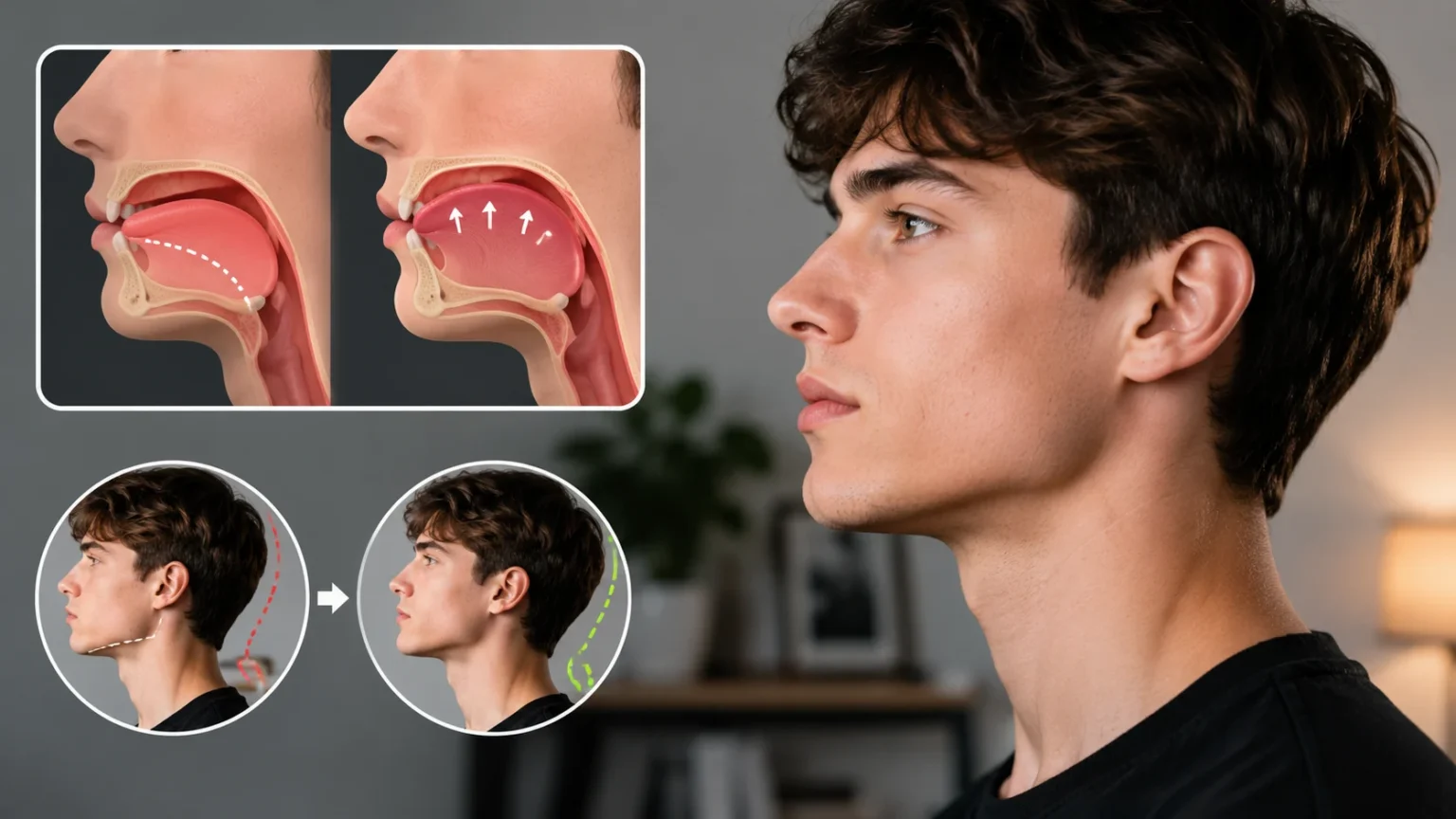

What Is Mewing? How It Works & Does It Really Help?
Mewing is a tongue-posture technique that has become widely discussed on TikTok, YouTube, Instagram, and other social platforms. Supporters claim that resting the tongue against the roof of the mouth can create a sharper jawline, improve facial symmetry, straighten teeth, and even change the shape of the face. The idea sounds appealing because it promises noticeable cosmetic changes without braces, surgery, or expensive treatments. However, many of the dramatic before-and-after claims circulating online are not supported by reliable clinical evidence. Understanding what mewing actually does is important before treating it as a facial-reshaping method.
The concept of mewing is associated with British orthodontist John Mew and later his son Mike Mew, whose ideas emphasize oral posture and facial growth. Proper tongue posture can certainly matter for functions such as swallowing, speaking, breathing, and normal oral development. However, that does not mean consciously pressing the tongue against the palate can dramatically remodel an adult jaw. Current guidance from orthodontic experts states that there is no credible evidence showing that mewing alone can reliably reshape facial bones or replace orthodontic treatment.
What Is Mewing?
Mewing generally refers to intentionally resting most of the tongue against the roof of the mouth while keeping the lips closed and the teeth lightly together or close to their natural resting position. People practicing the technique often focus on maintaining this posture throughout the day rather than performing a short exercise. The goal promoted online is usually to encourage upward tongue pressure against the palate. Supporters believe this pressure can influence the upper jaw, improve jawline definition, and encourage a more attractive facial profile. These claims have helped transform a niche orthodontic theory into a widespread online appearance trend.
The name “mewing” comes from John Mew, who developed an orthodontic philosophy known as orthotropics. His approach focused heavily on facial growth, oral posture, tongue positioning, and environmental factors that he believed influenced jaw development. The technique later became popular online when users began sharing facial transformations supposedly resulting from maintaining a particular tongue posture. Social media gradually shifted the discussion away from functional orthodontics and toward cosmetic goals such as achieving a more defined jawline. Today, many people discover mewing through appearance-focused content rather than through dentistry or speech therapy.
The basic idea behind mewing is that sustained tongue pressure could influence the bones and muscles surrounding the mouth. The tongue naturally rests somewhere inside the oral cavity, and its position can influence swallowing, speech, and dental forces. During childhood, oral habits such as prolonged thumb sucking, abnormal swallowing, or persistent mouth breathing can contribute to dental and facial-development issues in some people. This biological reality makes the theory behind mewing sound plausible at first. However, natural developmental influences are very different from claiming that deliberate tongue pressure can substantially reshape a fully developed adult skull.
Another reason mewing seems convincing is that changing tongue and head posture can temporarily alter how the jaw looks. Lifting the tongue toward the palate can tighten tissues beneath the chin, while improving neck posture may make the jawline appear more prominent in photographs. Changes in camera angle, lighting, body fat, facial hair, weight, and head positioning can exaggerate these differences. A sharper-looking photograph therefore does not necessarily represent permanent skeletal change. Before-and-after pictures without standardized imaging cannot reliably prove that facial bones have been remodeled.
Professional orthodontic organizations remain skeptical of claims that mewing can replace established treatments. The American Association of Orthodontists states that facial structure depends on a complex interaction of genetics, bone growth, muscles, teeth, and development. Simply changing tongue placement has not been shown to reliably straighten teeth or reshape the jaw. Cleveland Clinic similarly notes that research does not support the major cosmetic and orthodontic claims made for mewing.
How Does Mewing Work?
The typical mewing technique begins by placing the tip of the tongue just behind the upper front teeth without pushing directly against them. The middle and back portions of the tongue are then lifted toward the roof of the mouth. The lips remain closed, and the jaw is kept relaxed rather than forcefully clenched. Some people describe creating gentle suction between the tongue and palate to maintain the position. The intention is to make this posture feel natural enough that it can be maintained throughout normal daily activities.
A common online instruction is to say the letter “N” and notice where the tongue naturally touches the palate. The tongue tip is then kept near that region while the rest of the tongue is raised upward. People practicing mewing are often told to breathe through the nose whenever possible. Nasal breathing is a normal and important function, but difficulty breathing through the nose may indicate allergies, nasal obstruction, enlarged tonsils, structural problems, or another condition. Someone who cannot comfortably nasal-breathe should not simply force the mouth closed without understanding why.
Supporters believe the upward force of the tongue encourages the upper jaw to develop differently. In growing children, muscles, breathing patterns, oral habits, teeth, and facial bones do interact during development. However, the amount, direction, timing, and biological response to forces are critical. Orthodontic appliances work because they apply carefully planned forces for specific periods and are monitored by trained professionals. Casual tongue positioning does not offer the same control, predictability, or treatment planning needed to move teeth or reposition skeletal structures safely.
Adults face an additional limitation because most facial skeletal growth has already occurred. Adult bones can remodel gradually throughout life, but that does not mean light tongue pressure can create large changes in jaw width or projection. Orthodontists use braces, clear aligners, expansion devices in selected patients, or jaw surgery depending on the underlying problem. These treatments rely on established biomechanical principles and careful diagnosis. The dramatic adult transformations attributed to mewing online are therefore difficult to explain through tongue posture alone.
What mewing can sometimes change immediately is appearance during the posture itself. Holding the tongue firmly against the palate may pull some soft tissue upward beneath the jaw and reduce the appearance of fullness under the chin. Correcting a forward-head posture can also change how the jawline appears from the side. These effects can look impressive in a photograph without representing permanent bone remodeling. Understanding this distinction helps separate temporary positioning effects from actual orthodontic or skeletal change.
What Does Proper Tongue Posture Look Like?
A relaxed tongue normally rests within the mouth without forcefully pushing on the teeth. The exact resting position can vary somewhat between individuals, but many oral-health professionals consider light contact between the tongue and palate normal. The lips generally remain comfortably closed when nasal breathing is unobstructed, and the jaw muscles should remain relaxed. Healthy oral posture should not require continuous force, pain, or conscious clenching. If maintaining a posture feels exhausting, it may be a sign that the technique is being performed too aggressively.
The tongue performs several jobs beyond resting posture. It helps move food during chewing, initiates swallowing, shapes speech sounds, and contributes to oral sensory function. Abnormal tongue patterns can sometimes be associated with swallowing problems, speech difficulties, open bites, or other dental concerns. In these situations, trained professionals may use orofacial myofunctional therapy to address specific functional patterns. This structured therapy should not be confused with online mewing challenges designed primarily to alter appearance.
Orofacial myofunctional therapy involves exercises and behavioral training targeted to breathing, swallowing, tongue positioning, and facial muscle function. Cleveland Clinic describes it as provider-guided therapy used to help oral and facial muscles move and rest appropriately. The treatment may be helpful in selected functional conditions, but it is individualized rather than based on a universal jawline exercise.
Research on myofunctional treatment in developing children has found some promising outcomes for specific problems, but the overall evidence quality is limited. A systematic review examining early orthodontic management and muscle training found that the available studies were too inconsistent and often too weak to support broad conclusions. This is important because evidence for professionally supervised myofunctional therapy should not automatically be used as evidence for mewing. The two concepts overlap around oral posture but differ greatly in purpose and clinical supervision.
If someone has persistent mouth breathing, tongue-thrust swallowing, speech problems, difficulty chewing, or a suspected abnormal tongue resting position, professional assessment is more useful than copying an online technique. A dentist, orthodontist, speech-language pathologist, ENT specialist, or trained myofunctional therapist may be involved depending on the symptoms. Proper treatment begins by identifying why the pattern exists. Correcting function is more important than forcing the tongue into a position purely for cosmetic reasons.
Does Mewing Really Change Your Jawline?
There is currently no convincing scientific evidence showing that mewing reliably produces a permanently sharper jawline in adults. The American Association of Orthodontists specifically states that scientific evidence does not support claims that mewing can significantly reshape the jaw or correct dental alignment. Facial structure is influenced by genetics, skeletal development, muscle distribution, body composition, teeth, and soft tissues. A single change in tongue posture cannot easily override all of those factors.
Many online transformation photographs are difficult to evaluate scientifically. Users may take the first photo with poor posture, relaxed facial muscles, different lighting, or a downward camera angle and take the second photo while actively mewing. Weight loss, puberty, beard growth, fitness changes, and natural aging can also alter facial appearance over months or years. Without standardized photographs, X-rays, or three-dimensional facial measurements, it is impossible to determine whether the jaw bones actually changed.
Mewing may make the jawline appear temporarily stronger while the tongue is actively held against the palate. Lifting the back of the tongue can tighten some of the tissues under the lower jaw, while keeping the head upright can improve the neck-to-jaw angle. These changes can be visually noticeable without being permanent. Similar differences can occur simply by changing posture before taking a photograph. This temporary appearance effect is likely one reason many people become convinced that the technique is working.
Body composition can influence jawline appearance far more visibly than tongue position in many adults. Fat distribution around the cheeks, neck, and under the chin is determined partly by genetics and overall body composition. Losing excess body fat, when medically appropriate, may make facial contours more noticeable. However, people cannot selectively burn facial fat through mewing or jaw exercises. Someone who is already at a healthy weight may simply have naturally softer facial contours.
For people seeking genuine structural changes, professional options depend on the cause of their concern. Orthodontics can move teeth and correct certain bite problems, while orthognathic surgery can reposition jaw bones when significant skeletal abnormalities are present. Cosmetic procedures can alter soft-tissue contours but have their own risks and limitations. Mewing should not be presented as a medically equivalent alternative to these treatments because there is no comparable evidence supporting predictable structural results.
Can Mewing Change Your Face?
The human face changes naturally throughout childhood, adolescence, and even adulthood. Growth, hormones, weight, dental development, aging, and muscle changes all affect facial appearance. Because many people begin mewing during adolescence, natural facial maturation may occur at the same time they practice the technique. A teenager’s jaw may become more prominent over several years regardless of whether they mew. This makes personal before-and-after stories especially difficult to interpret.
During childhood, oral habits can influence developing teeth and jaws, particularly when abnormal forces are strong and persistent. Thumb sucking, prolonged pacifier use, mouth breathing, and tongue-thrust patterns can be associated with certain bite problems. This shows that oral function can interact with development, but it does not prove that intentionally pressing the tongue upward creates a desirable facial structure. Direction, intensity, duration, age, genetics, airway health, and existing dental relationships all matter.
In adults, substantial facial-bone restructuring generally requires far more controlled forces than normal tongue posture provides. Orthodontic appliances can gradually move teeth because they continuously apply carefully calibrated pressure. Some skeletal problems require surgery because the jaw bones themselves must be repositioned. The AAO emphasizes that proper facial restructuring involves established orthodontic or surgical methods rather than DIY tongue exercises.
Mewing might still influence how a person carries their face. Becoming more aware of posture may encourage someone to stop letting the mouth hang open, hold the head more upright, or reduce a habitual forward-neck posture. Those behavioral changes can create a more confident or balanced appearance. They should be described as posture changes rather than proof of bone growth. Confusing the two can lead people to spend years expecting skeletal results that may never occur.
Facial appearance also depends heavily on features that mewing cannot control. Chin size, cheekbone projection, lower-jaw shape, facial width, fat distribution, and skin elasticity are strongly affected by genetics and development. No tongue exercise can guarantee a particular facial proportion. People concerned about significant facial asymmetry or jaw development should seek orthodontic or medical assessment rather than comparing themselves with heavily curated social-media photographs.
Can Mewing Straighten Teeth?
Mewing should not be considered a method for straightening crooked teeth. Moving teeth safely requires controlled forces applied in specific directions over time. Braces and clear aligners are designed to produce these forces while orthodontists monitor the roots, gums, bite, and surrounding bone. Tongue pressure is far less predictable. Applying pressure unevenly may actually move teeth in unwanted directions rather than improving alignment.
The tongue naturally contacts teeth during speaking and swallowing, and abnormal tongue habits can contribute to certain dental patterns. A persistent tongue thrust, for example, may be associated with an open bite in some individuals. Correcting the functional habit can be part of a broader treatment plan, but existing tooth positions often still require orthodontic correction. Eliminating an abnormal force does not automatically move every tooth into ideal alignment.
Aggressive mewing can create problems when someone deliberately pushes the tongue against the front teeth. Repeated pressure may contribute to spacing, protrusion, or bite changes, particularly in growing individuals. The American Association of Orthodontists warns that uneven tongue pressure may disrupt tooth alignment and potentially create gaps or other problems.
People sometimes delay professional orthodontic care because they hope mewing will fix crowding, overbite, underbite, or an open bite. Waiting may allow certain problems to become more complicated, especially during periods when growth could have been used strategically in treatment. Early orthodontic evaluation does not mean every child needs immediate braces. It allows a professional to determine whether observation, treatment, or another referral is appropriate.
Anyone concerned about crooked teeth should begin with a dental or orthodontic evaluation. Modern orthodontic treatment can include traditional braces, ceramic braces, clear aligners, expanders, or other appliances depending on the diagnosis. The correct treatment depends on whether the problem involves tooth position, jaw size, skeletal relationships, or a combination. Mewing cannot provide that individualized diagnosis or treatment control.
Can Mewing Improve Breathing?
Mewing communities often connect tongue posture with nasal breathing. Breathing through the nose is normal when the nasal airway is clear and can humidify, warm, and filter inhaled air. Keeping the lips comfortably closed may also encourage nasal breathing in people who have developed a harmless habit of mouth breathing. However, persistent mouth breathing can have medical causes that cannot be corrected simply by forcing the tongue upward.
Common reasons for difficulty breathing through the nose include allergies, chronic nasal inflammation, enlarged adenoids or tonsils, a deviated septum, nasal polyps, or structural narrowing. Someone who struggles to breathe when their mouth is closed should not treat this as a lack of discipline. Forcing nasal breathing despite obstruction can create discomfort and potentially interfere with adequate airflow. An ENT specialist or other healthcare professional can evaluate persistent nasal obstruction.
Sleep-related breathing problems require particular caution. Mewing is sometimes promoted online as a treatment for snoring or obstructive sleep apnea, but there is no strong evidence that ordinary mewing can replace established sleep-apnea treatment. Obstructive sleep apnea can increase cardiovascular and daytime-function risks when untreated. People with loud snoring, witnessed breathing pauses, morning headaches, or excessive daytime sleepiness should seek appropriate evaluation rather than relying on tongue posture.
Orofacial myofunctional therapy is sometimes used as part of professionally supervised management for certain breathing or sleep-related conditions. Cleveland Clinic notes that myofunctional therapy may help selected people with conditions such as obstructive sleep apnea by training oral and facial muscles. That should not be confused with assuming that unsupervised mewing is an equivalent treatment.
Improving normal posture and becoming more aware of nasal breathing may still be useful for some people. The key distinction is whether breathing is comfortable and unobstructed. Healthy nasal breathing should not feel like a constant struggle. If someone consistently needs to open their mouth for air, addressing the airway is more important than trying to maintain a perfect-looking tongue position.
Mewing for Adults vs. Teenagers
Age is one of the most important factors when discussing claims about facial change. Children and teenagers still have developing facial bones, teeth, and jaws, making growth modification possible in selected orthodontic situations. Orthodontists sometimes use appliances during growth because skeletal development can be influenced more effectively at certain stages. However, this requires diagnosis, timing, and controlled treatment rather than generalized tongue exercises.
Teenagers are also the group most exposed to mewing content on social media. Appearance-focused videos may promise that changing oral posture will produce a square jaw or dramatically improve attractiveness within months. These messages can oversimplify normal adolescent development and encourage unrealistic comparisons. Faces naturally mature during puberty, and genetics strongly influence jaw prominence. Attributing every change during these years to mewing can create a misleading impression of effectiveness.
Improper pressure may be especially concerning in growing individuals because teeth and dental structures are still changing. Cleveland Clinic and the AAO both warn that forceful or uneven mewing can potentially contribute to misalignment or bite problems. Young people who already have orthodontic appliances should follow their orthodontist’s instructions instead of adding techniques found online.
Adults have less natural facial growth remaining, making claims about dramatic skeletal expansion even less plausible. Adult orthodontics can still move teeth because bone remodels around tooth roots, but major jaw-position problems may require more specialized treatment. Mewing does not provide the controlled forces necessary to move the jaws predictably. Adults who notice cosmetic changes are more likely seeing differences related to posture, weight, muscle tension, photography, or natural aging.
The safest message for every age group is that normal tongue posture should be comfortable rather than forced. Children with mouth breathing, swallowing problems, or unusual dental development should be evaluated professionally. Adults with bite problems, jaw pain, or facial concerns should also seek individualized advice. Age changes what treatments are possible, but there is no age at which aggressive DIY tongue pressure becomes a scientifically established facial-remodeling method.
Potential Benefits of Mewing
The most realistic benefit of mewing may simply be greater awareness of oral posture. Some people discover that they habitually keep their mouth open even when their nasal airway is clear. Becoming conscious of resting posture can encourage relaxed lip closure and awareness of tongue position. These small changes may feel more comfortable and may improve appearance temporarily. They should not be confused with permanent structural remodeling.
Mewing may also encourage people to pay attention to head and neck posture. A forward-head position can make the chin appear less prominent and may contribute to neck discomfort. Standing or sitting more upright changes the relationship between the head, neck, and jaw immediately. If someone improves posture while learning about mewing, they may genuinely look different in photographs. The improvement comes from posture rather than proven jawbone growth.
Another indirect benefit is increased interest in nasal breathing. People who realize they constantly mouth-breathe may become motivated to investigate allergies or nasal blockage. That can be helpful if it leads them to appropriate medical assessment. However, the benefit comes from identifying a breathing issue, not from forcing the mouth closed. Persistent airway symptoms should always take priority over cosmetic goals.
Mewing content can also introduce people to concepts such as swallowing patterns, orthodontics, and myofunctional therapy. Learning about oral function is useful when the information comes from qualified sources. A person who discovers a genuine tongue-thrust pattern or bite problem may ultimately receive appropriate therapy because the trend made them curious. In that sense, awareness can be beneficial even when the central facial-reshaping claim is unsupported.
The key is maintaining realistic expectations. Comfortable tongue posture and nasal breathing are reasonable goals, while expecting mewing to widen the palate, correct major malocclusion, eliminate sleep apnea, or produce a model-like jawline is not supported by current evidence. Benefits related to awareness should not be inflated into promises of skeletal transformation. Keeping this distinction clear makes the practice much less misleading.
Risks and Side Effects of Mewing
Mewing is often described as completely harmless because it does not involve medication or surgery. Gentle awareness of natural tongue posture is unlikely to create major problems for most people, but forceful or prolonged attempts to alter jaw structure can be different. Excessive tongue pressure may create muscle tension, soreness, or discomfort. The risk increases when people interpret mewing as something that requires constant force rather than a relaxed resting position.
Jaw tension and temporomandibular joint discomfort are possible concerns. People may unconsciously clench their teeth while trying to maintain a particular jaw position. Continuous clenching can fatigue the chewing muscles and potentially aggravate existing TMJ symptoms. Cleveland Clinic specifically warns that mewing may worsen jaw tension and TMJ-related problems in some individuals.
Uneven tongue pressure may also influence teeth. The AAO warns that pressing improperly can disrupt dental alignment, potentially contributing to crooked teeth, gaps, or bite changes. Teeth respond to persistent forces over time, which is why orthodontic treatment works. Unfortunately, uncontrolled forces do not necessarily move teeth in desirable directions.
Speech or swallowing patterns could also become uncomfortable if someone tries to hold the tongue unnaturally throughout every activity. Normal tongue movement changes constantly during speaking, eating, and swallowing. A person should not attempt to keep the entire tongue glued to the palate while performing functions that require movement. Functional problems deserve assessment from dental, medical, or speech professionals rather than increasingly aggressive practice.
Another risk is delaying appropriate treatment. Someone with severe crowding, an underbite, sleep apnea, chronic mouth breathing, or TMJ pain may spend months trying mewing instead of receiving a diagnosis. Conditions that require orthodontic, ENT, sleep, or dental treatment can persist or worsen during that delay. DIY techniques are most harmful when they become substitutes for care that has stronger evidence.
Mewing vs. Myofunctional Therapy
Mewing and orofacial myofunctional therapy are sometimes treated as though they are the same thing, but there are important differences. Mewing is usually a self-directed posture technique learned online and often pursued for cosmetic facial changes. Myofunctional therapy is a structured program delivered by trained professionals to address specific oral and facial muscle patterns. Its goals focus more on function than on achieving a particular jawline.
Myofunctional therapy may include exercises involving the tongue, lips, cheeks, breathing, chewing, and swallowing. A provider first evaluates how these muscles function and then selects exercises based on the person’s needs. Cleveland Clinic describes the therapy as a method for training facial and oral muscles to move and rest appropriately.
The evidence for myofunctional therapy varies according to the condition being treated. Research has explored its use for swallowing problems, mouth breathing, open bite, and sleep-related breathing disorders. A systematic review of early orthodontic and myofunctional interventions found some promising results but concluded that the overall evidence quality was questionable. This makes professional diagnosis and realistic expectations important even for formal therapy.
Mewing does not provide the same assessment or monitoring. Two people who appear to have similar jawlines can have very different dental relationships, airway anatomy, tongue function, and skeletal structure. Applying the same internet technique to both ignores those differences. Professional therapy is valuable precisely because it begins with understanding the problem rather than assuming everyone needs the same tongue position.
Someone interested in correcting tongue posture because of swallowing, speech, or breathing concerns may therefore benefit more from an evaluation than from mewing tutorials. A dentist, orthodontist, speech-language pathologist, ENT specialist, or myofunctional therapist may be appropriate depending on the issue. The goal should be normal function and comfort first. Cosmetic changes, if they occur, should be considered secondary rather than guaranteed.
Better Ways to Improve Jawline Appearance
Jawline appearance is influenced strongly by genetics and skeletal structure. Some people naturally have a broad lower jaw or prominent chin, while others have a softer facial contour. Neither is inherently unhealthy. Social-media trends often present one facial structure as universally ideal, but normal human variation is extensive. Before seeking changes, it helps to separate aesthetic preference from an actual dental or functional problem.
Posture can influence how the jaw looks without altering the bones. Keeping the head balanced over the shoulders rather than pushed far forward can improve the visual relationship between the chin and neck. Regular physical activity and strengthening exercises may also improve general posture. These changes are more realistic than expecting tongue pressure to build a new jaw. They may also provide benefits beyond appearance, including reduced neck strain.
Body composition can affect facial definition in people carrying excess body fat, although fat distribution is strongly genetic. Gradual weight loss through balanced nutrition and physical activity may reveal facial contours when weight reduction is medically appropriate. There is no reliable way to target only cheek or under-chin fat through mewing, chewing exercises, or facial workouts. People at a healthy weight should not pursue unnecessary weight loss solely to copy another person’s jawline.
Orthodontic treatment can improve appearance when bite or tooth alignment contributes to the facial profile. Braces, clear aligners, functional appliances, or other devices may be used depending on age and diagnosis. More significant skeletal discrepancies sometimes require orthognathic surgery. These interventions involve professional evaluation and known risks, but they also offer measurable and predictable treatment goals that mewing cannot provide.
Cosmetic procedures such as fillers or surgical contouring can alter jaw appearance, but they should not be treated casually. Every procedure carries risks, costs, and limitations, and results may be temporary or permanent depending on the intervention. A qualified professional can discuss whether concerns involve bone structure, teeth, soft tissue, or body composition. Understanding the source of the appearance concern makes it easier to choose an appropriate option rather than chasing viral techniques.
When Should You See an Orthodontist?
An orthodontic evaluation is appropriate when teeth are crowded, spaced unusually, or clearly misaligned. Problems such as overbite, underbite, crossbite, and open bite can affect chewing, dental wear, speech, or appearance. These conditions have multiple possible causes and should not be self-diagnosed through mirror comparisons. An orthodontist can examine the teeth and jaws and determine whether treatment is necessary.
Persistent jaw pain is another reason to seek professional help rather than experimenting with mewing. Clicking alone is common and does not always indicate disease, but pain, locking, limited opening, or frequent headaches may deserve evaluation. Forceful mewing can potentially aggravate jaw-muscle tension in susceptible people. Stopping aggressive tongue or jaw exercises while obtaining advice is safer than pushing through pain.
Chronic mouth breathing should also be assessed, especially in children. Nasal obstruction, allergies, enlarged tonsils, adenoids, or structural problems may interfere with breathing. Orthodontists sometimes work alongside pediatricians, dentists, allergists, and ENT specialists when airway issues interact with facial development. Simply instructing someone to close their mouth does not treat an obstructed airway.
Speech difficulties or unusual swallowing patterns may warrant evaluation from a speech-language pathologist or myofunctional specialist. An orthodontist can assess whether dental relationships contribute to the problem. Collaborative care is often more effective because tongue function, dental alignment, and airway health can interact. The appropriate professional depends on which system is causing the difficulty.
Finally, anyone thinking about mewing because they strongly dislike their facial appearance may benefit from a realistic orthodontic assessment before assuming something is structurally wrong. Many features viewed negatively online fall completely within normal variation. A professional can explain whether there is an actual bite or jaw problem and what evidence-based options exist. Clear information can prevent years of unnecessary self-experimentation.
Conclusion
Mewing is a tongue-posture technique in which the tongue is held against the roof of the mouth, usually with the lips closed and an emphasis on nasal breathing. It became popular because of claims that it can sharpen the jawline, widen the palate, straighten teeth, and transform facial structure. These promises are attractive because the technique is free and requires no equipment. However, popularity should not be confused with scientific evidence.
Current professional guidance does not support mewing as a reliable method for permanently reshaping the adult jaw or face. The American Association of Orthodontists states that changing tongue posture alone is not enough to correct misaligned teeth or significantly restructure facial bones. Cleveland Clinic similarly concludes that research does not support the major cosmetic claims associated with the trend.
Some apparent benefits may come from improved head posture, relaxed lip closure, or temporary tightening of tissues beneath the jaw while the tongue is raised. These changes can make the jawline look different without altering bone structure. Normal growth, weight changes, lighting, camera angles, and facial maturation can also explain many online before-and-after images. Permanent structural claims require much stronger evidence than photographs alone provide.
Forceful mewing is not necessarily harmless. Excessive or uneven tongue pressure can contribute to jaw tension and may influence tooth position or bite relationships. The AAO warns that improper practice can potentially lead to dental misalignment, bite problems, speech issues, or more complicated orthodontic treatment. Anyone experiencing pain or dental changes should stop aggressive techniques and seek professional advice.
Ultimately, comfortable tongue posture and nasal breathing are normal functional goals, but they should not be marketed as guaranteed facial-restructuring methods. People with crooked teeth, bite problems, chronic mouth breathing, jaw pain, sleep apnea symptoms, or swallowing difficulties deserve appropriate evaluation. Mewing may increase awareness of oral posture, but evidence-based orthodontic, medical, or myofunctional care remains the more reliable path when genuine problems need treatment.
FAQs About Mewing
What is mewing?
Mewing is a technique that involves resting most of the tongue against the roof of the mouth while keeping the lips closed. It is commonly promoted online as a way to improve jawline definition and facial structure.
Does mewing actually work?
There is no strong scientific evidence showing that mewing reliably reshapes the jaw, straightens teeth, or permanently transforms facial structure. Major orthodontic organizations recommend professional treatment for structural or dental problems.
Can mewing give you a sharper jawline?
Mewing may temporarily make the jawline appear sharper by lifting soft tissue beneath the chin and improving head posture. Evidence does not show that it reliably creates permanent jawbone changes.
How long does mewing take to work?
There is no scientifically established timeline because permanent facial reshaping from mewing has not been proven. Claims promising noticeable skeletal changes within weeks or months are not supported by good clinical evidence.
Can mewing change your face as an adult?
Substantial adult facial-bone changes from tongue posture alone have not been demonstrated. Adults can experience appearance changes from posture, body composition, aging, dental treatment, or cosmetic procedures, but these should not be attributed automatically to mewing.
Can teenagers benefit from mewing?
Teenagers are still growing, but that does not mean unsupervised mewing can reliably direct facial development. Forceful tongue pressure may potentially affect tooth alignment, so dental or orthodontic concerns should be professionally evaluated.
Can mewing straighten crooked teeth?
No reliable evidence shows that mewing can predictably straighten teeth. Braces and clear aligners use controlled orthodontic forces to move teeth safely, while uncontrolled tongue pressure may potentially worsen alignment.
Does mewing help an overbite or underbite?
Mewing has not been proven to correct significant overbites or underbites. These bite problems may involve tooth position, jaw relationships, or both and require an orthodontic assessment.
Can mewing improve nasal breathing?
Becoming aware of keeping the mouth comfortably closed may encourage nasal breathing when the airway is clear. Persistent inability to breathe through the nose should be evaluated for allergies, obstruction, or another medical cause.
Can mewing cure sleep apnea?
Mewing is not an established treatment for obstructive sleep apnea. People with loud snoring, witnessed breathing pauses, or excessive daytime sleepiness should seek appropriate sleep or medical evaluation.
Is mewing the same as myofunctional therapy?
No. Myofunctional therapy is professionally guided training designed to address specific oral and facial muscle functions, while mewing is usually a self-directed posture technique promoted online for facial appearance.
Can mewing cause jaw pain?
Forceful mewing or clenching may increase muscle tension and aggravate temporomandibular joint discomfort in some people. Stop aggressive practice if pain, locking, or persistent jaw soreness develops.
Can mewing make teeth worse?
Improper or uneven tongue pressure can potentially move teeth in undesirable directions, particularly when pressure is directed against them. The AAO warns that this may contribute to gaps, crooked teeth, or bite problems.
What is the correct tongue resting position?
A healthy resting position is generally relaxed rather than forceful, with the tongue resting comfortably in the mouth and the jaw muscles relaxed. People with functional concerns should seek individualized guidance rather than forcing an uncomfortable position.
What works better than mewing for jaw problems?
The appropriate treatment depends on the problem and may include braces, clear aligners, professionally supervised myofunctional therapy, airway treatment, or orthognathic surgery. An orthodontic evaluation can determine which option is actually necessary.