
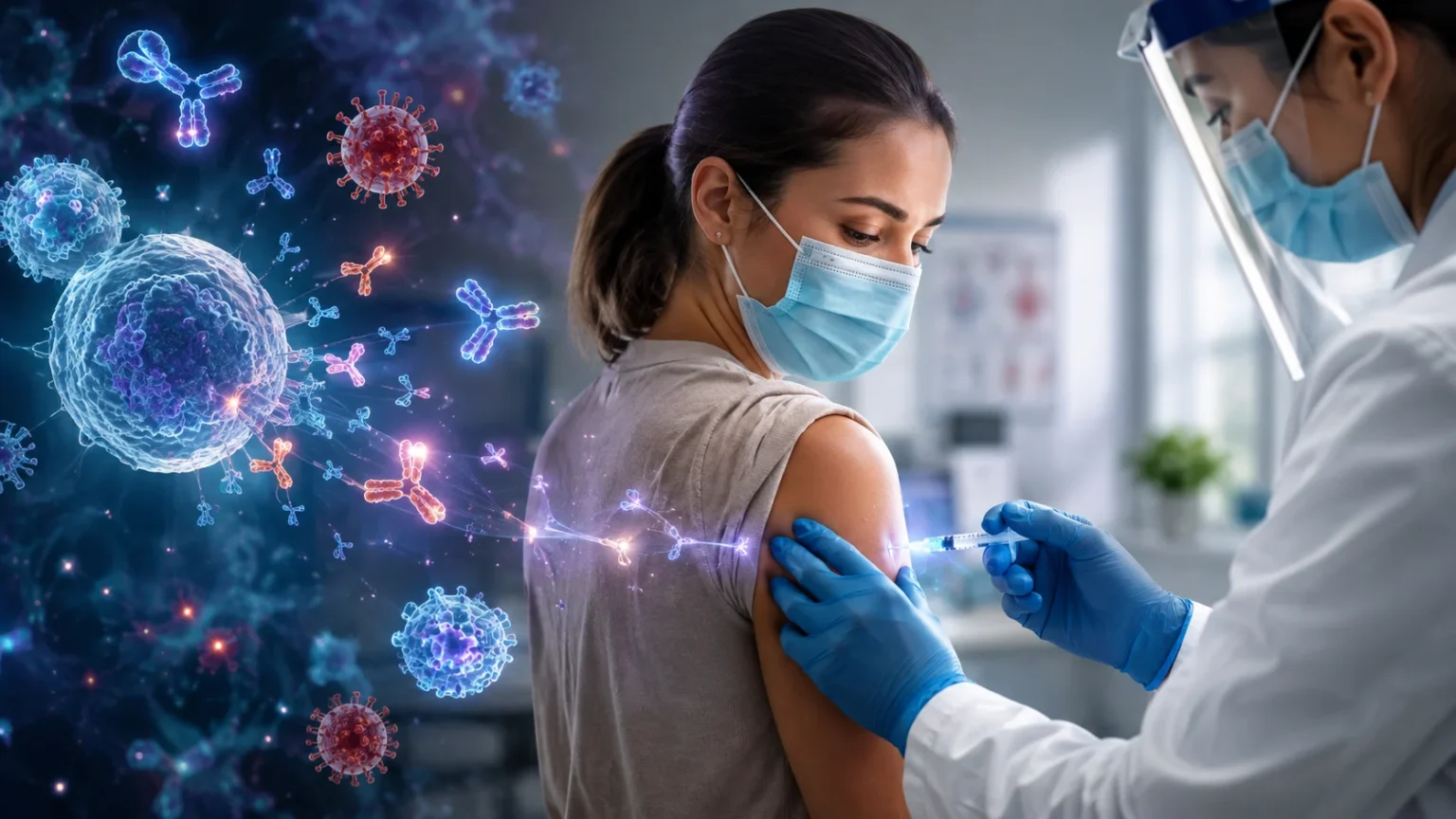

How Do Vaccines Train the Immune System?
Vaccines train the immune system by showing it a safe version, piece, or biological blueprint of something associated with a disease-causing germ. This gives the body’s defenses an opportunity to recognize the threat and practice responding without facing the full dangers of the disease itself.
During vaccination, the immune system encounters substances called antigens or receives instructions that allow the body to temporarily produce an antigen. Immune cells identify that antigen as foreign, activate defensive pathways, and begin developing a more targeted response against it.
B cells can produce antibodies that recognize specific targets, while T cells perform several jobs, including helping coordinate immune responses and, in some situations, recognizing infected cells. After the initial response settles, populations of memory cells can remain prepared for a future encounter with the same antigen.
That immune memory is the central idea behind vaccination. If the real pathogen appears later, the immune system may recognize it faster and mount a stronger response than it could during a first encounter, reducing the risk of disease or serious complications depending on the vaccine and infection.
How the Immune System Protects Your Body
Your immune system is an interconnected network of cells, tissues, proteins, and organs that helps protect the body from potentially harmful microorganisms. Every day, it encounters viruses, bacteria, fungi, and other substances while deciding what should be ignored and what requires a defensive response.
One part of this protection is the innate immune system. Innate defenses respond quickly and include physical barriers such as skin as well as cells and chemical signals that react when they detect signs of infection or tissue damage. These defenses are fast but are not highly specific to one particular pathogen.
The adaptive immune system provides a more targeted response. B lymphocytes and T lymphocytes can recognize specific antigens, allowing the body to build defenses directed toward particular microbes rather than responding in exactly the same way to every infection.
Vaccination takes advantage of this adaptive ability. Instead of waiting for a dangerous infection to provide the first lesson, a vaccine introduces the immune system to selected disease-associated information in a controlled way so protective immunity can begin developing beforehand.
What Is an Antigen?
An antigen is a substance that can be recognized by the immune system and help trigger an immune response. In vaccines, an antigen may be a protein, sugar, weakened microorganism, inactivated organism, toxin-related component, or another carefully selected target.
You can think of an antigen as an identifying feature that gives immune cells something specific to learn. Rather than memorizing the appearance of an entire virus or bacterium in the way a person memorizes a photograph, the immune system recognizes molecular structures associated with it.
Vaccines do not all deliver antigens in exactly the same way. Some contain the antigen itself, while technologies such as mRNA provide temporary instructions that allow cells to make an antigen that the immune system can then recognize.
Once an antigen has been detected, different parts of the immune system communicate with one another. This coordinated response can eventually produce antibodies, activated immune cells, and memory cells that make future recognition of the same target faster.
What Happens Immediately After Vaccination?
Shortly after vaccination, the innate immune system begins responding to the material introduced by the vaccine. Local immune cells recognize molecular signals and may release chemical messengers that attract additional immune cells to the area.
This early response helps explain why temporary soreness, swelling, tiredness, or a mild fever can occur after some vaccinations. These symptoms are generally short-lived and are associated with activation of the body’s immune and inflammatory systems.
Specialized cells can take up vaccine antigens and present pieces of them to cells involved in adaptive immunity. This creates an important bridge between the body’s rapid first-line defenses and its slower but much more targeted immune response.
The process does not usually happen instantly. Developing a mature immune response takes time, which is why protection may not reach its intended level immediately after receiving a vaccine. Some vaccines also require more than one dose.
How B Cells Make Antibodies
B cells are specialized white blood cells that play an important role in adaptive immunity. When the appropriate B cells become activated, some develop into antibody-producing cells that release large amounts of antibodies targeting a particular antigen.
Antibodies are proteins capable of recognizing specific molecular structures. Depending on the infection, antibodies may block a pathogen from entering cells, interfere with harmful toxins, or help other parts of the immune system identify and remove the threat.
Antibodies are highly specific. An antibody developed against one antigen will not automatically provide protection against unrelated diseases, which is one reason different infections generally require different vaccines or vaccine components.
Vaccination therefore gives selected B cells an opportunity to respond before exposure to the actual disease. If the same antigen appears later, memory B cells can help generate a faster antibody response than would usually occur during a completely new infection.
How T Cells Help Build Vaccine Protection
Antibodies receive considerable attention, but T cells are another major part of adaptive immunity. Different T-cell populations perform different jobs, and the exact response varies according to the vaccine technology and the pathogen being targeted.
Helper T cells help coordinate immune responses by sending signals that influence other immune cells. They can support B-cell activation and contribute to the development of stronger, more organized adaptive immunity.
Other T cells can recognize cells displaying particular foreign antigens. Cytotoxic T cells can destroy certain infected cells, which may be important when pathogens spend part of their life cycle inside human cells.
Not every vaccine stimulates identical proportions of antibody and T-cell responses. Effective vaccine design therefore considers which parts of immunity are most useful for controlling the particular virus, bacterium, or toxin the vaccine is intended to target.
How Immune Memory Makes Vaccination Work
After the strongest phase of an immune response ends, most activated immune cells are no longer needed. However, some antigen-specific B and T cells can remain as memory cells, preserving information about a previous encounter.
These cells provide the immune system with a biological head start. If the same antigen appears again, memory cells can respond more rapidly than they did during the first exposure.
Memory B cells can rapidly contribute to renewed antibody production, while memory T cells can participate in cellular immune responses. The exact duration and strength of this protection varies among vaccines, pathogens, age groups, and individuals.
Immune memory explains why immunity cannot be judged only by measuring antibodies at one moment. Antibody levels may decrease over time while other components of immune memory remain capable of responding to later exposure.
Why Some Vaccines Need More Than One Dose
A first vaccine dose introduces an antigen to the immune system and begins what is called the primary immune response. For some vaccines, this initial exposure produces enough protection, while others work best when additional doses follow.
Later doses expose the immune system to the antigen again. This can increase the quantity or quality of the immune response and strengthen the populations of immune cells prepared to react to future exposure.
A series of initial vaccine doses is sometimes called a primary series. The number of doses and spacing between them are determined from clinical evidence rather than following one universal schedule for every vaccine.
This is why receiving the recommended doses matters. Stopping a multidose series too early may mean the immune system has not developed the level or duration of protection expected from the complete vaccination schedule.
What Do Booster Vaccines Do?
A booster is an additional vaccine dose given after the initial vaccine series when strengthening or renewing protection is useful. It provides another encounter with the antigen and reminds the immune system of a threat it has previously learned to recognize.
After a booster, memory B and T cells can respond again, and antibody levels may increase. This renewed stimulation can improve protection when immunity has declined or when additional immune reinforcement is beneficial.
Not every vaccine requires regular boosters. Some vaccine-induced immune responses remain effective for very long periods, while others require additional doses because immunity changes over time or because the pathogen itself changes.
Booster recommendations therefore depend on the particular disease, vaccine, age group, medical situation, and evolving scientific evidence. The need for a booster does not mean a vaccine failed; it reflects how immunity and infectious diseases behave over time.
How Live Attenuated Vaccines Work
Live attenuated vaccines use a weakened form of a virus or bacterium that is capable of stimulating immunity without producing the severe effects associated with the natural disease in people for whom the vaccine is appropriate.
Because the weakened organism can resemble natural infection more closely than some other vaccine types, these vaccines can produce strong and often long-lasting immune responses.
Examples of live attenuated vaccines include certain vaccines against measles, mumps, rubella, rotavirus, chickenpox, yellow fever, and some influenza formulations. Availability and recommendations vary according to country and medical circumstances.
Live vaccines are not suitable for everyone. Certain people with weakened immune systems, pregnant individuals, or people with specific medical conditions may need different recommendations, which is why vaccination decisions should follow appropriate medical guidance.
How Inactivated Vaccines Work
Inactivated vaccines contain disease-causing organisms that have been killed or otherwise made unable to replicate. The immune system can still recognize their antigens even though the organism cannot produce a normal infection.
Because there is no replication of the vaccine organism, the immune response may differ from the one produced by some live vaccines. Multiple doses or boosters may sometimes be needed to develop and maintain strong protection.
Inactivated vaccine technology has been used for numerous infectious diseases. The precise manufacturing process is carefully controlled so important antigens remain available to stimulate immunity while the pathogen itself is no longer capable of normal replication.
The underlying principle remains the same as with other vaccine approaches: safely expose the immune system to disease-associated information before the body encounters the actual pathogen.
How Protein Subunit and Conjugate Vaccines Work
Protein subunit vaccines contain selected components of a pathogen rather than the entire microorganism. These components are chosen because the immune system can recognize them and develop defenses against them.
By focusing on selected antigens, subunit vaccines can generate immunity without exposing the body to a complete disease-causing organism. Hepatitis B and some whooping cough vaccines are examples of vaccines using protein-subunit approaches.
Conjugate vaccines use another strategy. Certain bacterial sugars do not produce a sufficiently strong immune response in some people, particularly young children, so scientists attach the sugar antigen to a carrier protein that helps the immune system recognize it more effectively.
These approaches demonstrate that vaccine design does not require copying natural infection exactly. Scientists can identify the components most useful for immune recognition and design a safer method of presenting those targets to the immune system.
How Toxoid Vaccines Train Immunity
Some bacterial diseases are dangerous largely because bacteria produce powerful toxins. In these cases, vaccine protection can focus on the toxin rather than trying to create immunity against every part of the bacterium.
Toxoid vaccines use toxins that have been rendered harmless while retaining enough of their recognizable structure to stimulate an immune response. The immune system can then develop antibodies directed against the toxin.
If a vaccinated person later encounters the toxin-producing bacterium, those immune defenses can help neutralize the harmful toxin before it produces severe effects.
Vaccines against tetanus and diphtheria use toxoid-based protection. These vaccines may require booster doses over time to maintain the desired level of immunity.
How mRNA Vaccines Train the Immune System
mRNA vaccines take a different approach because they do not need to contain the complete pathogen. Instead, they deliver temporary messenger RNA instructions that allow cells to make a specific antigen associated with the pathogen.
After cells produce the antigen, the immune system recognizes that it does not belong there and begins developing a response. Antibodies and other immune cells can then learn to recognize the target.
The mRNA does not need to enter the cell nucleus, where chromosomes and DNA are stored. After it has delivered its instructions, the mRNA is broken down through normal cellular processes.
The important outcome is immune memory rather than permanent production of the antigen. Once trained, parts of the adaptive immune system remain prepared to recognize that antigen during a future encounter with the pathogen.
What Are Vaccine Adjuvants?
An adjuvant is an ingredient included in some vaccines to help produce a stronger immune response to the vaccine antigen. Adjuvants are particularly useful when a vaccine contains only selected pieces of a microorganism.
Rather than acting as the antigen itself, an adjuvant helps stimulate immune activity around the antigen. This can make it easier for the immune system to develop an effective response.
Adjuvants have been used in vaccines for decades. Different vaccine products use different formulations, and many vaccines do not contain a separately added adjuvant at all.
Their purpose illustrates how modern vaccines are deliberately designed. Scientists consider not only which antigen the immune system should recognize but also how that antigen can be presented in a way that produces appropriate and durable immunity.
Why Your Arm May Hurt After a Vaccine
A sore arm after vaccination is usually related to local inflammation where the vaccine was given. Immune cells and signaling molecules gather around the injection site as the body’s defenses respond to the vaccine components.
Some people also experience temporary tiredness, headache, muscle aches, or mild fever. These effects usually resolve relatively quickly and are recognized possible responses to vaccination.
Experiencing no noticeable side effects does not mean a vaccine failed. People differ in how strongly they notice inflammatory symptoms, and protective immune responses can develop without producing obvious discomfort.
Likewise, stronger temporary side effects do not automatically mean stronger long-term immunity. Symptoms and immune protection are related to complex biological processes and should not be used as a simple personal measurement of vaccine effectiveness.
Can Vaccines Cause the Disease They Protect Against?
Most vaccines cannot cause the disease they are designed to prevent because they contain inactivated organisms, selected antigens, genetic instructions, or other materials incapable of causing the normal infection.
Live attenuated vaccines are different because they contain weakened organisms, but they are specifically developed so that they do not behave like the fully virulent pathogen in people for whom the vaccine is recommended.
Some vaccines can temporarily cause symptoms such as fever or soreness because the immune system has been activated. These effects should not be confused with developing the full disease the vaccine is designed to prevent.
Whether a particular vaccine is suitable for someone depends on factors such as age, pregnancy, immune status, allergies, and medical history. Healthcare professionals can provide guidance when special circumstances are involved.
Why Vaccinated People Can Sometimes Still Get Infected
No vaccine provides identical protection to every person. Age, underlying medical conditions, immune function, time since vaccination, and characteristics of the pathogen can all influence how effectively vaccination prevents infection or disease.
Some vaccines are highly effective at preventing infection, while others provide their greatest benefit by reducing the likelihood of severe disease, hospitalization, complications, or death.
Pathogens can also evolve. If a virus changes substantially, antibodies generated against an earlier version may recognize the new version less efficiently, although other components of immune memory may still provide useful protection.
A breakthrough infection therefore does not automatically mean vaccination provided no benefit. Vaccine effectiveness is evaluated by comparing health outcomes among groups rather than assuming protection must always mean complete prevention of every infection.
Vaccination Versus Immunity From Infection
Natural infection can sometimes produce immune memory because the immune system encounters the actual pathogen. However, developing immunity this way requires experiencing the infection and accepting the risks associated with the disease.
Vaccination is designed to create protective immune learning without requiring the person to experience the full dangers of the disease first. That distinction is one of the fundamental advantages of immunization.
The immune response from vaccination and natural infection is not necessarily identical. The strength, duration, and type of immunity can differ according to the particular disease and vaccine.
Previous infection also does not mean future vaccination is never useful. Recommendations vary by disease and individual circumstances because vaccination after infection can sometimes broaden or strengthen immune protection.
How Vaccines Help Protect Communities
Vaccination primarily protects the person receiving the vaccine, but when vaccination also reduces infection or transmission, it can help reduce opportunities for a pathogen to spread through a community.
This population-level protection is especially valuable for people who cannot receive certain vaccines or who may develop weaker immune responses because of age or medical conditions.
The proportion of people who need immunity for strong community protection is not identical for every disease. It depends partly on how easily the pathogen spreads and how effectively immunity interrupts transmission.
Community protection is therefore not a fixed number that applies to every infection. It emerges from interactions among vaccination coverage, previous immunity, vaccine effectiveness, human behavior, and the biology of the pathogen.
How Vaccine Safety Is Tested and Monitored
Vaccines undergo laboratory research and clinical testing before regulatory authorization or approval. Regulators examine evidence related to safety, effectiveness, manufacturing quality, purity, and potency before a vaccine can be widely marketed.
Safety monitoring does not stop when a vaccine becomes available. Health authorities continue collecting reports and analyzing data to identify unusual patterns or very rare adverse effects that may not have been visible in clinical trials.
Like all medicines, vaccines can cause side effects. Most commonly reported reactions are mild and temporary, while serious vaccine-related adverse effects are possible but much less common.
This continuing surveillance allows public-health authorities to update recommendations when new evidence emerges. Vaccine safety is therefore an ongoing process extending from early development through widespread real-world use.
Why Vaccine Schedules Matter
Vaccination schedules specify when particular vaccines should be given based on evidence about disease risk, immune response, age, previous doses, and how long protection is expected to last.
Some vaccines are given early in life because young children may be particularly vulnerable to the diseases they prevent. Other vaccines are recommended later because risk increases with age, occupation, travel, pregnancy, medical conditions, or other circumstances.
Timing between doses matters as well. The immune system needs enough time to respond to one dose before another dose is given according to the studied vaccination schedule.
Because recommendations can change as diseases and evidence evolve, people should rely on current guidance from their national health authorities or healthcare professionals rather than following an old schedule found online.
How Long Does Vaccine Immunity Last?
There is no universal duration of vaccine protection. Some vaccines can produce immunity lasting many years, while others require additional doses because protection decreases or the pathogen changes.
Immune protection is also more complicated than the concentration of antibodies in the bloodstream. Memory B cells, T cells, and other immune mechanisms may continue contributing to protection even after circulating antibody levels decline.
Scientists study how quickly protection changes by following vaccinated populations over time. Those findings help determine whether additional doses are needed and which groups benefit most from them.
The goal is not necessarily to maintain the highest possible antibody level forever. Vaccination programs aim to maintain enough meaningful protection against the outcomes that matter, particularly serious disease and complications.
How Scientists Are Improving Future Vaccines
Modern vaccine research is exploring technologies that can make immunization faster to develop, easier to deliver, and capable of producing broader or longer-lasting immunity.
Researchers are investigating new mRNA platforms, protein designs, viral vectors, nanoparticle delivery systems, improved adjuvants, and vaccines targeting multiple strains of rapidly changing viruses.
Mucosal vaccines delivered through the nose or mouth are another area of interest because many respiratory and gastrointestinal pathogens first encounter the immune system at mucosal surfaces. Researchers are studying whether stronger local immunity could help block infection closer to its point of entry.
Future vaccine science may also use genomic surveillance and computational tools to identify useful antigens more quickly. Whatever platform is used, new vaccines still need careful clinical testing and safety monitoring before widespread adoption.
Final Thoughts on How Vaccines Train the Immune System
Vaccines train the immune system by providing a controlled introduction to disease-associated antigens without requiring a person to experience the full risks of the natural infection. The immune system responds by activating specialized cells and building targeted defenses.
B cells can produce antibodies, T cells can coordinate or carry out cellular responses, and memory cells can remain after the initial immune reaction. Together, these mechanisms make future recognition of the same pathogen faster and more effective.
Different vaccine technologies accomplish this training in different ways. Live attenuated, inactivated, protein subunit, conjugate, toxoid, and mRNA vaccines use different methods of showing the immune system what it should learn to recognize.
The science is complex, but the central principle is straightforward: vaccination gives the immune system a safer opportunity to prepare before a dangerous infection occurs. That preparation can reduce the risk of disease and, depending on the vaccine, substantially reduce the likelihood of severe outcomes.
Frequently Asked Questions
How do vaccines train your immune system?
Vaccines expose the immune system to a safe antigen or instructions for making one. This helps B cells, T cells, antibodies, and memory cells prepare for future exposure to the real pathogen.
How long does it take for a vaccine to build immunity?
The timing varies by vaccine. Protection generally develops over days or weeks, and some vaccines require several doses before the intended level of immunity is reached.
Why are booster shots needed?
Boosters re-expose the immune system to an antigen, helping strengthen or renew immune protection when additional stimulation is useful. Not every vaccine requires regular boosters.
Do vaccines weaken the immune system?
Vaccines are designed to stimulate immune defenses rather than weaken them. They give the adaptive immune system a controlled opportunity to recognize specific disease-associated antigens.
Can you still get sick after vaccination?
Yes, because no vaccine prevents every infection in every person. However, vaccination can still reduce the likelihood of disease or serious complications depending on the vaccine and pathogen.