
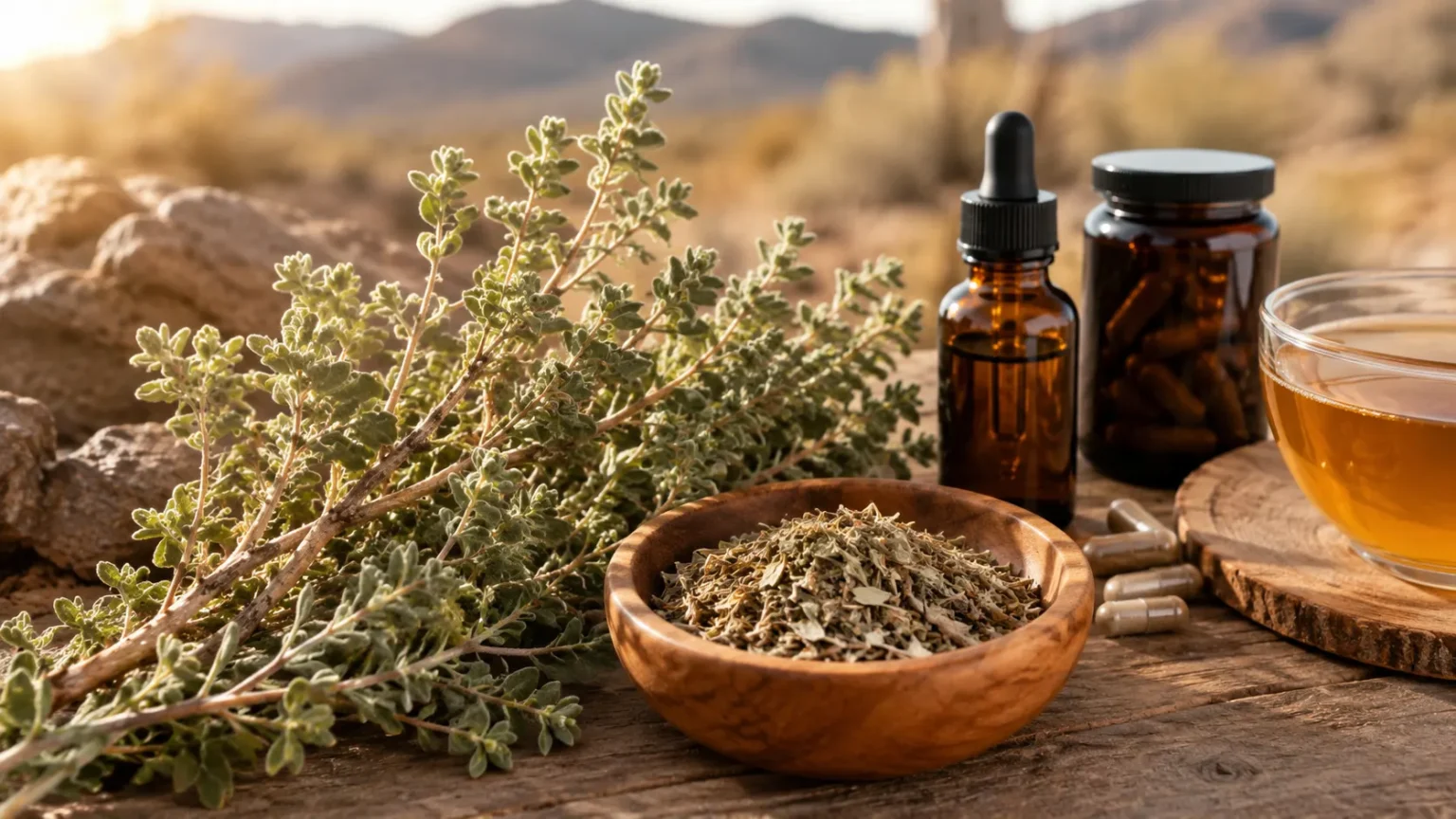

Chaparral Herb: Uses, Benefits, Risks & Safety
Chaparral herb is a traditional botanical made primarily from the leaves and twigs of plants in the Larrea genus, especially Larrea tridentata, a desert shrub commonly known as creosote bush. It has a long history of traditional use among Indigenous communities and has also been promoted commercially in teas, capsules, extracts, powders, and topical preparations. Supporters have used chaparral for skin complaints, digestive discomfort, respiratory symptoms, inflammation, infections, and general “detox” purposes. Modern laboratory research has identified antioxidant and biologically active compounds in the plant, particularly nordihydroguaiaretic acid, often abbreviated as NDGA. However, laboratory activity does not prove that taking chaparral supplements provides meaningful health benefits in people, and the herb carries important safety concerns.
The biggest concern with oral chaparral is its association with potentially serious liver injury. Reports have included hepatitis-like illness, jaundice, impaired liver function, and in rare severe cases liver failure requiring intensive medical treatment. Kidney problems and other adverse effects have also been described. These risks have caused health professionals to advise considerable caution with chaparral supplements, particularly concentrated internal preparations. Chaparral should not be used as a replacement for proven treatment of infection, cancer, arthritis, diabetes, liver disease, or any other medical condition. People considering the herb should understand the substantial difference between historical use, laboratory research, and established clinical benefit before deciding whether any form of chaparral belongs in their health routine.
What Is Chaparral Herb?
Chaparral generally refers to preparations made from Larrea tridentata, a hardy evergreen shrub that grows throughout desert areas of the southwestern United States and northern Mexico. The plant has small resinous leaves and a distinctive smell that becomes especially noticeable after rain. It is frequently called creosote bush because of this strong aroma, although it should not be confused with industrial creosote, a completely different chemical material. Traditional preparations have used the leaves, twigs, or resinous plant material in teas, washes, poultices, and other remedies. Modern supplement companies may grind dried plant material into capsules or create concentrated liquid extracts.
The plant contains numerous naturally occurring phytochemicals. NDGA is one of the best-known compounds and has strong antioxidant activity in laboratory experiments. Chaparral also contains lignans, flavonoids, volatile compounds, and other substances that may influence biological pathways. These chemical properties have generated research interest in inflammation, oxidative stress, viral replication, cellular signaling, and abnormal cell growth. However, a compound affecting cells in a laboratory dish does not mean that swallowing the plant safely produces the same effect in the human body. Effective concentration, absorption, metabolism, toxicity, and long-term outcomes all need to be studied separately.
Chaparral is sometimes marketed under names such as creosote bush, greasewood, gobernadora, or chaparro. Product labels may not always make the botanical species obvious, which can create confusion for consumers comparing supplements. A responsible product should clearly state the scientific name, plant part, amount per serving, and extraction method when relevant. Products containing multiple desert herbs can be even more difficult to evaluate because any adverse reaction may come from chaparral or another ingredient. Herbal mixtures marketed as “cleanses” or “detox teas” deserve particular caution when complete quantities are hidden inside proprietary blends.
Traditional use of chaparral is culturally significant, but historical use should be interpreted carefully. Traditional remedies were often prepared differently from modern concentrated capsules or extracts and may have been used in much smaller amounts or for shorter periods. Some traditions also relied on topical application rather than internal ingestion. Modern commercial products can deliver far more plant material than a weak traditional tea. Therefore, saying that a plant has been used for generations does not prove that every preparation, dose, or duration is safe.
Chaparral is best viewed as a pharmacologically active herb rather than an ordinary food. People do not generally consume large amounts of creosote bush as part of everyday meals, and the plant contains compounds capable of affecting human biology. This distinguishes it from culinary herbs such as parsley or basil that are commonly eaten in food-sized portions. The more concentrated the preparation becomes, the more important safety, dose, and interaction questions become. Chaparral therefore deserves the same caution someone would apply to a potent supplement rather than assuming that botanical origin makes it inherently gentle.
Traditional Uses of Chaparral Herb
Chaparral has historically been used for a broad variety of complaints. Traditional preparations have been associated with respiratory symptoms, digestive discomfort, skin problems, joint pain, menstrual concerns, and general cleansing practices. In some contexts, teas were prepared from small amounts of the plant, while external washes or poultices were applied to the skin. The specific use depended on regional knowledge, culture, and available plants. These practices form part of an important traditional medicine history. However, traditional use alone does not establish modern clinical effectiveness for any particular condition.
One common historical application involved skin irritation and wounds. Because chaparral contains resinous compounds and demonstrated antimicrobial activity in laboratory settings, it has been used topically for minor skin complaints. Modern products sometimes include chaparral in salves, soaps, ointments, or herbal washes. Topical use avoids some of the systemic exposure associated with swallowing the herb, but it is not automatically risk-free. Skin irritation, allergic contact dermatitis, or sensitivity can still occur. Open wounds, severe infections, burns, or rapidly spreading rashes should receive appropriate medical care rather than relying on an herbal salve.
Chaparral has also been promoted for arthritis and other inflammatory problems. This use is partly supported by laboratory observations showing that certain plant compounds can influence oxidative and inflammatory processes. Unfortunately, high-quality human trials demonstrating meaningful pain relief or improved joint function are lacking. Someone with rheumatoid arthritis, severe osteoarthritis, gout, or persistent unexplained joint swelling should not substitute chaparral for established treatment. Delaying appropriate care can allow joint damage or another underlying condition to worsen.
Another traditional use involves respiratory symptoms such as coughs, colds, or congestion. Herbalists historically used chaparral tea in some communities during respiratory illness. Modern evidence does not establish chaparral as a reliable treatment for viral or bacterial respiratory infections. A strong antioxidant or antimicrobial effect in laboratory testing does not prove that drinking the plant reaches infected tissues at an effective and safe concentration. Respiratory symptoms accompanied by difficulty breathing, persistent high fever, chest pain, or significant weakness deserve medical evaluation.
Chaparral has also been included in products marketed for “detoxification,” liver cleansing, or general purification. This use is particularly concerning because oral chaparral itself can injure the liver. The liver already performs essential metabolic and detoxification functions continuously, and no routine herbal cleanse is required to make it remove toxins from a healthy body. Using a potentially hepatotoxic herb specifically to “cleanse” the liver is therefore biologically questionable. People concerned about liver health gain far more from limiting excessive alcohol, managing weight and metabolic disease, reviewing medications, and seeking medical evaluation when liver tests are abnormal.
Possible Benefits and What the Evidence Suggests
Chaparral contains compounds with strong antioxidant properties, which is one reason the plant continues attracting scientific interest. Antioxidants interact with reactive molecules involved in oxidative stress, and excessive oxidative stress can contribute to cellular damage. NDGA has demonstrated considerable antioxidant activity in laboratory experiments. However, antioxidant activity in a test tube is not the same as proving that a supplement prevents chronic disease in humans. The body regulates oxidative balance through complex enzyme systems, and more antioxidant exposure is not automatically better. Human benefit requires clinical evidence showing improved symptoms or health outcomes at doses that are safe.
Researchers have also explored antimicrobial properties of chaparral-related compounds. Laboratory experiments suggest that some extracts can inhibit certain bacteria, fungi, or other microorganisms under controlled conditions. This has encouraged claims that chaparral may work as a natural antibiotic. Such claims are premature because the concentration required to inhibit microbes in a laboratory may be impossible or unsafe to achieve through oral supplementation. Serious bacterial infections need proven antimicrobial treatment. Using chaparral instead of antibiotics when antibiotics are medically indicated can allow infections to spread.
Anti-inflammatory activity is another proposed benefit. Certain chaparral compounds may affect enzymes and signaling pathways involved in inflammation. This could theoretically explain why the herb was historically used for pain or inflammatory complaints. Yet human research remains insufficient to determine whether ordinary chaparral products meaningfully reduce inflammation without unacceptable toxicity. Clinical benefit should be demonstrated through improved pain, mobility, disease activity, or other meaningful outcomes rather than only laboratory markers. At present, the risk-benefit balance for oral use remains unfavorable.
Chaparral compounds have also been studied in cancer-related laboratory research because NDGA and related chemicals can influence cell growth and signaling. This area is particularly vulnerable to misleading marketing. A compound that slows growth of cancer cells in a dish does not mean drinking chaparral tea treats cancer in a person. Effective cancer therapies must reach tumors at appropriate concentrations while producing acceptable toxicity throughout the body. Chaparral supplements have not been established as cancer treatments and may complicate therapy through liver toxicity or interactions with medications.
The overall evidence therefore supports a cautious conclusion. Chaparral is chemically active and scientifically interesting, but human clinical evidence for major health benefits is weak compared with the documented safety concerns surrounding oral use. Promising mechanisms should be viewed as research questions rather than health guarantees. Someone choosing a supplement should ask not merely whether the plant contains active compounds, but whether controlled studies demonstrate that the expected benefits outweigh the risks. For chaparral, that standard has not been convincingly met for routine internal supplementation.
Chaparral Herb and Liver Damage
Liver toxicity is the most important safety issue associated with chaparral. The liver processes many plant compounds after they are absorbed from the digestive tract, and certain substances in chaparral may create toxic metabolites or oxidative stress in susceptible individuals. Cases of liver injury have been reported after people consumed chaparral teas, capsules, or other internal preparations. The severity has ranged from abnormal liver tests to clinically significant hepatitis and liver failure. Because susceptibility varies, one person may use the herb without obvious symptoms while another develops serious injury.
Symptoms of possible liver injury can include unusual fatigue, nausea, vomiting, loss of appetite, discomfort in the upper right abdomen, dark urine, pale stool, or yellowing of the skin and eyes. Itching can also occur when bile flow becomes impaired. These symptoms should not be dismissed as a normal herbal “detox reaction.” Jaundice, persistent vomiting, confusion, or rapidly worsening weakness require prompt medical care. Stopping the suspected supplement early may improve the chance of recovery when supplement-induced liver injury is developing.
The risk can become harder to recognize because early liver damage may produce no obvious symptoms. A person may continue taking chaparral while liver enzymes rise silently. By the time jaundice appears, injury may already be substantial. This is one reason routine oral chaparral cannot be considered safe simply because someone “feels fine” after several days or weeks. The absence of immediate stomach upset tells little about what is happening inside the liver. Herbal toxicity can develop gradually and unpredictably.
Combining chaparral with alcohol or other substances that can affect the liver creates additional concern. Acetaminophen, certain prescription medications, concentrated herbal extracts, anabolic substances, and other supplements may all add to liver burden depending on dose and circumstances. People with existing fatty liver disease, viral hepatitis, cirrhosis, or previously abnormal liver tests have even less reason to experiment with a potentially hepatotoxic herb. Liver disease can reduce the organ’s ability to tolerate additional injury. Professional guidance should take priority over supplement marketing.
The association between chaparral and liver injury is serious enough that internal use is generally discouraged by many health professionals. This does not mean every person who takes one dose will develop hepatitis. It means the potential severity of harm is disproportionate to the uncertain benefit. When a supplement lacks strong evidence of effectiveness yet carries a known risk of significant organ toxicity, routine use becomes difficult to justify. Someone looking for antioxidant, anti-inflammatory, or general wellness support has safer dietary and lifestyle options available.
Other Side Effects and Health Risks
Digestive side effects can occur with chaparral even when severe liver injury does not develop. Nausea, stomach discomfort, vomiting, diarrhea, or reduced appetite may appear after oral use. These symptoms may reflect local gastrointestinal irritation, systemic effects, or early toxicity. Repeated vomiting can lead to dehydration and electrolyte imbalance, particularly in older adults or people with chronic illness. A person experiencing substantial symptoms after starting chaparral should stop the product rather than assuming discomfort proves the herb is “working.”
Kidney effects are another concern. The kidneys filter many metabolic products from the blood and can be affected by toxic compounds, dehydration, or severe liver dysfunction. Reports of kidney injury associated with chaparral make oral supplementation particularly concerning for people with chronic kidney disease. Changes in urination, swelling, severe weakness, or unexplained nausea deserve medical attention. Herbal preparations can contain minerals and compounds that are handled differently when kidney function is impaired. People with kidney disease should avoid experimenting with concentrated supplements without professional review.
Allergic or hypersensitivity reactions are possible as well. Chaparral contains numerous plant chemicals that can irritate skin or provoke an immune response in susceptible individuals. Topical products may cause redness, burning, itching, blistering, or dermatitis. Oral reactions could theoretically include rash, swelling, or respiratory symptoms. Severe facial swelling, difficulty breathing, or widespread hives require emergency treatment. A patch test sometimes helps identify obvious topical sensitivity, but it cannot predict every delayed or systemic reaction.
The herb may also influence how the body handles medications. Because chaparral contains biologically active compounds and may affect liver enzymes or oxidative pathways, interactions with prescription drugs are possible even when detailed studies are lacking. This uncertainty matters most for medications with narrow therapeutic ranges or those already associated with liver toxicity. People taking anticoagulants, diabetes medicines, blood-pressure medications, seizure drugs, cancer therapy, psychiatric medications, or multiple prescriptions should be especially cautious. A lack of interaction data should not be interpreted as proof that no interaction exists.
Supplement contamination adds another layer of risk. Herbal products can occasionally contain heavy metals, pesticides, microbial contamination, or ingredients not disclosed accurately on the label. Chaparral collected from contaminated soil may also carry environmental residues. Third-party testing can improve confidence in product quality but cannot remove the herb’s inherent pharmacological risks. Even a perfectly pure chaparral supplement can still potentially injure the liver. Quality testing solves contamination concerns, not toxicity concerns related to the plant itself.
Who Should Avoid Chaparral?
Pregnant people should avoid chaparral supplements because safety has not been established and certain traditional sources have raised concern about uterine effects. Pregnancy changes metabolism and makes unnecessary exposure to biologically active herbs especially difficult to justify. Products containing roots, bark, or concentrated extracts may be even less predictable than leaf preparations. A supplement marketed for cleansing, menstrual regulation, or fertility should not be assumed safe during pregnancy. When a pregnant person needs treatment for infection, inflammation, nausea, or another symptom, therapies with clearer safety information are preferable.
Breastfeeding people should also avoid routine chaparral supplementation. It is not well established how chaparral compounds or their metabolites pass into breast milk or affect an infant. Newborns and young infants have immature liver and kidney function, which can make them more vulnerable to certain chemical exposures. Using a potentially hepatotoxic herb during lactation therefore provides little safety margin. Traditional use does not substitute for infant exposure studies. A healthcare professional can suggest safer options when breastfeeding symptoms or health goals motivate interest in herbal products.
People with liver disease should avoid chaparral because the organ most strongly associated with the herb’s toxicity is already vulnerable. Fatty liver disease, hepatitis, cirrhosis, previous drug-induced liver injury, and unexplained elevated liver enzymes all increase the importance of avoiding unnecessary hepatotoxic substances. Someone awaiting liver testing should also tell their healthcare professional about every supplement being used. Herbal products are frequently forgotten during medication reviews, making it harder to identify the cause of abnormal tests.
Kidney disease creates another strong reason for avoidance. Reduced kidney function can alter how substances and metabolites are eliminated and may increase vulnerability to fluid or electrolyte disturbances. People receiving dialysis or following specialized renal diets should be especially cautious with nonessential herbal products. Chaparral has no established role in treating kidney disease and could potentially make evaluation more complicated if new symptoms develop. Safer nutrition and medical strategies should be prioritized.
Children should not receive chaparral supplements casually. Pediatric dosing has not been established, and a child’s lower body weight can increase exposure per kilogram from the same amount used by an adult. Children with coughs, skin conditions, infections, or digestive problems should receive age-appropriate evaluation and treatment. Giving a potent traditional herb because it is marketed as natural can expose a child to unnecessary toxicity. The same caution applies to older adults taking several medications because reduced organ reserve and polypharmacy can increase the consequences of an adverse reaction.
Chaparral Tea, Capsules and Topical Products
Chaparral tea is one of the oldest forms of internal preparation. Dried leaves or twigs are steeped in hot water, creating a bitter or resinous beverage containing soluble plant compounds. Some people assume tea must be safer than capsules because it feels more traditional and diluted. However, internal exposure still occurs, and cases of liver injury have been associated with chaparral taken in different oral forms. Concentration also varies depending on how much plant material is used and how long it is steeped. A homemade cup has no standardized dose.
Capsules can create greater concern because they deliver measured amounts of dried plant material without the strong taste that might naturally limit intake. Someone can swallow several grams easily and repeat the dose daily. Product directions may create the impression that the recommended serving has been proven safe, but supplement serving sizes are not equivalent to medically established dosing. Capsules can also contain extracts that concentrate particular compounds. The amount of NDGA or other active chemicals may vary considerably between products.
Liquid extracts and tinctures can be even more concentrated. Depending on manufacturing methods, a small dropper may represent a relatively large amount of starting plant material. Alcohol-based tinctures also introduce additional considerations for people avoiding alcohol or managing liver disease. Concentrated extracts make laboratory-style pharmacological effects more plausible but can also increase toxicity. A product being stronger does not mean it is more therapeutic. Stronger exposure can simply mean more risk when clinical benefit remains uncertain.
Topical chaparral products generally result in less systemic exposure than swallowing the herb, but they still need caution. Salves, creams, soaps, and washes can trigger skin irritation or allergy. They should not be applied to large open wounds, deep burns, severe infections, or extensive damaged skin without professional guidance because absorption and irritation may increase. A person using a topical product should stop if redness, burning, blistering, or worsening rash develops. Children may be especially likely to touch treated skin and transfer product to the mouth or eyes.
Among the available forms, topical use may appear less risky than oral use, but that does not establish effectiveness. Someone with a persistent skin condition should identify whether the problem is eczema, fungal infection, psoriasis, bacterial infection, or another disorder before relying on an herbal salve. Different conditions require different treatment. A product that temporarily soothes dry skin may still fail to address the actual cause. Chaparral should therefore be viewed as an optional topical botanical rather than a proven dermatological therapy.
Safer Alternatives to Chaparral Supplements
People seeking antioxidant support generally have many safer options than chaparral. Fruits, vegetables, herbs, legumes, nuts, seeds, whole grains, tea, and other plant foods contain a wide variety of antioxidant compounds without the same well-known chaparral toxicity concern. Berries, leafy greens, tomatoes, citrus fruits, and colorful vegetables can provide polyphenols and vitamins as part of normal meals. Dietary patterns rich in whole plant foods have much stronger evidence for long-term health than isolated chaparral supplements. Building meals around these foods also provides fiber and essential nutrients that a capsule cannot supply.
For inflammation and joint discomfort, evidence-based strategies include maintaining an appropriate body weight, regular movement, strength training, physical therapy, adequate sleep, and medical treatment tailored to the underlying diagnosis. Foods rich in omega-3 fatty acids and a generally Mediterranean-style eating pattern may support cardiovascular and inflammatory health without relying on hepatotoxic herbs. Turmeric and other supplements are sometimes considered as well, but they still require safety evaluation and should not be assumed risk-free. The safest option depends on the actual condition being treated.
People interested in skin health can focus on gentle cleansers, moisturizers, sun protection, and condition-specific treatment. Acne, eczema, fungal infections, and psoriasis each respond to different therapies, which is why a generic “detox herb” is unlikely to provide a universal solution. Persistent wounds or skin infections deserve professional care. If someone prefers botanical skincare, products containing better-studied ingredients at low concentrations can sometimes be incorporated cautiously. Patch testing and avoiding broken skin can reduce reaction risk.
For respiratory symptoms, fluids, humidified air, honey for appropriate ages, saline, and condition-specific medicine are generally more practical than chaparral tea. A cough lasting several weeks or accompanied by breathlessness, chest pain, coughing up blood, or high fever should be evaluated. Herbal tea can provide warmth and hydration, but safer herbs without a known liver-toxicity concern are preferable when someone simply wants a soothing beverage. Ordinary culinary ginger or peppermint may be reasonable for many adults depending on individual health conditions.
Someone seeking “detoxification” does not need a special chaparral cleanse. Supporting normal liver and kidney function means maintaining hydration appropriate for medical needs, limiting excessive alcohol, avoiding unnecessary supplements, eating a balanced diet, exercising, managing diabetes and blood pressure, and receiving treatment for actual organ disease. The irony of using a liver-toxic herb for detoxification highlights why marketing language needs scrutiny. A safer wellness strategy supports the organs that already perform detoxification rather than exposing them to additional potentially harmful compounds.
How to Evaluate Chaparral Supplement Claims
Start by separating laboratory findings from human clinical outcomes. If a company says chaparral “kills cancer cells,” ask whether this refers to a laboratory study or an actual controlled clinical trial showing improved survival in people. Many substances kill cells in laboratory experiments at high concentrations but would also harm normal human tissues at similar exposure. The same reasoning applies to claims about bacteria, viruses, inflammation, and antioxidants. Mechanisms are useful for research but should not be presented as proven treatment outcomes.
Look carefully at language suggesting that side effects are signs of detoxification. Nausea, fatigue, dark urine, jaundice, abdominal pain, or vomiting are not reassuring signs that the herb is removing toxins. They can indicate toxicity or organ injury. Supplements should not require someone to tolerate progressive illness in order to “heal.” Marketing that reframes warning signs as proof of effectiveness is dangerous. New significant symptoms after starting chaparral should be taken seriously rather than celebrated.
Be skeptical of products promoted as treatments for many unrelated conditions. Claims that one herb can cure cancer, reverse diabetes, eliminate arthritis, cleanse the liver, destroy viruses, improve fertility, cure infections, and extend lifespan are scientifically implausible. Diseases involve different biological pathways and often require completely different treatments. A long list of dramatic claims usually reflects marketing rather than strong clinical evidence. More responsible supplement information acknowledges uncertainty and does not discourage medical care.
Celebrity endorsements, testimonials, and dramatic before-and-after stories are also weak forms of evidence. A person can feel better for many reasons, including natural recovery, another treatment, expectation, diet changes, or misdiagnosis. Testimonials rarely include laboratory confirmation, comparison groups, or complete information about side effects. One positive experience also cannot reveal rare severe toxicity. Clinical evidence requires systematic observation across many people rather than selecting only the most favorable stories.
Finally, consider whether the expected benefit is worth the known risk. Even if chaparral eventually proves to have modest antioxidant or anti-inflammatory effects, safer foods and treatments already provide similar goals without the same liver-safety concern. A supplement does not need to be completely ineffective to be a poor choice. Risk-benefit analysis matters. When benefit is uncertain and potential harm includes serious liver injury, routine oral use becomes difficult to justify.
Frequently Asked Questions About Chaparral Herb
What is chaparral herb used for?
Chaparral has traditionally been used for skin problems, inflammation, respiratory complaints, digestive symptoms, infections, and general cleansing practices. However, strong human evidence supporting these uses is limited, and oral use carries significant safety concerns.
Is chaparral safe to drink as tea?
Chaparral tea cannot be considered reliably safe because internal use has been associated with serious liver injury. The amount of active compounds in homemade tea also varies, making exposure difficult to predict.
Can chaparral damage the liver?
Yes. Oral chaparral has been linked with liver inflammation, jaundice, abnormal liver function, and severe liver injury in some users. Anyone who develops dark urine, yellow skin or eyes, persistent nausea, or unusual fatigue after taking chaparral should stop it and seek medical care.
Does chaparral have proven health benefits?
Chaparral contains antioxidant and biologically active compounds, and laboratory studies have produced interesting findings. However, human clinical evidence is not strong enough to support chaparral as a proven treatment for cancer, infections, inflammation, diabetes, or other major diseases.
Who should avoid chaparral?
Pregnant or breastfeeding people, children, people with liver or kidney disease, and those taking multiple medications should avoid chaparral unless specifically advised by a qualified healthcare professional. Because oral use can cause serious toxicity, many people are better choosing safer alternatives altogether.