

Introduction to Vaccines
Vaccines are biological preparations designed to provide immunity against specific infectious diseases. They typically contain weakened or inactivated parts of a particular microorganism or its toxins, which, when introduced into the body, stimulate the immune system to recognize and combat the pathogen without causing the disease itself. This fundamental principle of vaccine development allows the immune system to prepare for future encounters with the actual disease-causing agents.
The purpose of vaccines extends beyond individual health; they play a crucial role in public health. By immunizing large segments of the population, vaccines can create herd immunity, which significantly reduces the spread of diseases. Herd immunity protects those who cannot be vaccinated, such as infants and individuals with certain health conditions, by limiting the circulation of pathogens within the community. Diseases like smallpox have been eradicated through comprehensive vaccination campaigns, highlighting the profound impact vaccines can have on global health.
Vaccines work by mimicking the presence of a disease in a controlled manner. When vaccinated, the body responds by producing antibodies, which are specific proteins that can recognize and neutralize pathogens. This adaptive immune response ensures that if the body encounters the actual disease in the future, it can efficiently and rapidly mount a defense. This process not only prevents infections but also is vital in eradicating diseases by curtailing transmission and leading to population-level immunity.
The importance of vaccines cannot be overstated. They represent one of the most effective tools in preventing infectious diseases and are pivotal in maintaining public health. Throughout history, vaccines have saved millions of lives and are essential in the continuous battle against emerging infectious diseases. As such, understanding how vaccines function and their significance is vital for appreciating their role in health care systems worldwide.
Historical Context: The Journey of Vaccines
The history of vaccines is a fascinating narrative that showcases scientific ingenuity and the commitment to public health. The journey began in the late 18th century with Edward Jenner, who developed the first smallpox vaccine in 1796. Jenner’s approach involved using material taken from cowpox lesions to induce immunity against smallpox, a devastating disease that had plagued humanity for centuries. This early triumph laid the groundwork for the field of immunology and set the stage for future vaccine advancements.
Throughout the 19th and 20th centuries, vaccine development accelerated, spurred by the need to combat various infectious diseases. The scientific community made significant breakthroughs, most notably with the development of vaccines for rabies by Louis Pasteur and diphtheria by Emil von Behring. These milestones demonstrated the potential of vaccines to protect against life-threatening illnesses, marking a shift in public health strategies. By the mid-20th century, widespread vaccination campaigns were implemented, leading to remarkable successes in controlling diseases such as polio, measles, and pertussis.
As we entered the 21st century, the evolution of vaccines continued with innovations such as recombinant DNA technology and mRNA vaccines. The rapid development of COVID-19 vaccines exemplified how modern science could swiftly respond to emerging pandemics. Additionally, the global effort to distribute vaccines equitably highlighted the ongoing challenges and successes in vaccination efforts worldwide. This dynamic history reflects the essential role that vaccines play in public health, illustrating how they not only combat infectious diseases but also enhance the quality of life for communities across the globe.
Types of Vaccines
Vaccines can be classified into several categories, each with distinct mechanisms and characteristics. Understanding these types is crucial for recognizing how they work to protect against infectious diseases.
Live-Attenuated Vaccines consist of a weakened form of the virus or bacteria. These vaccines elicit a strong immune response because they closely mimic a natural infection. Examples include the measles, mumps, and rubella (MMR) vaccine. However, because they contain live pathogens, there is a slight risk of causing disease in immunocompromised individuals.
Inactivated Vaccines are made from viruses or bacteria that have been killed or inactivated. They can’t cause disease but still provoke an immune response. Examples include the polio vaccine and the Hepatitis A vaccine. While inactivated vaccines generally have a safer profile, they may require multiple doses for adequate immunity and may result in a weaker response compared to live-attenuated vaccines.
Subunit Vaccines contain only specific pieces of the pathogen, such as proteins or sugars, that trigger an immune response. The human papillomavirus (HPV) vaccine is a prominent example of this type. The advantage of subunit vaccines is that they carry no risk of causing disease, but they may also necessitate booster doses to maintain immunity.
mRNA Vaccines represent a novel approach by using messenger RNA to instruct cells to produce a harmless piece of the virus, prompting an immune response. The Pfizer-BioNTech and Moderna COVID-19 vaccines are examples. mRNA vaccines demonstrate high efficacy but require stringent storage conditions, which can be a logistical challenge.
Vector-Based Vaccines utilize a harmless virus as a vector to deliver genetic material from the target pathogen. This type sparks an immune response without causing disease itself. The Johnson & Johnson COVID-19 vaccine utilizes this method. While promising, vector-based vaccines can sometimes lead to immune responses against the vector itself.
The Vaccine Development Process
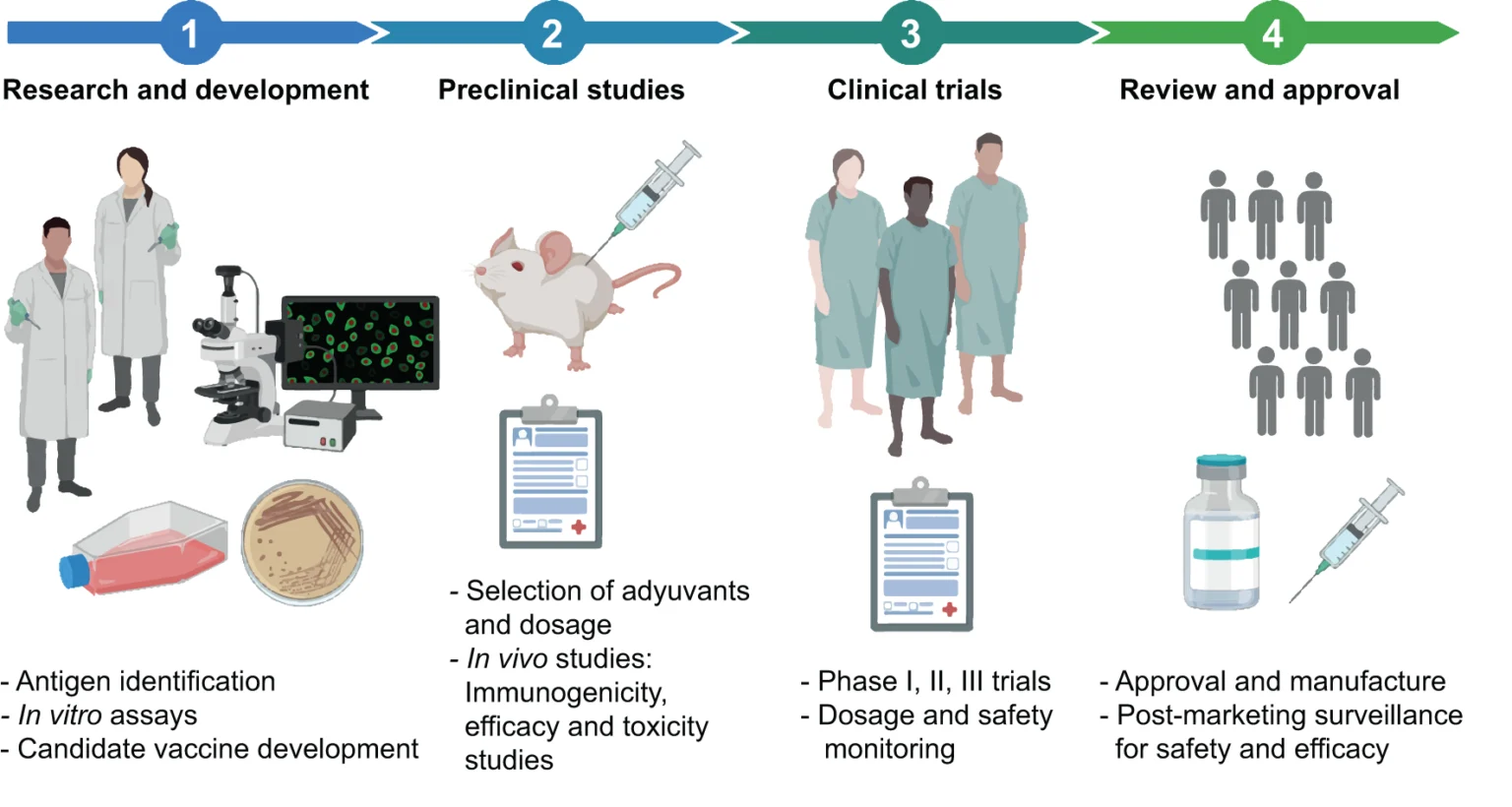
The development of vaccines is a complex and multi-stage process designed to ensure safety and efficacy before a vaccine becomes available for public use. This process is primarily divided into four key phases: the exploratory stage, pre-clinical testing, clinical trials, and regulatory review.
Initially, in the exploratory stage, researchers identify natural or engineered pathogens that may stimulate an immune response. This phase is crucial for establishing the foundation for vaccine development, as it involves understanding the pathogen’s biology and how the immune system interacts with it. Scientists engage in laboratory experiments to discover potential vaccine candidates, focusing on optimizing immune response mechanisms.
The next phase is pre-clinical testing, which involves assessments of safety and immunogenicity using animal models. During this stage, researchers examine how well the vaccine candidate works and adjust formulations accordingly. They conduct rigorous testing to ensure that it induces a robust immune response while minimizing any adverse effects. Successful pre-clinical trials are essential before advancing to human trials, as they provide critical insights into the vaccine’s safety profile.
Clinical trials consist of three phases: Phase I, Phase II, and Phase III. In Phase I, the vaccine is administered to a small group of healthy volunteers to evaluate safety and determine the appropriate dosage. Phase II expands the participant group, including a more diverse population to assess the vaccine’s efficacy and the extent of immune responses generated. Phase III is the final and largest test, wherein thousands of participants receive the vaccine to confirm its effectiveness and monitor any potential side effects in a broader populace.
After successful completion of clinical testing, the vaccine undergoes regulatory review. Regulatory bodies, such as the FDA or EMA, scrutinize the trial data for safety and efficacy before granting approval for public use. This thorough evaluation ensures that only safe and effective vaccines are made available, protecting public health.
Pre Clinical and Clinical Trials
The vaccine development process is a meticulous journey that typically begins with preclinical trials, where researchers aim to evaluate the safety and efficacy of the vaccine candidate. During this phase, animal models play a crucial role. Scientists conduct experiments on these models to gather preliminary data about the immune response generated by the vaccine, as well as to identify any potential side effects. This step is essential, as it helps to ascertain whether the vaccine poses any risks to humans and informs the design of subsequent clinical trials.
Following the successful completion of preclinical trials, researchers proceed to clinical trials, which are conducted in three distinct phases. Phase I focuses on assessing the safety and immunogenicity of the vaccine in a small number of healthy human volunteers. This phase emphasizes close monitoring for adverse events, allowing researchers to determine the appropriate dosage and optimal formulation.
Phase II involves a larger group of participants and aims to evaluate the vaccine’s efficacy and further assess safety. This phase often employs randomized, controlled trial methodologies to ensure robust data collection. Volunteers are divided into groups, with one receiving the vaccine and another receiving a placebo, allowing for direct comparisons of immune responses and side effects.
Finally, Phase III trials involve thousands of participants and serve to confirm the vaccine’s effectiveness in real-world settings. These trials generate comprehensive data on vaccine performance across various demographic groups and help to identify rare side effects that may not have been apparent in earlier phases. The data collected during these stages is critical for regulatory approval and ultimately contributes to public health outcomes.
Regulatory Oversight and Approval
Vaccine development is a complex and highly regulated process that involves meticulous oversight by various regulatory agencies. Among the most prominent are the U.S. Food and Drug Administration (FDA) and the European Medicines Agency (EMA). These organizations play a crucial role in ensuring that vaccines are safe, effective, and of high quality before they reach the public.
The vaccine approval process begins with preclinical studies, where initial toxicity and efficacy are assessed. If the early results are promising, the developers may submit an Investigational New Drug (IND) application to the FDA or similar applications to other regulatory bodies. Upon approval of the IND, clinical trials can commence, typically divided into Phase 1, Phase 2, and Phase 3 trials. Each phase has specific goals, such as evaluating safety and determining an appropriate dosage, which contributes to building a robust data set necessary for regulatory review.
After successful completion of these trials, vaccine manufacturers submit a Biologics License Application (BLA) to the FDA or a Marketing Authorization Application (MAA) to the EMA. This submission includes comprehensive data on the vaccine’s efficacy, safety data from clinical trials, and details on manufacturing processes. Regulatory agencies conduct an in-depth review of this data, consulting advisory committees to make informed decisions.
Even post-approval, the scrutiny does not cease. Ongoing safety assessments through post-marketing surveillance are conducted to monitor the vaccine’s performance in the general population. This continued oversight is essential to identify any rare adverse effects that might not have been apparent during clinical trials. Overall, the rigorous requirements set forth by the FDA, EMA, and other regulatory agencies ensure that the vaccines meet the necessary standards to protect public health effectively.
Challenges in Vaccine Development
Vaccine development is a complex and multifaceted process, characterized by a series of challenges that can impede progress. One of the most significant challenges is scientific in nature, as researchers must navigate intricate biological pathways to identify effective antigens and adjuvants. The process requires extensive testing to ensure the vaccine induces a robust immune response without presenting adverse effects. This often leads to lengthy research periods, which can delay the introduction of essential vaccines.
In addition to scientific hurdles, logistical issues can further complicate the vaccination development landscape. Manufacturing vaccines at scale requires advanced technologies and strict adherence to regulatory standards. Establishing efficient supply chains, particularly during a global health crisis, poses significant difficulties. The necessity for cold storage and transportation also amplifies logistical constraints, especially in low-resource environments where infrastructure may be inadequate.
Moreover, funding presents another critical challenge in vaccine development. Securing investments for vaccine research is essential, yet it often depends on demonstrating a viable return on investment. Consequently, public health initiatives may compete against other pressing health concerns for funding, leading to delays in vital vaccine projects. Global collaboration is paramount in overcoming these financial barriers; however, it can be hindered by political influences, varying priorities among countries, and uneven access to resources.
Lastly, public perception and misinformation can drastically affect the success of vaccine initiatives. Vaccine hesitancy fueled by misinformation can arise from distrust in pharmaceutical companies or government institutions. Combating these perceptions necessitates clear communication strategies and involves engaging communities to build trust and reassure the public about the safety and efficacy of vaccines. To overcome these challenges, it is crucial for stakeholders to foster collaboration and improve global readiness for vaccine development.
The Future of Vaccines: Innovations and Technologies
Over the past decade, advancements in science and technology have reshaped the landscape of vaccine development. These innovations promise not only to enhance the effectiveness of vaccines but also to improve their accessibility to populations worldwide. A leading area of growth is the development of personalized vaccines, tailored specifically to an individual’s genetic makeup and immune response. This personalized approach aims to optimize vaccine efficiency, particularly in the fight against diseases such as cancer, where unique biological markers can inform treatment strategy.
Another promising avenue lies in the realm of DNA vaccines. Unlike traditional vaccines that often use weakened or inactivated pathogens, DNA vaccines employ synthetic genetic material to stimulate an immune response. This technology offers several advantages, including rapid production, stability at ambient temperatures, and the potential for a robust cellular and humoral immune response. Trials have demonstrated the ability of DNA vaccines to elicit strong immune reactions against various infectious diseases, leading researchers to explore their use in both human and veterinary medicine.
Additionally, emerging platforms such as mRNA vaccines have gained significant attention, particularly following their success in combating the COVID-19 pandemic. This technology enables rapid development and scalable production capabilities, drastically shortening the time from pathogen identification to vaccine distribution. mRNA vaccines work by instructing cells to produce a harmless piece of the virus’s protein, prompting an immune response without the risk of disease.
Innovative vaccine delivery systems, including nanotechnology, are also on the rise. Nanoparticles can enhance the stability and delivery of antigens, ensuring they reach the right cells in the right amounts. Overall, these innovations not only hold the promise of more effective vaccines but also aim to ensure that immunization is more accessible across diverse populations, moving us closer to global health equity.
Conclusion: The Importance of Vaccination in Global Health
Vaccination plays a pivotal role in safeguarding public health and preventing the spread of infectious diseases. Over the past few decades, vaccines have significantly contributed to reducing the incidence of diseases such as polio, measles, and hepatitis, exemplifying their effectiveness in controlling and eliminating life-threatening conditions. The immunization of populations not only protects individuals but also establishes herd immunity, which is crucial for those who cannot be vaccinated due to medical reasons. This communal protection creates a healthier society overall, reducing the burden of disease on healthcare systems.
Additionally, vaccination is associated with substantial economic benefits. By preventing diseases, vaccines reduce healthcare costs, lessen the need for medical intervention, and promote a more productive workforce. The long-term effects of vaccinations extend beyond immediate health benefits; they contribute to the stability of communities and economies by preventing outbreaks that could lead to crisis situations.
Despite the evident advantages of vaccination, ongoing efforts in research, education, and public health strategies are necessary to combat misinformation and vaccine hesitancy. Continuous education about the safety and efficacy of vaccines is vital in ensuring public trust and compliance. Health authorities must emphasize the importance of global vaccination efforts, especially in low-income regions where access to healthcare can be limited. Innovations in vaccine technology and equitable distribution methods are required to ensure that all populations, regardless of their geographical or socioeconomic status, receive the protection that vaccines offer.
In conclusion, the critical role of vaccination in enhancing global health cannot be overstated. As we move forward, a collaborative approach involving governments, organizations, and individuals is essential to sustain and improve vaccination rates worldwide. This commitment will ensure that global health remains resilient against current and future infectious disease threats.