
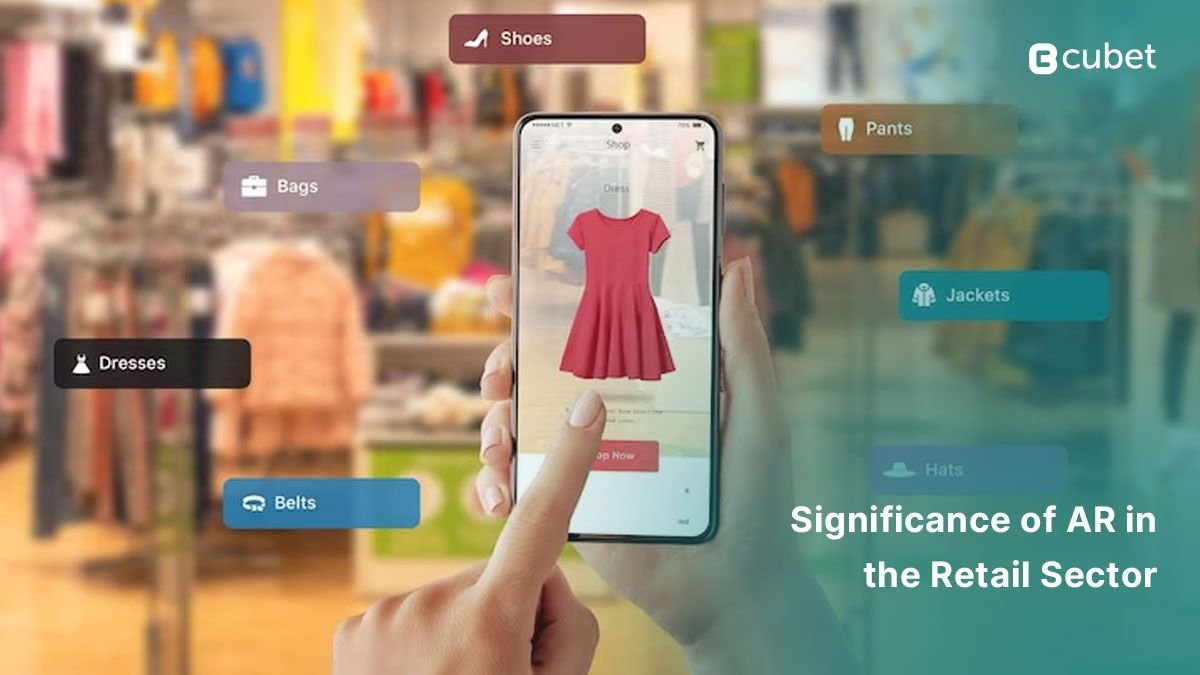

Introduction to Augmented Reality in Retail
Augmented Reality (AR) represents a groundbreaking technology that superimposes digital information onto the real world, enhancing user interaction with their environment. Unlike virtual reality (VR), which creates an entirely immersive digital experience, AR overlays digital elements onto the physical realm. This distinction allows AR to enhance rather than replace the user’s perception of reality, making it particularly beneficial in sectors like retail.
The significance of AR in the retail industry is increasingly recognized. As consumers grow more accustomed to technological advancements, the demand for innovative shopping experiences rises. Retailers are integrating AR strategies to foster customer engagement, allowing them to interact with products in dynamic ways. For instance, shoppers can visualize how a piece of furniture will look in their home by using an AR application to overlay the item in their actual living space through their smartphone camera.
This applications of AR not only enhance the buying process but also bridge the gap between the physical and digital shopping environments. Retailers are using AR to create virtual try-on experiences for clothing, cosmetics, and accessories, giving consumers the ability to make more informed decisions without the constraints of physical limitations. This convergence of the physical and digital realm fosters a more engaging shopping experience, catering to the customer’s desire for personalization.
Moreover, the current retail landscape is increasingly competitive, requiring businesses to leverage technology effectively. By adopting AR, retailers are not only improving operational efficiencies but also enhancing their marketing strategies. The implementation of AR tools can attract a more engaged customer base, improve brand loyalty, and ultimately drive sales growth.
The Benefits of Augmented Reality for Retailers
Augmented Reality (AR) is rapidly transforming the retail sector by enhancing customer experiences and fostering deeper engagement. One of the most significant benefits of AR for retailers is its ability to create interactive shopping environments that attract customers and keep them engaged. By integrating AR technology, retailers can offer immersive experiences, allowing shoppers to visualize products in their own spaces, thereby facilitating better purchasing decisions.
The implementation of AR in retail has been shown to increase sales conversion rates effectively. When customers can interact with products in a virtual setting, their purchasing confidence often rises. For example, furniture retailers using AR apps allow consumers to see how a piece of furniture would fit within their living space, effectively bridging the gap between online browsing and in-store shopping. This capability not only enhances the shopping experience but also significantly drives up conversion rates, as customers are more likely to complete a purchase when they can visualize the product.
Furthermore, AR provides retailers with the opportunity to deliver personalized shopping experiences. Retailers can use AR technology to suggest products based on customer preferences or previous purchases. By analyzing user interaction data, AR applications can present tailored recommendations, thereby improving customer satisfaction and encouraging repeat purchases. Additionally, features like virtual try-ons in the fashion and beauty industries allow customers to see how products look on them before committing to a purchase, effectively reducing return rates.
In summary, the advantages of integrating Augmented Reality into retail extend far beyond mere aesthetics. AR enhances customer experiences, increases sales conversion rates, and provides personalized shopping journeys. As the retail landscape continues to evolve, embracing AR technology may prove to be a crucial factor for success.
Case Studies: Brands Successfully Implementing AR
As augmented reality (AR) technology continues to evolve, many retail brands have recognized its potential to enhance customer engagement and operational efficiency. A few standout examples illustrate the diverse applications of AR in the retail sector.
IKEA has been a pioneer in utilizing AR technology through its mobile application, IKEA Place. This innovative tool allows customers to visualize how furniture items will look in their own living spaces before making a purchase. By leveraging AR, IKEA provides users with a 3D model of selected products, which they can place within their environment via their smartphones. This functionality not only improves the shopping experience but also reduces the likelihood of returns by facilitating informed decisions. Customers have responded positively, often citing enhanced confidence in their purchasing choices.
Sephora, a leading cosmetic retailer, has integrated AR into its shopping experience via the Virtual Artist feature in its app. This feature allows customers to virtually try on makeup products using their device’s camera. By enabling customers to experiment with different looks without the need for physical samples, Sephora has significantly increased user interactivity and satisfaction. The implementation of AR has reportedly led to a rise in customer engagement and purchase conversions, showcasing how technology can transcend traditional retail limitations.
Nike has also embraced AR, particularly in its flagship stores, where customers can use interactive displays that provide personalized product information. The Nike app includes features that allow users to scan shoes, revealing details about material, design, and even customer reviews. This level of engagement not only enriches the shopping experience but also aligns with Nike’s commitment to connecting with consumers on a deeper level. By focusing on the integration of AR experiences, Nike is leading the charge in modernizing retail interactions.
These case studies demonstrate the transformative impact of AR technology within the retail sector, encouraging brands to rethink their customer engagement tactics while creating immersive shopping experiences that cater to modern consumer preferences.
AR in the Online Shopping Experience
Augmented Reality (AR) has emerged as a transformative technology in the retail sector, particularly during online shopping experiences. One of the most notable applications of AR is the development of virtual try-on solutions. This innovation allows consumers to visualize clothing, accessories, and even makeup products on themselves through their devices. By simply pointing their camera at their face or body, customers can see how a particular item will look without physically trying it on. This not only enhances the shopping experience but also helps in making informed decisions, reducing the chances of returns due to unfit products.
In addition to virtual try-ons, AR technology facilitates 3D product visualizations. Online shoppers can explore items in three dimensions, rotating and zooming in to observe details that would be difficult to assess from standard images. This feature is particularly valuable when purchasing large items, such as furniture or electronics, as customers can get a better sense of the product’s dimensions and appearance in a real-world setting. By integrating AR, retailers can bridge the gap between online and in-store shopping, allowing for a more immersive experience.
Furthermore, AR elements can provide interactive product demonstrations, showing how a product works or how it can fit into a consumer’s lifestyle. Such features not only increase engagement but also instill greater confidence in the purchase. By reducing uncertainty and providing a more tangible feel of the items, AR enhances consumer satisfaction and encourages repeat participation in online shopping.
Ultimately, the incorporation of AR into the online shopping experience signifies a shift towards a more interactive and personalized approach, catering to consumers’ needs while redefining how they discover and shop for products online.
AR in Physical Stores: Enhancing In-Person Shopping
Augmented Reality (AR) is significantly transforming the landscape of brick-and-mortar retail by creating more engaging and interactive shopping experiences for customers. One of the primary applications of AR in physical stores is through interactive displays. Retailers are now employing AR to allow customers to view products in a more dynamic way, such as trying on clothes virtually or visualizing how furniture would look in their homes. This not only enhances the visual appeal of displays but also provides valuable information beyond what traditional signage can offer.
Moreover, AR is enhancing in-store navigation, helping customers locate products more easily. With AR-powered applications, shoppers can use their smartphones or AR glasses to scan the environment and be guided to where their desired items are located. This is particularly beneficial in large stores where products are organized in a way that may be confusing for customers. By simplifying the search process, AR is reducing frustration and improving the overall shopping efficiency.
Incorporating gamification elements through AR is another way retailers are engaging customers. For example, brands can create in-store scavenger hunts that use AR technology to provide clues and rewards when customers participate. This not only makes the shopping experience more entertaining but also promotes a deeper connection with the brand, as customers are actively engaging with the environment around them. By bridging the gap between the digital and physical worlds, AR is enhancing the overall shopping experience and encouraging customers to spend more time in stores.
As the retail industry continues to evolve, embracing AR technology will be crucial in meeting the expectations of tech-savvy consumers. By leveraging AR in physical stores, retailers can create immersive experiences that lead to increased customer satisfaction and loyalty.
Challenges and Limitations of AR in Retail
While augmented reality (AR) holds the potential to transform retail experiences, several challenges and limitations must be considered by retailers seeking to adopt this innovative technology. One of the primary hurdles is the inherent costs associated with implementing AR solutions. Developing AR applications and integrating them into existing retail systems often require substantial investment in both software development and necessary hardware. This can be a barrier, especially for smaller retailers or those operating with tight margins.
Another significant concern is customer privacy. As AR applications often utilize a variety of personal data to create customized experiences, it raises questions regarding how that data is collected, stored, and used. Retailers must navigate the complex landscape of privacy regulations and consumer rights, making it essential to balance innovative experiences with transparent data practices. Failure to do so can result in a loss of consumer trust, which is detrimental to any retail operation.
Additionally, the usability of AR applications can pose a challenge. Not all users may have the required technical knowledge or devices to fully engage with AR features. This disparity in access can lead to an inequitable customer experience where certain segments of the market benefit more than others. Retailers must consider the accessibility of their AR solutions to ensure they cater to a broad audience. Factors such as device compatibility and user-friendliness are crucial for ensuring that AR enhances, rather than detracts from, the shopping experience.
Lastly, a robust technological infrastructure is crucial for the successful deployment of AR in retail. Many retailers may face difficulties in ensuring adequate network coverage, processing power, and support for AR applications across various locations. If these technical requirements are not met, the effectiveness of AR solutions can be severely limited, impacting customer satisfaction and engagement.
The Future of AR in Retail
As the retail landscape continues to evolve, augmented reality (AR) is poised to play a pivotal role in shaping its future. The integration of AR technology in retail is not merely a trend; it represents a fundamental shift in how consumers interact with products and experiences. Retailers are increasingly adopting AR to enhance customer engagement, streamline purchasing processes, and create immersive shopping environments.
One of the most promising applications of augmented reality in retail is personalized shopping experiences. Brands are using AR to allow customers to visualize products in their own home environments before making a purchase. For instance, furniture retailers have implemented AR solutions that enable consumers to see how a couch or table would fit in their living space, mitigating the uncertainty often associated with online shopping. This trend is expected to expand beyond furniture, encompassing apparel and accessories, where customers can virtually try on clothing through smart mirrors or mobile applications.
Moreover, AR is expected to revolutionize the in-store shopping experience as well. Retailers may leverage AR to create interactive displays that guide customers through product features or provide instant discounts and promotions via their smartphones. This kind of engagement not only enhances the customer journey but also drives sales through informed decision-making. Furthermore, the integration of AR with artificial intelligence (AI) opens new avenues for data analytics, allowing retailers to tailor marketing strategies based on consumer behavior.
Looking ahead, the potential for AR in retail appears boundless. As technology advances, the capabilities of AR will likely become more sophisticated, leading to even more engaging and personalized shopping experiences. The future of retail will undoubtedly be transformed by AR, paving the way for a new era in consumer interaction and engagement that seamlessly connects the digital and physical worlds.
Consumer Perspectives on AR in Shopping
Augmented reality (AR) has become a pivotal aspect of the retail landscape, reshaping how consumers interact with products. A range of recent surveys provides valuable insights into consumer opinions and attitudes toward the integration of AR technology in shopping experiences. Many consumers express a high level of satisfaction when using AR applications that enhance their purchasing decisions. For instance, studies have shown that nearly 70% of consumers appreciate the ability to visualize products in their own environment before making a purchase. This feature not only boosts confidence in buying decisions but also reduces the likelihood of returns due to mismatched expectations.
Engagement levels are another crucial factor in understanding consumer perspectives on AR in retail. Research indicates that consumers who utilize AR applications often report higher engagement rates compared to those who shop using traditional methods. Interactive features, such as virtual try-ons for clothing and cosmetics, allow shoppers to immerse themselves in a more enjoyable and personalized shopping experience. Moreover, consumers frequently mention that AR elements, like the ability to see how furniture fits into their living space, make the shopping process more intuitive and informative.
Willingness to adapt to AR technologies is increasingly evident among shoppers. A significant percentage of surveyed consumers indicated that they would be more inclined to shop at retailers that offer AR capabilities. This willingness often stems from the convenience that AR applications provide, enabling users to compare products quickly and efficiently. Furthermore, younger demographics appear particularly enthusiastic about adopting AR technology, viewing it as an essential component of modern shopping. As the retail sector continues to evolve, it is crucial for brands to recognize and address these consumer perspectives to ensure they meet the expectations of an increasingly tech-savvy audience.
Conclusion: The Lasting Impact of AR on Retail
As we reflect on the substantial influence that Augmented Reality (AR) is exerting on the retail landscape, it becomes evident that this technology transcends mere novelty. AR is fundamentally altering the way consumers engage with brands, allowing for a more immersive and personalized shopping experience. Throughout our discussion, we have highlighted the various applications of AR in retail, from virtual try-ons for clothing and accessories to interactive displays that enhance product visibility and consumer understanding.
The integration of AR capabilities empowers consumers to visualize products in their own environment through 3D modeling and spatial mapping, ultimately driving more informed purchasing decisions. This unique interaction fosters a deeper connection between the consumer and the brand, enhancing customer loyalty and satisfaction. Moreover, AR serves as a bridge that harmonizes the physical and digital shopping experience, providing retailers with innovative tools to engage customers like never before.
Furthermore, as retailers adopt AR technologies, they gain a competitive edge in an increasingly crowded marketplace. This capability not only attracts tech-savvy consumers but also appeals to a broader audience seeking a richer shopping experience. In this context, AR stands as a transformative force, reshaping traditional retail paradigms and initiating a new era characterized by creativity and interaction.
In summary, Augmented Reality is not simply a passing trend; it represents a significant shift in how consumers shop and interact with brands. As adoption rates continue to grow, the lasting impact of AR in retail will likely evolve and expand, enhancing both operational efficiency for retailers and enriching experiences for consumers. The future of retail will undoubtedly be shaped by the ongoing innovations in AR technology, leading to unprecedented opportunities in the retail industry.