
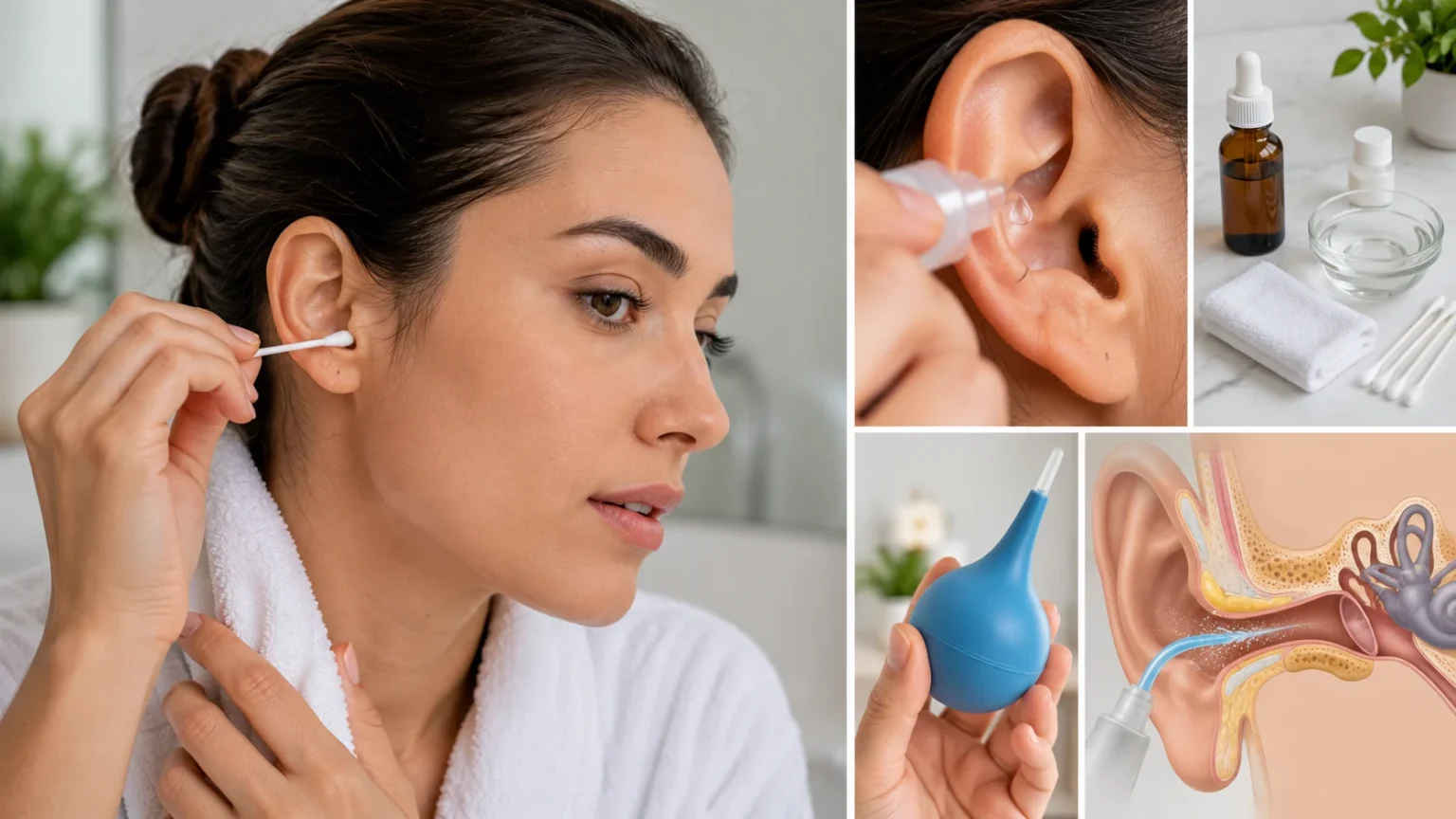

How to Clean Your Ears Safely Without Causing Damage
Cleaning your ears may seem like a basic part of personal hygiene, but the safest approach is often much gentler than people expect. The ear canal is designed to move earwax outward naturally, which means routine deep cleaning is usually unnecessary. Problems often begin when cotton swabs, hairpins, ear-cleaning tools, or other objects are inserted into the canal in an attempt to remove wax. Instead of pulling earwax out, these methods can push it deeper, scratch delicate skin, or even damage the eardrum. For most people, cleaning only the visible outer ear is enough to maintain good hygiene. Understanding how earwax works can help you avoid unnecessary cleaning and protect your hearing.
Earwax, medically called cerumen, is not simply dirt that needs to be removed whenever it appears. It helps trap dust and debris, protects the skin of the ear canal, and contributes to an environment that discourages excessive bacterial growth. Jaw movement from talking and chewing gradually helps move old wax toward the ear opening, where it can dry and fall away naturally. Some people produce more earwax than others, and certain ear shapes can make wax more likely to accumulate. Hearing aids, earbuds, and frequent use of earplugs may also interfere with normal wax movement. The goal of safe ear cleaning is therefore not to create a completely wax-free ear but to prevent troublesome buildup without injuring the canal.
When earwax becomes impacted, symptoms can include muffled hearing, fullness, itching, discomfort, ringing in the ears, or a sensation that the ear is blocked. In these situations, earwax-softening drops or professional removal may be appropriate depending on your health history. Home irrigation is not suitable for everyone, particularly people with a perforated eardrum, ear tubes, previous ear surgery, significant ear pain, drainage, or certain medical conditions. Sudden hearing loss should also never automatically be blamed on wax because it can have other causes that need prompt treatment. This guide explains how to clean your ears safely, which methods to avoid, and when medical care is the better option.
Why Your Ears Usually Do Not Need Deep Cleaning
The ear canal has a natural self-cleaning system that continuously moves old skin cells and earwax toward the outside of the ear. This process is assisted by movements of the jaw during chewing and speaking, which gradually shift material outward. Once wax reaches the entrance of the canal, it may become dry, flake away, or be easily wiped from the visible outer ear. Because of this mechanism, healthy ears generally do not need instruments inserted into them for routine cleaning. Trying to remove wax from deep inside can actually interfere with the process. The more often objects are inserted, the greater the chance that wax will be pushed toward the eardrum instead of moving outward naturally.
Earwax has several useful functions that make complete removal unnecessary and potentially counterproductive. It coats the skin of the ear canal and helps prevent excessive dryness, cracking, and irritation. Its sticky texture traps small particles of dust, dirt, and other debris before they travel farther into the canal. Cerumen also contributes to the ear canal’s protective environment, helping limit conditions that encourage some microorganisms to grow. A small amount of wax is therefore normal and healthy rather than a sign of poor hygiene. Someone who notices visible wax near the opening of the ear does not necessarily have an earwax problem. Treatment is generally needed when wax causes symptoms or prevents a healthcare professional from examining the ear properly.
People naturally produce different amounts and types of earwax. Genetics can influence whether wax tends to be softer and wetter or drier and more flaky, while age can make cerumen harder and more difficult to move naturally. Older adults are therefore more likely to experience impacted earwax, especially when the ear canal becomes narrower or hairier over time. Some people also have naturally narrow, curved, or irregular ear canals that make normal wax migration more difficult. These anatomical differences explain why one person may rarely think about earwax while another experiences repeated blockage. Having recurrent wax does not necessarily mean someone is cleaning poorly, and aggressive cleaning often makes the situation worse rather than preventing it.
Devices placed in or around the ear can also change the way wax behaves. Hearing aids, in-ear headphones, earbuds, and earplugs can partially block the natural outward movement of cerumen. Repeated insertion may also push existing wax deeper into the canal, particularly when devices are worn for many hours each day. People who regularly use these products may therefore notice more frequent blockage or need professional earwax checks. Keeping the devices themselves clean according to manufacturer instructions can reduce accumulation of wax and debris on their surfaces. However, cleaning a hearing aid is very different from inserting cleaning tools into the ear canal. The canal itself should still be treated gently to avoid irritation and impaction.
A healthy ear canal usually needs very little maintenance beyond washing the external ear during normal bathing. Water that reaches the visible folds of the ear can be wiped away with a clean towel or soft cloth afterward. There is no need to scrub the ear opening aggressively or attempt to make the canal visibly spotless. Excessive cleaning can strip away protective wax and leave the skin dry, itchy, and more easily irritated. This irritation can create the urge to scratch or insert objects, beginning a cycle that causes additional damage. A safer mindset is to think of earwax as protective material that only needs attention when it becomes excessive, uncomfortable, or obstructive.
The Safest Way to Clean the Outside of Your Ears
For routine ear hygiene, focus on the auricle, which is the visible external part of the ear, and the area immediately around the entrance of the ear canal. During a shower or bath, allow warm water to clean the outer ear naturally without directing a high-pressure stream deep into the opening. Afterward, gently dry the visible areas with a soft towel or clean washcloth. You can wipe away wax that has already migrated to the outer edge of the canal without inserting the cloth farther inside. This approach removes sweat, skin oils, and visible debris while leaving the ear’s self-cleaning system intact. For most people without symptoms, no additional earwax removal is necessary.
Cotton swabs can be used on the outer folds of the ear if needed, but they should not be pushed into the ear canal. A useful rule is to clean only the areas you can easily see without attempting to reach inward. Once a swab enters the canal, it can compress wax and move it farther toward the eardrum. Repeated swab use is a common reason people develop dense plugs of impacted earwax despite believing they are cleaning thoroughly. Swabs can also scratch the thin canal skin, creating pain, inflammation, or an opportunity for infection. In rare cases, accidental movement while a swab is inserted can injure the eardrum.
If the skin around your ears becomes oily or sweaty, gentle soap can be used on the external ear during bathing. Soap should not be deliberately pushed into the canal because residue may contribute to dryness or irritation. Rinse the outer ear carefully and dry it without rubbing aggressively. People with sensitive skin, eczema, or dermatitis may need fragrance-free products because harsh cleansers can worsen itching around the ear. Persistent scaling, redness, crusting, or irritation should not automatically be treated as an earwax problem. Skin conditions around or inside the ear may require a different treatment approach from ordinary wax buildup.
After swimming or showering, some people notice temporary water trapped in the ear. Tilting the head and allowing gravity to help the water drain is usually safer than inserting a swab or tissue into the canal. Gently pulling the outer ear in different directions may help water escape in some cases. Drying only the outside with a towel is generally sufficient once drainage stops. If water repeatedly remains trapped, causes pain, or is followed by increasing itching or discharge, an outer ear infection may be developing. People prone to swimmer’s ear should discuss prevention strategies with a clinician rather than regularly using homemade ear solutions without considering eardrum health.
Ear hygiene should feel simple rather than invasive. If routine cleaning repeatedly causes pain, bleeding, significant itching, or blocked hearing, the problem may not be ordinary surface wax. Continuing to clean more aggressively can worsen conditions such as impacted cerumen, eczema, ear canal infection, or eardrum injury. A clinician can look inside the ear with an otoscope and determine whether wax is actually present and where it is located. This examination is especially useful when symptoms affect only one ear or when hearing changes suddenly. Safe cleaning means knowing when to stop home care rather than trying increasingly forceful methods to make the ear feel completely clean.
How Earwax-Softening Drops and Irrigation Work
Earwax-softening drops, sometimes called cerumenolytics, can help loosen hardened wax so that it moves outward more easily or can be removed by a healthcare professional. Common formulations may contain carbamide peroxide, hydrogen peroxide in appropriate ear-care products, saline, mineral oil, glycerin, or other ingredients designed to soften cerumen. Different products work in slightly different ways, so instructions on the package should be followed carefully. More drops or longer exposure does not necessarily improve results and may increase irritation. Some people hear bubbling or temporary crackling after using certain peroxide-containing drops. That sensation can be normal, but significant pain, dizziness, or worsening symptoms are reasons to stop and seek advice.
Softening drops are most appropriate when earwax blockage is likely and there are no reasons to avoid putting liquid into the ear. Someone with an intact eardrum and uncomplicated wax buildup may be able to use an over-the-counter earwax product as directed. However, people with known or suspected eardrum perforation, ear tubes, previous ear surgery, active infection, drainage, or unexplained severe ear pain should not start ear drops without professional guidance. Liquid entering through a damaged eardrum can potentially reach structures that are normally protected. When your ear history is uncertain, having the ear examined first is safer than experimenting with multiple products.
Ear irrigation uses liquid to flush softened wax from the canal, but it requires more caution than simply cleaning the outer ear. Water that is too hot or too cold can sometimes trigger dizziness because the inner ear responds to temperature changes. Excessive pressure can injure the canal or eardrum, particularly when a hard wax plug is tightly impacted. Irrigation may also leave moisture behind, potentially increasing the risk of outer ear infection in susceptible people. For these reasons, forceful water jets, high-pressure devices, and shower attachments should never be directed into the ear canal. Professional irrigation allows the ear to be assessed before and during removal.
Some people should generally avoid home irrigation unless a healthcare professional specifically advises otherwise. This includes people with a history of perforated eardrum, ventilation tubes, significant ear surgery, or anatomical abnormalities affecting the canal. Extra caution is also appropriate for individuals with diabetes or weakened immune systems because complications from ear infections can be more serious. Severe ear pain, active drainage, bleeding, or a suspected foreign object are additional reasons to avoid flushing the ear. When any of these circumstances are present, professional removal using appropriate instruments or microsuction may be safer. The correct method depends on what is actually inside the ear and the condition of the surrounding tissues.
If an ear remains blocked after an appropriate course of softening drops, repeatedly escalating home treatment is not a good strategy. Persistent symptoms may mean the wax is too dense, positioned too deeply, or not actually responsible for the problem. Hearing loss can also result from middle ear fluid, infection, eardrum problems, or inner ear conditions that drops cannot correct. A healthcare professional can directly examine the canal and determine whether additional wax removal is needed. Professional techniques may include careful irrigation, suction, or removal with specialized instruments under direct visualization. The goal is to clear the obstruction without damaging the canal or eardrum.
Ear-Cleaning Methods You Should Avoid
Cotton swabs are one of the most commonly misused ear-cleaning products because their shape makes them appear ideal for reaching into the canal. In reality, inserting a swab often pushes wax deeper instead of removing it. With repeated use, smaller amounts of wax can become compressed into a firm plug close to the eardrum. This can lead to muffled hearing, pressure, ringing, discomfort, or difficulty examining the ear. Swabs can also leave small fibers behind or scratch the canal skin. They are better reserved for cleaning visible external areas rather than exploring inside the ear. If a swab disappears from view inside the canal, it has already gone farther than routine hygiene requires.
Hairpins, fingernails, keys, tweezers, matchsticks, pen caps, and improvised ear picks are considerably more dangerous. The ear canal is narrow, and the eardrum sits at its inner end where it can be injured by surprisingly small movements. A sudden cough, sneeze, stumble, or bump from another person can drive an inserted object deeper than intended. Sharp or irregular objects can cut the canal, produce bleeding, and increase infection risk. An eardrum perforation may cause sudden pain, hearing loss, ringing, drainage, or dizziness. No amount of perceived precision makes a household object an appropriate tool for cleaning inside the ear.
Ear candles are another method that should be avoided despite claims that they can pull wax or toxins from the ear. The basic idea involves placing a hollow candle near the ear opening and lighting the opposite end, supposedly creating suction. In practice, this method can cause burns, drip hot candle wax into the canal, or temporarily block the ear further. It can also create a fire hazard near hair and skin. The ear canal does not need smoke or heat to stimulate normal wax removal. When wax requires treatment, softening products or professionally supervised removal are more predictable approaches.
Small cameras attached to consumer ear picks have become increasingly visible online, but seeing the ear canal does not make deep self-cleaning risk-free. Camera perspective can be misleading, and people without clinical training may have difficulty distinguishing ordinary wax from irritated skin, infection, or the eardrum itself. Watching a screen can also create confidence that encourages someone to manipulate areas that should be left alone. Even smooth tools can scrape canal skin or push wax deeper when used repeatedly. A healthcare professional examining the ear has both specialized equipment and training to recognize normal anatomy and warning signs. Home cameras may provide an interesting view, but they do not convert self-instrumentation into a medical procedure.
Vacuum devices and high-pressure ear cleaners also deserve caution, particularly when they make claims about powerful wax extraction. Excessive suction or pressure can irritate delicate tissues, while poorly designed attachments may still enter too deeply. Some devices remove little useful wax while encouraging repeated manipulation because the ear continues to feel blocked. If hearing remains reduced after an attempted cleaning, continuing to use stronger equipment may delay diagnosis of another ear problem. Safe ear care is rarely about applying more mechanical force. When simple external cleaning or an appropriate wax-softening product does not solve the problem, professional examination becomes the safer next step.
How to Recognize an Earwax Blockage
Earwax impaction occurs when wax accumulates enough to block part or all of the ear canal. One of the most common symptoms is gradual muffled hearing that may affect one or both ears. People often describe the sensation as though they are hearing through an earplug or have water trapped in the ear. Fullness, pressure, itching, or mild discomfort can also occur. Some individuals hear ringing, called tinnitus, when wax significantly obstructs the canal. Symptoms may become more noticeable after showering because water can become trapped around the wax or cause the plug to expand slightly.
Wax blockage can sometimes develop shortly after attempts to clean the ear with cotton swabs. A person may initially remove a small amount of visible wax but unknowingly compress the rest deeper into the canal. This explains why hearing can feel worse after apparently successful cleaning. Earbud and hearing-aid users may experience a similar effect because repeated insertion prevents wax from moving outward normally. People with narrow ear canals or naturally dry, hard wax are also more susceptible. Recurrent blockage is not a reason to perform deeper home cleaning. Instead, periodic examination and an individualized prevention plan may be safer.
Ear pain should not automatically be assumed to come from wax, particularly when the pain is significant or rapidly worsening. Outer ear infections, middle ear infections, jaw problems, dental conditions, eardrum injuries, and other disorders can produce similar discomfort. Ear discharge, fever, marked tenderness, or swelling around the ear can suggest infection rather than uncomplicated cerumen buildup. A foul odor from drainage also deserves professional assessment. Because the ear canal cannot be fully evaluated without appropriate visualization, symptoms alone cannot always distinguish wax from another problem. This is another reason aggressive home irrigation can be risky when the diagnosis is uncertain.
Sudden hearing loss requires particular caution because it can be mistaken for a blocked ear. Some inner ear conditions produce rapid hearing reduction without obvious pain and may require urgent treatment to improve the chance of recovery. If hearing suddenly drops over hours or a few days, especially in one ear, medical evaluation should not be delayed while repeatedly trying wax-removal products. Severe dizziness, neurological symptoms, or new intense ringing can increase the urgency. Wax can certainly cause hearing loss, but only an examination can confirm that it is blocking the canal. Prompt assessment helps distinguish a simple obstruction from a time-sensitive hearing problem.
A healthcare professional can usually diagnose earwax impaction by looking into the canal with an otoscope. If wax is blocking the view of the eardrum, removal may be recommended based on symptoms and medical history. Some people need softening drops first, while others may be better candidates for suction or careful manual removal. Hearing often improves quickly once a true wax obstruction is cleared. If symptoms continue despite successful removal, additional evaluation may be necessary to look for another cause. The important point is that wax should be treated because it is causing a problem, not simply because a small amount is visible.
Special Ear-Cleaning Considerations for Children, Hearing Aids and Ear Problems
Children generally need even less ear cleaning than adults because their ear canals are small and easily injured. Parents can gently clean the visible outer ear with a washcloth during bathing, but cotton swabs and ear-cleaning tools should not be inserted into a child’s canal. Young children may move suddenly during cleaning, making accidental injury especially likely. Earwax visible near the opening can usually be left alone unless it is causing symptoms or a clinician recommends removal. If a child complains of ear pain, has fever, drainage, hearing difficulty, or repeatedly touches the ear, professional examination is more useful than attempting deep cleaning at home.
Children who have had tympanostomy tubes, commonly called ear tubes, require additional caution with drops and irrigation. Tubes create an opening through the eardrum that changes which liquids and medications are appropriate for the ear. Parents should follow the instructions provided by the child’s ear specialist rather than using routine wax-removal products automatically. The same principle applies to anyone with a known perforated eardrum. A hole in the eardrum can allow fluid to enter the middle ear, potentially causing pain or other complications. When the eardrum’s condition is uncertain, professional evaluation should come before flushing the canal.
Hearing-aid users often develop more noticeable earwax problems because the device sits at or inside the canal for long periods. Wax can also block hearing-aid microphones or sound outlets, making the device seem weaker or distorted. Keeping the hearing aid clean according to its manufacturer’s instructions helps preserve function, but the ear itself should not be aggressively cleaned. Regular ear examinations may be useful for people who repeatedly develop impaction. Some audiology or ENT practices incorporate wax checks into hearing-care appointments. Professional removal can be especially helpful when the canal must remain clear for hearing aids to work effectively.
People with chronic skin conditions around the ears may mistake dryness or eczema for a hygiene problem. Scratching inside the ear in response to itching can damage the skin and worsen inflammation. Repeatedly washing the canal may also remove protective oils and make dryness more severe. Conditions such as eczema, psoriasis, and seborrheic dermatitis can affect skin around or within the ear and may require targeted treatment. Persistent itching accompanied by flaky skin, redness, or recurrent irritation deserves medical assessment. Treating the underlying skin condition is more effective than repeatedly trying to remove wax that may not be causing the symptoms.
Previous ear surgery changes the safety considerations for home cleaning because normal anatomy may have been altered. People who have had mastoid surgery, eardrum reconstruction, chronic ear disease, or other significant procedures should follow individualized instructions from their ENT specialist. Home irrigation may be inappropriate even years after surgery, depending on the procedure performed. Recurrent drainage, unusual odor, worsening hearing, or pain in a previously operated ear should be examined rather than treated with generic products. Medical history matters because an approach that is harmless for one person may create unnecessary risk for another. Safe ear cleaning always depends on the condition of both the canal and the eardrum.
When to See a Doctor and How to Prevent Future Earwax Problems
Professional evaluation is appropriate when ear symptoms are persistent, severe, or difficult to explain. Significant ear pain, bleeding, drainage, fever, sudden hearing loss, severe dizziness, or a foreign object in the ear should not be managed with routine wax-cleaning methods. A healthcare professional can examine the canal and eardrum and determine whether wax, infection, injury, or another condition is responsible. If a foreign object is lodged in the ear, repeated attempts to grab it may push it farther inward. Batteries and certain sharp objects require particularly prompt attention. The safest treatment begins with identifying what is actually causing the symptoms.
Routine wax blockage can often be managed in a primary care clinic, audiology setting, or ear, nose, and throat practice depending on local services and the person’s medical history. Professional techniques include controlled irrigation, microsuction, and manual removal with specialized instruments. Microsuction uses gentle suction under direct visualization and may be preferred in certain circumstances where irrigation is unsuitable. Manual removal allows a trained professional to carefully lift wax from the canal using appropriate equipment. No method is perfect for every ear, which is why examination matters. The clinician considers wax consistency, canal anatomy, eardrum health, previous surgery, infection risk, and patient comfort before choosing an approach.
People who repeatedly develop impacted wax may benefit from a preventive plan rather than waiting until hearing becomes blocked each time. A clinician might recommend occasional softening drops when medically appropriate or periodic professional cleaning for someone prone to heavy accumulation. Hearing-aid users may need more frequent ear checks because their devices interfere with natural wax migration. Avoiding routine insertion of cotton swabs often reduces recurrence by allowing the ear’s normal outward movement to function. Keeping earbuds and hearing aids clean can also limit debris buildup around the opening. Prevention should be gentle and consistent rather than based on frequent deep cleaning.
It is also useful to reconsider the idea that perfectly clean ears should contain no visible wax. Cerumen is part of normal ear physiology, and small amounts near the canal opening do not require treatment. Overcleaning can increase itching, irritation, and the urge to clean again, creating a self-perpetuating cycle. Gentle external hygiene and leaving the canal alone are often the healthiest approach. When wax repeatedly affects hearing or comfort, professional guidance can help determine why buildup occurs. The safest ear-care routine is generally the least invasive one that keeps symptoms under control.
Protecting your ears means treating hearing and eardrum health as more important than removing every trace of wax. Avoid inserting objects, using unproven ear candles, or directing high-pressure water into the canal. Use wax-softening products only when they are appropriate for your ear history, and stop if they cause significant pain or other concerning symptoms. Seek medical assessment when hearing changes suddenly, drainage appears, or symptoms persist despite simple care. Most ears can manage wax remarkably well when they are allowed to function naturally. Learning when not to clean is one of the most important parts of cleaning your ears safely.
Frequently Asked Questions
What is the safest way to clean your ears?
The safest routine method is to clean only the visible outer ear with a soft washcloth or towel after bathing. Avoid inserting cotton swabs, tools, or other objects into the ear canal because they can push wax deeper and injure delicate tissues.
Can I use hydrogen peroxide to clean my ears?
Some commercial earwax-softening products contain peroxide-based ingredients and can be appropriate for certain people when used exactly as directed. Do not put peroxide or other liquids into an ear with a known or suspected perforated eardrum, ear tubes, active drainage, previous significant ear surgery, or severe unexplained pain without professional advice.
Are cotton swabs safe for earwax removal?
Cotton swabs are not recommended for removing wax from inside the ear canal because they frequently push wax deeper instead of pulling it out. They can also scratch the canal or injure the eardrum if inserted too far.
How do I know if I have impacted earwax?
Impacted earwax can cause gradual muffled hearing, fullness, itching, pressure, ringing, or discomfort in the affected ear. Because infections and other ear conditions can produce similar symptoms, professional examination is helpful when symptoms persist or hearing changes significantly.
When should I see a doctor about earwax?
Seek medical care if you have severe pain, bleeding, drainage, fever, sudden hearing loss, significant dizziness, a foreign object in the ear, or blockage that does not improve with appropriate basic care. People with ear tubes, eardrum perforation, previous ear surgery, diabetes, or recurrent ear problems should also get individualized advice before attempting home irrigation.