
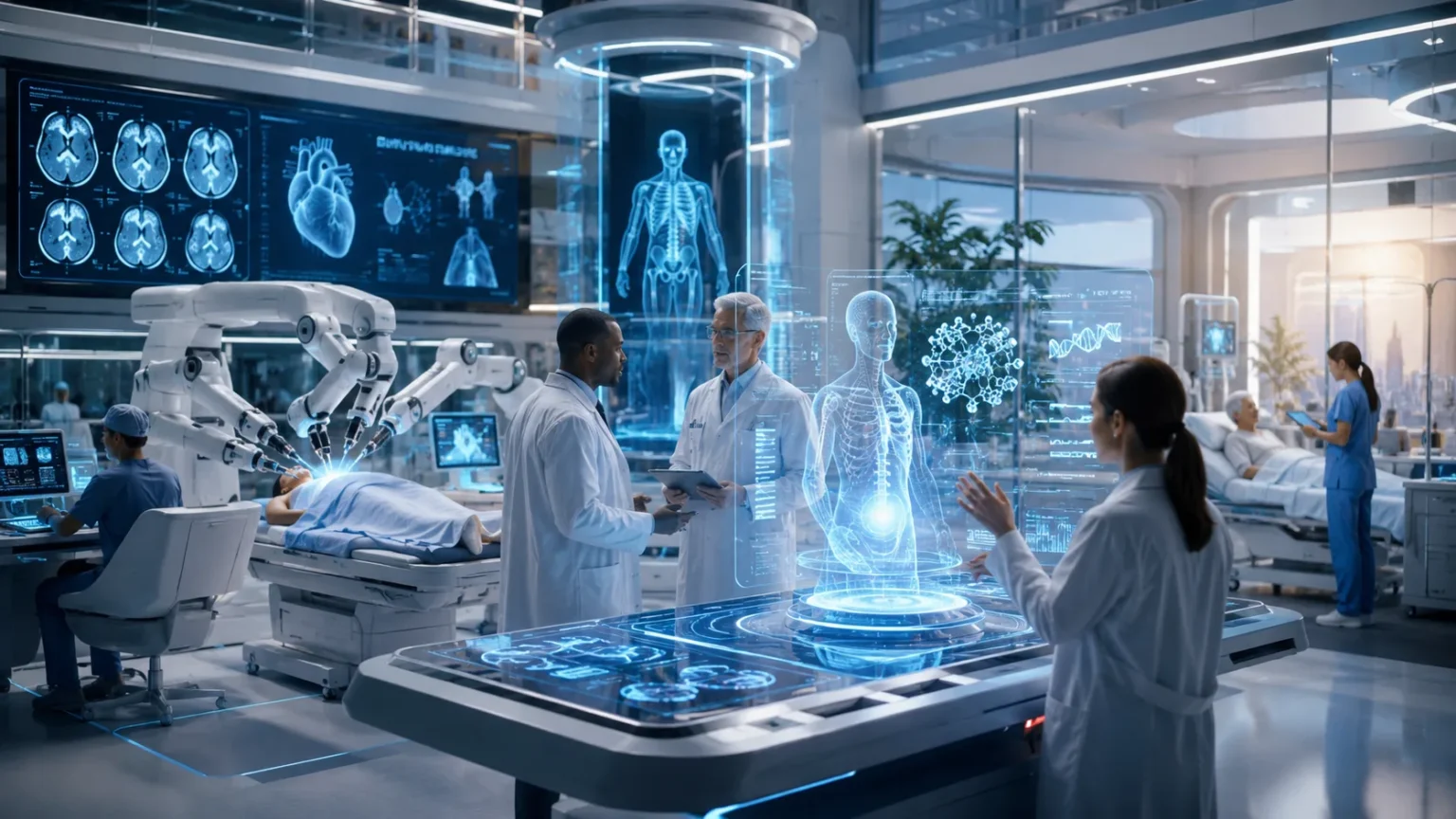

Future Medicine: Scientific Discoveries Changing Healthcare
Medicine is entering a period in which treatments are becoming increasingly precise, data-driven, and tailored to individual patients. Technologies that once sounded futuristic—including gene editing, artificial intelligence, engineered immune cells, and lab-grown organ-like tissues are now moving from research laboratories into clinical studies and, in some cases, routine medical care.
The future of medicine is not simply about inventing new drugs. Researchers are developing better ways to detect diseases earlier, understand their molecular causes, predict which treatments may work, repair damaged tissues, and continuously monitor health outside hospitals. These advances are gradually changing healthcare from a reactive model toward more preventive and personalized medicine.
Some discoveries are already transforming patient care, while others remain experimental. CRISPR-based therapies have received regulatory approval for certain inherited blood disorders, cellular immunotherapies are treating selected cancers, and AI-enabled medical devices are already part of the healthcare technology landscape.
Other possibilities—including personalized gene-editing treatments, xenotransplantation, sophisticated organoids, and therapeutic cancer vaccines are progressing rapidly but still require extensive testing. Understanding where the science actually stands helps separate realistic medical innovation from exaggerated predictions about the future of healthcare.
What Does the Future of Medicine Really Mean?
Future medicine refers to scientific and technological advances that could improve how diseases are prevented, diagnosed, monitored, and treated. Instead of focusing exclusively on symptoms after someone becomes ill, researchers increasingly aim to identify biological changes earlier and intervene before significant damage occurs.
This shift includes precision medicine, genomic testing, artificial intelligence, advanced medical imaging, digital health technologies, cell and gene therapies, regenerative medicine, and new approaches to drug discovery. Many of these areas overlap because modern healthcare increasingly combines biology with computing, engineering, chemistry, and data science.
Future healthcare will also depend on better understanding differences among patients. Two people with what appears to be the same disease may have different genetic variants, molecular abnormalities, immune responses, environments, or treatment histories. Identifying those differences can help clinicians choose more appropriate therapies.
The biggest change may therefore be philosophical as much as technological. Medicine is gradually moving away from assuming that one treatment will work equally well for everyone and toward healthcare strategies informed by an individual’s biology, clinical history, behavior, and changing health data.
Precision Medicine Is Making Treatment More Personal
Precision medicine aims to select prevention or treatment strategies based on characteristics specific to an individual or group of patients. These characteristics can include genetic information, biomarkers, medical history, environmental exposures, lifestyle factors, and molecular features of a disease.
Cancer treatment already provides a useful example. Modern oncology may classify tumors according to genetic mutations or molecular markers rather than relying only on the organ where the cancer began. This information can sometimes reveal therapies designed to target specific vulnerabilities within cancer cells.
Artificial intelligence may further strengthen precision medicine by analyzing combinations of medical imaging, laboratory results, genomic information, and clinical records. Current research is exploring how multimodal AI can identify patterns that would be extremely difficult for humans to evaluate manually.
Precision medicine does not mean doctors will be able to predict every patient’s future perfectly. Biology remains complex, and treatments can still work differently between individuals. Instead, the goal is to make medical decisions increasingly informed by evidence specific to the patient rather than population averages alone.
Genomic Medicine Is Revealing the Biology Behind Disease
Genomic medicine examines a person’s DNA and other biological information to better understand disease risk, diagnosis, and treatment. Improvements in DNA sequencing have made it possible to analyze enormous amounts of genetic information far more efficiently than was possible during the early years of genome research.
Genetic testing can already help diagnose certain inherited disorders and identify mutations associated with particular cancers. In rare diseases, analyzing a patient’s genome or exome may reveal a genetic explanation after years of inconclusive medical investigations.
Another developing area is pharmacogenomics, which studies how genetic differences influence responses to medications. Certain genetic variants can affect how quickly drugs are metabolized, whether they are likely to work, or whether particular adverse effects may occur.
Genomics will probably become increasingly integrated with other medical data rather than functioning alone. A genetic variant becomes more clinically useful when it can be interpreted alongside symptoms, laboratory findings, family history, imaging, environmental factors, and other information relevant to a patient’s condition.
CRISPR Gene Editing Has Moved Into Real Medicine
CRISPR is a gene-editing technology that allows scientists to make targeted changes to DNA. Researchers can use variations of CRISPR systems to cut, disable, replace, or modify genetic sequences, opening possible approaches for diseases caused by specific genetic abnormalities.
A major milestone occurred when CRISPR-based therapy became an approved medical treatment for sickle cell disease. In July 2026, the FDA expanded approval of Casgevy for eligible patients aged 2 years and older with sickle cell disease or transfusion-dependent beta thalassemia, demonstrating that genome editing has moved beyond laboratory research into regulated clinical medicine.
Gene editing still presents challenges. Scientists need to deliver editing machinery to the correct cells, minimize unintended DNA changes, understand possible long-term effects, and determine whether treatments can be manufactured safely and affordably.
Future CRISPR technologies may become more precise and versatile. Base editing and prime editing, for example, are designed to make certain genetic changes without creating the same type of double-stranded DNA cut used by traditional CRISPR-Cas9 approaches.
Personalized Gene Editing Could Transform Rare-Disease Treatment
One of the most striking recent developments in future medicine has been personalized gene editing. Instead of designing a drug for thousands of patients with the same condition, researchers are exploring whether treatments could sometimes be created for extremely small groups—or even individual patients.
In 2025, researchers reported treating an infant with a severe rare metabolic disorder using a customized gene-editing therapy designed specifically for his disease-causing genetic variants. NIH described the case as the first successful use of a personalized gene-editing treatment of this type.
The significance extends beyond one patient. Thousands of rare genetic disorders affect relatively small populations, making conventional drug-development economics challenging. A flexible platform capable of rapidly adapting gene-editing tools to different mutations could potentially create new treatment possibilities for some of these conditions.
However, personalized therapies remain extraordinarily difficult to develop. Scientists must solve manufacturing, regulatory, safety, cost, and long-term monitoring challenges before customized gene editing can become widely accessible. The breakthrough is therefore an important proof of possibility rather than evidence that personalized genetic cures are already routinely available.
Artificial Intelligence Is Becoming Part of Healthcare
Artificial intelligence can analyze medical information, recognize patterns, generate predictions, and assist healthcare professionals with specific tasks. Medical AI systems are being developed for imaging, disease detection, clinical decision support, risk assessment, monitoring, workflow automation, and numerous other applications.
AI-enabled medical devices are already a regulated part of healthcare rather than purely experimental technology. The FDA maintains a continuously updated list of authorized AI-enabled medical devices and has developed guidance addressing their safety, effectiveness, transparency, and lifecycle management.
Medical imaging has been a particularly active area because machine-learning systems can analyze complex images from radiology and other specialties. AI may help identify abnormalities, prioritize urgent cases, quantify features, or provide additional information that supports a clinician’s interpretation.
The safest vision of AI in healthcare is generally not a machine replacing every doctor. Instead, AI may increasingly work as a clinical tool that helps professionals process information more efficiently while physicians and other healthcare providers remain responsible for context, judgment, communication, and patient care.
Medical AI Still Needs Human Oversight
Artificial intelligence can make mistakes when training data poorly represent real patients or when healthcare environments differ from those used during model development. Algorithms may also perform differently across hospitals, equipment types, populations, or changing clinical conditions.
Performance can change after deployment, which makes ongoing evaluation particularly important. In 2025, the FDA sought input on approaches to measuring the real-world performance of AI-enabled medical devices, including methods for detecting changes or performance drift over time.
Bias is another important challenge. If datasets underrepresent certain populations, AI systems may provide less accurate predictions for those groups. Responsible medical AI therefore requires diverse data, transparent evaluation, careful validation, cybersecurity protections, and clearly defined clinical uses.
Patients also deserve to know when important medical decisions involve automated systems. Future healthcare must balance technological innovation with explainability, accountability, privacy, and the human relationship between patients and healthcare professionals.
AI Could Accelerate Drug Discovery
Traditional drug development requires researchers to identify biological targets, search for promising molecules, perform laboratory experiments, conduct animal studies when appropriate, and progress through multiple stages of human clinical trials. The process can require considerable time and resources.
Artificial intelligence can help researchers analyze enormous chemical and biological datasets. Machine-learning systems may predict molecular properties, suggest potential drug candidates, identify biological targets, and help prioritize experiments that appear most promising.
AI can also help analyze genomic data and discover relationships between diseases and biological pathways. Combining computational models with laboratory experiments could make early-stage drug research more focused, although predictions still require real-world biological testing.
Future medicine may therefore use AI as an accelerator rather than a replacement for pharmaceutical science. Computer models can suggest possibilities rapidly, but laboratory experiments and well-designed clinical trials remain essential for proving that a treatment is actually safe and effective.
Cancer Immunotherapy Is Becoming More Sophisticated
Cancer immunotherapy aims to help a patient’s immune system recognize and attack malignant cells. Some of the most advanced approaches involve collecting immune cells, modifying or expanding them in laboratories, and returning them to the patient as a personalized treatment.
CAR T-cell therapy has become an established option for selected blood cancers. The treatment involves engineering a patient’s T cells to recognize particular targets on cancer cells, and multiple CAR T therapies have received regulatory approval since the first approval in 2017.
Cellular therapy has also begun moving further into solid tumors. In 2024, lifileucel became the first FDA-approved tumor-infiltrating lymphocyte therapy and the first approved cellular therapy for a solid tumor, specifically certain advanced melanomas.
A T-cell receptor therapy was also approved for eligible patients with metastatic synovial sarcoma in 2024. Together, these advances suggest that future cancer treatment may increasingly involve highly personalized immune cells engineered or selected to recognize individual tumors.
Personalized Cancer Vaccines Could Train the Immune System
Vaccines are usually associated with preventing infectious diseases, but researchers are also developing therapeutic vaccines designed to help the immune system recognize existing cancers. These approaches may target molecules or mutations that distinguish tumor cells from healthy tissues.
One strategy involves identifying tumor-specific neoantigens created by genetic mutations within an individual’s cancer. Researchers can then design personalized vaccines intended to teach immune cells to recognize those molecular targets.
Small clinical studies of personalized neoantigen vaccines have produced encouraging findings in certain cancers, including kidney and pancreatic cancers, although larger trials are needed to determine their true clinical benefit.
mRNA technology provides one possible platform for delivering these instructions. Cancer vaccines based on mRNA are being investigated across multiple tumor types, but they remain a developing therapeutic field rather than a universal or established cure for cancer.
Liquid Biopsies May Make Cancer Detection Less Invasive
Traditional cancer diagnosis often depends on imaging followed by a tissue biopsy. A liquid biopsy instead analyzes blood or another body fluid for tumor-related biological signals such as circulating tumor DNA, cells, proteins, or other biomarkers.
This approach has several potential advantages. Drawing blood is generally easier to repeat than surgically removing tumor tissue, which could allow clinicians to monitor molecular changes during treatment or look for evidence of cancer returning.
Researchers are also investigating whether blood-based tests could identify cancers before symptoms develop. Multi-cancer detection tests are especially interesting because they aim to search for signals associated with several cancers using one blood sample.
Early detection sounds straightforward, but screening tests must be extremely accurate. False-positive results can lead to unnecessary procedures, while false negatives may provide misleading reassurance. Large clinical studies are therefore necessary before emerging tests can be incorporated responsibly into population-wide screening.
Regenerative Medicine Could Help Repair Damaged Tissues
Regenerative medicine focuses on restoring the structure or function of damaged cells, tissues, or organs. The field combines stem cell biology, tissue engineering, biomaterials, gene therapy, and developmental biology.
Stem cells are important because some types can develop into specialized cells. Researchers are exploring whether stem-cell-derived tissues could someday replace cells damaged by injury, inherited disorders, degenerative diseases, or aging.
Several regenerative strategies are already part of medicine, while many ambitious applications remain experimental. Researchers must learn how to produce the correct cells, ensure they integrate safely into tissues, control their growth, and prevent unwanted immune reactions.
Future regenerative treatments might eventually focus less on simply managing permanent tissue damage and more on restoring function. Achieving that goal will depend on understanding how cells communicate, organize themselves, form blood supplies, and respond to the complex environment inside the human body.
Organoids Are Creating Miniature Models of Human Biology
Organoids are three-dimensional collections of cells grown in laboratories that reproduce selected structural or functional features of organs and tumors. Scientists can create organoids resembling aspects of the intestine, brain, liver, kidney, lung, and other tissues.
Patient-derived tumor organoids are particularly interesting for precision oncology. Researchers can grow cells from an individual’s cancer and expose those cells to different drugs, potentially providing information about treatment sensitivity while preserving important biological features of the original tumor.
Organoids are also valuable for studying how diseases develop and testing potential treatments before exposing patients to experimental drugs. They can provide more realistic biological models than traditional flat layers of cells grown in laboratory dishes.
They are not perfect miniature organs, however. Many lack complete blood vessels, immune systems, nervous connections, and other features of a full human body. Current research is therefore focused on making organoids increasingly sophisticated and clinically useful.
3D Bioprinting Could Change Tissue Engineering
Three-dimensional bioprinting adapts principles from 3D printing to biological materials. Instead of depositing plastic or metal, researchers can position cells, biomaterials, and supportive structures layer by layer.
One potential goal is to create tissue structures suitable for research, drug testing, reconstructive procedures, or eventually transplantation. Scientists are particularly interested in reproducing the complex architecture that helps cells organize and function inside natural tissues.
Building a full transplantable human organ is far more difficult than printing a shape resembling one. Thick tissues require blood vessels to deliver oxygen and nutrients, and transplanted structures must integrate with the recipient’s circulation, immune system, and surrounding tissues.
For these reasons, bioprinted replacement organs should still be viewed as a longer-term scientific objective rather than an everyday clinical reality. Nearer-term applications may involve smaller tissues, disease models, implants, and laboratory platforms used to test medicines.
Xenotransplantation Could Address the Organ Shortage
Organ transplantation can save lives, but the number of patients needing organs exceeds the supply of suitable human donors. Xenotransplantation explores whether organs from another species—particularly genetically modified pigs—could someday provide an additional source.
Gene editing has made this idea more plausible by allowing researchers to modify pig genes associated with immune rejection and other biological incompatibilities. Experimental pig kidney transplantation into humans has provided important information about organ function and immune responses.
By 2025–2026, xenotransplantation research had progressed into formally authorized human studies, representing a major step from earlier laboratory and decedent experiments. Researchers are closely monitoring rejection, infections, organ durability, and the effects of immunosuppressive treatments.
The technology still faces substantial hurdles before animal organs could become routine transplant options. Safety, ethics, animal welfare, infection risks, long-term survival, and public acceptance will all shape whether xenotransplantation eventually becomes part of mainstream medicine.
Wearable Health Technology Could Detect Problems Earlier
Wearable medical technology is evolving beyond simple step counters. Modern devices can measure signals such as heart rhythm, activity, sleep, oxygen-related measures, temperature, and other physiological data depending on the device and its intended use.
Continuous monitoring could reveal changes that might be missed during occasional medical appointments. For some patients with chronic conditions, remote monitoring can help healthcare teams follow trends while patients remain at home.
Future wearable sensors may measure increasingly sophisticated biomarkers. Researchers are developing patches, implantable sensors, smart textiles, and minimally invasive technologies intended to collect health information continuously or at frequent intervals.
More data does not automatically mean better healthcare. Measurements must be accurate, clinically meaningful, secure, and interpreted in the correct context. Otherwise, constant monitoring could generate unnecessary anxiety, false alarms, or overwhelming quantities of information for both patients and clinicians.
Digital Health Could Move More Care Beyond Hospitals
Digital health combines software, connected devices, remote monitoring, telemedicine, and data systems to deliver or support healthcare. These technologies can make certain services available without requiring every interaction to occur inside a traditional clinic.
Remote healthcare can be particularly useful for follow-up appointments, chronic disease management, medication monitoring, rehabilitation, and patients who live far from specialized medical centers. Connected devices can also send relevant measurements to healthcare professionals between appointments.
The FDA’s Digital Health Center of Excellence continues to address technologies involving AI, software, sensors, cybersecurity, and digitally connected medical devices, showing how rapidly this area is becoming integrated into regulated healthcare.
Digital medicine must still remain accessible to people with limited internet connectivity, technology skills, or financial resources. If digital healthcare is designed only for highly connected populations, innovation could unintentionally widen existing healthcare disparities.
Robotic and Computer-Assisted Surgery May Become More Precise
Robotic surgical systems allow surgeons to control specialized instruments through sophisticated mechanical interfaces. These systems can provide enhanced visualization, stable movements, and access through relatively small incisions during appropriate procedures.
Future surgical platforms may increasingly incorporate advanced imaging, navigation, augmented reality, and artificial intelligence. Surgeons could potentially receive real-time information about anatomy while operating, helping them distinguish structures and plan movements more precisely.
Robots are unlikely to eliminate surgeons. Complex operations involve unexpected events, ethical judgment, patient-specific anatomy, and decisions that require experienced medical professionals. Automation is more likely to expand gradually within carefully defined parts of procedures.
The long-term goal is therefore not simply “robot doctors.” The more realistic future involves surgeons working with increasingly capable tools that improve visualization, planning, accuracy, and potentially recovery while maintaining appropriate human oversight.
Nanomedicine Could Deliver Treatments More Precisely
Nanomedicine uses extremely small engineered materials and particles for medical applications. Because nanoscale materials can interact with biological systems in unusual ways, researchers are investigating them for drug delivery, imaging, diagnostics, and regenerative medicine.
Targeted drug delivery is one particularly attractive possibility. Instead of distributing a medicine widely throughout the body, nanoparticles may sometimes help concentrate drugs in particular tissues or protect therapeutic molecules until they reach their intended destination.
Lipid nanoparticles have already demonstrated the importance of nanoscale delivery systems by helping transport fragile nucleic-acid medicines such as mRNA into cells. Similar delivery principles are being explored for gene editing and other emerging therapies.
Nanotechnology still requires careful safety evaluation because particle size, chemistry, distribution, persistence, and biological interactions can affect toxicity. Future nanomedicine will depend on designing systems whose benefits clearly outweigh their potential risks.
The Microbiome Is Creating a New View of Human Health
The human body contains enormous communities of microorganisms, particularly within the digestive system. Collectively, these organisms and their genetic material are often discussed as part of the human microbiome.
Research suggests that microbial communities interact with digestion, metabolism, immunity, and other biological systems. Changes in the microbiome have been associated with numerous diseases, although association does not automatically prove that microorganisms caused the condition.
Future treatments may attempt to alter microbial communities through targeted probiotics, dietary strategies, defined microbial therapies, or other approaches. Some microbiome-based interventions are already used or studied for particular gastrointestinal conditions.
The field also illustrates why future medicine requires caution. Microbiomes differ enormously between individuals and can change with diet, medication, geography, age, and other factors, making simplistic claims about finding a single “perfect microbiome” scientifically unrealistic.
Future Diagnostics Could Detect Disease Before Symptoms Appear
Traditional medicine often begins after patients notice symptoms. Future diagnostics increasingly aim to identify molecular or physiological changes earlier, potentially before a disease has caused major damage.
Genomic testing, proteomics, metabolomics, advanced imaging, liquid biopsies, wearable sensors, and AI-assisted analysis can generate different layers of information about what is happening inside the body.
Combining these datasets could eventually produce more accurate risk profiles. A clinician might identify concerning changes from several weak signals that would not be meaningful if evaluated separately.
Earlier detection is valuable only when it improves outcomes. Finding abnormalities that would never cause harm can lead to overdiagnosis and unnecessary treatment, so future screening technologies must prove that they benefit patients rather than simply detecting more biological differences.
Medicine May Shift From Treatment Toward Prevention
Preventive medicine already includes vaccination, screening, healthy lifestyle interventions, and management of risk factors such as blood pressure. Emerging technologies could make prevention substantially more personalized.
Genomic and biomarker data may help identify people with unusually high risks for specific diseases. Continuous monitoring could detect subtle physiological changes, while AI systems may help clinicians recognize combinations of risk factors earlier.
The goal would be to intervene before someone becomes seriously ill. Depending on the situation, intervention might involve medication, lifestyle changes, additional screening, preventive surgery, or closer clinical monitoring.
Predictive information also creates psychological and ethical challenges. People may not always want to know about risks that cannot be reduced, and genetic predictions are rarely absolute. Preventive medicine therefore needs thoughtful communication alongside technological capability.
Ethical Questions Will Shape the Future of Healthcare
Scientific ability does not automatically determine what society should do. Gene editing, reproductive genetics, AI decision-making, neural technologies, and engineered tissues all raise ethical questions that cannot be answered by laboratory experiments alone.
Genetic editing is particularly sensitive when changes could affect eggs, sperm, embryos, or future generations. Editing cells in an individual patient to treat disease creates different ethical considerations from making heritable genetic changes.
Artificial intelligence introduces additional questions about accountability. If an algorithm contributes to a harmful medical decision, responsibility may involve clinicians, hospitals, software developers, manufacturers, or several parties simultaneously.
Ethics must therefore develop alongside technology rather than after it. Patients, scientists, clinicians, regulators, ethicists, and communities all have roles in determining which applications provide genuine medical benefit while respecting human rights and autonomy.
Medical Data Privacy Will Become Increasingly Important
Personalized medicine requires enormous amounts of information. Genomes, medical images, wearable-device measurements, laboratory results, prescriptions, and clinical histories can provide powerful insights when analyzed together.
These datasets are also deeply sensitive. Genetic information can reveal details not only about an individual but potentially about biological relatives, making privacy particularly complicated.
Connected medical devices create cybersecurity concerns as well. Healthcare organizations must protect systems against unauthorized access while still allowing legitimate information sharing among professionals involved in patient care.
Future healthcare therefore needs secure infrastructure, strong privacy protections, transparent consent, and clear limits on how medical information can be collected and reused. Trust will be essential if patients are expected to participate in increasingly data-intensive medicine.
Affordability Could Decide Who Benefits From Future Medicine
Some cutting-edge therapies are highly complicated to manufacture and administer. Personalized cell therapies and gene therapies may require specialized laboratories, experienced medical teams, intensive monitoring, and sophisticated hospital infrastructure.
A medical breakthrough has limited public-health value if only a tiny fraction of eligible patients can access it. Costs, insurance coverage, geographic availability, manufacturing capacity, and trained healthcare workforces will strongly influence who receives advanced treatments.
The same concern applies globally. Wealthier healthcare systems may adopt genomic medicine, AI tools, and advanced therapeutics faster than countries with limited healthcare resources.
The future of medicine should therefore be measured not only by scientific sophistication but also by accessibility. Innovations that become safer, easier to manufacture, and less expensive could ultimately have greater impact than spectacular technologies available only to a small number of patients.
What Could Healthcare Look Like in the Future?
A future medical appointment may begin long before a patient enters a clinic. Wearable sensors could identify changes in health data, digital systems might organize relevant information, and predictive tools could help clinicians recognize which problems need attention first.
Diagnosis could combine imaging, laboratory tests, genomic information, and molecular biomarkers rather than relying on a single source. AI may help organize these signals while healthcare professionals interpret them alongside symptoms, preferences, and personal circumstances.
Treatment could also become increasingly individualized. One patient may receive a drug selected through genomic testing, another an engineered immune-cell therapy, and a third a regenerative treatment designed to repair damaged tissue.
The strongest future healthcare systems will probably combine advanced science with something far older: good human medicine. Compassion, trust, communication, preventive care, experienced clinical judgment, and equitable access will remain essential regardless of how sophisticated medical technology becomes.
Final Thoughts on Scientific Discoveries Changing Healthcare
Future medicine is already beginning to appear in today’s hospitals and research centers. Gene-editing therapies, engineered immune cells, genomic medicine, AI-enabled medical devices, and advanced diagnostics demonstrate that many once-futuristic concepts are becoming genuine medical tools.
Other discoveries remain at earlier stages. Personalized gene editing, organoids, cancer vaccines, bioprinted tissues, and pig-to-human organ transplantation are producing important scientific milestones, but they still require further evidence before widespread clinical adoption.
The biggest transformation may come from combining technologies rather than relying on any single breakthrough. AI could interpret genomic information, organoids could test treatment responses, gene editing could correct mutations, and digital monitoring could help physicians follow patients after therapy.
Future medicine therefore represents more than futuristic machines or miracle cures. Its real promise is healthcare that becomes earlier, safer, more precise, more personalized, and ultimately more effective while preserving the human judgment and compassion that patients continue to need.
Frequently Asked Questions
What will medicine look like in the future?
Future medicine will likely use more personalized treatments, genomic testing, AI-assisted diagnostics, remote monitoring, regenerative therapies, and advanced disease-prevention tools alongside traditional medical care.
Is CRISPR already being used in humans?
Yes. CRISPR-based therapy has received regulatory approval for certain inherited blood disorders, although gene editing is not yet available as a treatment for most genetic diseases.
Will AI replace doctors in the future?
AI is more likely to assist healthcare professionals than completely replace them. It can analyze data and automate specific tasks, while clinicians provide judgment, communication, context, and patient-centered decision-making.
Can scientists grow human organs in laboratories?
Scientists can grow organoids that reproduce selected features of human organs, but routinely producing complete laboratory-grown replacement organs for transplantation remains a major scientific challenge.
What is the biggest breakthrough in future medicine?
There is no single breakthrough. Gene editing, personalized medicine, cancer immunotherapy, artificial intelligence, regenerative medicine, advanced diagnostics, and engineered tissues are all contributing to the changing future of healthcare.