
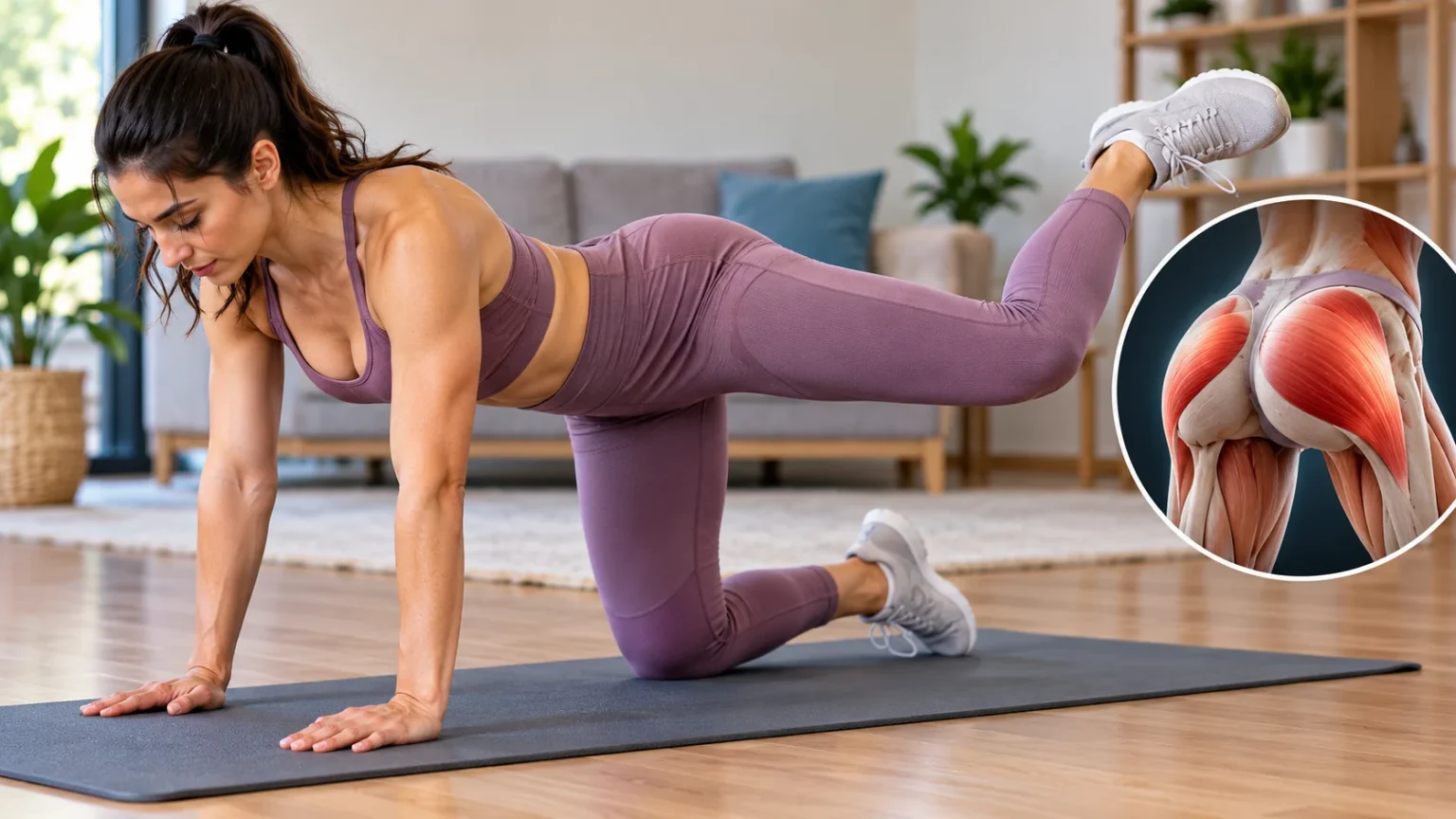

The fire hydrants exercise is a simple yet effective bodyweight movement that targets the muscles around your hips and glutes. It is commonly included in lower-body workouts, Pilates routines, and physical therapy programs because it helps improve hip strength, stability, and movement control. Best of all, you can perform this exercise at home without special equipment.
Although the movement looks easy, proper technique is essential for getting the most from it. Small mistakes, such as rotating your hips or arching your lower back, can reduce muscle engagement and make the exercise less effective. Understanding the correct form can help you perform fire hydrants comfortably and improve your overall lower-body strength.
What Is the Fire Hydrants Exercise?
The fire hydrants exercise is a floor-based movement performed on your hands and knees. It involves lifting one bent leg outward to the side while keeping your hips and torso relatively stable. The movement primarily targets the gluteal muscles responsible for hip abduction, particularly the gluteus medius, while also challenging your core muscles and supporting joints.
This exercise gets its unusual name from the movement pattern, which resembles a dog lifting its leg beside a fire hydrant. Despite its playful name, it is a useful strengthening exercise that can be adapted for beginners and experienced exercisers. Its controlled movement encourages awareness of hip positioning, pelvic stability, and proper muscle activation.
Fire hydrants are often performed during warm-ups, rehabilitation sessions, and lower-body workouts. They can complement exercises such as squats, lunges, bridges, and lateral band walks. Since the movement requires little space and no equipment, it offers an accessible way to practice hip control and strengthen muscles involved in everyday movement.
What Muscles Do Fire Hydrants Work?
The primary muscles involved in the fire hydrants exercise are the gluteus medius and gluteus minimus. These muscles are located along the outer hip and help move the thigh away from the body’s midline. They also play important roles in stabilizing the pelvis during walking, running, and single-leg activities.
The gluteus maximus contributes to the movement, particularly through its upper fibers, which can assist hip abduction. Other supporting muscles around the hip help coordinate the lifting motion. The exact contribution of each muscle depends on your hip position, movement range, and whether you use additional resistance during the exercise.
Your abdominal muscles and spinal stabilizers also work to maintain a steady trunk. They help prevent excessive movement through your lower back and pelvis as one leg lifts. Although fire hydrants are not primarily a core exercise, maintaining proper alignment creates a useful stability challenge that supports controlled lower-body movement.
How to Do Fire Hydrants Exercise Step by Step
Start on a comfortable exercise mat in a tabletop position, placing your hands directly beneath your shoulders and knees approximately beneath your hips. Keep your arms straight without forcefully locking your elbows, and maintain a natural spinal position. Look toward the floor so your neck remains aligned with the rest of your spine.
Engage your abdominal muscles gently, keeping both hip bones facing the floor. With your knee bent around 90 degrees, slowly lift one leg outward to the side without rotating your pelvis. Raise your knee only as high as you can while maintaining control, then pause briefly at the top of the movement.
Lower your knee toward the starting position using a slow, deliberate motion. Repeat for a comfortable number of repetitions before switching legs, and breathe naturally throughout the exercise. Focus on keeping your shoulders steady, your back neutral, and the movement controlled rather than trying to lift your leg as high as possible.
Benefits of Fire Hydrants Exercise
One major benefit of fire hydrants is improving strength in the muscles responsible for hip abduction. These muscles help control the pelvis and thigh during everyday movements. Strengthening them may support activities such as walking, stair climbing, and balancing on one leg, especially when they are included in a well-rounded exercise routine.
Fire hydrants can also improve awareness of hip and trunk positioning. Since you must move one leg while keeping the rest of your body steady, the exercise challenges coordination and movement control. This can be useful when learning to stabilize the pelvis during more demanding exercises such as lunges or single-leg squats.
Another advantage is their convenience and adaptability. You can perform standard fire hydrants without weights, machines, or a gym membership, and you can modify the difficulty as strength improves. While the exercise alone cannot transform overall fitness, it provides a practical addition to a balanced lower-body strengthening program.
Why Proper Form Matters During Fire Hydrants
Correct fire hydrant form helps ensure that the intended hip muscles perform the movement. If you rotate your torso or lift your leg using momentum, other body parts may compensate for limited hip strength or mobility. Maintaining a steady pelvis allows you to focus on controlled hip abduction rather than simply reaching a greater height.
Your spinal position is another important consideration. Excessive arching or twisting of the lower back can shift the movement away from the hip joint and may cause discomfort. Keeping your abdominal muscles gently engaged and your spine in a comfortable neutral position helps you maintain control without creating unnecessary tension.
Proper technique also makes it easier to recognize meaningful progress. As your strength improves, you may notice smoother repetitions, better stability, and a greater controlled movement range. These improvements are more useful than lifting your leg higher by changing your body position or sacrificing the quality of each repetition.
Common Fire Hydrant Exercise Mistakes to Avoid
One common mistake is rotating the pelvis upward while lifting the leg. This often happens when someone tries to raise their knee beyond their available hip range of motion. Instead, keep your hips relatively level and stop when you can no longer maintain control, even if that means using a smaller movement.
Another mistake is allowing the lower back to arch excessively during the exercise. This can happen when the abdominal muscles are not helping stabilize the trunk or when the movement is performed too quickly. Focus on keeping your ribs and pelvis comfortably aligned while allowing the hip joint to guide the lifting motion.
Rushing through repetitions is another problem that can reduce exercise quality. Fast movements may encourage momentum and make it harder to feel the muscles working. Slow down, breathe comfortably, and perform each repetition deliberately, taking breaks whenever your form begins to change or your supporting arms become fatigued.
How Many Fire Hydrants Should You Do?
Beginners can often start with one or two sets of approximately 8–12 controlled repetitions per side. This is a general starting point rather than a strict requirement, and the appropriate amount depends on your strength and comfort. Prioritize smooth movements and stop before fatigue causes your hips or back to lose alignment.
People with more exercise experience may gradually increase repetitions, sets, or resistance as their strength develops. However, completing more repetitions does not automatically produce better results. A smaller number of controlled movements can be more useful than many rushed repetitions, especially when the goal is improving stability and hip muscle coordination.
Recovery matters as well, particularly when fire hydrants are part of a challenging lower-body workout. The frequency should reflect your overall activity level, exercise intensity, and ability to recover comfortably. If your hips are unusually sore or the movement becomes painful, reduce the workload and consider seeking professional guidance.
Fire Hydrants Exercise for Beginners
If you are new to fire hydrants, begin by practicing the tabletop starting position. Place a folded towel or cushioned mat beneath your knees if the floor feels uncomfortable. Spend a few moments finding a stable position with your shoulders above your hands, your hips above your knees, and your breathing relaxed.
Next, practice lifting one knee only a short distance away from the floor. A smaller range of motion is completely acceptable, especially if it helps you maintain a steady pelvis. Keep the movement slow, avoid shifting your weight dramatically, and concentrate on controlling both the lifting and lowering phases.
Beginners can also use a mirror or ask a qualified instructor to check their technique. If supporting your body on your hands causes wrist discomfort, an alternative position or exercise may be more appropriate. Building confidence with basic movements first can make progressing to more challenging variations easier and more comfortable.
Banded Fire Hydrants for Extra Resistance
Banded fire hydrants are a variation that uses a loop resistance band placed around the thighs, generally above the knees. The band adds resistance as you lift your leg outward, increasing the challenge for the hip abductor muscles. This variation is often included in strength training routines when standard bodyweight repetitions become relatively easy.
To perform the movement, begin in your usual tabletop position with the band securely positioned. Lift one bent knee outward while keeping your pelvis level and your spine neutral. The band should provide manageable resistance without forcing you to twist, lean excessively, or use momentum to complete the movement.
Start with a light resistance band and progress gradually when you can perform each repetition with control. Using a stronger band too early may encourage compensatory movements rather than improving muscular strength. If the band rolls, pinches, or makes the exercise uncomfortable, adjust its position or return to the bodyweight version.
Fire Hydrant Exercise Variations to Try
The standard quadruped fire hydrant is a useful starting point, but several variations can add variety to your training. One option involves holding the raised position briefly before lowering your knee. This increases the time your hip muscles spend working while challenging your ability to maintain a steady trunk and pelvis.
Another variation combines a small outward lift with a controlled return toward the starting position. You can focus on smooth repetitions, modest movement ranges, and continuous muscular control rather than speed. Some exercise routines also include standing hip abduction as an alternative that works similar muscles without requiring a hands-and-knees position.
More challenging variations may involve resistance bands or increased time under tension. However, adding difficulty should not come at the expense of comfortable movement. Choose variations that match your current abilities and training goals, and remember that different exercises may be more suitable if you experience wrist, knee, or hip discomfort.
Fire Hydrants vs Donkey Kicks: What’s the Difference?
Fire hydrants and donkey kicks are both performed from a hands-and-knees position, but they emphasize different hip movements. Fire hydrants involve lifting a bent leg outward to the side, creating hip abduction. Donkey kicks generally involve extending the hip by lifting the bent leg backward or upward while keeping the torso relatively steady.
Because of these differences, the two exercises recruit the gluteal muscles in somewhat different ways. Fire hydrants emphasize the hip abductors, including the gluteus medius, while donkey kicks place greater emphasis on hip extension involving the gluteus maximus. Both movements also require trunk stability and coordinated control.
Neither exercise is universally better because their usefulness depends on the intended training goal. Fire hydrants may be selected when focusing on hip abduction strength, while donkey kicks can complement exercises targeting hip extension. Combining different movement patterns within a balanced training program can help develop broader lower-body strength.
Can Fire Hydrants Help Improve Hip Stability?
Hip stability depends on coordinated activity between muscles, joints, and the nervous system. The gluteus medius and other hip muscles help maintain pelvic alignment during activities that involve supporting body weight on one leg. Fire hydrants provide a controlled way to strengthen some of these muscles while practicing trunk and pelvic stability.
This exercise can be useful as one part of a broader strengthening program. For example, someone learning to control unwanted pelvic movement may benefit from targeted hip exercises alongside functional movements. However, improved performance during fire hydrants does not automatically guarantee better balance or movement patterns in every daily activity.
Functional hip stability also benefits from exercises performed while standing and bearing weight. Step-ups, supported single-leg balance, and appropriately progressed squats may complement floor-based exercises. Using a variety of movements can help improve strength and control in positions that more closely resemble walking, climbing stairs, and other activities.
Are Fire Hydrants Good for Lower Back Support?
Fire hydrants require the abdominal and spinal stabilizing muscles to work while the hip moves. Maintaining a neutral trunk position provides a gentle stability challenge that may complement other core and lower-body exercises. Stronger hip muscles can also support efficient movement, although their relationship with lower back symptoms varies between individuals.
The exercise should not be considered a guaranteed treatment for lower back pain. Back discomfort can result from many factors, including joint conditions, nerve irritation, muscular issues, or other health concerns. People with persistent symptoms may need a personalized assessment rather than relying on one specific glute exercise.
If fire hydrants feel comfortable, they may be included in a general strengthening routine. Keep the movement within a controlled range and avoid twisting or arching the back to lift the knee higher. Stop if the exercise causes worsening pain, radiating symptoms, or unusual discomfort, and seek professional advice when appropriate.
How to Add Fire Hydrants to Your Workout Routine
Fire hydrants can fit into several types of exercise sessions depending on your goals. During a warm-up, a few gentle repetitions can help you practice hip movement and trunk control before more demanding lower-body activities. They may also be performed alongside glute bridges, squats, and other exercises as part of a strengthening routine.
If your main goal is hip strengthening, perform fire hydrants when you can give proper attention to technique. Fatigue from demanding exercises may make it more difficult to maintain a stable pelvis. You can also alternate them with complementary movements that target hip extension, knee strength, and general lower-body coordination.
Consistency is more important than making every workout difficult. Choose a manageable exercise frequency and gradually adjust the challenge as your strength and control improve. A balanced routine should include different movement patterns, appropriate recovery, and activities you enjoy, rather than depending entirely on isolated glute exercises.
Who Should Be Careful With Fire Hydrants?
Most people can adapt fire hydrants to their abilities, but the exercise may not be comfortable for everyone. Individuals experiencing knee pain may find pressure from the kneeling position uncomfortable. Wrist or shoulder conditions can also make supporting body weight through the hands difficult, particularly when the exercise is performed repeatedly.
People with existing hip injuries, recent surgery, or significant movement restrictions should seek guidance before attempting the exercise. Certain hip positions may aggravate symptoms depending on the underlying condition. A physical therapist can recommend modifications or alternative movements that better match individual mobility, strength, and recovery needs.
Pain should not be treated as proof that an exercise is working. Mild muscular effort is expected, but sharp pain, catching sensations, numbness, or worsening joint discomfort are reasons to stop. Choosing exercises that feel manageable and progressing carefully can help make strength training more sustainable over time.
Tips to Get Better Results From Fire Hydrants
Focus on controlled movements instead of trying to achieve the largest possible leg lift. The goal is to move at the hip while limiting unnecessary rotation through the pelvis and lower back. Keeping your body steady helps you develop awareness of the muscles involved and makes each repetition more consistent.
Breathing naturally can also improve exercise comfort. Avoid holding your breath or bracing so forcefully that movement becomes difficult. Exhale gently during the lifting phase if it helps you maintain control, and inhale during the lowering phase while keeping your shoulders relaxed and your weight evenly supported.
Finally, treat fire hydrants as one part of a complete exercise program. Hip strength develops through progressive training that includes appropriate resistance, movement variety, and recovery. Combining fire hydrants with functional lower-body exercises can support strength and mobility without placing unrealistic expectations on a single exercise.
Conclusion
The fire hydrants exercise is a convenient bodyweight movement that strengthens the hip abductor muscles while challenging pelvic and trunk stability. It primarily works the gluteus medius and gluteus minimus, with assistance from other hip and core muscles. Its simple setup makes it accessible for home workouts, warm-ups, and many lower-body strengthening routines.
Correct technique is essential for making the movement effective and comfortable. Keeping your pelvis relatively level, your spine neutral, and your repetitions controlled helps prevent unnecessary compensation. Beginners can start with small movements, while more experienced exercisers may progress to resistance bands or other variations when appropriate.
Regular practice can help improve hip strength and movement awareness, especially when combined with a balanced exercise routine. Progress gradually, allow adequate recovery, and pay attention to any unusual discomfort. With a thoughtful approach, fire hydrants can become a useful addition to your lower-body training.
Frequently Asked Questions
What muscles do fire hydrants work?
Fire hydrants primarily target the gluteus medius and gluteus minimus, which help move the leg outward and stabilize the pelvis. The gluteus maximus and core muscles also contribute to controlled movement.
How many fire hydrants should beginners do?
Beginners can try one or two sets of 8–12 controlled repetitions on each side. The ideal amount depends on comfort, strength, and technique, so prioritize movement quality rather than completing a specific number.
Can I do fire hydrants every day?
Gentle fire hydrants may be manageable on consecutive days, but more demanding strengthening sessions require appropriate recovery. Exercise frequency should reflect your overall training routine, muscle soreness, and ability to maintain proper technique.
Are fire hydrants better than squats?
Fire hydrants and squats serve different purposes. Fire hydrants emphasize hip abduction and pelvic control, while squats train several major lower-body muscles through a weight-bearing movement. Both can complement a balanced strengthening program.
Do I need resistance bands for fire hydrants?
No, resistance bands are not necessary for standard fire hydrants. Bodyweight repetitions can provide a useful starting challenge, and light resistance bands may be introduced gradually when you can maintain proper form comfortably.