
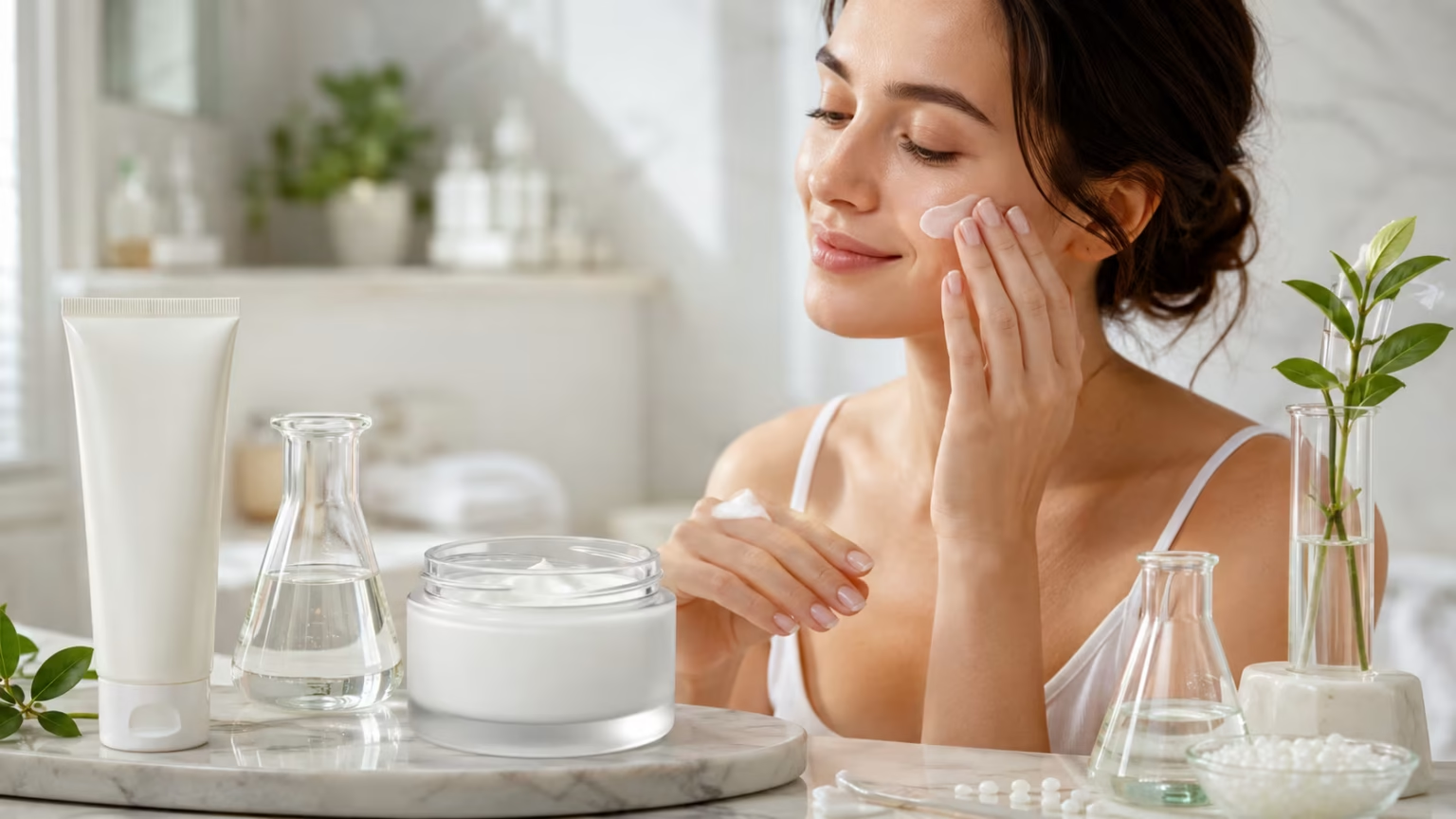

Cetearyl Alcohol: Benefits, Uses, Safety and What It Does for Skin
Seeing the word “alcohol” on a skincare label can immediately make a product seem drying or harsh. However, not every cosmetic alcohol behaves in the same way. Cetearyl alcohol is a waxy fatty alcohol commonly added to moisturizers, cleansers, conditioners, body lotions, and other personal care products.
Instead of rapidly evaporating or stripping oil from the skin, cetearyl alcohol helps give cosmetic formulas a smooth, creamy texture. It can soften the surface of the skin, improve how a product spreads, and prevent oil-and-water ingredients from separating inside the container.
Cetearyl alcohol is not usually included as the main active ingredient in a formula. Its role is often supportive, helping other ingredients remain evenly distributed and making the finished product more pleasant to apply. Nevertheless, that supporting role can significantly affect how well a moisturizer or conditioner performs.
Understanding cetearyl alcohol benefits, uses, and safety can make skincare labels less confusing. It can also help people distinguish this ingredient from potentially drying alcohols and decide whether products containing it suit their skin type, hair needs, and personal preferences.
What Is Cetearyl Alcohol?
Cetearyl alcohol is a mixture made primarily from cetyl alcohol and stearyl alcohol. Both belong to a group known as long-chain fatty alcohols. The ingredient may also appear in technical information under names such as cetostearyl alcohol, cetylstearyl alcohol, or C16–C18 alcohol.
At room temperature, cetearyl alcohol is generally a white, wax-like solid rather than a thin liquid. Its physical structure makes it useful for thickening creams, stabilizing emulsions, and creating the rich consistency people expect from many lotions and hair conditioners.
The “fatty” part of fatty alcohol refers to its long carbon chain and relationship to fatty substances. It does not mean the ingredient is dietary fat, nor does it behave like the alcohol found in alcoholic drinks or many fast-drying sanitizing products.
Current cosmetic ingredient information describes cetearyl alcohol as a mixture of cetyl and stearyl alcohols that supports emulsion stability and improves consistency. These functional properties explain why it appears across a wide range of skincare and haircare formulations.
Cetearyl Alcohol vs Drying Alcohols
The word alcohol describes a broad family of chemical compounds rather than one single ingredient. Ethanol, denatured alcohol, isopropyl alcohol, cetyl alcohol, and cetearyl alcohol may all contain “alcohol” in their names, yet their structures and cosmetic effects can differ considerably.
Short-chain alcohols such as ethanol evaporate quickly and may help formulas feel lightweight or deliver certain ingredients. In higher amounts, however, they can feel drying or irritating for some people, particularly when the skin barrier is already sensitive or compromised.
Cetearyl alcohol has a much longer fatty chain and a waxier texture. Rather than disappearing rapidly, it remains within the product and contributes softness, thickness, and stability. It is therefore often described as a non-drying alcohol or moisturizing fatty alcohol.
The FDA explains that cosmetics labelled “alcohol free” may still contain cetyl, stearyl, cetearyl, or lanolin alcohol. In cosmetic labelling, the word alcohol used alone generally refers to ethyl alcohol, while fatty alcohols have notably different effects on the skin.
Why Is Cetearyl Alcohol Used in Skincare?
Many skincare products combine water-based and oil-based ingredients. Since oil and water naturally separate, formulators need supporting ingredients to create a consistent emulsion. Cetearyl alcohol helps maintain that structure so every application delivers a more even mixture.
It also works as a viscosity-increasing agent, meaning it can make a liquid formula thicker. Without ingredients that control consistency, a face cream may feel watery, separate in its packaging, or spread unevenly across the skin.
Texture matters because people are more likely to use a product consistently when it feels comfortable. Cetearyl alcohol can create a creamy, cushiony slip without necessarily leaving the intensely oily finish associated with heavier butters or waxes.
Its stabilizing role may also help protect the overall quality of a formula during normal storage and use. Cetearyl alcohol does not replace a preservative, but it can support the physical stability of products containing oils, water, humectants, emollients, and active skincare ingredients.
Cetearyl Alcohol Benefits for the Skin
One of the main cetearyl alcohol benefits is its emollient effect. Emollients help smooth the outer surface of the skin by filling spaces between dry, uneven skin cells. This can make rough areas feel softer and give the skin a more comfortable texture.
Cetearyl alcohol may also support moisture retention by contributing to the protective layer formed by a moisturizer. It is not a humectant that attracts water in the same way as glycerin or hyaluronic acid, but it can complement those ingredients within a balanced moisturizing formula.
People with dry or tight-feeling skin may appreciate the richer texture it gives creams and lotions. A product containing cetearyl alcohol may spread more smoothly and feel more protective than a very light gel, although the final result depends on every ingredient in the formula.
It is important to view cetearyl alcohol as one part of the product rather than a complete solution for dryness. Effective moisturizers often combine humectants, emollients, and occlusive ingredients to attract water, soften the skin, and reduce excessive moisture loss.
Common Cetearyl Alcohol Uses in Cosmetics
Cetearyl alcohol is frequently found in facial moisturizers, body lotions, hand creams, cleansing creams, sunscreens, and eye-area products. In these formulas, it may improve stability while creating a smoother and more luxurious application.
Cream cleansers can contain the ingredient because it adds body and helps the formula move comfortably over the face. Its presence does not determine how strongly a cleanser removes oil, since surfactants and other cleansing agents play a much larger role.
Thicker treatments such as masks, foot creams, body butters, and barrier-supporting balms may also contain cetearyl alcohol. Formulators can adjust its amount and combine it with lighter emollients to achieve a particular level of richness without relying on one heavy ingredient.
You may also find it in makeup, deodorants, shaving products, and specialized cosmetic formulas. In most cases, it is included to improve texture, emulsification, opacity, softness, or product stability rather than to provide a dramatic standalone skincare result.
How Cetearyl Alcohol Works in Haircare
Cetearyl alcohol is widely used in conditioners, hair masks, leave-in treatments, and styling creams. Its waxy texture can make these products feel richer and help them spread more evenly from the mid-lengths of the hair to the ends.
As an emollient, it may help the surface of dry hair feel smoother. This improved slip can make strands easier to separate during detangling, reducing the pulling and friction caused by forcing a comb through tangled hair.
Cetearyl alcohol can also support conditioning ingredients that are responsible for reducing static and improving manageability. It does not permanently repair damaged hair, but a well-formulated product may temporarily improve softness, shine, and the appearance of rough ends.
Fine or easily weighed-down hair may respond better to lightweight conditioners, while coarse, curly, bleached, or very dry hair may benefit from richer formulas. The ingredient alone does not indicate how heavy a product will feel because concentration and the surrounding oils, silicones, and conditioning agents also matter.
Is Cetearyl Alcohol Safe?
Cetearyl alcohol is generally considered safe when used as intended in cosmetic formulations. The Cosmetic Ingredient Review Expert Panel evaluated cetearyl alcohol alongside several related long-chain fatty alcohols and concluded that they were safe under the cosmetic uses assessed in its report.
That conclusion does not mean every product containing cetearyl alcohol will suit every individual. Cosmetic safety assessments consider the ingredient’s expected use, concentration, exposure, and available testing, while a person’s reaction can also be influenced by the complete formula.
A moisturizer could cause irritation because of fragrance, preservatives, botanical extracts, active ingredients, or another component rather than cetearyl alcohol. This is why judging an entire product by one familiar ingredient can sometimes lead to the wrong conclusion.
Most people can use properly formulated products containing this fatty alcohol without difficulty. Anyone with a history of multiple cosmetic allergies, severe skin sensitivity, or previous reactions to fatty alcohols should be more cautious and consider professional guidance before introducing a new formula.
Is It Suitable for Sensitive or Dry Skin?
Cetearyl alcohol is often included in products designed for dry skin because it provides softness and improves the comforting texture of creams. It may work especially well when paired with glycerin, ceramides, petrolatum, squalane, or other barrier-supporting ingredients.
Sensitive skin is more complicated because triggers differ from person to person. Although cetearyl alcohol is generally well tolerated, sensitive skin can react to almost any ingredient, particularly when the skin barrier is inflamed or damaged.
People managing eczema-prone or highly reactive skin should look at the complete ingredient list. A simple, fragrance-free moisturizer may be easier to tolerate than a formula containing numerous essential oils, perfumes, exfoliating acids, or strongly active botanical extracts.
Apply a small amount to a limited area before using a new product widely. Stop use if persistent burning, swelling, itching, or a spreading rash develops, and seek medical advice when the reaction is severe, worsening, or affecting the eyes or breathing.
Does Cetearyl Alcohol Clog Pores?
Cetearyl alcohol is sometimes described online as pore-clogging, but comedogenicity is not reliably determined by looking at one ingredient in isolation. A finished product’s concentration, texture, supporting ingredients, and interaction with an individual’s skin can all affect the result.
Some people with acne-prone skin use moisturizers containing cetearyl alcohol without developing additional breakouts. Others may find that a particularly rich cream feels too heavy, especially when it also contains multiple oils, waxes, esters, or highly occlusive ingredients.
Comedogenic ratings should therefore be treated as rough screening tools rather than universal rules. Many rating systems are based on testing methods that do not perfectly represent how a complete modern cosmetic formula behaves on human facial skin.
For oily or breakout-prone skin, choose products labelled for the face and suited to your preferred texture. A lighter lotion containing cetearyl alcohol may feel very different from a dense balm containing the same ingredient, even though both show it on their labels.
Possible Side Effects and Allergic Reactions
Although uncommon, irritation or allergic contact dermatitis can occur after exposure to cetearyl alcohol or related fatty alcohols. Possible symptoms include redness, itching, dryness, burning, bumps, or a rash where the product was applied.
A reaction does not automatically prove that cetearyl alcohol is responsible. Skincare and haircare products contain many ingredients, and several may cause similar symptoms. Continuing to test products without identifying the trigger may make the irritation harder to understand.
A basic home patch test may reveal obvious intolerance, but it cannot formally diagnose an allergy. Dermatologists can perform controlled patch testing when allergic contact dermatitis is suspected, helping identify the ingredient or ingredient group causing repeated reactions.
Discontinue the product and gently wash the area when significant irritation occurs. Immediate medical attention is appropriate for facial swelling, difficulty breathing, widespread blistering, or other signs of a serious reaction rather than a mild localized sensitivity.
Is Cetearyl Alcohol Natural or Vegan?
Cetearyl alcohol may be produced from plant-derived fatty materials or through synthetic manufacturing processes. Vegetable sources can include oils such as palm or coconut, although the precise starting material depends on the manufacturer and supply chain.
The ingredient name on a cosmetic label does not reveal its original source. Two products may both list cetearyl alcohol while using material from different suppliers, production methods, or agricultural sources.
Its presence also does not automatically confirm whether a product is vegan, cruelty-free, organic, or sustainably sourced. These claims involve sourcing and manufacturing information that cannot be established from the standard INCI ingredient list alone.
Consumers concerned about animal-derived materials, palm sourcing, or environmental standards should check the brand’s certification and ingredient-sourcing information. Contacting the company may be necessary when the product page does not clearly answer those questions.
How to Find Cetearyl Alcohol on an Ingredient List
On most personal care labels, the ingredient appears as “Cetearyl Alcohol.” It may be positioned near emollients, emulsifiers, conditioning agents, or texture-enhancing ingredients, depending on how much of it the product contains.
Cosmetic ingredients are generally listed according to applicable labelling rules, but the position does not tell you exactly how the product will feel. A lower concentration may still influence texture, while the combined formula determines whether the finish is light, silky, waxy, or rich.
Do not confuse cetearyl alcohol with ceteareth ingredients. Ceteareth compounds are related materials created through additional processing and have different functions and characteristics, even though their names begin similarly.
You may also see cetyl alcohol and stearyl alcohol listed separately. These are individual fatty alcohols and share several practical functions with cetearyl alcohol, including improving texture, stability, and the feel of skincare or haircare products.
How to Choose a Product Containing Cetearyl Alcohol
Begin with your main goal rather than choosing a product solely because it contains or avoids cetearyl alcohol. Dry skin may need a richer moisturizer, while oily skin may prefer a fluid lotion with lightweight emollients and a non-greasy finish.
Review the full ingredient list for known personal triggers. People with fragrance sensitivity may prioritize fragrance-free options, while those using strong retinoids or exfoliating acids may need a simple moisturizer that minimizes additional irritation.
Introduce one new product at a time whenever possible. This makes it easier to identify the cause if your skin develops discomfort, congestion, or a rash after changing your routine.
Consistency also matters. A well-tolerated basic moisturizer used regularly is usually more practical than a complicated formula that feels unpleasant or causes frequent irritation, regardless of how impressive its ingredient list appears.
Cetearyl Alcohol Benefits and Safety Explained
Cetearyl alcohol is a fatty alcohol made mainly from cetyl alcohol and stearyl alcohol. Unlike fast-evaporating alcohols, it has a waxy structure that helps soften the skin, thicken products, and stabilize mixtures of oil and water.
Its most important benefits come from its role as an emollient, texture enhancer, and emulsion stabilizer. These properties make it valuable in moisturizers, lotions, conditioners, hair masks, cleansers, and many other personal care products.
The ingredient is generally considered safe in properly formulated cosmetics, but individual reactions remain possible. People with sensitive skin or known contact allergies should pay attention to their personal experience rather than assuming every fatty alcohol will be suitable.
For most consumers, cetearyl alcohol is not an ingredient that needs to be automatically avoided. Understanding what it does can make product labels easier to read and help you choose skincare and haircare formulas based on their complete composition rather than one misunderstood word.
Frequently Asked Questions
Is cetearyl alcohol bad for the skin?
Cetearyl alcohol is generally well tolerated and is not the same as drying ethyl alcohol. It commonly functions as an emollient, thickener, and stabilizer in cosmetic products.
Can cetearyl alcohol cause acne?
It does not cause acne in everyone, but a rich product containing it may feel unsuitable for some acne-prone skin. The concentration and complete formulation matter more than the ingredient alone.
Is cetearyl alcohol safe for sensitive skin?
Many people with sensitive skin tolerate it well, particularly in simple, fragrance-free moisturizers. However, irritation or contact allergy is possible, so testing a new product gradually is sensible.
Is cetearyl alcohol natural?
It can be manufactured using plant-derived fatty materials or synthetic processes. The ingredient name alone does not identify its exact source, so sourcing questions should be directed to the manufacturer.
Does cetearyl alcohol dry out hair?
Cetearyl alcohol is a conditioning fatty alcohol rather than a fast-drying alcohol. It is commonly added to conditioners and masks to improve slip, softness, texture, and manageability.