
Introduction to Search Engines
Search engines are powerful tools that enable users to locate information on the expansive and often complex landscape of the internet. At their core, search engines function as intermediaries; they query vast databases of web content, index this information, and return relevant results based on user input. Their primary purpose is to facilitate information retrieval, transforming the chaotic nature of the web into a more navigable experience for users.
In the early days of the internet, navigating the web environment presented significant challenges. Users often found themselves overwhelmed by the sheer volume of content, with a limited ability to effectively search for specific information. Initial attempts to categorize and locate online resources were rudimentary at best, often requiring knowledge of exact URLs or relying on basic directory listings. This limited functionality led to frustration for many users who struggled to find the information they needed.
The inception of search engines marked a pivotal shift in how we interact with online content. Platforms such as Archie, Lycos, and Yahoo! began to emerge, offering solutions to the information overload by allowing users to perform keyword-based searches. These early search engines laid the groundwork for more advanced algorithms and indexing techniques, paving the way for the sophisticated search tools we rely on today. They implemented various strategies to rank and retrieve web pages, making it easier for users to find relevant information amidst the vast sea of online content.
As technology progressed, so did search engines, evolving to incorporate more user-friendly features and intelligent search capabilities. Today, they not only provide links and information but also facilitate a wide array of services, further enhancing the user experience and information access on the internet.
The Early Days: Basic Algorithms and Directories
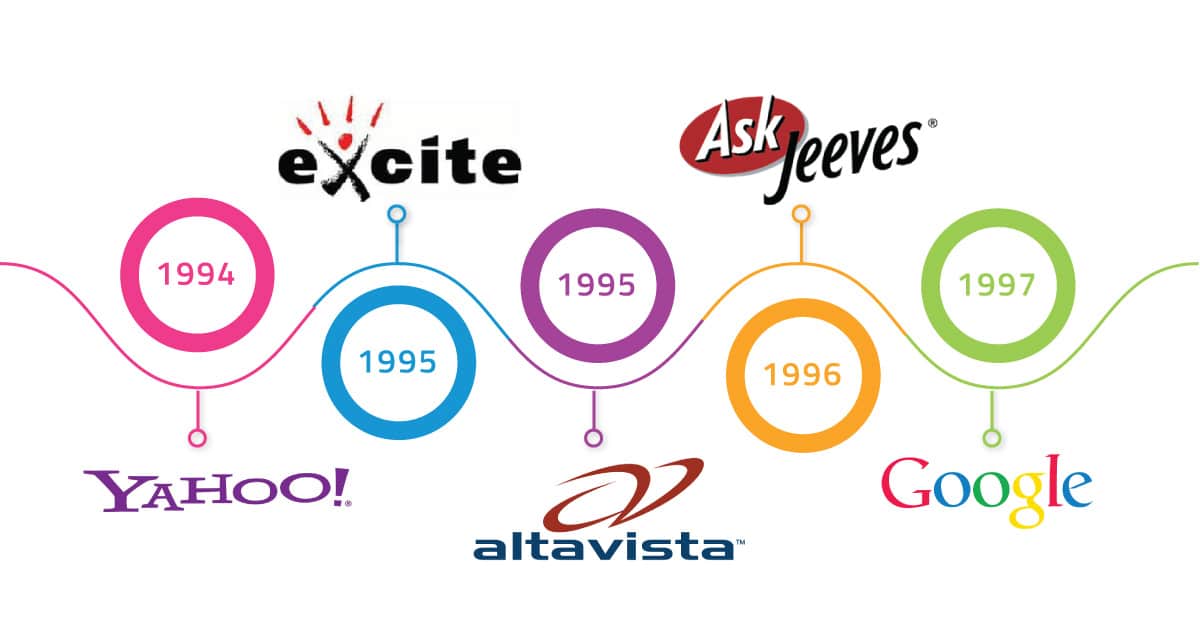
The origins of search engines date back to the early days of the internet, which witnessed the adoption of text-based search services and directory-based systems. During this formative period, platforms such as Yahoo and AltaVista emerged as pioneers in the realm of online navigation and information retrieval. These early systems primarily relied on human input, where users would curate and categorize information, resulting in a directory-based approach to searching for content.
The limitations of these primitive search engines were evident. Search capabilities were largely restricted to the scope of the directories, meaning the depth and breadth of accessible information were constrained by the directory’s comprehensiveness. Users would need to navigate through categorical listings to find relevant content, which could be time-consuming and inefficient. Furthermore, the rudimentary algorithms used at this time lacked the sophistication to decipher the relevance of content effectively. Instead, searches often returned a broad array of results that were not necessarily aligned with users’ queries.
As technology progressed, it became clear that the need for more robust search methodologies was critical. The reliance on human curation and simple algorithms could not satisfy the growing demand for faster and more relevant search results. Thus, the foundational work laid by early search engines paved the way for more complex and automated approaches to information retrieval. The transition from rudimentary systems to more sophisticated frameworks marked the beginning of a transformative journey, setting the stage for the development of modern search engines with advanced algorithms that could analyze and prioritize content more effectively.
The Rise of Google: PageRank and Relevance
In the late 1990s, the landscape of the internet began to shift dramatically with the advent of Google, a search engine that fundamentally changed how users interact with web pages. Founded by Larry Page and Sergey Brin while they were students at Stanford University, Google introduced a groundbreaking algorithm known as PageRank. This algorithm was instrumental in determining the relevance of web pages based on their link structures and authority.
Prior to Google, search engines primarily relied on keyword matching, which often resulted in an abundance of irrelevant search results. However, PageRank revolutionized this approach by assessing the quality and quantity of links pointing to a particular page. Essentially, every hyperlink to a page was viewed as a vote of confidence, whereby pages that received a higher number of quality links were deemed more authoritative and consequently ranked higher in search results. This method was pivotal in aligning search results with user intent, thereby enhancing the overall search experience.
The introduction of PageRank established a novel paradigm in the search engine industry, prompting other platforms to rethink their algorithms and methodologies. It allowed Google to provide users with not only faster results but also insights that resonated with their needs and interests. As a result, the company quickly gained popularity, solidifying its position as a leader in the search engine sector.
This advancement in search technology not only propelled Google to unprecedented heights but also established a new benchmark for relevance and efficiency in online search. The reliance on authoritative links underscored the importance of quality content as a critical factor for visibility in search results, thereby inspiring webmasters and content creators to adopt strategies that prioritize relevancy and engagement. The culmination of these factors led to a search engine that fundamentally transformed the way information is accessed on the internet.
The Shift to Semantic Search
The evolution of search engines has dramatically transformed the landscape of information retrieval, particularly with the advent of semantic search. Traditional keyword-based search systems primarily operated on exact match algorithms that relied heavily on the presence of specific keywords in the indexed content. While effective for a time, this approach often led to results that were not contextually relevant to user inquiries.
Semantic search, in contrast, seeks to understand the meaning behind a user’s query, going beyond mere keyword matching. This shift was largely enabled by advancements in natural language processing (NLP) and machine learning technologies. These sophisticated algorithms allow search engines to analyze the intent behind a user’s search, considering factors such as context, synonyms, and related entities. As a result, the user experience has significantly improved, with search engines delivering more accurate and contextually relevant results.
One of the key milestones in this transition was the introduction of Google’s Hummingbird algorithm in 2013, which marked a pivotal move towards a more semantic understanding of search queries. Hummingbird emphasized the importance of understanding the overall context of queries rather than focusing solely on individual keywords. By interpreting a user’s intent, the algorithm effectively reshaped the way information is retrieved from vast databases.
Furthermore, developments in artificial intelligence have played a crucial role in refining semantic search capabilities. Machine learning enables search engines to learn from user interactions, continuously improving their ability to interpret and anticipate user behavior. Consequently, search engines can now deliver content that aligns more closely with what users expect, thereby fostering a more intuitive interaction with search technology.
The Impact of Mobile and Voice Search
In recent years, the landscape of search engines has undergone significant transformation, primarily driven by the rising use of mobile devices and the emergence of voice-activated search technologies. The prevalence of smartphones has reshaped user behavior, with an increasing number of individuals relying on mobile search to find information quickly and conveniently. This shift has necessitated a reevaluation of search engine optimization (SEO) strategies to accommodate mobile-first indexing and a more user-centric approach to content delivery.
Mobile search has significantly influenced how users interact with search engines, as these devices allow for immediate access to information regardless of location. Consequently, search engines have adapted by prioritizing mobile-friendly sites in their rankings, thereby enhancing the user experience. Websites that fail to optimize for mobile may find themselves penalized in search results, resulting in decreased visibility and user engagement.
Additionally, the advent of voice search, powered by digital assistants like Siri, Google Assistant, and Alexa, has further altered the dynamics of traditional search methods. Voice queries typically differ from typed queries, often being longer and more conversational in nature. This evolution necessitates that SEO strategies incorporate more natural language processing and focus on long-tail keywords, which align more closely with how individuals verbally ask questions. As users engage with these platforms, search engines are refining their algorithms to understand spoken queries better and provide more relevant results.
The integration of mobile and voice search has indeed reshaped the search engine landscape, prompting a shift towards adaptive technologies and strategies that meet the evolving preferences of users. As the trend continues to grow, businesses and content creators must prioritize optimization for mobile and voice to remain competitive in the digital space.
Search Engine Personalization and AI Integration
The landscape of search engines has undergone significant transformation over the years, with personalization and artificial intelligence (AI) emerging as dominant forces shaping user experience. As search engines have evolved, they have increasingly incorporated AI to enhance the relevance of search results tailored to individual users. This integration of AI technology allows search engines to analyze vast amounts of data, enabling them to deliver results that are not only pertinent but also aligned with user preferences and behavior.
Personalization in search results is primarily driven by user data, which includes search history, location, and interaction patterns. By utilizing machine learning algorithms, search engines can make educated predictions about what users are likely to find useful or interesting. For instance, this could mean presenting local businesses higher in the results for users searching for specific products, thereby increasing the likelihood of engagement. Furthermore, these algorithms continually adapt based on user feedback, further refining search accuracy and relevance over time.
The implications of AI-driven personalization are profound. Users now expect a search experience that anticipates their needs and preferences, making traditional methods of searching less effective. As such, search engines are compelled to innovate continuously. The integration of natural language processing (NLP) has also played a pivotal role in enhancing search personalization. NLP enables a deeper understanding of user queries, allowing search engines to deliver more relevant content that meets specific contextual needs.
In this ongoing evolution, ethical considerations related to user privacy and data security become increasingly imperative. Search engines must navigate the fine line between personalization and user consent, ensuring that they maintain trust while delivering tailored experiences. As AI continues to refine search technologies, the future promises even richer and more intuitive search engine interactions, impacting how information is accessed in an increasingly digital world.
The Rise of Local and Visual Search
The evolution of search engines has taken a significant turn with the emergence of local and visual search functionalities. As users increasingly seek relevant information within their geographical context, search engines have adapted to meet these demands by integrating location-based services. This adaptation has redefined how individuals engage with search platforms, prioritizing results that are not only relevant but also nearby. Moreover, the implementation of GPS technology in mobile devices empowers search engines to provide tailored recommendations, ranging from nearby restaurants to local events.
Simultaneously, visual search has gained momentum, propelled by advancements in image and video recognition technologies. Users can now search for information not just through text but by uploading images or utilizing camera functionalities on their devices. This intuitive method allows for a more interactive experience, enabling search engines to return visually similar results or even identify objects, products, and landmarks. The integration of AI in these systems enhances their accuracy, thus refining user experience and satisfaction.
The shift in user preferences has been evident in the changing patterns of search behavior. A growing number of individuals gravitate towards visually engaging content and localized results. The convenience of finding what one needs within close proximity or through a simple image has reshaped expectations regarding search engine functionality. As social media platforms continue to emphasize rich media and local discovery features, search engines are compelled to innovate continuously. They strive not only to accommodate these compelling user demands but also to remain competitive in an ever-evolving digital landscape.
Current Trends in Search Engine Technology
In the ever-evolving landscape of search engines, contemporary trends are shaping the way users interact with online information. Among the most significant developments is the optimization for voice search. With the proliferation of smart devices and virtual assistants, users increasingly opt to verbally query their devices instead of typing. This shift necessitates a focus on natural language processing, as search engines adjust algorithms to better understand and interpret spoken queries. Consequently, optimizing content for voice search has become essential for businesses looking to enhance their visibility and accessibility.
Another notable trend is the rise of zero-click searches, where users find the information they need directly on the search results page, without clicking through to a website. This phenomenon often manifests as featured snippets, knowledge graphs, or direct answers powered by structured data. As a result, businesses must prioritize optimizing their content for these features to capture potential clientele, as users may receive the information they seek without visiting their sites. This ongoing trend underscores the importance of concise, accurate, and engaging content that can be easily extracted and displayed by search engines.
Additionally, the integration of augmented reality (AR) into search queries is transforming the user experience. AR technology enables users to engage with search results in a more interactive and immersive manner. For instance, people can visualize products or explore locations in their real-world context before making decisions. As search engines continue to incorporate AR capabilities, it is crucial for businesses to consider how they present information, ensuring that it is compatible with this cutting-edge technology.
In conclusion, understanding and adapting to current trends in search engine technology—such as voice search optimization, zero-click searches, and augmented reality integration—will be vital for businesses aspiring to thrive in a digital landscape marked by rapid change.
Conclusion: The Future of Search Engines
As we reflect on the rapid evolution of search engines, it becomes clear that the landscape will continue to transform significantly in the coming years. The advancements in technology have not only changed how information is retrieved but have also reshaped user expectations. With every iteration of search algorithms and user interfaces, the importance of innovation plays a crucial role in enhancing user experience.
Looking ahead, search engines are likely to become even more intuitive and capable, integrating advanced technologies such as artificial intelligence and machine learning. These technologies can analyze data patterns and user behavior to provide increasingly personalized search results. The rise of voice search and natural language processing will further influence how information is accessed, making interactions with search engines resemble conversational dialogue rather than traditional queries.
Moreover, the incorporation of augmented and virtual reality could redefine search functionalities. Imagine a future where users can physically interact with their search results in a virtual environment, making the search experience immersive and engaging. This would not only enhance the way information is consumed but also redefine digital marketing strategies for businesses aiming to optimize their presence in this new era of search.
In conclusion, as search engines evolve, they will likely prioritize user-centric designs and functionalities. The continuous drive for efficiency, speed, and relevance will shape the direction of search technologies, pushing the boundaries of what users can achieve with a simple search query. It is essential for stakeholders in the digital landscape—businesses, marketers, and developers—to stay attuned to these changes and adapt accordingly. The future of search engines promises to be an exciting journey filled with possibilities, revolutionizing how we access and interact with information online.