
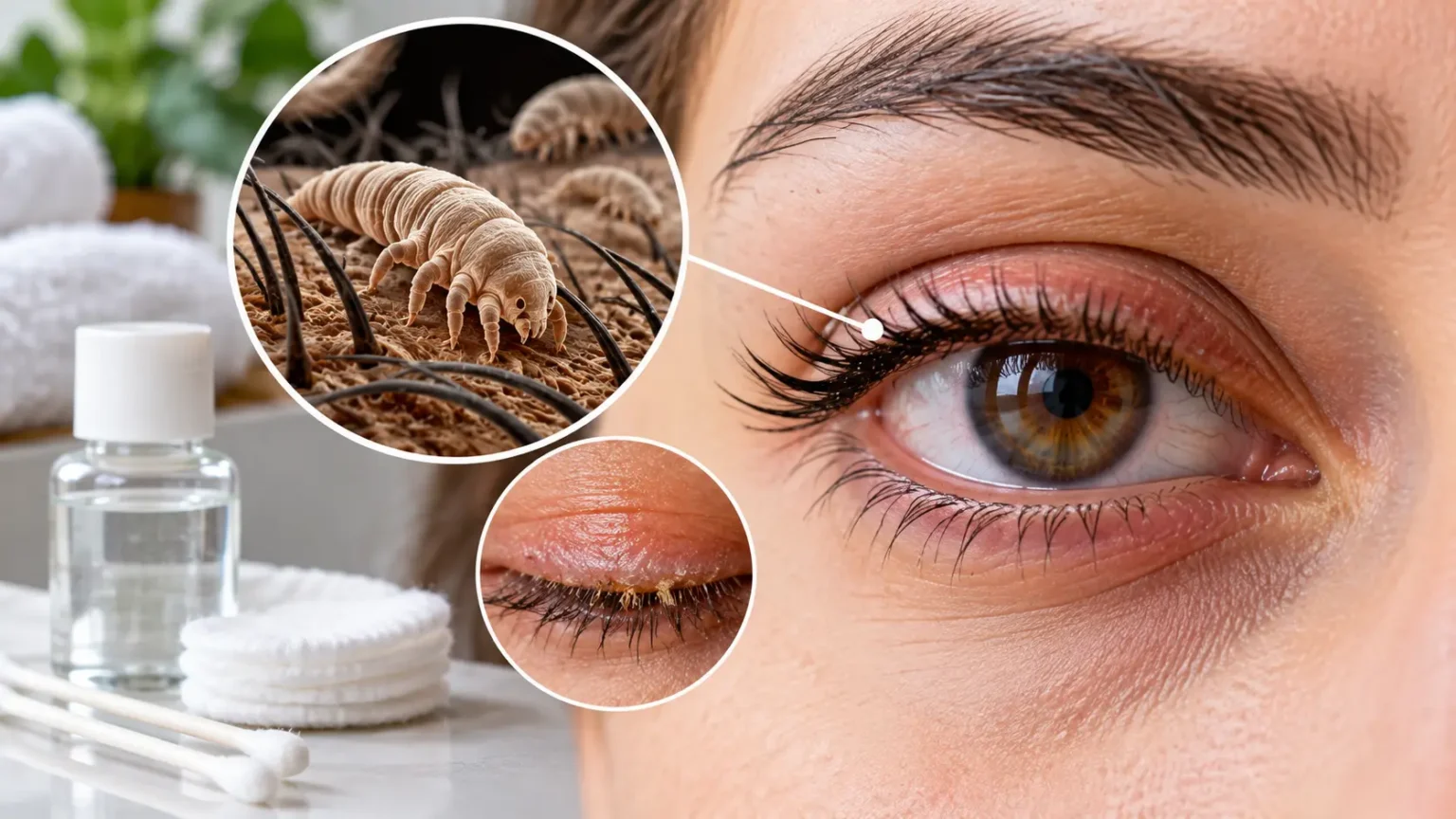

Lash Mites: Symptoms, Causes & How to Get Rid of Them
Lash mites sound alarming, but these microscopic organisms are far more common than many people realize. The term usually refers to Demodex mites, which naturally live in hair follicles and oil-producing glands on human skin, including around the eyelashes. In small numbers, they may cause no noticeable problems at all and can exist without a person knowing they are there. Trouble may begin when the mite population becomes excessive and contributes to irritation or inflammation along the eyelid margin. This condition is often called Demodex blepharitis and can cause itching, crusting, redness, burning, and uncomfortable eyes. Understanding the difference between normal mite presence and troublesome overgrowth is important before trying to eliminate them.
People often search for ways to get rid of lash mites after noticing flaky material around their eyelashes or waking with irritated, crusty eyelids. However, similar symptoms can also occur with dry eye, allergies, bacterial blepharitis, skin conditions, and problems involving the oil glands of the eyelids. This is why treating the area aggressively without knowing the cause can sometimes make irritation worse rather than better. Proper eyelid hygiene may help control buildup, while clinically significant Demodex overgrowth may require treatment recommended by an optometrist or ophthalmologist. Prescription treatments are now available specifically for Demodex blepharitis in some countries, providing another option beyond older home-based approaches. This guide explains lash mite symptoms, causes, diagnosis, treatment, prevention, and practical steps for healthier eyelids.
What Are Lash Mites and Why Do They Live on Eyelashes?
Lash mites are microscopic mites belonging mainly to the Demodex genus, and two species commonly associated with humans are Demodex folliculorum and Demodex brevis. Demodex folliculorum tends to live around hair follicles, including eyelash follicles, while Demodex brevis can inhabit deeper oil-producing glands in the skin and eyelids. These mites are extremely small and generally cannot be clearly identified with the naked eye. Their presence does not automatically mean someone has an infection or poor hygiene because Demodex can be part of the normal microscopic environment of human skin. Many people carry them without experiencing redness, itching, or other symptoms. Problems become more relevant when their numbers increase enough to contribute to inflammation and eyelid disease.
Demodex mites tend to favor areas where oil, skin cells, and follicles provide a suitable environment for survival. The face contains many sebaceous glands, making the eyebrows, nose, cheeks, forehead, and eyelid margins common places for the mites to live. Around the eyes, they may occupy eyelash follicles or glands involved in producing the oily portion of the tear film. Their presence can therefore become associated with both the front and back portions of the eyelid margin. When too many mites accumulate, debris and inflammation may build around the lashes. This can contribute to the recognizable crusting or sleeve-like material that eye care professionals often associate with Demodex blepharitis.
One reason lash mites receive so much attention is that they may be involved in persistent cases of blepharitis that do not improve with ordinary eyelid care. Blepharitis simply means inflammation of the eyelids, and it can have several different causes. Demodex is only one possible contributor, which is why seeing crust or irritation does not automatically confirm a mite problem. A person may instead have seborrheic dermatitis, meibomian gland dysfunction, allergic irritation, bacterial overgrowth, or another eye condition. In some cases, more than one problem can occur simultaneously and make symptoms harder to manage. Proper diagnosis is therefore more useful than assuming every recurring case of eyelid irritation is caused by lash mites.
It can also be reassuring to understand that finding Demodex does not mean a person’s skin is dirty or neglected. These mites can live on the skin of people with excellent personal hygiene, and their prevalence generally increases with age. The issue is less about whether a few mites are present and more about whether they have become numerous enough to trigger inflammation or other signs. Factors involving oil production, skin conditions, immune health, and the eyelid environment may influence how easily they multiply. Because the mites are microscopic, a person usually cannot accurately determine their number by looking in an ordinary mirror. Eye care professionals can examine characteristic eyelash debris and other signs more closely when symptoms persist.
The term “lash mite infestation” can make the problem sound like an emergency, but most cases of Demodex-related eyelid disease develop gradually. Symptoms may start with intermittent itching, mild crusting, or irritation that resembles ordinary dry eye. Over time, a person may notice repeated flare-ups despite cleaning the eyelids or using lubricating drops. Persistent symptoms are one reason an eye examination can be helpful, particularly when self-care has not solved the problem. Treatment focuses on reducing problematic mite levels, improving eyelid hygiene, controlling inflammation, and protecting the ocular surface. The objective is not necessarily to create completely sterile skin, because microorganisms and microscopic organisms naturally exist on healthy human skin.
Lash Mite Symptoms and Signs to Watch For
Itching around the eyelashes is one of the symptoms commonly associated with Demodex blepharitis, particularly when the itching repeatedly affects the eyelid margins. Some people notice that their eyes feel most irritated after waking or during periods when eyelid inflammation is more active. The itching may be accompanied by burning, stinging, or a gritty sensation that feels as though something is trapped in the eye. These symptoms can resemble dry eye disease or allergies, which makes self-diagnosis difficult. Rubbing the eyes may temporarily feel satisfying but can further irritate sensitive eyelid tissue. Persistent eyelid itching therefore deserves attention when it occurs alongside visible debris, redness, or recurring inflammation.
A particularly important visible sign is crusty or waxy material that forms around the base of the eyelashes. This material is sometimes described as cylindrical dandruff, sleeves, cuffs, or collarettes because it appears to wrap around the lash near the eyelid margin. Collarettes are strongly associated with Demodex blepharitis and may be much easier for an eye care professional to identify under magnification. Ordinary dandruff-like flakes can have other causes, so appearance and location matter when evaluating the problem. Some people may mistake the material for dried makeup, sleep debris, or simple skin flaking. When the buildup repeatedly returns after cleaning, Demodex-related inflammation becomes one possible explanation that an eye specialist may investigate.
Red or swollen eyelids can also occur when lash mite overgrowth contributes to ongoing inflammation. The edge of the eyelid may look irritated, thickened, or more visibly vascular than usual. Some people experience tenderness around the lash line, while others primarily notice cosmetic redness without much pain. Inflammation can sometimes affect the stability of the tear film, causing the eyes to feel dry even when they water frequently. Excessive tearing may seem inconsistent with dry eye, but unstable tears can trigger reflex watering. Because eye redness has numerous potential causes, sudden severe redness or pain should not automatically be attributed to lash mites without appropriate assessment.
Eyelash changes may develop when inflammation continues around the follicles for a long period. Some lashes can become brittle, fall out, or grow in an unusual direction, although these findings are not specific to Demodex alone. Repeated inflammation may also contribute to irritation of glands located along the eyelids. If these glands do not release healthy oils properly, the tear film can evaporate too quickly and worsen dryness or burning. This connection is one reason some people with Demodex blepharitis also complain of fluctuating vision or eye fatigue. Treating only the feeling of dryness may provide temporary comfort without addressing the underlying eyelid inflammation when mites are playing a significant role.
Blurred vision, light sensitivity, and significant discomfort are less useful for identifying lash mites specifically because many eye disorders can cause these symptoms. They should nevertheless be taken seriously, especially if vision changes persist after blinking or become progressively worse. Severe eye pain, marked sensitivity to light, sudden vision loss, or intense redness can indicate conditions that need urgent medical attention. Demodex-related inflammation can occasionally occur alongside more significant surface irritation, but these symptoms should never simply be assumed to be harmless. An optometrist or ophthalmologist can examine the cornea, tear film, eyelid glands, and lashes to determine what is happening. Recognizing concerning symptoms early helps prevent delays in treating a problem that may be unrelated to mites.
What Causes Lash Mites to Become a Problem?
The presence of Demodex mites is not usually the problem by itself because small populations may live naturally on human skin. Symptoms become more likely when the balance changes and the number of mites around follicles or eyelid glands becomes excessive. Scientists continue to study exactly why certain people develop symptomatic Demodex blepharitis while others carry mites without discomfort. Age appears to be one important factor because Demodex populations tend to become more common as people get older. Changes in skin oils, immune responses, and eyelid health may create conditions that allow mites to multiply more easily. Therefore, developing lash mites does not necessarily reflect anything a person did wrong.
Oil and cellular debris around the eyelid margin can help create an environment in which Demodex populations thrive. The mites live around follicles and oil-producing structures, so conditions that affect sebaceous or meibomian glands may influence their numbers. This does not mean people with naturally oily skin will automatically develop Demodex blepharitis. Rather, several biological and environmental factors can interact and make the eyelid environment more favorable for mite overgrowth. Chronic inflammation can then create a cycle in which the eyelid becomes increasingly irritated. Regular eyelid care may help remove excess oils and debris, but symptomatic disease may still require targeted treatment instead of cleaning alone.
Certain facial skin conditions are frequently considered when someone has persistent eyelid inflammation. Rosacea, for example, can affect both facial skin and the eyes, producing redness, dryness, burning, and eyelid problems. Seborrheic dermatitis can also cause oily or flaky skin around the eyebrows, scalp, and eyelids that may resemble or coexist with Demodex-related symptoms. Because these conditions overlap, identifying the true source of eyelash crusting can be more complicated than simply checking whether mites are present. An individual can have Demodex plus another type of blepharitis at the same time. Treatment is more likely to succeed when all contributing problems are recognized rather than focusing only on one possible cause.
Immune health may also influence how the skin responds to Demodex populations, although most people with lash mites do not have a serious immune disorder. Certain medical conditions or medications that affect immune function can potentially alter the balance of microorganisms and mites on the skin. Older adults may be particularly prone to Demodex-related eyelid problems because both skin biology and immune responses change over time. The important point is that lash mite symptoms are not necessarily contagious disease in the same sense as a typical bacterial or viral eye infection. Direct contact can transfer microscopic organisms, but Demodex is already widespread among humans. The clinical concern is usually excessive numbers and inflammation rather than simply exposure to another person.
Makeup habits and eyelid hygiene can influence the amount of oil and debris remaining around the lash line, although they are rarely the sole explanation for Demodex blepharitis. Sleeping in eye makeup, repeatedly using contaminated applicators, or failing to clean the lash margin may make eyelid irritation easier to develop. Heavy cosmetic products can also hide early crusting, making symptoms less noticeable until inflammation increases. People who wear eyelash extensions may find cleaning the base of their lashes more difficult, depending on the products and maintenance routine used. However, lash mites can occur in people who never use cosmetics or extensions. Hygiene should therefore be viewed as one modifiable factor rather than a reason to blame someone for developing the condition.
Who Is More Likely to Develop Demodex Blepharitis?
Increasing age is one of the clearest factors associated with higher Demodex populations on human skin. Children and younger adults can carry the mites, but they tend to become increasingly common later in life. Older adults also have a greater chance of experiencing conditions such as dry eye, meibomian gland dysfunction, and chronic blepharitis, which can make symptoms more noticeable. This combination can sometimes make Demodex-related inflammation difficult to distinguish from other age-related eye surface problems. An eye care professional can evaluate several possible causes during the same examination. Age alone does not mean treatment is required because mites without symptoms generally do not need aggressive intervention.
People who have recurrent or persistent blepharitis may be more likely to have Demodex considered as a possible contributing factor. Someone may repeatedly clean the eyelids, use artificial tears, or receive treatment for bacterial inflammation without achieving lasting relief. When characteristic collarettes remain around the eyelashes, an eye specialist may investigate Demodex more closely. This is particularly useful because symptoms such as burning and dryness overlap with several other eye conditions. Treating the wrong cause repeatedly can prolong discomfort and frustration. Identifying the type of eyelid inflammation allows treatment to be selected according to what is actually occurring rather than using the same approach for every case of blepharitis.
People with rosacea may also experience eyelid and ocular surface symptoms, and Demodex can sometimes be part of the clinical picture. Facial flushing, persistent redness, visible blood vessels, or acne-like bumps may occur alongside burning or inflamed eyes. Ocular rosacea itself can affect meibomian glands and tear quality even without a clinically significant mite problem. For that reason, it is important not to assume that all redness in someone with rosacea comes from Demodex. A dermatologist and eye care professional may sometimes need to address different aspects of the same condition. Controlling facial inflammation while treating eyelid disease can provide better results than concentrating solely on the eyelashes.
Individuals who use eye cosmetics frequently may notice lash-line irritation sooner because makeup can accumulate around inflamed follicles. Mascara, eyeliner, false lashes, and extension adhesives can also independently trigger allergic or irritant reactions that resemble Demodex symptoms. Sharing eye makeup or using old products may introduce additional microorganisms and further complicate eyelid health. Removing cosmetics thoroughly before sleep helps reduce residue around the lash margin, but aggressive scrubbing can create its own irritation. Gentle cleansing is therefore preferable to attempting to scrub the eyelids until they feel completely free of oil. Anyone with persistent symptoms should consider whether cosmetic products are contributing while also obtaining an evaluation for other possible causes.
Contact lens wearers may also become especially aware of dry, irritated, or gritty eyes when eyelid inflammation develops. Contact lenses do not automatically cause lash mites, but poor tear quality or blepharitis can make lenses less comfortable. A person may initially assume the lenses themselves are the entire problem when inflammation along the eyelash line is also contributing. Proper lens cleaning, replacement schedules, and hand hygiene remain important for preventing other eye complications. Persistent redness, pain, discharge, or reduced contact lens tolerance should be assessed rather than repeatedly treated with over-the-counter redness-relief drops. Contact lens users have additional reasons to seek prompt care when symptoms are severe because certain infections can progress rapidly.
How Are Lash Mites Diagnosed?
An eye care professional can often begin evaluating Demodex blepharitis by examining the eyelids and eyelashes with magnification. A slit lamp allows an optometrist or ophthalmologist to inspect the lash roots, eyelid margins, tear film, and surface of the eye much more closely than someone can at home. Characteristic collarettes around the base of the eyelashes are an especially useful clue. The clinician may also look for redness, swollen eyelid margins, abnormal lash direction, blocked oil glands, or dry eye changes. Symptoms are considered alongside these physical findings because mites can exist without causing disease. Diagnosis therefore depends on the entire clinical picture rather than simply establishing that Demodex organisms are present somewhere on the skin.
In some cases, eyelashes may be examined microscopically to confirm the presence of Demodex mites. A clinician can remove selected lashes and evaluate them under magnification to see whether mites are attached to the follicles or surrounding debris. Microscopy is not necessarily required for every patient when the clinical signs are highly characteristic. The decision depends on the eye care professional’s approach and whether another diagnosis is being considered. Home microscopes, phone cameras, or online photographs are generally not reliable substitutes for an eye examination. Trying to remove eyelashes at home to search for mites can injure the lid margin and should be avoided.
The eye examination is also valuable because Demodex symptoms overlap with several other forms of blepharitis. Bacterial eyelid inflammation, seborrheic blepharitis, allergies, contact dermatitis, meibomian gland dysfunction, and dry eye disease can all produce redness or irritation. Some conditions require completely different treatments, and using the wrong medication around the eye can cause additional problems. For example, itching from cosmetic allergy may worsen if the irritating product remains in use regardless of how aggressively the lashes are cleaned. Similarly, severe discharge or eye pain may signal an infection that should not be managed as a simple mite problem. Differential diagnosis protects patients from treating a symptom while missing its true cause.
An eye care professional may also evaluate whether inflammation is affecting structures beyond the eyelashes. The meibomian glands release oils that slow tear evaporation, and dysfunction in these glands commonly contributes to dry eye symptoms. If those glands are blocked or inflamed, a person may experience burning, blurry vision, watering, and contact lens discomfort. The cornea may also be examined for surface damage or inflammation when symptoms are more severe. This broader assessment helps determine whether treatment should address mites alone or several interconnected eyelid and tear-film problems. Effective care often requires improving the overall eyelid environment instead of focusing only on removing visible crust.
People should avoid diagnosing Demodex based solely on the feeling that something is crawling around the eyelashes. Lash mites are microscopic and generally cannot be individually felt moving across the eyelid. Crawling sensations can have several causes, including irritation, dryness, anxiety about parasites, allergic reactions, and skin sensitivity. Visible flakes also do not prove that mites are responsible because ordinary skin conditions can create similar debris. Seeking confirmation is particularly worthwhile before applying strong substances around the eyes. The eye surface is delicate, and an incorrect do-it-yourself treatment can produce chemical irritation that becomes more uncomfortable than the original symptoms.
How to Get Rid of Lash Mites Safely
Treating clinically significant lash mite overgrowth usually focuses on reducing Demodex populations and controlling the eyelid inflammation they cause. The appropriate approach depends on symptom severity, examination findings, other eye conditions, and which treatments are available locally. In the United States, a prescription ophthalmic treatment containing lotilaner is approved specifically for Demodex blepharitis. It is used as eye drops according to a prescribed treatment schedule and targets the mites rather than simply cleaning visible debris. This represents an important change from older strategies that relied heavily on eyelid cleansing or products containing tea tree oil components. A qualified eye care professional can determine whether prescription mite-directed treatment is suitable for an individual patient.
Eyelid hygiene can still play an important supportive role even when prescription treatment is used. Cleaning the lid margin helps remove oils, skin debris, makeup residue, and crust that can accumulate around the lashes. The goal is gentle cleansing rather than aggressively scraping material from the eyelid. Some eye care professionals recommend commercially prepared eyelid wipes or cleansers designed specifically for use around the eyes. The exact product should be chosen carefully because sensitive skin and inflamed eyelids can react to fragrances or harsh ingredients. Following professional instructions is especially important if other eye conditions, surgeries, or contact lenses make the ocular surface more vulnerable.
Warm compresses are often used as part of general eyelid care, especially when meibomian gland dysfunction accompanies blepharitis. Gentle heat can soften thickened oils in the eyelid glands and loosen some debris along the lash margin. A clean eye mask designed to retain warmth may be easier to use consistently than a washcloth that cools rapidly. Warm compresses can improve comfort, but they should not be viewed as a guaranteed method for eradicating Demodex mites. Their main value is supporting eyelid gland function and making cleansing easier. Excessively hot compresses can burn the delicate eyelid skin, so comfortable warmth rather than intense heat should be the goal.
Tea tree oil has historically been discussed as a way to reduce Demodex mites, but using it around the eyes requires significant caution. Concentrated or undiluted tea tree oil can cause substantial irritation and should not be placed directly into the eyes or improvised into homemade eye treatments. Even commercially formulated products containing tea tree-derived ingredients can cause irritation in some people with sensitive eyelid skin. Modern clinical options mean there is less reason to experiment with strong essential-oil mixtures at home when symptoms are persistent. Anyone considering a mite-targeting eyelid cleanser should discuss the product with an eye care professional. The safest treatment is one that reduces mites without damaging the skin, glands, or ocular surface.
Treatment also needs enough time to address both symptoms and the mite population rather than expecting overnight results. Crusting and itching may improve gradually as inflammation settles and eyelid hygiene becomes more consistent. Someone who stops treatment as soon as the eyelids feel slightly better may not achieve the result intended by the prescribed regimen. Conversely, continuing an irritating product despite worsening redness or swelling can damage the eyelid barrier. Patients should follow the recommended course and report unexpected reactions rather than changing treatment independently. Follow-up can confirm whether collarettes and inflammation have decreased and whether another condition needs attention if symptoms remain.
Home Care for Lash Mites and Eyelid Hygiene
Daily eyelid hygiene can help keep the lash line cleaner and may reduce some of the debris associated with blepharitis. Begin with clean hands and use a gentle method recommended for the delicate eyelid area rather than ordinary facial soap that may sting the eyes. Commercial eyelid cleansers or wipes are designed to be easier to control near the lashes and may be appropriate for some people. Cleaning should focus on the eyelid margins instead of rubbing directly across the eyeball. Consistency is usually more valuable than vigorous scrubbing because repeated irritation can make inflammation worse. People with prescription treatment should follow instructions about how cleansing fits into their medication routine.
Removing eye makeup before sleep is another practical habit that supports eyelid health. Mascara and eyeliner can collect around lash follicles, particularly when several layers are applied or waterproof products are worn for long periods. Sleeping in makeup allows residue, skin oils, and debris to remain against the eyelid margin throughout the night. A gentle remover suitable for the eye area can reduce buildup without requiring excessive rubbing. Makeup applicators should also be kept clean, and products should not be shared with other people. If a particular cosmetic repeatedly causes burning, swelling, or itching, discontinuing it may help determine whether contact irritation is contributing to the symptoms.
Pillowcases, face towels, and eye masks should be washed regularly, particularly during treatment for persistent eyelid inflammation. Fresh linens do not by themselves cure Demodex blepharitis, but clean fabrics reduce the accumulation of oils, makeup, skin debris, and other irritants that contact the face. Avoid sharing towels or eye cosmetics because this can transfer bacteria and other organisms even if Demodex itself is widespread among people. Eyeglasses should also be cleaned regularly when frames rest close to irritated eyelids. These habits support treatment without requiring obsessive cleaning of the entire home. The goal is sensible hygiene that protects the eyes, not an attempt to disinfect every surface because microscopic skin organisms exist naturally.
People who use eyelash extensions may need to pay particular attention to cleaning the base of the natural lashes. Fear of loosening extension adhesive sometimes causes people to avoid cleansing the lash line thoroughly, allowing oils and debris to accumulate. On the other hand, harsh brushing or aggressive cleansers can irritate the eyelids and damage natural lashes. Someone with active Demodex blepharitis may be advised to pause cosmetic lash treatments until inflammation is controlled. Extension adhesives themselves can also cause allergic or irritant reactions that mimic mite symptoms. Discussing lash extensions with an eye professional can therefore help separate cosmetic irritation from genuine Demodex-related disease.
Artificial tears may relieve dryness or burning when blepharitis affects the tear film, but they do not kill lash mites. Preservative-free lubricating drops may be more comfortable for people who need frequent lubrication, although individual needs vary. Redness-relief drops that work mainly by constricting blood vessels are not an appropriate treatment for the underlying mite problem. Repeatedly masking redness can delay proper diagnosis if eyelid inflammation continues. Any eye drop should be used according to its instructions, and prescription drops should be spaced appropriately if additional lubricating products are also needed. Managing comfort is helpful, but controlling the source of inflammation remains the main objective.
How to Prevent Lash Mites From Becoming a Recurring Problem
Because Demodex organisms are common inhabitants of human skin, preventing every mite from ever appearing around the eyelashes is unrealistic. Prevention instead focuses on maintaining a healthier eyelid environment and reducing conditions that allow excessive mite populations or inflammation to return. Consistent but gentle lash-line hygiene can be especially useful for people who have experienced recurrent blepharitis. The routine should be simple enough to maintain without causing dryness or skin irritation. Some people may need daily eyelid care, while others can use a less frequent maintenance schedule after symptoms improve. An eye care professional can recommend a routine based on the individual’s eyelids, skin type, and history.
Managing associated skin conditions can also reduce repeated eyelid irritation. People with rosacea or seborrheic dermatitis may benefit from keeping those conditions controlled rather than treating only the eyes whenever symptoms flare. Facial skin inflammation can affect the eyelids and contribute to oil gland dysfunction, redness, or scaling around the lash line. A dermatologist may be helpful when facial symptoms remain active despite appropriate eye care. Avoiding known triggers for rosacea or dermatitis may also support more stable eyelid health. Treating the entire facial and eyelid environment can be more effective than repeatedly cleaning the eyelashes without addressing the surrounding skin.
Cosmetic hygiene remains particularly important for people who frequently use mascara, eyeliner, false lashes, or eyelash extensions. Eye makeup should be removed before sleep, and old products should be replaced according to reasonable hygiene practices rather than kept indefinitely. Brushes and reusable tools should be cleaned appropriately and allowed to dry before reuse. Eye makeup should not be shared because bacterial and viral eye infections can spread through contaminated products. Anyone recovering from a significant eye infection may also need to replace products that contacted the affected eye. These practices are useful even when lash mites are not present because they support broader eye health and reduce avoidable sources of irritation.
Avoiding unnecessary rubbing can further protect inflamed eyelids and the surface of the eye. Itchy lashes create a strong urge to rub, but repeated friction can worsen redness, damage delicate skin, and potentially introduce bacteria from the hands. A cool compress may sometimes provide temporary relief from itching when heat is not being used for meibomian gland care. Persistent itching should be investigated rather than managed through constant rubbing or repeated use of random eye drops. Hand hygiene is especially important before applying medications, cleaning the eyelids, or handling contact lenses. Simple habits can make treatment more comfortable and reduce secondary irritation while the underlying condition improves.
Follow-up is worthwhile when symptoms repeatedly return despite apparently successful treatment. Recurrent collarettes may indicate that Demodex populations have increased again, but persistent symptoms could also result from dry eye, rosacea, gland dysfunction, allergy, or another form of blepharitis. An eye care professional can reassess the eyelids instead of automatically repeating the same treatment indefinitely. Long-term management sometimes requires a combination of mite control, gland care, skin treatment, and tear-film support. Recognizing this broader picture helps explain why a quick one-time cleansing routine may not permanently solve chronic eyelid problems. Prevention works best when it is tailored to the causes affecting the individual person.
When Should You See an Eye Doctor for Lash Mite Symptoms?
Mild eyelid irritation may sometimes improve with careful hygiene, but persistent or recurring symptoms should be evaluated by an eye care professional. This is especially true when crusting repeatedly forms around the base of the eyelashes or itching continues despite routine cleansing. An optometrist or ophthalmologist can look for collarettes and determine whether Demodex is likely to be contributing. Early evaluation can also identify dry eye, meibomian gland problems, allergy, or other conditions that may require different treatment. Seeking care does not necessarily mean a person needs prescription medication. It simply provides a more reliable diagnosis than experimenting with multiple products around sensitive eye tissue.
An appointment becomes more important when eyelid swelling or redness is increasing rather than improving. Significant tenderness, recurrent bumps on the eyelid, or lashes growing in abnormal directions can indicate inflammation that deserves closer assessment. Repeated chalazia or blocked eyelid glands may have several causes and should not automatically be blamed on lash mites. Eye specialists can examine whether the glands are functioning normally and whether another treatment is necessary. Persistent problems affecting only one small area of the eyelid may also require careful evaluation. Unusual or asymmetric eyelid changes sometimes need additional investigation to rule out conditions unrelated to routine blepharitis.
Certain symptoms require more urgent assessment because they are not typical signs that should simply be managed as ordinary lash mites. Sudden vision loss, severe eye pain, strong light sensitivity, significant eye injury, or intense redness can signal a more serious eye problem. Thick discharge, rapidly worsening swelling, or difficulty opening the eye may also indicate infection or another condition requiring prompt care. Contact lens wearers should be particularly cautious about significant pain and redness because corneal infections can progress quickly. Waiting for a home mite treatment to work would be inappropriate in these circumstances. Protecting vision takes priority over identifying whether Demodex is part of the problem.
People should also contact their eye care provider if a treatment itself seems to cause worsening symptoms. Strong burning, increasing swelling, rash, or persistent redness after using an eyelid product may indicate irritation or an allergic reaction. Essential oils and concentrated cleansing products are especially risky when used too close to the eye or at inappropriate strengths. Prescription medications can also produce side effects and should be used exactly as directed. Stopping, restarting, or doubling treatment without professional advice can make it difficult to understand what caused the reaction. Reporting side effects allows the clinician to recommend a safer alternative or adjust the treatment plan when necessary.
The outlook for Demodex blepharitis is generally manageable when the cause is correctly recognized and an appropriate treatment routine is followed. Many people can reduce crusting, itching, and eyelid inflammation once excessive mite populations and associated eyelid problems are addressed. Recurrence can occur because Demodex naturally lives on human skin, so maintenance eyelid care may remain important for some individuals. The key is avoiding both extremes: ignoring persistent inflammation and aggressively trying to sterilize the eyelashes. Healthy eyelids do not need to be completely free of microscopic organisms. They need a balanced environment in which mites, oils, skin cells, and inflammation are kept from disrupting comfort and eye health.
Frequently Asked Questions About Lash Mites
Can you see lash mites with the naked eye?
Lash mites are microscopic and generally cannot be clearly identified without magnification. What people may notice instead is crusting or collarettes around the base of the eyelashes that can occur with Demodex blepharitis.
Do lash mites mean you have poor hygiene?
No, Demodex mites can naturally live on the skin of people with good hygiene. Symptoms develop when mite populations and associated inflammation become excessive, rather than simply because someone failed to clean their eyelashes.
Can lash mites go away on their own?
Mild symptoms may fluctuate, but clinically significant Demodex blepharitis can persist or return without appropriate management. An eye care professional can determine whether eyelid hygiene alone is sufficient or whether targeted treatment is needed.
Does tea tree oil kill lash mites?
Tea tree oil and some of its components have historically been used in Demodex-related eyelid care, but concentrated tea tree oil can irritate or injure the eye area. Avoid homemade or undiluted applications and ask an eye care professional about safer treatment options.
What is the best way to get rid of lash mites?
The best approach depends on whether Demodex is actually causing the symptoms and how severe the eyelid inflammation is. Proper diagnosis, gentle eyelid hygiene, treatment of related eye conditions, and prescription mite-directed therapy when appropriate can provide a safer strategy than aggressive home remedies.