
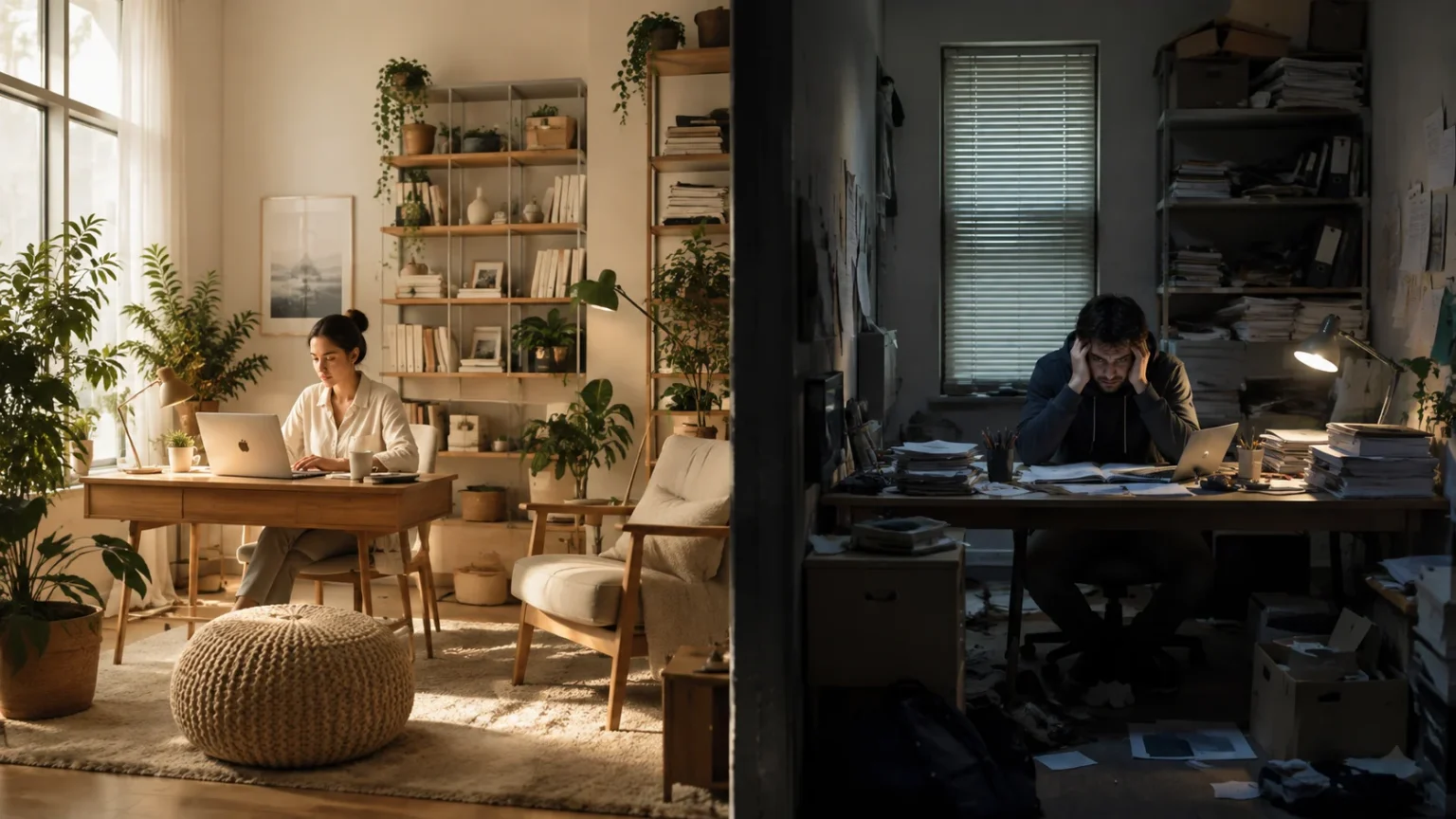

How Can Interior Design Affect Human Behavior?
Interior design does much more than make a room attractive. The way a space is arranged, illuminated, colored, furnished, and decorated can influence how people feel and behave inside it. A bright, organized room may encourage focus and movement, while a crowded or poorly lit environment can make people feel uncomfortable, distracted, or mentally tired.
So, how can interior design affect human behavior in everyday life? The answer lies in the relationship between people and their surroundings. Humans constantly respond to environmental cues such as light, sound, temperature, color, privacy, openness, and proximity to other people, often without consciously realizing how strongly those factors shape their actions.
This relationship is commonly explored through environmental psychology, a field that examines how physical environments influence emotions, decisions, social behavior, and overall well-being. Interior designers increasingly use these principles to create homes, workplaces, schools, healthcare facilities, restaurants, and public spaces that support specific human needs rather than focusing on appearance alone.
Good design therefore asks more than, “Does this room look beautiful?” It also asks whether people can move comfortably, concentrate, relax, communicate, feel safe, and perform the activities the space was created for. Understanding the psychology of interior design can help create environments that work with human behavior instead of unintentionally working against it.
Why Does Interior Design Influence Human Psychology?
Humans constantly receive information from their surroundings. The brain notices brightness, shapes, colors, sounds, textures, temperature, movement, and spatial boundaries before a person consciously analyzes them. These environmental signals can influence emotional responses and determine whether a space feels comfortable, stimulating, stressful, safe, private, or welcoming.
Imagine walking into two bedrooms of the same size. One is cluttered, dark, noisy, and filled with oversized furniture, while the other has natural light, organized storage, comfortable proportions, and clear walking paths. Even before examining individual decorative details, most people would probably experience noticeably different emotional reactions in the two environments.
Interior spaces can also influence behavior by making certain actions easier or harder. A dining table positioned centrally may encourage family members to gather, while isolated seating arrangements may reduce interaction. A well-positioned desk can support concentration, whereas a workspace located beside constant household activity may encourage distraction.
This is why interior design psychology focuses on the interaction between environment and behavior. Design does not control people like a switch, but it creates conditions that can encourage particular feelings and actions. Effective spaces support what occupants naturally want and need to do.
How Does Color Affect Mood and Behavior?
Color is one of the most noticeable elements of interior design, and it can influence the overall emotional character of a room. Warm shades such as red, orange, and yellow often create an energetic or visually stimulating atmosphere, while cooler tones such as blue and green are commonly associated with calmness, freshness, and relaxation.
However, color psychology in interior design is more complicated than saying that one color always creates one emotion. Personal preferences, cultural associations, brightness, saturation, surrounding materials, and the purpose of the room all influence how a color is experienced. A deep red dining room may feel intimate, while the same color throughout a small bedroom could feel overwhelming.
Neutral colors can provide visual calm and flexibility, particularly when combined with natural materials or subtle accents. Beige, cream, gray, and soft earthy tones often create quieter backgrounds that allow furniture, artwork, or architectural features to stand out. Too little contrast, however, can make some spaces feel flat or visually unengaging.
The best approach is to select colors according to the behavior a room should support. Calmer tones may work well in bedrooms and relaxation spaces, while more stimulating accents can bring energy to social or creative environments. Color works most effectively when it supports the room’s function rather than following trends alone.
How Does Lighting Affect Human Behavior?
Lighting has a powerful influence on how people experience interior spaces. Natural daylight can make rooms feel larger, fresher, and more inviting, while inadequate lighting may cause a space to feel gloomy or uncomfortable. Light also affects practical behaviors because people need appropriate visibility to read, cook, work, relax, and move safely.
Exposure to daylight helps support the body’s natural circadian rhythm, which influences sleep and wake patterns. Bright daytime environments can promote alertness, while warmer and dimmer lighting in the evening may help create a calmer atmosphere. This is why thoughtful lighting design and human behavior are increasingly considered together.
Different tasks require different lighting conditions. A kitchen needs bright functional lighting around preparation areas, while a living room may benefit from several softer light sources that allow people to adjust the atmosphere. Using only one harsh overhead fixture can limit flexibility and make a room feel less comfortable.
Layered lighting usually creates a more adaptable interior. Ambient lighting provides general illumination, task lighting supports specific activities, and accent lighting draws attention to architectural or decorative features. When these layers work together, occupants can adjust the environment according to their activity and mood.
Can Natural Light Improve Mood and Productivity?
Natural light can make an interior feel more open and connected with the outside environment. Windows, skylights, glazed doors, and reflective surfaces help daylight travel through a space, reducing dependence on artificial lighting during daytime hours. Many people also find sunlit rooms more pleasant and inviting.
In work environments, appropriate daylight can contribute to comfort and alertness when glare and excessive heat are controlled. A desk with access to daylight may feel more stimulating than a workspace hidden in a dark corner. However, direct sunlight hitting computer screens can create visual discomfort and reduce productivity instead of improving it.
Daylight can also influence how people perceive colors, materials, and room proportions. Natural variations in sunlight throughout the day create a changing visual environment that artificial lighting rarely reproduces completely. These subtle changes can make interiors feel more dynamic and connected with the passage of time.
Designers often maximize natural light in interior design through window placement, lighter wall finishes, mirrors, open layouts, and appropriate window treatments. The goal is not necessarily to make every space extremely bright, but to provide comfortable access to daylight while maintaining privacy, temperature control, and visual comfort.
How Does Room Layout Influence the Way People Behave?
Furniture placement affects how people move and interact inside a room. A clear, intuitive layout can make navigation feel effortless, while furniture placed randomly in walking routes can create frustration. People are more likely to use a space comfortably when they can understand its function almost immediately.
In social spaces, furniture orientation can strongly influence interaction. Sofas and chairs positioned toward one another encourage conversation, while seats facing only a television naturally shift attention toward the screen. A large distance between seats can make communication feel formal, whereas extremely close spacing may feel intrusive.
Open-plan interiors can encourage movement, visibility, and informal interaction, but complete openness is not always desirable. People also need areas where they can concentrate, retreat, or have private conversations. Effective space planning in interior design balances connection with opportunities for privacy.
Furniture arrangement should therefore begin with desired behavior. Before deciding where a sofa, table, desk, or chair looks best, designers can ask how people need to move and interact in the room. Layout becomes more successful when human activity determines placement rather than decoration alone.
How Does Clutter Affect Stress and Mental Focus?
Clutter increases the amount of visual information a person has to process. A room filled with scattered objects, cables, paperwork, clothing, and unnecessary furniture can continually compete for attention. Even when people consciously ignore the mess, the environment can still feel mentally demanding.
A cluttered workspace may be particularly distracting because unrelated objects remain within the visual field while a person is trying to concentrate. Searching for misplaced items can also waste time and create frustration. An organized environment reduces these unnecessary decisions and makes important objects easier to locate.
However, an organized interior does not have to be extremely minimal. Some people enjoy displaying books, collectibles, photographs, artwork, and meaningful possessions. The important distinction is often between intentional visual richness and uncontrolled clutter that interferes with movement or functionality.
Good interior organization and storage can support calmer behavior by giving everyday items logical places. Closed cabinets, shelves, baskets, drawers, and multifunctional furniture can reduce visual noise without removing personality. The goal is to create an environment where belongings support daily life rather than constantly demanding attention.
How Can Interior Design Affect Productivity and Focus?
Workspaces influence how easily people can concentrate. Poor lighting, uncomfortable seating, constant noise, excessive visual distractions, or an awkward desk setup can repeatedly interrupt focus. Even small environmental problems become significant when someone spends several hours each day working in the same location.
A productive workspace should make the desired activity easy to begin. Frequently used tools should be accessible, the chair and desk should support comfortable posture, and unnecessary distractions should remain outside the immediate work zone. This reduces friction and allows more mental energy to remain focused on the task.
Visual boundaries can also help the brain associate a particular place with working. This is especially useful in small homes where living and professional activities happen in the same room. A dedicated desk, rug, shelving unit, or lighting arrangement can create a psychological distinction between work time and relaxation.
Effective office interior design and productivity therefore depends on more than expensive furniture. Lighting, acoustics, temperature, organization, ergonomics, access to nature, and privacy all contribute. A thoughtful workspace supports sustained attention without making the environment feel sterile or overly controlled.
Can Interior Design Influence Social Interaction?
Interior design can either encourage people to interact or make social contact less likely. Consider a living room where every chair points toward the center compared with one where seats are positioned far apart and facing different directions. The first arrangement naturally makes eye contact and conversation easier.
Dining areas provide another clear example. A comfortably sized dining table can create a regular gathering point for meals and conversation. If the table is buried beneath clutter or located in an inconvenient position, household members may gradually develop habits of eating separately in other areas.
Public and commercial interiors use the same principles. Restaurants may arrange tables to create intimacy, hotel lobbies may include seating clusters that encourage informal conversation, and offices may create shared areas where employees can meet without scheduling a formal meeting.
The relationship between interior design and social behavior is therefore largely about opportunity. Design cannot force meaningful interaction, but it can remove barriers to it. Spaces that provide comfortable seating, appropriate distances, pleasant acoustics, and logical gathering points make social connection easier.
How Does Personal Space Affect Comfort and Behavior?
People naturally maintain different amounts of physical distance depending on their relationship and situation. Standing very close to a family member may feel completely normal, while the same distance from a stranger may feel uncomfortable. Interior design influences whether occupants can maintain an appropriate sense of personal space.
Furniture that is packed too closely together can make even a large room feel restrictive. Narrow walkways, crowded seating, or oversized pieces may cause people to move cautiously or avoid certain areas. Providing sufficient circulation space helps occupants feel more physically comfortable and in control of their movements.
Privacy is another important part of human-centered interior design. Bedrooms, bathrooms, offices, consultation spaces, and study areas often require stronger boundaries than communal spaces. Walls, screens, curtains, furniture placement, and acoustic materials can all create different degrees of separation.
Successful interiors usually offer both connection and retreat. People may enjoy gathering with others but still need opportunities to be alone, concentrate, or recover from stimulation. Providing choices allows occupants to regulate their environment according to their changing social and emotional needs.
How Do Sound and Acoustics Influence Human Behavior?
Sound dramatically changes how an interior feels. Hard surfaces such as glass, concrete, tile, and bare walls reflect sound, potentially making conversations, footsteps, appliances, and background activity seem louder. Excessive noise can make it harder to focus, communicate, relax, or sleep.
Restaurants demonstrate this effect clearly. A moderate level of background activity can make a restaurant feel lively, but excessive reverberation forces guests to speak more loudly. As everyone raises their voice, the overall noise level can increase further and make conversation increasingly uncomfortable.
Homes and offices experience similar challenges. Rugs, upholstered furniture, curtains, acoustic panels, bookshelves, and other sound-absorbing surfaces can reduce echoes and create a more comfortable auditory environment. Strategic separation of noisy and quiet activities can also make spaces easier to use.
Acoustic interior design is therefore an important behavioral tool rather than a purely technical consideration. When sound is controlled appropriately, people may communicate more comfortably, focus for longer periods, and feel less overwhelmed by their surroundings.
How Does Furniture Affect Comfort and Behavior?
Furniture directly shapes how people use a space because it supports sitting, working, sleeping, eating, storage, and socializing. Attractive furniture that is uncomfortable or poorly proportioned may discourage people from using a room as intended, regardless of how impressive it looks.
Ergonomics is particularly important for furniture used for extended periods. Office chairs, desks, dining chairs, beds, and sofas should support comfortable body positions appropriate to their purpose. When furniture causes discomfort, occupants naturally shift position more frequently or avoid spending time there.
Scale also influences human behavior. Large furniture in a small room can make movement difficult, while furniture that is too small for a large space may make social areas feel disconnected. Choosing pieces according to room dimensions creates more intuitive circulation and comfortable interaction.
Good furniture arrangement and ergonomics combine appearance with usability. Designers should consider who will use the furniture, what activities will happen there, and how frequently the items will be used. A visually beautiful chair becomes far more valuable when someone genuinely wants to sit in it.
How Can Nature in Interior Design Affect People?
Bringing natural elements indoors can make spaces feel warmer, calmer, and more visually engaging. Indoor plants, wood, stone, natural textures, daylight, outdoor views, and organic forms are commonly used in biophilic interior design to strengthen people’s connection with nature.
Plants can introduce color, movement, and changing organic shapes into environments dominated by straight architectural lines. A window overlooking trees or greenery can similarly create visual relief from screens, walls, and artificial surfaces. These elements can make interiors feel less enclosed.
Natural materials also influence the sensory experience of a room. Wood grain, woven fibers, stone textures, and linen fabrics provide visual and tactile variation. Their imperfections often create a sense of warmth that highly uniform synthetic surfaces may not provide on their own.
Biophilic design works best when it feels integrated rather than decorative. A single plant cannot compensate for poor lighting, noise, uncomfortable furniture, or dysfunctional layout. Natural elements are most effective when combined with broader design choices that support comfort, movement, daylight, and well-being.
How Do Interior Spaces Affect Sleep and Relaxation?
Bedrooms provide one of the clearest examples of how interior design can influence behavior. A space filled with bright lighting, electronic distractions, work materials, clutter, and noise may make it harder to mentally transition toward rest. A calmer environment can create stronger signals that the day is ending.
Lighting is particularly important. Bright, cool illumination may be useful during daytime activities, but softer and warmer lighting tends to feel more appropriate during evening relaxation. Blackout curtains or suitable blinds can also help control unwanted outdoor light when darkness is needed.
Temperature, bedding, sound, and mattress comfort contribute to the sleeping environment as well. While interior design cannot solve every sleep problem, it can remove environmental obstacles that interfere with relaxation. Keeping the bedroom comfortable and separating work from sleep where possible can create more consistent behavioral cues.
Bedroom interior design for better sleep should prioritize comfort rather than visual complexity. Calm colors, accessible storage, limited clutter, adjustable lighting, and appropriate privacy can help create an atmosphere associated with rest instead of stimulation.
Can Interior Design Affect Buying Decisions?
Retailers understand that physical environments can influence how customers explore and experience products. Store layouts guide movement, lighting highlights particular merchandise, and displays attract attention toward selected areas. Even the location of checkout counters can influence how customers travel through a space.
Restaurants and cafés use similar design strategies. Lighting, seating comfort, music, colors, furniture density, and table arrangement contribute to how fast or slowly customers move through the experience. A quick-service restaurant may create a very different atmosphere from a restaurant designed for long, relaxed dinners.
Brand identity also affects customer perception. Materials, signage, furniture, colors, scent, and spatial organization can communicate whether a business intends to feel luxurious, affordable, youthful, traditional, minimalist, or playful. Customers begin forming impressions before they interact with staff or products.
This does not mean commercial interior design can force consumers to purchase something they do not want. Instead, it can make products easier to discover, environments easier to navigate, and experiences more memorable. Good commercial design supports customer decisions by reducing friction and strengthening the atmosphere surrounding the brand.
How Can Interior Design Improve Well-Being at Home?
A supportive home makes everyday routines easier. When storage is convenient, furniture fits the room, lighting supports daily activities, and circulation paths remain clear, occupants spend less time fighting against their environment. Small improvements in usability can accumulate into meaningful improvements in everyday comfort.
Homes should also reflect the people who live there. Photographs, artwork, books, inherited objects, travel souvenirs, and personal collections can create a sense of identity and belonging. Interiors that feel completely disconnected from their occupants may appear stylish but still fail to feel emotionally comfortable.
Flexibility has become increasingly important as homes support more activities. A living room might function as a social space, relaxation area, temporary workspace, and entertainment zone. Furniture, lighting, and storage that can adapt between activities make these transitions easier.
The strongest interior design for well-being combines functionality, comfort, identity, and sensory balance. There is no universal decorating formula that makes everyone happier. Effective design starts with understanding the behaviors, preferences, routines, and challenges of the people who actually use the space.
How to Design a Space Around Human Behavior
Start by identifying what people need to do in the room before choosing decorative elements. A living room intended primarily for conversation should be organized differently from one designed around television viewing. Likewise, a home office requires different lighting, acoustics, and furniture from a meditation area.
Next, examine how people naturally move through the environment. Doors, pathways, furniture, and storage should support that movement rather than interrupt it. Frequently used objects should be easy to access, and activities that require concentration should be protected from unnecessary distractions whenever possible.
Consider the senses as well. Look at lighting intensity, temperature, textures, sound levels, colors, natural elements, and visual complexity. No single design feature determines behavior by itself. The overall experience emerges from the way these different environmental factors interact.
Finally, allow the design to evolve. Human needs change as families grow, work arrangements shift, routines develop, and preferences change. Behavioral interior design is most successful when a space can adapt instead of remaining permanently tied to one decorative arrangement.
The Bottom Line: How Can Interior Design Affect Human Behavior?
So, how can interior design affect human behavior? It influences the environmental cues people experience every day. Lighting can affect alertness and atmosphere, layouts can encourage movement or interaction, colors can shape perception, and clutter can increase visual distraction.
Sound, privacy, furniture, natural elements, and personal space also contribute. These features can influence whether someone wants to stay in a room, communicate with others, concentrate on work, relax, shop, eat, or sleep. Design creates the conditions within which those behaviors occur.
Interior design should not be treated as a method of controlling people’s minds. Individual personality, culture, experiences, health, preferences, and circumstances remain extremely important. The same room can produce different reactions in different people, which is why effective design avoids simplistic psychological formulas.
Ultimately, good interior design combines aesthetics with an understanding of human needs. When a space supports movement, comfort, concentration, connection, privacy, and emotional well-being, it becomes more than visually appealing. It becomes an environment designed around the way people actually live.
Frequently Asked Questions About Interior Design and Human Behavior
How does interior design influence people’s emotions?
Interior design can influence emotions through color, lighting, sound, layout, texture, and spatial comfort. A calm, organized environment may feel relaxing, while a noisy or cluttered room can feel more mentally demanding.
Can interior design improve productivity?
Yes, thoughtful workspace design can support concentration by improving lighting, ergonomics, organization, acoustics, and privacy. Removing environmental distractions can make focused work easier.
What colors affect human behavior the most?
There is no single color that produces the same response in everyone. Warm colors often feel energetic, while cooler shades may feel calmer, but culture, personal preference, saturation, and context strongly influence the effect.
How does room layout affect social interaction?
Seating positioned toward other people can encourage conversation, while distant or poorly oriented furniture may discourage interaction. Layout also affects personal space, eye contact, movement, and privacy.
Why is psychology important in interior design?
Psychology helps designers understand how people perceive and respond to spaces. Using principles of environmental psychology can create interiors that better support comfort, focus, interaction, relaxation, and everyday well-being.