
How to Decorate a Large Empty Wall
A large empty wall can make an otherwise beautiful room feel unfinished. The problem is not always a lack of decor; sometimes the wall is simply too large for the small pictures, shelves, or accessories you already own. When the scale is wrong, even attractive pieces can look lost instead of intentional.
Learning how to decorate a large empty wall starts with thinking about proportion rather than immediately buying more decorations. A successful wall usually has one clear visual idea, whether that is an oversized artwork, a gallery arrangement, architectural molding, shelving, or a combination of texture and furniture.
The best choice also depends on how the room is used. A living room wall may need a strong focal point, while an empty dining room wall could benefit from a mirror, art, or storage. In a bedroom, softer artwork, paneling, or textiles may create a more comfortable atmosphere.
You also do not have to fill every inch. Negative space is an important part of interior design, and leaving breathing room around wall decor often makes the final arrangement look more expensive. The goal is to create balance, not to cover the wall simply because it is large.
Start by Measuring the Wall Before You Decorate
Before choosing artwork or furniture, measure the height and width of the wall. A rough visual estimate is rarely enough when you are decorating a large surface, because even a few inches can dramatically change how an arrangement feels once it is installed.
Next, pay attention to nearby furniture. A sofa, console table, dining table, bed, or fireplace usually becomes the visual anchor for the wall behind it. Wall decor should relate to that furniture rather than appearing as an independent collection floating above the room.
It also helps to mark potential dimensions using painter’s tape. Tape can show you how a large artwork, mirror, gallery wall, or paneling arrangement will occupy the space before you make holes or spend money. This simple step often prevents scale mistakes.
Finally, consider the room’s sightlines. Look at the wall from the doorway, main seating area, and neighboring spaces. A design that looks balanced from directly in front may feel too small or visually crowded when viewed from the room’s natural entrance.
Choose One Strong Focal Point Instead of Many Small Objects
One of the easiest ways to decorate a large wall is to use a single statement piece. Oversized wall art immediately creates scale and gives the eye somewhere to rest, which can make the entire room feel more composed.
A large canvas, framed print, textile artwork, sculptural piece, or photographic image can all work well. The subject does not need to be dramatic if the scale itself is strong enough. Even a simple abstract piece can carry a large wall beautifully.
The key is to avoid choosing something that is technically large but still too small for the furniture underneath it. If an artwork looks like it could comfortably fit inside one small section of the wall, it may not have enough visual weight to act as the primary focal point.
A single large piece is particularly effective in minimalist, contemporary, transitional, and modern interiors because it keeps the wall visually clean. It can also be more affordable and easier to arrange than buying a dozen smaller pieces that need careful spacing.
Create a Gallery Wall That Feels Intentional
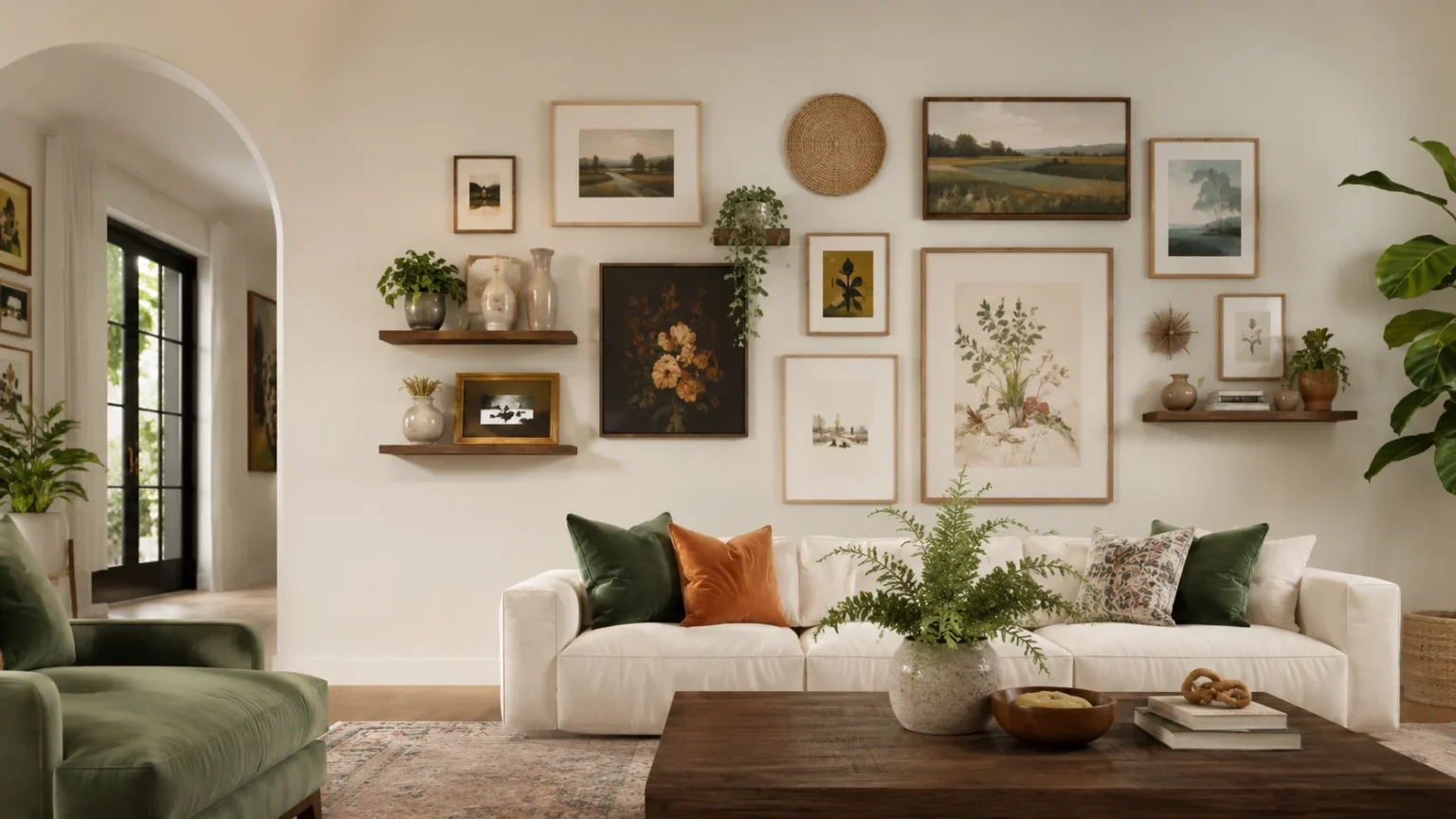
A gallery wall is ideal when you want to display several photographs, prints, illustrations, or personal objects together. On a large empty wall, a well-planned gallery can create enough visual presence to compete with the room’s scale.
Start with one larger anchor piece and build outward. The surrounding frames can vary in size, but they should share something in common, such as frame color, subject matter, matting, or overall tone. This prevents the arrangement from appearing completely random.
Spacing is just as important as the artwork itself. Keeping relatively consistent gaps between frames makes the collection feel connected. If the spaces are too wide, the arrangement may look like several unrelated pictures rather than one large composition.
Before hanging anything, lay the frames on the floor or create paper templates and tape them to the wall. This allows you to adjust the balance, width, and height before committing, which is especially useful when the gallery includes many pieces.
Use an Oversized Mirror to Add Light and Depth
A large mirror is one of the most useful large wall decor ideas, especially in rooms that feel dark or narrow. Mirrors reflect light and views, visually extending the space instead of adding another solid decorative surface.
The frame style can influence the entire room. A thin metal frame feels contemporary, while warm wood can soften the look. Arched, antique-inspired, irregular, and frameless mirrors can create very different moods even when they occupy similar amounts of wall space.
Think carefully about what the mirror will reflect. Positioning it opposite a window, attractive artwork, greenery, or an open area can make the room feel brighter and more spacious. Reflecting clutter or an awkward corner may have the opposite effect.
For very tall walls, a floor-length mirror can be particularly effective because it uses vertical space that small artwork often fails to address. A large leaning mirror can also create a relaxed designer look when it is safely secured to prevent tipping.
Add Wall Molding for an Architectural Upgrade
If artwork alone feels too temporary, consider adding wall molding or decorative paneling. Picture-frame molding, board and batten, applied trim, and paneled walls create architectural interest even when the wall itself remains relatively simple.
Molding works particularly well on large walls because it divides an intimidating blank surface into smaller visual sections. Those sections can then remain empty, hold artwork, or frame furniture below, giving the wall structure without making it feel cluttered.
Painting the molding the same color as the wall creates subtle texture and shadow. For a bolder look, you can use contrasting colors or combine lower wall paneling with wallpaper, although the room’s existing architecture should guide how decorative you become.
This approach is useful when you want the room to feel more custom or permanent. Unlike accessories that can seem added afterward, molding becomes part of the architecture and can make an otherwise plain room feel thoughtfully designed.
Turn the Wall Into an Accent Wall
Sometimes the wall itself should become the decoration. An accent wall can transform a large blank surface using paint, wallpaper, limewash, wood slats, textured plaster, or another material without requiring dozens of decorative objects.
A darker or richer paint color can create depth and make furniture stand out, especially in large rooms that otherwise feel visually flat. Softer earthy tones can produce a similar effect without creating an overly dramatic contrast.
Wallpaper offers greater pattern and detail. Large-scale botanical prints, geometric designs, murals, and textured grasscloth-inspired finishes can give a wall enough personality that additional artwork becomes optional rather than necessary.
The strongest accent walls usually connect with colors or materials already present in the room. Repeating a shade from a rug, cushion, chair, or curtain makes the wall feel integrated rather than like an isolated design experiment.
Install Floating Shelves for Decor and Flexibility
Floating shelves are a practical option if you enjoy changing your decor regularly. Instead of permanently committing to one art arrangement, shelves allow you to layer framed prints, books, plants, ceramics, and small decorative objects.
On a large wall, one tiny shelf will usually feel undersized. Consider several long shelves, staggered arrangements, or a wide picture ledge that relates to the furniture below. The shelf system should have enough visual weight to belong on the wall.
Avoid filling every available inch. A few carefully chosen pieces generally look more polished than dozens of small decorations crowded together. Mixing vertical and horizontal objects also creates a more natural rhythm across the display.
Shelves are especially useful in living rooms, home offices, reading areas, and dining rooms because they combine decoration with storage. They also make it easy to refresh the room seasonally without changing the wall structure itself.
Build a Statement Wall With Bookshelves
A large empty wall can become functional storage by turning it into a wall of bookshelves. Built-in shelving creates one of the strongest visual transformations because it uses both height and width while adding practical storage at the same time.
Built-ins can be expensive, but freestanding bookcases placed side by side can achieve a similar effect. Choosing units that nearly fill the height of the wall creates a more custom appearance than several short shelves scattered around the room.
Style the shelves with a mix of books and decorative pieces rather than treating every shelf exactly the same. Leaving some negative space keeps the design from looking crowded and allows special objects to stand out.
For an even more cohesive look, paint the shelving the same color as the wall or use a slightly darker shade. This creates depth while visually connecting the storage system to the architecture of the room.
Add Texture With Fabric, Tapestries, or Woven Art
Large walls do not always need hard frames or rigid materials. Textile wall decor can soften a room while introducing pattern, warmth, and texture that traditional artwork may not provide.
A large tapestry, woven hanging, quilt, macramé piece, or framed textile can work particularly well above a sofa, bed, or console. Fabric also absorbs some visual harshness in rooms dominated by glass, metal, stone, or straight architectural lines.
Textiles are useful for covering a large area without creating excessive visual weight. A soft neutral woven piece can occupy substantial wall space while still keeping the room calm and understated.
They also provide an opportunity to introduce handmade character. Natural fibers, embroidery, woven textures, and vintage fabrics can make a contemporary room feel more collected and personal rather than overly polished.
Use a Large Console Table to Anchor the Wall
Sometimes the problem is not the wall decor but the empty floor area beneath it. A console table against a large wall creates an anchor that gives artwork, lamps, mirrors, and accessories something to visually connect with.
Choose a console that is substantial enough for the available wall. A very narrow piece on a wide wall can look accidental, while a longer console immediately establishes a clear zone for decorating.
Above the table, add one large artwork or mirror rather than several tiny pieces. Table lamps, books, bowls, greenery, or sculptural objects can then create a layered composition that fills the lower portion of the wall.
This arrangement works especially well in entryways, dining rooms, open-plan living areas, and long hallways. It combines useful surface space with wall decoration, making it more functional than art alone.
Use Plants to Bring a Blank Wall to Life
Plants can solve large-wall problems without actually hanging anything on the wall. Tall indoor trees, climbing plants, hanging greenery, and plant shelves create height and movement while adding natural texture to the room.
A tall fiddle-leaf fig, olive-style tree, rubber plant, or other substantial indoor plant can visually occupy an empty corner beside a large wall. The exact plant should match the available light rather than being chosen only for appearance.
For a stronger effect, combine plants of different heights. One tall plant, a medium floor plant, and smaller greenery on a console can create a layered composition that fills vertical space without making the wall itself busy.
Plant-focused decor works particularly well in neutral interiors because greenery adds natural color. It can also soften large areas of white, gray, or beige and make a room feel warmer and more lived in.
Decorate a Large Wall Behind a Sofa
The wall behind a sofa is one of the most common decorating challenges because the furniture immediately establishes a strong horizontal line. Whatever you place above it should feel visually connected to the sofa instead of floating too high.
A large artwork, triptych, mirror, gallery wall, or long picture ledge can all work. The overall arrangement should usually occupy a meaningful portion of the sofa’s width so that the proportions feel balanced.
Keep the bottom of the artwork close enough to the sofa to create a relationship between the two. Hanging art excessively high is a common mistake that makes the furniture and wall decor look disconnected.
If your sofa already has a bold shape, patterned upholstery, or many cushions, simpler wall decor may work better. A plain sofa, on the other hand, can support a more expressive gallery wall or dramatic piece of oversized artwork.
Decorate a Large Empty Dining Room Wall
A dining room wall offers an opportunity to combine atmosphere with function. A large mirror can reflect a chandelier or table setting, while artwork can establish the color palette and mood of the dining area.
A sideboard or buffet is another useful anchor. Adding artwork or a mirror above it creates a complete composition and gives you storage for serving pieces, linens, or dinnerware at the same time.
For a more architectural look, wall molding can make a dining room feel sophisticated without overwhelming it with objects. Adding wall sconces inside or beside molding panels can create an especially polished evening atmosphere.
If the dining room is narrow, avoid wall decor that projects too far into the space. Shallow frames, mirrors, molding, or wallpaper may be more practical than deep shelving or bulky decorative installations.
Decorate a Large Empty Bedroom Wall
Large bedroom walls usually benefit from softer visual choices because the room should still feel restful. Oversized artwork, upholstered panels, wall molding, wallpaper, or a large headboard can provide impact without creating visual noise.
If the empty wall is behind the bed, treat the bed and wall as one composition. A tall headboard can solve much of the problem automatically, while artwork or molding above it can extend the visual interest upward.
On a wall opposite the bed, consider a dresser, console, mirror, or low storage cabinet rather than adding decoration alone. Combining furniture with wall decor helps distribute visual weight more evenly around the room.
Avoid filling every bedroom wall with competing focal points. If one wall contains dramatic wallpaper or artwork, another large wall may need only subtle molding, a mirror, or a simple piece of art to maintain a calmer balance.
Try a Wall Mural for Maximum Impact
A wall mural can turn a blank wall into the main feature of a room. Murals can include landscapes, abstract shapes, botanical patterns, architectural scenes, or custom designs that create a sense of depth and personality.
Large-scale designs generally work better than tiny repeated patterns on expansive walls. Oversized imagery matches the scale of the surface and reduces the need to add several pieces of framed artwork afterward.
Peel-and-stick murals can be useful for renters or people who like changing their decor, while traditional wallpaper or hand-painted murals create a more permanent finish. The right option depends on your budget and how long you expect to keep the design.
Because a mural already carries significant visual weight, keep nearby accessories relatively restrained. Allowing the wall to remain the star often produces a more sophisticated result than layering many additional decorative objects over it.
Common Mistakes When Decorating a Large Wall
The most common mistake is using decor that is too small. A few tiny frames might look attractive up close but disappear when viewed across a large room. Scale should reflect both the wall and the furniture positioned underneath it.
Another mistake is hanging pieces too far apart. Large gaps break the visual connection between related artwork, making the wall look scattered. Group smaller pieces closely enough that they read as a single composition.
People also sometimes hang everything too high. Artwork should relate to normal eye level and nearby furniture rather than automatically being centered between the floor and ceiling. Very high ceilings do not mean every picture should be pushed upward.
Finally, avoid adding decoration simply to eliminate blank space. A wall filled with unrelated signs, baskets, shelves, clocks, and photographs can feel more unfinished than an intentionally simple wall. Strong editing is one of the most important parts of successful interior design.
How to Decorate a Large Empty Wall on a Budget
Decorating a large wall does not require expensive original artwork. Large printable art, thrifted frames, fabric panels, removable wallpaper, DIY molding, and secondhand mirrors can create substantial visual impact at a much lower cost.
One budget-friendly strategy is to frame inexpensive materials at a large scale. Maps, wrapping paper, vintage posters, textile remnants, photographs, and even attractive wallpaper samples can become stylish artwork when presented intentionally.
Paint is another economical tool. A large painted arch, geometric shape, color block, or contrasting wall can provide more visual impact than several small accessories while requiring relatively little material.
The most important money-saving principle is to buy fewer pieces at the correct scale. Spending your budget on one strong large item will often make a room look more finished than purchasing many inexpensive decorations that are too small for the wall.
How to Decorate a Large Empty Wall Without Cluttering It
The easiest way to avoid clutter is to decide on one dominant idea before buying anything. Choose oversized art, shelves, a gallery wall, molding, a mirror, or an accent finish as the primary feature rather than trying to combine every option.
Repeat materials and colors already present in the room. If your furniture includes warm wood, black metal, or soft beige fabric, echoing one of those elements in the wall decor creates visual continuity.
Give every arrangement breathing room. Empty wall space around artwork is not wasted space; it frames the design and helps the eye understand what is important. This is particularly valuable in smaller rooms with large wall surfaces.
Step back regularly while decorating. Large-wall arrangements are difficult to judge from arm’s length, so evaluate them from across the room. If your eye does not know where to look first, simplifying the composition usually improves it.
How to Decorate a Large Empty Wall: The Bottom Line
When deciding how to decorate a large empty wall, start with scale, proportion, and function. The wall should connect visually with the furniture, architecture, and purpose of the room rather than becoming an isolated decorating project.
Oversized artwork is one of the simplest solutions, while gallery walls allow more personality and variety. Mirrors can increase light, shelves add flexibility, molding adds architecture, and wallpaper or murals can turn the entire surface into a feature.
You do not need to use every idea at once. In fact, large walls often look most polished when one strong design choice is supported by a few smaller details. Restraint can make inexpensive decor appear far more intentional.
Measure first, experiment with placement, and choose pieces large enough to belong in the space. When proportion and visual balance are right, even a previously awkward blank wall can become one of the most attractive features in your home.
Frequently Asked Questions About Decorating a Large Empty Wall
Large walls can feel difficult because ordinary wall decorations often look undersized once they are hung. The solution usually involves creating a larger visual composition rather than simply adding more individual objects.
Furniture placement also matters. A sofa, bed, console, or dining buffet can provide an anchor that helps determine the ideal width, height, and position of the wall decor above it.
Budget does not have to limit creativity. Paint, thrifted frames, printable art, DIY molding, textiles, and rearranged furniture can create a significant transformation without requiring expensive designer pieces.
The most successful large-wall designs combine scale with restraint. A strong focal point and enough negative space will usually feel more polished than filling every available section of wall.
What can I put on a very large empty wall?
Oversized art, gallery walls, mirrors, floating shelves, molding, wallpaper, murals, tapestries, and bookcases are all strong options. Choose one main idea that suits the scale and style of your room.
How do you decorate a large wall without spending much money?
Use paint, printable art, thrifted frames, fabric, DIY molding, or removable wallpaper. One large budget-friendly feature often looks better than purchasing many small accessories.
How big should artwork be on a large wall?
Artwork should feel substantial compared with the furniture and wall beneath it. Above a sofa or console, aim for a composition wide enough to look visually connected rather than small and isolated.
What should I put on a large wall behind a sofa?
Consider one oversized artwork, a gallery wall, triptych, large mirror, picture ledge, or decorative molding. Keep the arrangement relatively close to the sofa so the two elements feel connected.
How do I make a large wall look cozy?
Add warm textures, layered artwork, wood tones, textiles, plants, soft lighting, or architectural molding. These elements break up the scale of the wall and make the room feel more comfortable.