
The trapezius muscles play an important role in everyday movements, supporting your neck, shoulders, and upper back. Whether you work at a desk, carry groceries, or participate in sports, these muscles help stabilize your shoulder blades and coordinate upper-body movement. Strengthening them through appropriate exercises can improve muscular control, endurance, and overall shoulder function.
Exercises for traps focus on strengthening the upper, middle, and lower portions of the trapezius muscle. These areas work together to support shoulder blade movement, neck positioning, and upper-body stability. With proper technique, trapezius exercises can become a valuable part of a balanced fitness routine for beginners and experienced exercisers alike.
This guide explores effective trap exercises, their benefits, proper form, and important training practices. You will also learn about common mistakes, safe exercise variations, and ways to incorporate trapezius strengthening into your regular workouts. Understanding these fundamentals can help you train comfortably while developing better movement control and upper-back strength.
What Are the Trapezius Muscles?
The trapezius is a large, flat muscle extending across the upper back, neck, and shoulders. It originates from several structures along the back of the head and spine and connects to portions of the collarbone and shoulder blade. Its broad shape allows it to perform several important functions during everyday movements and physical activities.
The trapezius is commonly divided into three functional regions: upper, middle, and lower. The upper fibers help elevate and rotate the shoulder blades, while the middle fibers contribute to shoulder blade retraction. The lower fibers assist with depression and upward rotation, working alongside other muscles to coordinate smooth shoulder movement during various activities.
These regions function together rather than operating as completely separate muscles. For example, raising your arm overhead requires coordinated activity between the trapezius, serratus anterior, and other shoulder muscles. Understanding this relationship explains why different exercises emphasize different trapezius regions. Balanced training should support the entire shoulder complex instead of focusing on one muscle alone.
Benefits of Exercises for Traps
One of the main benefits of trapezius exercises is improved strength and control around the shoulder blades. These muscles help stabilize the upper back during lifting, reaching, and carrying activities. Strengthening them can make certain movements feel more controlled and support the demands of everyday physical tasks when combined with broader upper-body conditioning.
Trapezius strengthening can also support muscular endurance, particularly during activities that require sustained shoulder positioning. People who spend long periods sitting may benefit from combining upper-back exercises with regular movement breaks and workstation adjustments. However, strengthening exercises alone cannot guarantee improved posture or eliminate discomfort caused by prolonged sitting.
Another benefit is improved coordination between the shoulders, upper back, and surrounding muscles. The trapezius contributes to movements used in rowing, overhead reaching, and many recreational activities. A balanced program that includes the rotator cuff, serratus anterior, and other back muscles can support healthy shoulder function and comfortable movement.
Dumbbell Shrugs for Upper Trapezius Strength
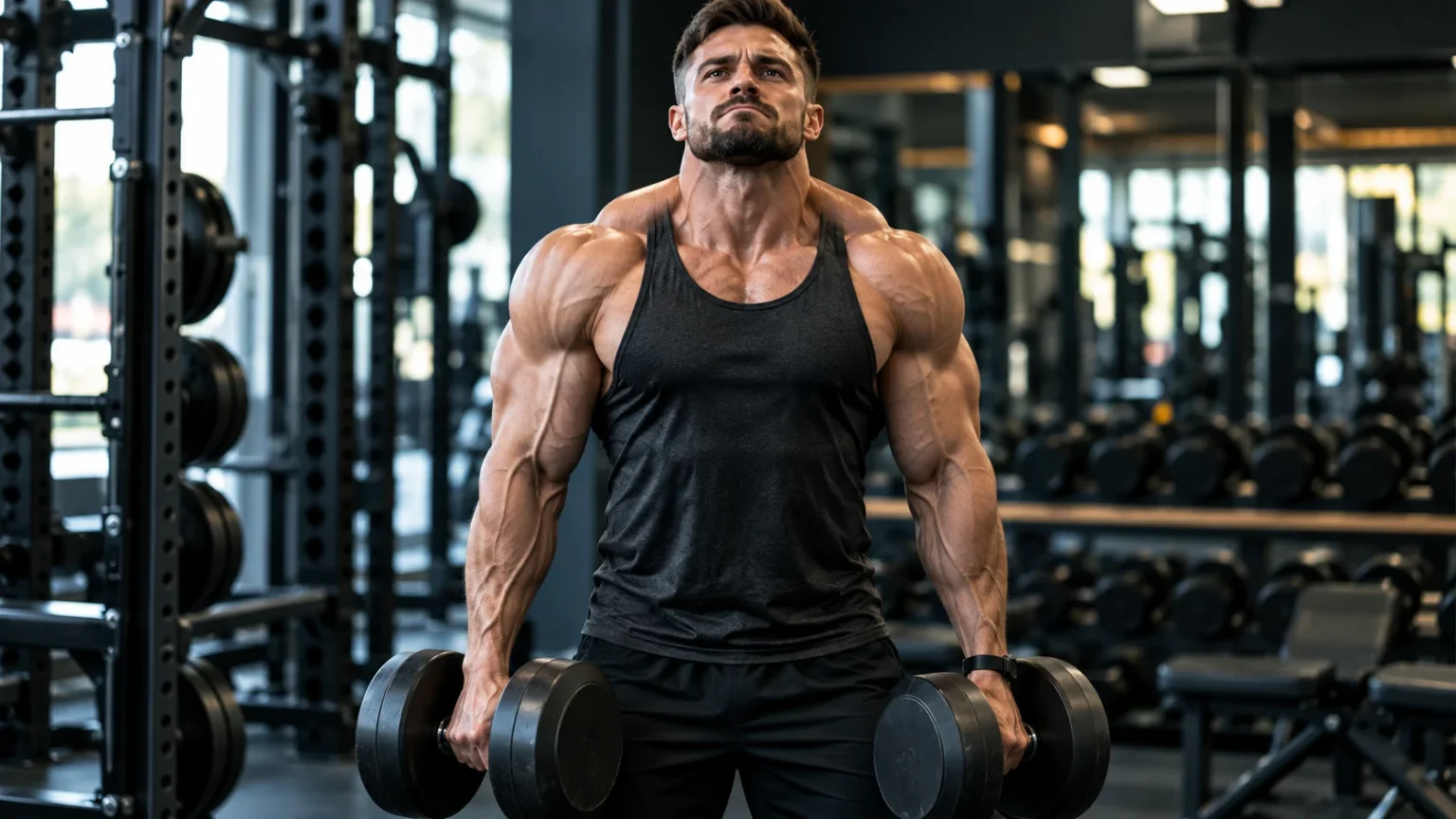
Dumbbell shrugs are a straightforward exercise that primarily emphasizes the upper trapezius muscles. Begin by standing upright with your feet approximately hip-width apart and holding a light dumbbell in each hand. Keep your arms relaxed beside your body, maintain a comfortable neck position, and avoid leaning forward or backward.
Slowly raise your shoulders toward your ears without bending your elbows or rolling your shoulders in circles. Pause briefly at the highest comfortable position before lowering your shoulders with control. Keep the movement smooth and avoid using your legs or upper body to generate momentum. Your neck should remain relaxed throughout the exercise.
Beginners should choose resistance that allows comfortable, controlled repetitions without excessive effort. Start with a manageable number of repetitions and focus on maintaining steady movement. Avoid lifting weights that cause neck strain or shoulder discomfort. Dumbbell shrugs can be useful when incorporated into a balanced upper-back routine rather than performed as the only trapezius exercise.
Resistance Band Rows for Middle Traps
Resistance band rows are an accessible way to strengthen the muscles responsible for pulling the shoulder blades toward one another. The movement involves the middle trapezius alongside the rhomboids and other upper-back muscles. Resistance bands provide adjustable difficulty, making this exercise suitable for home workouts and general strength training.
Secure an appropriate resistance band to a stable anchor at approximately chest height. Hold the band with both hands, maintain an upright posture, and gently pull your elbows backward. Allow your shoulder blades to move naturally toward one another without forcing them together. Slowly return your arms to the starting position while maintaining control.
Choose a band that provides manageable resistance throughout the movement. Avoid raising your shoulders excessively or arching your lower back to complete the exercise. Keep your movements steady and breathe naturally. Resistance band rows can help develop upper-back strength while providing a convenient alternative to gym-based rowing equipment.
Prone Y Raises for Lower Trapezius Activation
Prone Y raises are commonly used to train the lower trapezius and other muscles involved in shoulder blade control. The exercise involves lifting the arms into a Y-shaped position while lying face down. Because the movement requires precise coordination, beginners often benefit from using no additional weight while learning the technique.
Lie face down on a comfortable exercise mat with your arms extended diagonally overhead. Keep your neck aligned with your spine and point your thumbs toward the ceiling. Gently lift your arms a small distance from the floor while avoiding excessive back arching. Lower them slowly and repeat within a comfortable range.
The goal is to maintain controlled shoulder blade movement rather than lifting the arms as high as possible. Start with a few slow repetitions and stop if you experience pinching or discomfort around the shoulders. This exercise may feel more demanding than expected even without weights. Proper technique is more valuable than increasing resistance quickly.
Face Pulls for Upper-Back and Shoulder Control
Face pulls are a useful upper-body exercise that works the middle trapezius, rear shoulder muscles, and several smaller stabilizers. They are commonly performed using a resistance band or suitable cable machine. The movement combines pulling with shoulder rotation, making it a practical addition to balanced upper-back strengthening routines.
Attach a suitable resistance band to a secure anchor around upper-chest or face height. Hold the ends with both hands and gently pull toward your face while allowing your elbows to move outward comfortably. Keep your shoulders relaxed and avoid forcing the neck forward. Return slowly to the starting position.
Face pulls should be performed using resistance that allows smooth, coordinated movement. Avoid leaning backward or using sudden momentum to pull against the band. Maintain a comfortable shoulder position throughout the exercise. If the movement causes pain, reduce the range or seek guidance on a more appropriate variation.
Wall Slides for Shoulder Blade Coordination
Wall slides are a simple exercise that encourages coordinated movement between the trapezius, serratus anterior, and other shoulder muscles. They can help improve awareness of shoulder blade movement during overhead reaching. Because they require little equipment, wall slides are convenient for home exercise routines and controlled mobility practice.
Stand facing a wall with your forearms resting against its surface at a comfortable height. Gently slide your arms upward while allowing your shoulder blades to rotate naturally. Keep your neck relaxed and avoid excessively arching your lower back. Move only through a comfortable range before slowly returning to the starting position.
Wall slides should feel smooth rather than forced. You do not need to push your arms as high as possible if your shoulders become uncomfortable. Beginners can start with short movements and gradually explore a wider range as coordination improves. This exercise complements strengthening movements that place greater emphasis on muscular resistance.
Reverse Fly Exercises for the Middle Trapezius
Reverse fly exercises strengthen several muscles across the upper back, including the middle trapezius and rear deltoids. The movement involves opening the arms outward against light resistance. When performed carefully, it can improve muscular control around the shoulder blades and complement rowing exercises within a balanced upper-body workout.
Begin with light dumbbells and hinge slightly forward at the hips while keeping your back in a comfortable, neutral position. Allow your arms to hang beneath your shoulders with a small bend at the elbows. Slowly raise your arms outward without shrugging excessively. Lower the weights gradually after reaching a comfortable position.
Avoid swinging the dumbbells or lifting them higher than your shoulders comfortably allow. Using lighter resistance often makes it easier to maintain good technique throughout the exercise. Keep your neck aligned with your spine and avoid holding your breath. Reverse fly exercises are most effective when performed with control rather than relying on heavy weights.
Scapular Retractions for Upper-Back Awareness
Scapular retractions are a simple movement that helps develop awareness of shoulder blade positioning. They involve gently drawing the shoulder blades toward one another without requiring weights. This exercise can be useful for beginners learning how the middle trapezius and surrounding muscles contribute to upper-back movement and shoulder coordination.
Sit or stand comfortably with your arms relaxed beside your body. Gently move your shoulder blades backward as though bringing them slightly closer together. Avoid lifting your shoulders toward your ears or forcing your chest forward. Hold the position briefly before relaxing and allowing your shoulder blades to return naturally.
The movement should remain comfortable and should not create tension in your neck. Start with a few controlled repetitions rather than maintaining a rigid position for long periods. Scapular retractions can be included during movement breaks or before other upper-back exercises. They are not a replacement for varied strengthening activities or regular movement throughout the day.
Common Mistakes During Trap Exercises
One common mistake during trapezius exercises is using excessive resistance before developing proper technique. Heavy weights may encourage swinging, neck tension, or unnecessary shoulder movement. Instead, choose a manageable load that allows consistent control. Smooth repetitions help maintain better alignment and make it easier to identify when fatigue begins affecting movement quality.
Another mistake is focusing exclusively on upper trapezius exercises such as shrugs. Although the upper fibers are important, the middle and lower regions also contribute to shoulder blade function. A balanced routine should include pulling movements and exercises that encourage coordinated shoulder rotation. This approach supports more complete upper-back conditioning.
Some people also attempt to maintain a rigid shoulder position throughout every exercise. However, the shoulder blades naturally move during many upper-body activities. Forcing them into one position can interfere with comfortable movement. Allow appropriate motion, avoid unnecessary tension, and stop exercises that produce sharp pain or persistent discomfort.
How Often Should You Train Your Traps?
The ideal frequency for trapezius exercises depends on your experience, overall activity, and recovery needs. For general strength development, two or three sessions per week may be appropriate. Beginners should leave sufficient recovery time between demanding upper-body workouts, especially when introducing movements involving muscles that have not been trained regularly.
A simple routine might include resistance band rows, light shrugs, and wall slides or prone Y raises. Begin with one or two manageable sets and focus on controlled repetitions. The exact number should depend on your ability to maintain comfortable form. Gradually increase the challenge only when the existing exercises feel steady and manageable.
Remember that the trapezius muscles also work during everyday movements and many other strength exercises. Carrying objects, rowing, and overhead activities can contribute to their total workload. More frequent training is not always necessary for improvement. Adequate sleep, recovery, and varied physical activity support a sustainable approach to upper-back strength.
Best Practices for Safe and Effective Trap Training
A comfortable warm-up can prepare your shoulders and upper back for trapezius exercises. Begin with gentle arm movements, shoulder circles, or easy resistance exercises that do not cause discomfort. Gradually increase the challenge as your muscles become ready for activity. Avoid beginning a demanding workout with heavy resistance or unfamiliar movements.
Proper posture during trap exercises involves maintaining a comfortable spine and allowing natural shoulder blade movement. Keep your neck relaxed and avoid forcing your head forward while lifting or pulling. Breathe steadily throughout each repetition. Controlled technique is especially important because excessive neck tension can make otherwise manageable exercises feel uncomfortable.
Choose exercises that match your current fitness level and adapt them when necessary. Training should involve appropriate resistance, comfortable movement, and gradual progression rather than excessive strain. If you have persistent neck pain, shoulder instability, or a recent injury, consult a qualified healthcare professional before beginning a new routine. Individual guidance may help identify suitable exercises.
How to Build a Balanced Trapezius Workout
A balanced trapezius workout should include movements that address the upper, middle, and lower regions of the muscle. Shrugs can emphasize upper trapezius strength, while rows support middle trapezius function. Exercises such as prone Y raises and wall slides encourage lower trapezius involvement and coordinated shoulder blade movement.
Beginners can start with two or three exercises that feel comfortable and manageable. For example, supported rows, gentle shrugs, and wall slides provide different movement patterns without requiring complicated equipment. Focus on smooth repetitions and maintain adequate rest between sets. Additional exercises can be introduced gradually as strength and confidence improve.
Trapezius training should also complement exercises for the chest, shoulders, arms, and other back muscles. A varied routine supports the coordinated movement required for daily activities and recreational sports. Avoid concentrating entirely on one muscle group or repeatedly training through fatigue. Balanced conditioning is generally more practical than an overly complicated workout focused on isolated movements.
Conclusion
Exercises for traps can support upper-back strength, shoulder blade stability, and comfortable everyday movement. The trapezius contains upper, middle, and lower regions that contribute to different shoulder functions. Dumbbell shrugs, resistance band rows, prone Y raises, and wall slides provide useful options for training these muscles through varied movement patterns.
The most effective approach emphasizes proper technique, manageable resistance, and gradual progression. Avoid swinging weights, forcing shoulder positions, or creating unnecessary neck tension during exercises. Combining strengthening movements with appropriate mobility activities can help improve muscular coordination. Beginners should focus on controlled repetitions rather than attempting advanced exercises too quickly.
Whether you exercise at home or in a gym, consistency and balanced training are essential. Choose activities appropriate for your abilities, allow sufficient recovery, and stop movements that cause unusual pain. With thoughtful exercise selection and good form, trapezius strengthening can become a valuable part of a comfortable, sustainable upper-body fitness routine.
Frequently Asked Questions
What are the best exercises for traps?
Dumbbell shrugs, resistance band rows, face pulls, and prone Y raises are useful trapezius exercises. They emphasize different regions of the muscle and support balanced upper-back strength when performed correctly.
How often should I train my trapezius muscles?
Two or three strengthening sessions per week may be appropriate for general fitness, depending on your activity level. Allow adequate recovery between demanding workouts and increase resistance gradually.
Do shrugs work all parts of the trapezius?
Shrugs primarily emphasize the upper trapezius. Other exercises, including rows and prone Y raises, can provide greater emphasis on the middle and lower regions of the muscle.
Can trap exercises improve posture?
Trap exercises can strengthen muscles involved in shoulder blade control and upper-back endurance. However, posture also depends on movement habits, other muscle groups, workstation setup, and individual physical characteristics.
Can I train my traps at home without weights?
Yes, resistance band rows, wall slides, scapular retractions, and bodyweight prone Y raises can be performed at home. These exercises require minimal equipment and can support controlled upper-back strengthening.