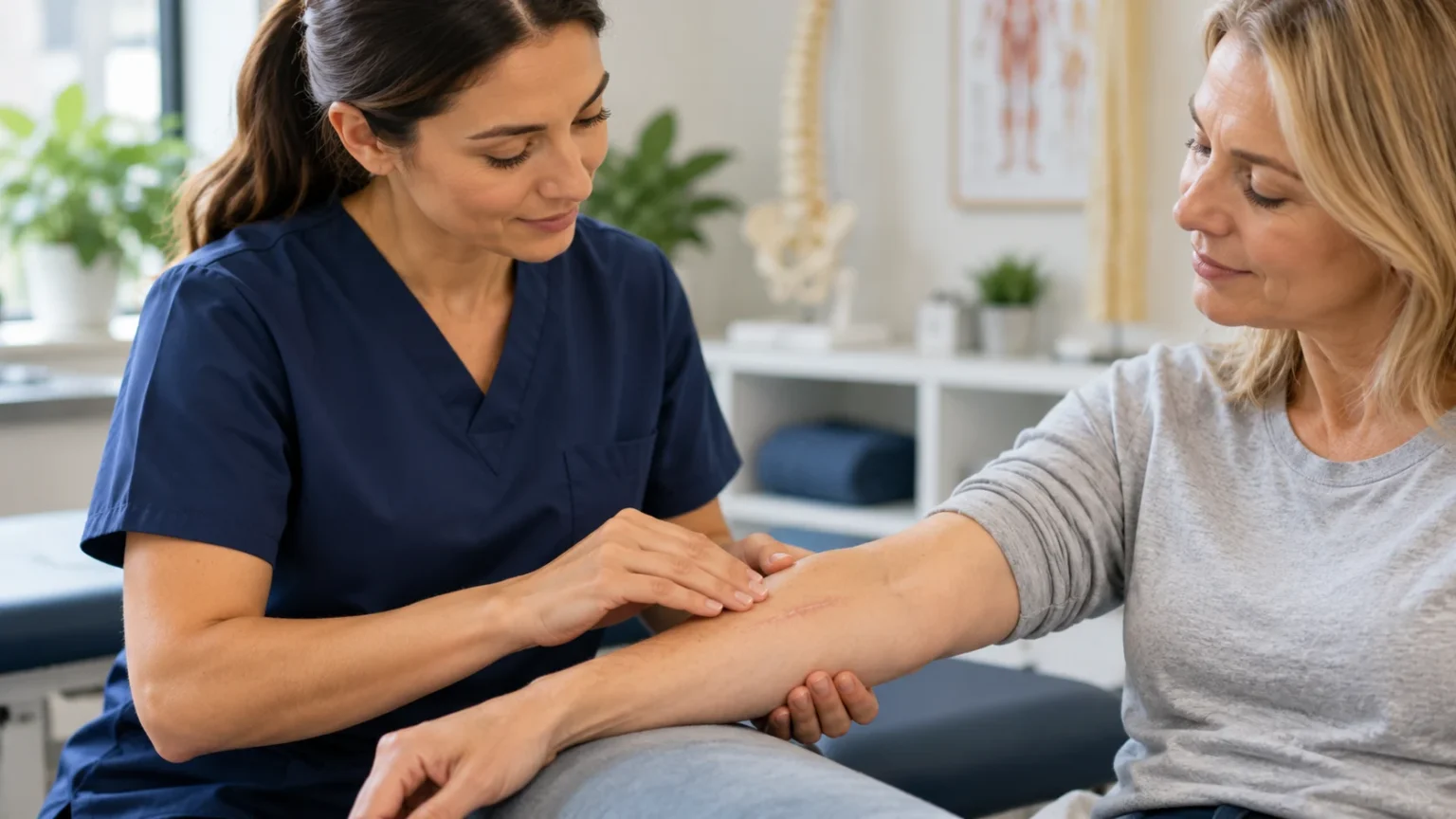

What Is Scar Massage?
Scar massage is a gentle therapeutic technique that involves moving the skin and surrounding tissues after an injury, surgery, or wound has completely healed. It is commonly used during rehabilitation to help improve tissue mobility, manage tightness, and support comfortable movement. The technique involves applying controlled pressure around the scar without irritating or damaging sensitive skin.
When skin is injured, the body produces collagen fibers to repair the damaged tissue. These fibers form scar tissue, which may initially feel firmer or less flexible than the surrounding skin. Some scars also develop attachments to deeper tissues, potentially affecting comfort and movement in certain areas of the body.
Scar massage is sometimes recommended by physical therapists, occupational therapists, and other healthcare professionals as part of scar management. However, its benefits vary, and research has not consistently established that massage improves scar appearance or prevents abnormal scarring. Understanding appropriate techniques, healing stages, and safety precautions is essential before beginning any scar massage routine.
How Does Scar Tissue Form?
Scar tissue develops as part of the body’s natural healing process following damage to the skin or deeper tissues. When an injury occurs, the body begins repairing the affected area by producing collagen and forming new connective tissue. This process helps restore the protective barrier of the skin while supporting the recovery of damaged structures.
During early healing, scar tissue may appear pink, red, raised, or slightly firm compared with nearby skin. The appearance depends on factors such as wound depth, location, skin characteristics, and individual healing responses. As healing continues, collagen fibers gradually reorganize, although the repaired area may never look or function exactly like the original tissue.
Scar maturation can continue for many months and sometimes longer than a year. During this period, scars may naturally become softer, flatter, and less noticeable without specific treatment. Some scars remain thick, sensitive, or restrictive, making professional assessment useful when they interfere with movement, comfort, or everyday activities.
Benefits of Scar Massage
One potential benefit of scar massage is improved comfort when moving the skin around a healed scar. Some individuals experience tightness or pulling sensations because scar tissue behaves differently from surrounding healthy tissue. Gentle massage may help certain people tolerate touch and movement more comfortably, especially when included in a structured rehabilitation program.
Scar massage may also help reduce sensitivity in some healed scars through gradual exposure to gentle touch. After surgery or injury, the affected area can become unusually sensitive to clothing, pressure, or everyday contact. Carefully controlled touch may help improve tolerance over time, although results vary depending on the scar and underlying cause of sensitivity.
Another possible benefit is improved awareness of tissue mobility during recovery. Massage may encourage individuals to identify uncomfortable areas and discuss them with their rehabilitation professional. However, evidence that scar massage reliably prevents adhesions, changes collagen organization, or reduces scar thickness remains limited, so expectations should remain realistic.
Can Scar Massage Improve Scar Appearance?
Many people consider scar massage because they want their scars to become softer, flatter, or less noticeable. While some scars change in appearance during a period of regular massage, these improvements may also result from natural scar maturation. Research has not established that massage alone consistently reduces scar size, redness, or thickness.
The appearance of a scar depends on several factors, including wound depth, location, genetics, skin tension, and healing complications. Raised scars and keloids may behave differently from flat surgical scars. Because these conditions have different underlying characteristics, a massage technique that feels comfortable for one scar may be unsuitable for another.
Other scar management approaches may have stronger evidence for certain concerns. Silicone gel or silicone sheets, for example, are commonly used for selected raised scars after the skin has healed. A dermatologist or qualified healthcare professional can recommend appropriate options based on scar type, symptoms, and individual healing needs.
When Should You Start Scar Massage?
Scar massage should only begin after the wound has completely closed and healed. The skin should have no open areas, scabs, drainage, or signs of infection before direct massage is considered. Starting too early can irritate fragile tissue, interfere with healing, or increase the risk of wound complications.
The appropriate starting time varies depending on the type of injury, surgical procedure, and individual healing process. A small superficial wound may heal differently from a deep surgical incision or skin graft. Therefore, a fixed number of days or weeks cannot determine when scar massage is safe for every person.
Healthcare professionals often provide specific instructions following surgery or other procedures. If your scar resulted from an operation, ask your surgeon or rehabilitation specialist when direct massage is appropriate. Professional clearance is especially important after complicated wounds, reconstructive procedures, or injuries involving deeper tissues.
How to Prepare for Scar Massage
Before beginning scar massage, examine the healed area for any signs of irritation or unusual changes. The skin should be intact and free from increasing redness, swelling, warmth, or drainage. If the scar remains painful or its healing status is uncertain, seek medical guidance before applying pressure.
Wash your hands thoroughly and make sure the surrounding skin is clean. Choose a comfortable position that allows you to reach the scar without twisting or straining your body. A calm environment may make it easier to notice changes in sensitivity and adjust your touch according to personal comfort.
Some healthcare professionals recommend a small amount of fragrance-free moisturizer when the skin is fully healed. Moisturizer can reduce friction during gentle surface movements, although certain techniques may require more direct skin contact. Avoid applying unfamiliar products to irritated skin, and follow specific instructions provided by your healthcare professional.
Gentle Circular Scar Massage Technique
Circular massage is one technique sometimes used for fully healed scars. It involves moving the skin gently in small circles using the fingertips rather than rubbing aggressively across the surface. The goal is to introduce comfortable movement without creating pain, excessive friction, or irritation around the affected area.
Place one or two fingertips lightly over the healed scar or nearby skin. Move the skin in small, controlled circles using only a comfortable amount of pressure. Avoid forcing the tissue downward, and keep movements slow enough to notice whether the area becomes unusually sensitive or uncomfortable.
Continue only while the movement remains comfortable and the skin shows no signs of irritation. There is no universally established duration or repetition schedule that works for every scar. A therapist can help determine whether circular massage is appropriate and explain how to adjust the technique for your specific healing stage.
Side-to-Side Scar Massage Technique
Side-to-side massage involves gently moving the skin across the direction of a healed scar. Healthcare professionals sometimes include this approach in rehabilitation programs when scar mobility is limited. The technique aims to assess and encourage comfortable tissue movement rather than aggressively stretching or breaking down scar tissue.
Begin by placing your fingertips gently against the skin near the scar. Move the skin a small distance from one side to the other while maintaining comfortable pressure. The movement should remain controlled, and the skin should not become irritated, painful, or excessively stretched during the process.
Different scar locations may require adjustments to positioning and movement direction. For example, a scar near a joint may respond differently from one located on the abdomen. If the technique produces persistent discomfort or appears to increase tightness, stop and consult a qualified rehabilitation professional for guidance.
Up-and-Down Scar Massage Technique
Up-and-down massage uses gentle movements along the direction of the scar or surrounding skin. This technique may be included in a therapist-guided routine when the healed tissue feels tight during ordinary movement. It should remain comfortable and should not involve forceful rubbing, scraping, or attempts to separate deeper tissues.
Position your fingertips over the fully healed area and gently move the skin in a short vertical direction. Keep the motion small and avoid pulling the scar beyond its comfortable range. If the skin feels fragile or unusually sensitive, reduce the pressure or avoid direct massage until you receive professional guidance.
The direction and amount of movement may vary depending on the scar’s location and surrounding structures. Some individuals find that gentle contact becomes easier with gradual practice, while others require a different approach. The technique should be adjusted according to symptoms rather than following a rigid routine.
Scar Massage After Surgery
Surgical scars develop after planned incisions used during medical procedures. Their appearance and healing time depend on factors such as incision depth, location, closure method, and individual health. Some surgical scars become flexible and comfortable naturally, while others may develop tightness or sensitivity during recovery.
Scar massage may be considered after the incision has healed completely and the surgical team confirms that direct pressure is appropriate. This is particularly important when deeper tissues are still recovering beneath the skin. A wound that appears closed on the surface does not necessarily mean every underlying structure is ready for massage.
Different operations require different rehabilitation precautions. For example, abdominal surgery, joint procedures, and reconstructive operations can involve tissues that need additional protection during healing. Following procedure-specific instructions is more important than using a general massage schedule intended for all surgical scars.
Scar Massage After a C-Section
A cesarean section leaves a surgical scar on the lower abdomen after childbirth. Healing involves multiple tissue layers, including the skin and deeper abdominal structures. Some people experience temporary numbness, pulling sensations, or sensitivity around the incision as the area gradually recovers from surgery.
Gentle scar massage may be discussed with a healthcare professional after the incision has completely healed. However, direct massage should not begin while the wound remains tender, open, draining, or otherwise incompletely healed. The appropriate timing depends on the individual’s recovery and any surgical complications that may have occurred.
A pelvic health physical therapist or other qualified rehabilitation professional can provide personalized guidance when scar discomfort affects everyday movement. Treatment may include gradual touch exposure, comfortable mobility exercises, and other rehabilitation strategies. Persistent pain or unusual swelling should receive medical assessment rather than being managed through increasingly firm massage.
Scar Massage for Burn Scars
Burn scars can differ substantially from scars caused by minor cuts or routine surgical incisions. Deeper burns may affect multiple skin layers and produce thickened, sensitive, or restrictive tissue. Their management often requires a specialized rehabilitation approach because healing skin can be fragile and vulnerable to irritation.
Massage is sometimes included in burn rehabilitation programs, but evidence supporting its effectiveness for scar thickness and appearance is limited. Deep pressure may increase discomfort or damage sensitive tissue, particularly during early recovery. Therefore, burn scars should not be treated with firm home massage without guidance from an experienced healthcare professional.
Burn rehabilitation may involve moisturizers, pressure garments, silicone products, stretching, or other treatments selected according to the injury. A burn care team can determine which approaches are appropriate for the healing stage. Professional supervision is especially important for extensive burns, skin grafts, or scars that restrict movement around joints.
Can Scar Massage Help With Tightness and Adhesions?
Some scars feel tight because the repaired tissue has different mechanical properties from surrounding skin. After deeper injuries or surgery, restrictions may also develop between tissue layers. These changes can produce pulling sensations or reduced comfort during movements that stretch the affected region.
Gentle scar massage may help certain individuals manage these sensations and improve tolerance to movement. However, claims that massage reliably breaks apart internal adhesions are not supported by strong clinical evidence. Deep internal adhesions cannot be assumed to respond to surface massage, particularly after abdominal or pelvic surgery.
Persistent pulling, restricted mobility, or pain may require a broader rehabilitation approach. Physical therapists can assess surrounding muscles, joints, and movement patterns before recommending treatment. Exercises, gradual movement exposure, and other interventions may be more appropriate than applying increasingly strong pressure directly over the scar.
Scar Massage for Sensitive or Numb Scars
Some healed scars feel unusually sensitive to touch, clothing, or changes in temperature. Others may feel partially numb because small sensory nerves were affected during the original injury or surgery. These sensations can change gradually as healing progresses, although certain sensory differences may remain for a longer period.
Gentle touch exposure is sometimes used to help manage scar sensitivity. A therapist may recommend gradually introducing comfortable contact using clean hands or suitable soft materials. The aim is to improve tolerance without provoking significant discomfort, rather than forcing the area to tolerate painful stimulation.
Numbness requires particular caution because reduced sensation can make it difficult to judge pressure. Excessive rubbing may irritate skin without producing an obvious warning sensation. If numbness is spreading, accompanied by weakness, or associated with other neurological symptoms, seek medical evaluation to identify the underlying cause.
Common Mistakes to Avoid During Scar Massage
One common mistake is beginning massage before the wound has fully healed. Applying pressure to an open or fragile incision can disrupt healing and increase irritation. Even when a scar looks closed, ongoing drainage, scabbing, or unusual tenderness may indicate that direct massage is not yet appropriate.
Another mistake involves applying excessive pressure in an attempt to soften thick scar tissue. Strong rubbing can cause discomfort, inflammation, or damage to sensitive skin without providing additional benefits. Scar massage should not involve deliberately causing pain, and more force does not necessarily produce better outcomes.
Using irritating skincare products can also create unnecessary problems around a healing scar. Fragranced creams, harsh exfoliants, and products containing ingredients that trigger sensitivity may worsen redness or itching. Choose products appropriate for your skin and follow medical recommendations, especially when managing scars after surgery or more significant injuries.
Safety Tips for Scar Massage
The most important safety rule is to avoid massaging wounds that have not fully healed. Open skin, infection, significant swelling, and active inflammation are reasons to delay direct massage. Professional advice is also important when scars involve grafts, reconstructive procedures, or medical conditions that affect tissue healing.
Use gentle pressure and pay attention to how the skin responds during and after massage. Mild awareness of tissue movement may be acceptable, but sharp pain, bleeding, increased swelling, or persistent redness should prompt you to stop. Avoid assuming that discomfort means the technique is working or that greater pressure will improve the result.
Keep expectations realistic because scars continue changing naturally for many months. Massage may provide comfort for selected individuals, but it cannot guarantee complete scar removal or prevention of thickened tissue. Combining appropriate rehabilitation with medical advice, sun protection, and suitable scar care may offer a more comprehensive approach.
How Often Should You Massage a Scar?
There is no single evidence-based massage schedule that is appropriate for every scar. Frequency depends on the scar’s location, healing stage, sensitivity, and the reason massage has been recommended. A healthcare professional can provide a suitable routine based on your individual symptoms and response to treatment.
Some rehabilitation programs use brief, gentle sessions rather than prolonged massage. However, repeating the technique more frequently does not automatically improve results and may irritate sensitive skin. The amount of pressure, duration, and frequency should remain consistent with professional guidance and personal comfort.
If the area becomes more tender, red, swollen, or uncomfortable after massage, reduce or stop the activity and seek advice. Avoid continuing a routine simply because it was previously recommended. Scar tissue changes over time, and the most appropriate management approach may also change as recovery progresses.
Other Ways to Support Healthy Scar Management
Scar massage is only one possible component of scar care and is not necessary for every individual. Protecting healed scars from excessive sunlight can help reduce the risk of persistent discoloration. Sunscreen and suitable clothing are useful when scars are exposed, particularly during the period when the tissue is still maturing.
Silicone gel and silicone sheets may help manage certain raised scars after the wound has fully closed. These products are often recommended for hypertrophic scars, although outcomes vary. Dermatologists can also discuss additional treatments when scars remain raised, uncomfortable, or cosmetically concerning.
Maintaining general skin health can support comfort throughout the healing process. Gentle cleansing, appropriate moisturizing, and avoiding unnecessary friction may reduce irritation around healed tissue. Balanced nutrition and following wound-care instructions also support recovery, while persistent problems should be assessed by a healthcare professional.
When Should You See a Doctor About a Scar?
Medical advice is recommended when a scar becomes increasingly painful, swollen, warm, or red. These changes may indicate infection, inflammation, or another problem requiring evaluation. Drainage, wound reopening, or a noticeable deterioration in healing should also prompt medical attention rather than continued massage.
Some individuals develop unusually thick scars that extend beyond the original wound boundaries. These may represent keloids, which can require specialized treatment rather than routine massage. Other scars may become restrictive, affecting movement near joints or causing persistent discomfort during daily activities.
Seek professional assessment when scar-related symptoms interfere with movement, sleep, or normal functioning. A dermatologist, surgeon, or rehabilitation professional can help identify the underlying concern and recommend appropriate care. Early evaluation may be especially valuable when a scar changes rapidly or develops unexpected symptoms.
Conclusion
Scar massage is a technique sometimes used to improve comfort, manage sensitivity, and encourage gentle movement around fully healed scar tissue. It may be included in rehabilitation after surgery, injury, or other skin damage. However, the available evidence does not confirm that massage consistently improves scar appearance, prevents adhesions, or reduces scar thickness.
Safe scar care begins with allowing the wound to heal completely before applying direct pressure. Gentle techniques, appropriate skin care, and professional guidance can help reduce the risk of irritation or injury. Massage should never involve forceful rubbing or persistent pain, particularly when scar tissue remains sensitive or healing is complicated.
Every scar heals differently, and changes in appearance and texture often occur naturally over time. A personalized approach that considers scar type, symptoms, and medical history is more useful than following a universal massage routine. When discomfort, restricted movement, or unusual skin changes persist, professional evaluation can help identify suitable treatment options.
Frequently Asked Questions
1. Does Scar Massage Really Work?
Scar massage may improve comfort, touch tolerance, and movement around some healed scars. However, research is limited, and it has not consistently demonstrated improvements in scar thickness, appearance, or prevention of internal adhesions.
2. When Is It Safe to Start Scar Massage?
Scar massage should begin only after the wound is completely closed and healed. The appropriate timing varies, so ask your surgeon or healthcare professional before massaging surgical scars or complicated injuries.
3. Should Scar Massage Be Painful?
No, scar massage should not cause sharp pain or significant discomfort. Use gentle pressure and stop if the skin becomes irritated, swollen, or increasingly painful during or after treatment.
4. Can Scar Massage Remove Scars Permanently?
No, scar massage cannot permanently remove scar tissue. Some scars naturally soften and fade over time, but treatment results vary. Other approaches may be more appropriate for managing raised or noticeable scars.
5. How Long Should You Massage a Scar?
There is no universally recommended duration for scar massage. A healthcare professional can suggest an appropriate routine based on scar sensitivity, healing stage, location, and individual response to gentle treatment.