
Introduction to Creativity
Creativity is a multifaceted concept that has significantly enriched human culture and development throughout history. It is often defined as the ability to produce original ideas, solutions, or works that are deemed valuable in some way. Creativity manifests itself in various forms, including artistic expression, scientific innovation, and everyday problem-solving. Each of these forms contributes to the advancement of society and enhances our understanding of the world.
Artistic creativity finds expression in visual arts, music, literature, and performance, allowing individuals to convey emotions, thoughts, and experiences. Scientific creativity, on the other hand, involves the application of novel ideas to solve complex problems, advancing technology and medicine, and ultimately shaping the future of human existence. Furthermore, everyday problem-solving draws from creativity in daily life, as individuals navigate challenges and seek new ways to improve their circumstances.
The significance of creativity lies not just in its outputs but also in its role as a catalyst for change. It drives progress and inspires societal evolution, forming the foundation of many key innovations and cultural shifts. Understanding creativity’s complexities requires acknowledging its nuanced nature; it can emerge spontaneously or through deliberate effort, influenced by cultural context and individual disposition.
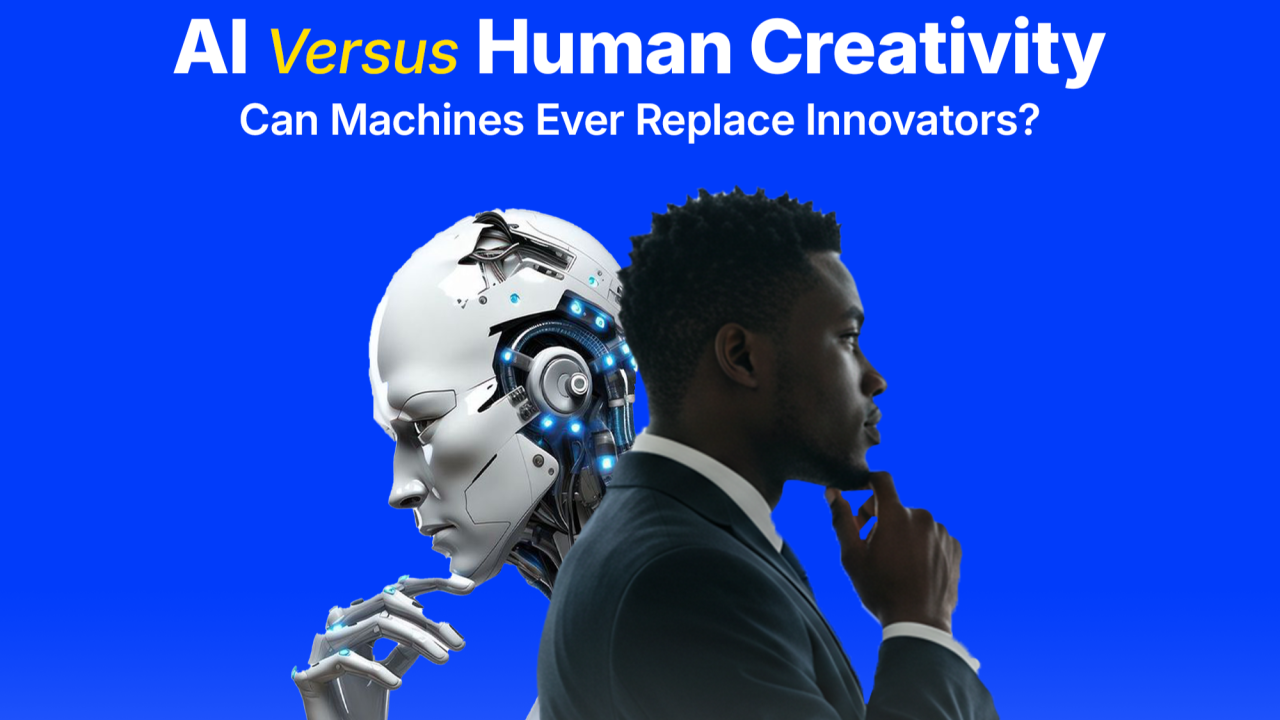
As artificial intelligence continues to evolve, the exploration of whether machines can replicate or even surpass human creativity raises profound questions about the essence of creative thought. This discussion sets the foundation for examining AI’s potential to become a creative force in its own right, challenging the traditionally held view of creativity as an exclusively human trait. The interplay between human and machine creativity presents fascinating implications for the future of creative industries and the human experience itself.
Understanding AI and Its Capabilities
Artificial Intelligence (AI) refers to the simulation of human intelligence processes by machines, particularly computer systems. This technology encompasses a variety of capabilities including reasoning, learning, problem-solving, perception, and language understanding. Among the most significant forms of AI are machine learning and neural networks. Machine learning is a subset of AI that enables systems to learn from data and improve their performance without explicit programming. Neural networks, inspired by the biological neural networks present in animal brains, are a critical component of machine learning. They excel in recognizing patterns and processing vast amounts of information, which are essential for creative tasks.
The capabilities of AI systems extend to numerous creative fields, where they demonstrate remarkable potential. For instance, in the domain of music, AI algorithms can compose original pieces by analyzing existing compositions, understanding harmonic structures, and synthesizing new work that resonates emotionally with listeners. In visual arts, generative adversarial networks (GANs) allow AI to produce artwork that is indistinguishable from those created by human artists, challenging conventional perceptions of creativity.
Similarly, AI has found its place in the world of writing, where natural language processing (NLP) tools aid in drafting content, generating stories, and even composing poetry. These applications showcase AI’s ability to process language and ideas in ways that mimic human creativity. Highly advanced systems can analyze an extensive range of literature, discern styles, and produce coherent narratives, effectively posing questions about the nature of creative authorship.
By harnessing data processing and pattern recognition capabilities, AI systems not only augment human creativity but also redefine the landscape of creative industries. As technology continues to evolve, the ongoing exploration of AI’s role in creativity will further illuminate the complex interaction between human and machine-generated works.
The Nature of Human Creativity
Human creativity embodies a complex interplay of psychological, emotional, and cognitive components that shape the way individuals generate ideas. The essence of creativity is deeply rooted in personal experiences, emotions, and the social contexts within which individuals operate. These factors contribute to the originality and depth of human creations, making them distinct from what machines can produce. While artificial intelligence has made significant advancements in generating content and ideas, it often lacks the intrinsic emotional and experiential backdrop that fuels human creativity.
From a psychological perspective, creativity involves divergent thinking, which encourages the exploration of multiple potential solutions to a given problem. This cognitive process allows individuals to make connections across seemingly unrelated concepts, leading to innovative ideas. Furthermore, cognitive theories of creativity suggest that the human brain operates through a unique combination of memory, intuition, and emotional processing, enabling individuals to draw from a vast reservoir of personal experiences. This is where AI predominantly falls short: while machines can analyze and replicate patterns in data, they struggle to understand the richness of human experiences that lead to genuine creativity.
Emotional factors also play a crucial role in the creative process. Human emotions can inspire innovative ideas, serving as a catalyst for artistic expressions or problem-solving. In contrast, AI lacks the capability to experience emotions in a manner that influences its outputs. The nuances of human feelings, which often embody joy, sadness, or nostalgia, shape how individuals create and connect with their audience. The social context in which creativity flourishes cannot be underestimated, as collaborative environments often lead to richer, more diverse creative outputs.
In summary, while AI can simulate certain aspects of creative tasks, the unique interplay of emotions, experiences, and social interactions fundamental to human creativity creates a distinctive edge that machines currently cannot replicate.
Comparison of AI and Human Creative Processes
The exploration of creativity through the lenses of artificial intelligence (AI) and human involvement reveals striking contrasts and subtle parallels. AI operates through algorithms and data patterns, whereas human creativity is often a confluence of experiences, emotions, and cognitive processes. To better understand the implications of these differences, various case studies can be analyzed to compare outputs from both entities.
One notable example is the use of AI in the music composition field. AI systems, such as OpenAI’s MuseNet, have generated musical pieces that mimic styles from classical composers to contemporary genres. However, these compositions, while technically proficient, often lack the emotional depth and storytelling elements typically found in human-created music. Research has shown that audiences tend to respond to human compositions with greater emotional resonance, as these pieces often convey personal narratives and cultural contexts that AI systems are yet to replicate.
In visual arts, AI-generated artworks, like those produced by GANs (Generative Adversarial Networks), have sparked interest and debate. Artworks such as “Portrait of Edmond de Belamy,” created by AI, raised questions about originality and artistic intent. Critics argue that while AI can create visually appealing work, it may not convey the same level of intended message or emotional engagement as a human artist’s creation. Human artists infuse their works with subjective experiences, something AI, which operates devoid of personal sentiment, can struggle to reproduce adequately.
Furthermore, audience perception plays a significant role in distinguishing AI outputs from human creativity. Studies have noted that individuals often gravitate toward art and compositions that evoke emotional responses stemming from the artist’s lived experiences. As a result, the substance of human creativity not only embraces originality but also thrives on empathy and connection, attributes that AI is currently limited in developing.
The Role of Collaboration Between Humans and AI
In the contemporary landscape of creativity, the collaboration between humans and artificial intelligence (AI) is emerging as a focal point of innovation. Rather than viewing AI as a competitor in the creative domain, many artists, writers, and musicians are discovering the potential of blending human intuition with machine analysis to elevate their creative outputs.
Numerous projects exemplify this synergy. For instance, in the literary field, co-writing initiatives have gained popularity, where authors utilize AI tools to assist in generating ideas, structuring narratives, or even drafting passages. This partnership allows writers to explore new themes and styles that they might not have considered on their own, thereby expanding the creative horizon. Noteworthy examples include authors experimenting with AI-generated prompts or suggestions, fostering an interactive writing process that enhances creativity.
In the realm of music, AI systems are being used to compose melodies and harmonies that can complement human-created pieces. These collaborative compositions not only showcase the strengths of both parties but also highlight a unique form of hybrid creativity. By relying on AI’s ability to analyze vast datasets of existing music, artists can uncover patterns and trends that inform their creative decisions. Some musicians have already ventured into this extensive interplay, resulting in compositions that fuse traditional techniques with innovative soundscapes crafted with the help of AI instruments.
This collaborative approach offers numerous benefits. Firstly, it allows for the enhancement of the creative process, with AI acting as a powerful tool that refines ideas and enhances artistic expression. Secondly, it fosters an environment where both entities can learn from each other, leading to innovative solutions and inspiring works of art. Ultimately, the fusion of human creativity and AI’s analytical capabilities illustrates an exciting future where both can thrive together, enriching the creative landscape significantly.
Limitations of AI in Creative Fields
While artificial intelligence (AI) has made significant strides in various domains, its limitations in creative fields are noteworthy. One of the primary challenges lies in AI’s difficulty in grasping cultural nuances and emotional depth. Unlike human creators who draw from personal experiences, emotions, and cultural contexts, AI operates predominantly through algorithms and data sets. The lack of genuine human experiences can lead to creative outputs that, while technically proficient, often fall short in emotional resonance.
For example, AI-generated art has been praised for its detail and innovation, yet many pieces fail to connect with audiences on a personal or emotional level. A notable case is the art piece created by an AI that was auctioned for a substantial sum. Critics argued that the artwork, while visually appealing, lacked the narrative depth and meaning found in pieces created by human artists. The reactions to AI-generated music have been similarly mixed; compositions may mimic styles or genres effectively but often miss the emotional layers that evoke empathy or nostalgia in listeners.
Moreover, AI struggles with the subtleties of human experience, which are often crucial for genuine creativity. AIs analyze patterns and replicate them, but they do not possess an inherent understanding of the human condition or the nuances of individual emotions. As a result, when tasked with generating content requiring deep emotional insight, AI may produce outcomes that seem superficial or uninspired. This gap emphasizes the irreplaceable value of human creativity, which is rooted in consciousness and subjective experience. While AI can assist in creative processes, its limitations become evident in endeavors that require true emotional engagement or cultural awareness.
The Future of Creative Industries with AI
The introduction of artificial intelligence technology into creative industries presents both opportunities and challenges that are likely to shape the landscape of these fields in the coming years. As AI continues to evolve, it is essential to consider its implications for art, literature, music, and design.
One of the most significant transformations AI may bring is in the area of content generation. Machine learning algorithms are already capable of producing impressive artwork, composing music, and generating literature that is near indistinguishable from that crafted by human hands. This raises the question of originality and authenticity in creative works. While AI can assist in generating ideas, the essence of creativity—rooted in human experience—remains a critical differentiator.
In the realm of visual arts, AI-driven applications are being developed to assist artists in various capacities, such as suggesting color palettes or even completely rendering images and designs. This collaboration could result in the emergence of entirely new genres of art, where the fusion of human intuition and machine precision creates novel experiences. However, there may also be fears among artists regarding the devaluation of their skill sets or the loss of job opportunities.
Similarly, the music industry is seeing the integration of AI to aid in songwriting and production. AI-generated compositions have started to gain traction, prompting discussions on copyright issues and the implications of having machines produce music enabled by algorithms. The design field is also seeing changes as AI tools optimize processes, allowing designers to focus on conceptualization rather than technical execution.
Ultimately, the evolving role of AI in creative industries suggests a future where collaboration between humans and machines could yield innovative results. The focus may shift towards developing new forms of creativity that embrace AI as a tool rather than a competitor. Balancing this evolution with the preservation of human-centric creative expression will be paramount as we navigate these uncharted territories.
Ethical Considerations in AI Creativity
The rise of artificial intelligence (AI) in creative domains raises significant ethical questions that warrant careful examination. As machines become capable of generating art, music, and literature, issues surrounding ownership of these AI-generated works become paramount. Who holds the copyright for a painting created by an algorithm or a song composed by a neural network? Traditionally, intellectual property laws have recognized human creators, but as AI’s capabilities expand, it challenges existing legal frameworks and compels a reevaluation of authorship.
In addition to ownership, the authenticity of creativity emerges as a critical concern. Human creativity is often viewed as a deeply personal expression, influenced by experiences, emotions, and cultural context. Conversely, AI operates through data and algorithms, synthesizing information rather than experiencing it. This dichotomy prompts inquiries into the true nature of creativity and whether AI-generated outputs can genuinely resonate with the human experience. The question of whether AI creativity can stand on equal footing with that of humans remains open to debate.
Another pressing ethical issue is the potential biases rooted in AI algorithms. AI systems are trained on vast datasets that may reflect societal biases, leading to the perpetuation of stereotypes and exclusionary practices in creative outputs. These biases can shape the type of content generated, thus impacting the representation of diverse voices in art and media. As AI tools become more prevalent, it is essential to address these biases to foster inclusivity and ensure that diverse perspectives are honored in the creative landscape.
Furthermore, the growing influence of AI in creative fields may pose a threat to human artists, who could find their work devalued in an era where machines produce similar outputs efficiently. This shift in dynamics indicates the urgent need to reassess the value of human creativity and its irreplaceable qualities within a technology-driven society.
Conclusion: The Synergy of Human and AI Creativity
In exploring the intricate relationship between artificial intelligence (AI) and human creativity, it is evident that both elements possess unique strengths that can complement one another. While AI has made significant advances in generating creative content, from art to literature, it often relies on algorithms and data analysis, which can limit the imaginative scope inherent in human creativity. The spontaneity, emotional depth, and cultural context that humans bring to the creative process are qualities that cannot be easily replicated by machines.
Throughout this discussion, we have examined various facets of creativity, highlighting the differences between human intuition and machine-generated approximations. AI can enhance this creative process through assistance, providing tools that automate mundane tasks, sift through vast amounts of information, and inspire new ideas. This partnership can free human creators to focus on the elements that require deep understanding, emotional input, and human experience.
As we look toward the future, it is crucial to envision a landscape where human and AI creativity coexist harmoniously. Rather than viewing AI as a competitor in the realm of creativity, we should embrace it as a collaborative partner. This synergy can lead to novel forms of expression and innovation, enriching the creative world. The coexistence of these two forms of creativity offers a promising frontier where human attributes such as empathy, narrative, and subjective experience intersect with the efficiency and scalability of AI.
In conclusion, while AI has the capacity to imitate aspects of human creativity, its potential is maximized when it works alongside human creators, harnessing the best of both worlds. Together, they can shape a vibrant and diverse creative landscape that benefits society as a whole.