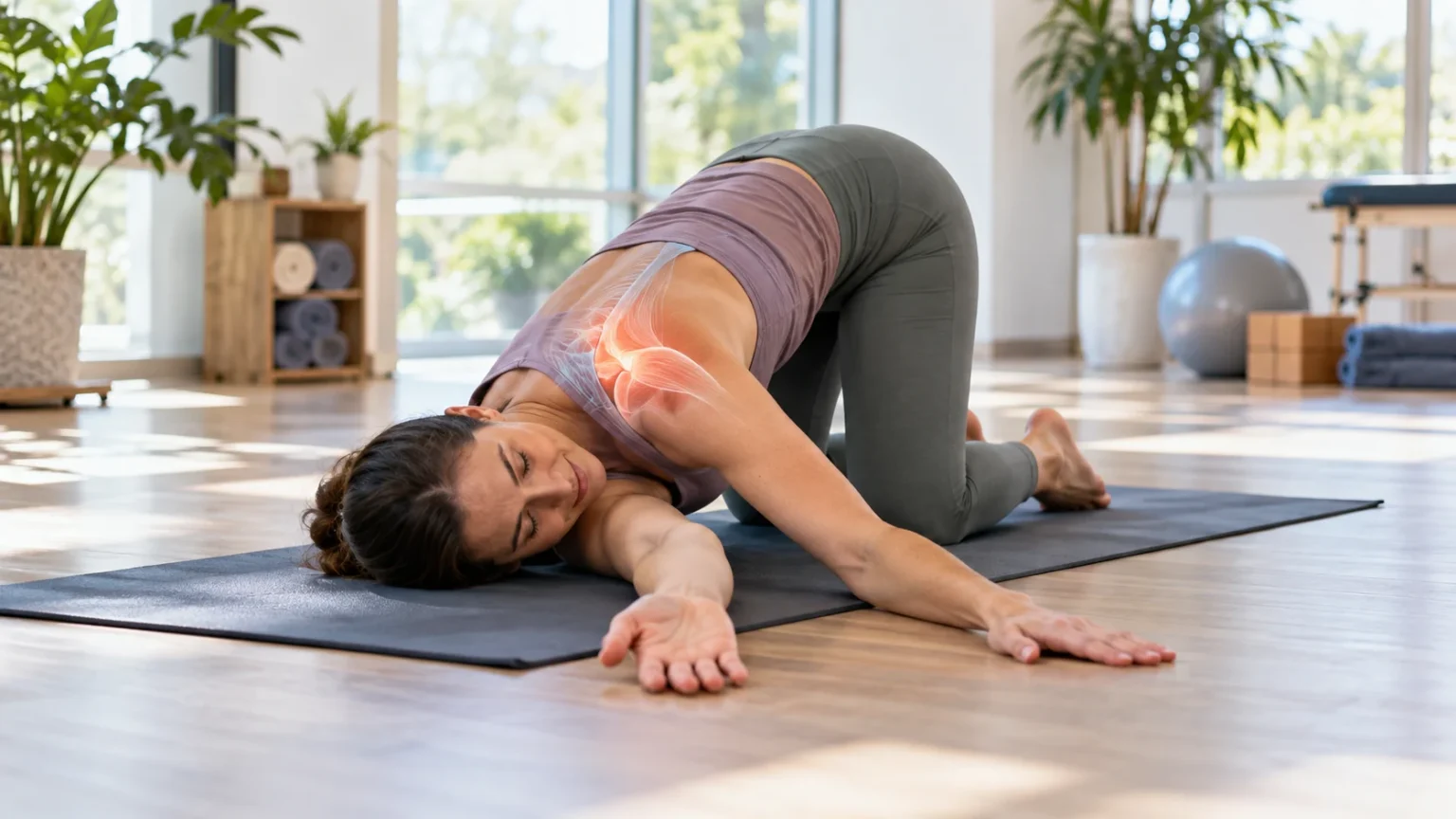

Thread the Needle is a gentle mobility exercise commonly used to stretch the shoulders, upper back, and muscles around the spine. The movement combines rotation with a supported stretch, making it useful for people who spend long periods sitting, working at a desk, or performing repetitive upper-body activities. It is also frequently included in yoga, mobility routines, and warm-ups.
Although the exercise looks simple, technique matters. Moving too quickly, forcing the shoulder toward the floor, or allowing the hips to shift excessively can reduce the effectiveness of the stretch. A controlled approach helps you focus the movement through the thoracic spine and shoulder area while keeping the rest of the body comfortable and stable.
Understanding how Thread the Needle works can help you decide when and how to include it in your routine. The exercise can support flexibility, upper-body mobility, and relaxation when performed appropriately. This guide explains the movement, potential benefits, correct form, modifications, common mistakes, and important precautions to consider.
What Is Thread the Needle?
Thread the Needle is a rotational stretch usually performed from a hands-and-knees position. From this starting point, one arm slides underneath the opposite arm while the upper body gently rotates toward the floor. The shoulder and side of the head may rest on the ground while the hips remain positioned above or close to the knees.
The exercise primarily creates movement through the thoracic spine, which is the middle and upper portion of the back. It also stretches muscles around the shoulder, rear deltoid, upper back, and shoulder blade. Because the movement is supported by the floor, many people find it easier to control than standing rotational stretches.
Thread the Needle is commonly seen in yoga classes, physical therapy programs, mobility sessions, and general fitness routines. It does not require specialized equipment and can usually be performed on an exercise mat or another comfortable surface. However, the movement should always stay within a pain-free and manageable range.
What Muscles Does Thread the Needle Stretch?
The exercise mainly targets muscles surrounding the upper back and shoulder. These include the posterior deltoid, rhomboids, trapezius, and muscles that support the shoulder blade. As the arm reaches underneath the body, these tissues lengthen while the upper spine rotates gently toward the working side.
Muscles around the chest and rib cage may also participate in the movement. Rotation through the thoracic spine involves coordinated motion between the vertebrae, ribs, and surrounding soft tissues. People who spend long periods sitting may notice stiffness in these areas because prolonged posture can reduce comfortable rotational movement.
The hips, abdominal muscles, and supporting arm also contribute by keeping the body stable. Although Thread the Needle is primarily considered an upper-body mobility exercise, the entire trunk helps control the position. Good stability allows the stretch to remain focused around the shoulder and upper back instead of creating unwanted movement elsewhere.
Benefits of Thread the Needle
One of the main benefits of Thread the Needle is improved thoracic rotation. The upper spine needs rotational mobility for many everyday actions, including reaching, turning, walking, and performing sports movements. Gentle rotational exercises can help maintain comfortable movement when the upper back feels stiff or restricted.
The exercise may also help reduce temporary muscular tension around the shoulders and upper back. Desk work, driving, lifting, and extended phone use can contribute to feelings of tightness in these regions. Moving slowly through a comfortable range can provide a relaxing stretch without requiring aggressive pressure or complicated equipment.
Thread the Needle may also support better body awareness. Because the movement involves rotation while keeping the hips relatively stable, it teaches you to separate upper-spine movement from unnecessary pelvic motion. This awareness can be useful during strength training, mobility work, yoga, and daily activities that involve reaching or twisting.
How to Perform Thread the Needle Correctly
Begin on your hands and knees with your wrists roughly beneath your shoulders and your knees positioned under your hips. Keep your spine in a comfortable neutral position and distribute your weight evenly. Your neck should remain relaxed rather than looking sharply upward or forcing your chin toward your chest.
Lift one hand from the floor, then slowly slide that arm underneath the opposite arm with the palm facing upward. Allow your shoulder and side of the head to move gently toward the floor as your upper body rotates. Keep your hips relatively centered above your knees instead of letting them shift dramatically sideways.
Hold the stretch for around 15 to 30 seconds while breathing comfortably, then slowly return to the starting position. Repeat on the opposite side. You can perform two or three rounds per side, focusing on smooth movement rather than trying to force your shoulder as close to the floor as possible.
How Breathing Improves the Stretch
Breathing can make Thread the Needle feel more comfortable and controlled. Before beginning the movement, take a slow breath while maintaining your hands-and-knees position. As you slide the arm underneath your body, exhale gently and allow your upper back to rotate without forcing the movement.
Once you reach your comfortable end position, continue breathing slowly rather than holding your breath. Each relaxed exhale may help reduce unnecessary muscular tension around the shoulders, ribs, and upper back. The goal is not to push deeper with every breath but to allow the body to settle into the position naturally.
Slow breathing also encourages you to move at a controlled pace. People often rush through mobility exercises, which can turn a gentle stretch into an abrupt twisting movement. Coordinating your breathing with the exercise helps maintain awareness of posture, comfort, and how your body is responding.
Thread the Needle for Shoulder Mobility
The shoulder complex relies on movement from several areas, including the shoulder joint, shoulder blade, ribs, and upper spine. Thread the Needle encourages these areas to move together while the arm crosses beneath the torso. This can provide a comfortable stretch through the back of the shoulder and surrounding muscles.
People who perform frequent pushing, pulling, lifting, or overhead activities may use the exercise as part of a mobility routine. It may also feel useful after extended desk work when the upper back and shoulders feel stiff. However, stretching should complement rather than replace appropriate strength and movement training.
Pay attention to unusual sensations during shoulder mobility exercises. Mild stretching or muscular tension is expected, but sharp pain, persistent numbness, or unexplained symptoms should not be ignored. If you also experience symptoms such as frequent arm twitching, consider the broader context rather than assuming a stretch alone will address the cause.
Thread the Needle for Upper Back Mobility
The thoracic spine can become relatively stiff when daily routines involve prolonged sitting or limited rotational movement. Thread the Needle gently encourages the upper back to rotate while the lower body stays supported. This makes it a practical movement for people who want to add more thoracic mobility to their routine.
Improving comfortable upper-back rotation may make reaching and turning movements feel easier. It can also complement exercises that require good thoracic positioning, such as overhead presses, rows, swimming, and some yoga poses. Mobility should still be built gradually rather than forcing the spine through a larger range than feels natural.
Keep the hips as steady as reasonably possible while performing the exercise. If the pelvis rotates excessively, some of the movement that should occur through the upper back may instead come from the lower body. Using a smaller range often produces a more focused and comfortable thoracic stretch.
Common Thread the Needle Mistakes
One common mistake is shifting the hips significantly backward or sideways during the movement. Some hip motion is normal, but excessive shifting can reduce the rotational demand on the upper back. Try to keep your pelvis relatively centered while allowing the shoulder and chest to rotate naturally.
Another mistake is pushing the shoulder aggressively into the floor. Thread the Needle should feel like a gentle mobility exercise rather than a forced stretch. Applying excessive pressure may create unnecessary strain around the shoulder, neck, or upper back, particularly if those areas are already irritated.
People may also hold their breath or rush between repetitions. Fast movement can reduce control and make it harder to notice when the body reaches a comfortable limit. Slow breathing, deliberate positioning, and gradual rotation generally create a more useful stretch than trying to maximize range quickly.
Modifications for Beginners
If reaching the shoulder all the way to the floor feels difficult, place a folded towel, cushion, or yoga block underneath it. This reduces the amount of rotation required while still allowing you to practice the movement. As mobility improves, you may gradually reduce the amount of support.
You can also limit how far the arm travels underneath the body. Instead of trying to reach as far as possible, stop when you first notice a comfortable stretch through the upper back or shoulder. A smaller pain-free range is often more beneficial than forcing yourself into a position that creates discomfort.
People who find hands-and-knees positions uncomfortable can try a seated variation. Sit upright in a chair, cross one arm gently toward the opposite side, and rotate through the upper back without forcing the movement. The exact sensation will differ, but the modification can still encourage controlled thoracic rotation.
How to Make Thread the Needle More Challenging
Once the basic exercise feels comfortable, you can add a rotational reach before threading the arm underneath. From the hands-and-knees position, raise one arm toward the ceiling while rotating your chest upward. Then reverse the movement and slide the same arm underneath the body.
This variation moves the thoracic spine through rotation in both directions. The goal should remain smooth control rather than trying to achieve the largest possible range. Keep your hips reasonably stable and follow the movement with your eyes only if doing so feels comfortable for your neck.
Another progression is to use Thread the Needle as part of a dynamic warm-up. Instead of holding each position for an extended period, move slowly between the open and threaded positions for several repetitions. Dynamic versions may be particularly useful before workouts that involve reaching, pulling, rotation, or overhead movement.
When to Use Thread the Needle
Thread the Needle can be performed during a warm-up when you want to prepare your shoulders and upper back for movement. A few controlled repetitions may help you explore your available rotational range before strength training, yoga, or recreational activities. Keep the movement dynamic and comfortable rather than holding a deep stretch beforehand.
It can also be included in a cool-down or general mobility routine. Holding the position slightly longer after physical activity may feel relaxing when the upper back and shoulders are tired. Some people also use the stretch during work breaks after spending extended periods sitting at a computer.
There is no requirement to perform the exercise every day. Frequency depends on your comfort, activity level, and overall training program. A few sessions per week may be sufficient for general mobility, while shorter daily sessions can work for people who enjoy regular movement breaks.
Best Practices for Safe and Effective Form
Move slowly enough that you remain aware of where the stretch is coming from. Thread the Needle should primarily produce a gentle sensation through the upper back and shoulder rather than sharp discomfort in the neck, spine, or joint. More range is not automatically better if control begins to disappear.
Use a comfortable surface that protects your knees and supporting shoulder. An exercise mat, carpet, or folded towel can make the hands-and-knees position easier to maintain. If wrist pressure bothers you, adjust your hand placement or use supportive padding while keeping the movement controlled.
Combine mobility work with appropriate strength exercises rather than relying only on stretching. Strong upper-back, shoulder, and core muscles help support movement during everyday activities and exercise. Mobility and strength generally work best together when your goal is comfortable, functional movement over the long term.
Who Should Be Careful With Thread the Needle?
People with recent shoulder, neck, back, wrist, or spinal injuries should be cautious before performing Thread the Needle. The exercise involves shoulder loading and spinal rotation, which may not be appropriate during every stage of recovery. A healthcare professional can provide individualized guidance when an injury or medical condition affects movement.
You should also modify or stop the exercise if it produces sharp pain, numbness, tingling, dizziness, or symptoms spreading into the arm. Stretching sensations are generally mild and localized, while neurological or intense symptoms deserve greater attention. Continuing to push through these signals can make it harder to understand what is causing the discomfort.
People with limited mobility may benefit from beginning with a supported or seated variation. There is no advantage to forcing yourself into the traditional floor position if another version feels safer and more manageable. The purpose of the exercise is to encourage comfortable movement, not to achieve a specific visual position.
How Thread the Needle Fits Into a Mobility Routine
Thread the Needle works particularly well alongside other gentle upper-body mobility exercises. Cat-cow movements, shoulder blade circles, chest stretches, and controlled thoracic rotations can create a balanced routine. Combining several movement directions helps avoid focusing exclusively on one stretch or one area of the body.
A simple routine might begin with gentle spinal flexion and extension before moving into Thread the Needle. You could then perform shoulder mobility or light strengthening exercises. This sequence gradually increases movement and prepares the upper body without requiring long or complicated sessions.
Consistency matters more than performing a large number of exercises at once. Five to ten minutes of controlled mobility several times per week can be easier to maintain than occasional long sessions. Choose movements that feel comfortable, match your goals, and help you move more confidently throughout the day.
Conclusion
Thread the Needle is a simple upper-back and shoulder mobility exercise that combines gentle rotation with a supported stretch. It primarily targets the thoracic spine, shoulder region, and muscles surrounding the shoulder blades. Because it requires little equipment, it can easily fit into warm-ups, mobility sessions, or general movement breaks.
Proper form matters more than reaching deeply into the stretch. Keep your hips relatively stable, move slowly, breathe comfortably, and stop when you reach a mild stretching sensation. Beginners can use cushions, blocks, or smaller ranges of motion to make the exercise more comfortable and accessible.
Thread the Needle can be a useful part of a broader mobility and strength routine, but it should not cause sharp pain or neurological symptoms. If you experience persistent discomfort, numbness, weakness, or unexplained symptoms during movement, consider seeking professional guidance. The goal should always be controlled, comfortable movement rather than forcing flexibility.
Frequently Asked Questions
What does Thread the Needle stretch?
Thread the Needle mainly stretches the upper back, rear shoulder, and muscles around the shoulder blade. It also encourages gentle rotation through the thoracic spine and movement around the rib cage.
How long should you hold Thread the Needle?
A comfortable hold of about 15 to 30 seconds is suitable for many people. You can repeat the stretch two or three times on each side while maintaining relaxed breathing and pain-free movement.
Can beginners do Thread the Needle?
Yes. Beginners can shorten the range of motion or support the shoulder with a cushion or yoga block. The exercise should remain gentle, controlled, and comfortable rather than becoming an aggressive stretch.
Is Thread the Needle good for upper back stiffness?
It may help improve comfortable upper-back rotation and temporarily relieve feelings of muscular stiffness. However, persistent or severe symptoms may require assessment to determine whether another condition is contributing to the problem.
Should Thread the Needle hurt?
No. You may feel mild tension through the shoulder or upper back, but sharp pain, numbness, tingling, or worsening symptoms are reasons to stop and consider getting appropriate professional advice.