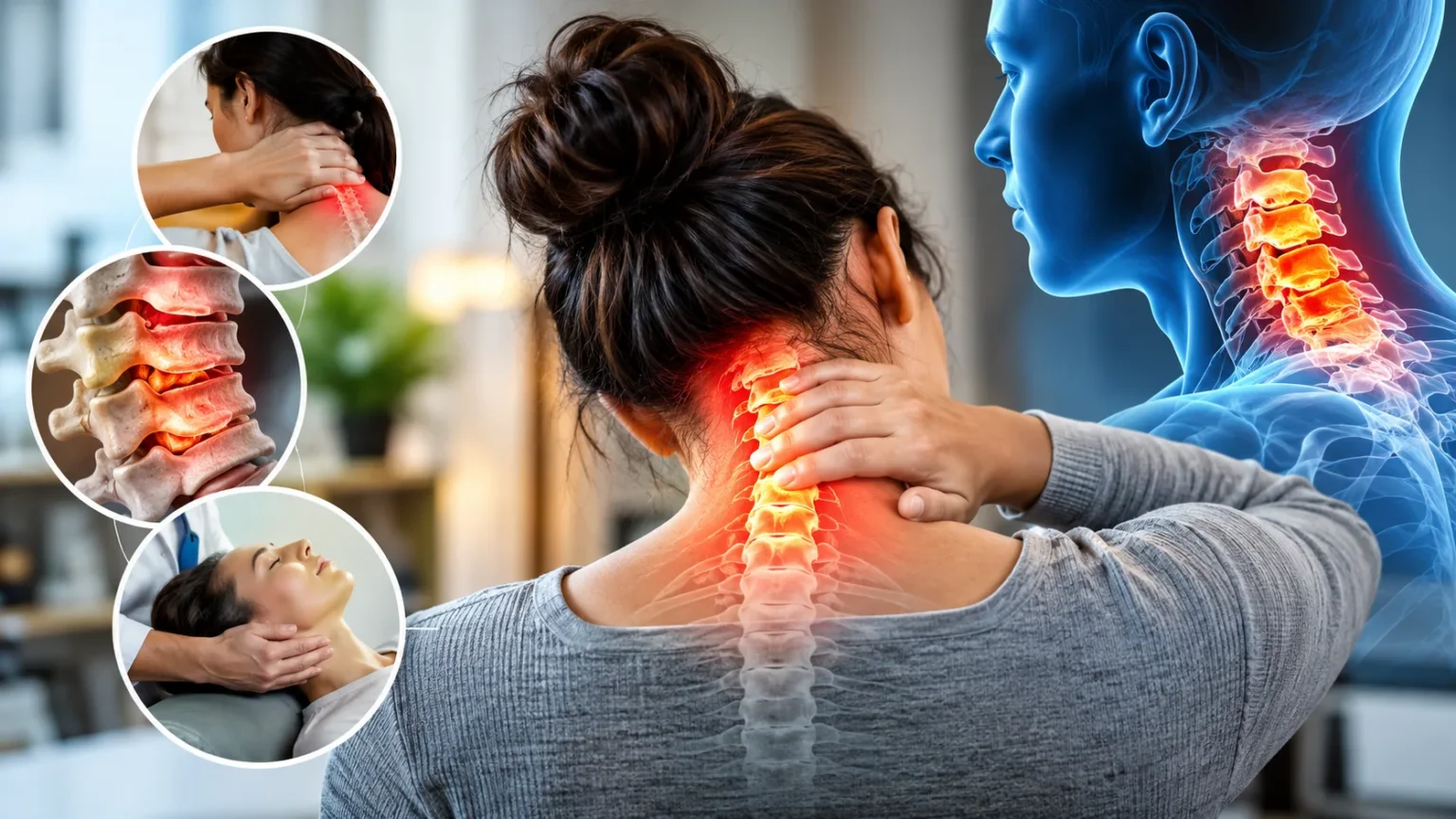

Arthritis in the neck can make everyday activities such as driving, working at a computer, sleeping, or turning your head uncomfortable. The condition commonly develops as the joints and discs of the cervical spine change over time. While neck arthritis becomes more common with age, symptoms can vary widely from occasional stiffness to persistent pain and reduced mobility.
Understanding what causes neck arthritis and how it affects the cervical spine can make symptoms easier to manage. Treatment usually focuses on maintaining movement, reducing irritation, improving strength, and addressing factors that contribute to discomfort. Many people can manage symptoms effectively with conservative approaches, although persistent or neurological symptoms may require medical evaluation.
What Is Arthritis in the Neck?
Arthritis in the neck refers to degenerative or inflammatory changes affecting the joints, cartilage, discs, and surrounding structures of the cervical spine. The cervical spine contains seven vertebrae that support the head while allowing bending, rotation, and other movements. Changes within these structures can gradually produce stiffness, soreness, and reduced range of motion.
The most common form is cervical osteoarthritis, often called cervical spondylosis. It develops when cartilage and spinal discs experience age-related changes, allowing greater stress to reach the small facet joints between vertebrae. The body may respond by forming bone spurs, which do not always cause symptoms but can sometimes irritate nearby nerves.
Other types of arthritis can also affect the neck, including rheumatoid arthritis and inflammatory joint conditions. These disorders work differently from ordinary age-related wear and may require specialized medical treatment. Correctly identifying the source of neck symptoms is important because muscle tension, disc problems, nerve irritation, and arthritis can produce similar discomfort.
Common Causes of Arthritis in the Neck
Age-related changes are one of the main causes of cervical arthritis. Spinal discs naturally lose some water content and flexibility over time, while cartilage covering the facet joints may gradually become thinner. These changes can increase pressure between spinal structures and contribute to stiffness, clicking, aching, and reduced neck movement, particularly after long periods of inactivity.
Previous neck injuries may also contribute to joint degeneration later in life. Whiplash, sports injuries, falls, or repeated occupational strain can alter how forces move through the cervical spine. An injury does not guarantee that arthritis will develop, but changes in joint mechanics may increase stress on certain areas and potentially accelerate degenerative changes.
Genetics, smoking, repeated physical stress, and certain inflammatory conditions may also influence the development of cervical arthritis. Jobs or activities requiring frequent neck rotation, prolonged fixed postures, or repetitive loading can contribute to irritation. However, arthritis usually develops from several interacting factors rather than one specific movement, posture, or lifestyle habit alone.
Symptoms of Arthritis in the Neck
Neck pain and stiffness are among the most common symptoms of cervical arthritis. Discomfort may feel dull, aching, or tight and can become more noticeable after sitting still, sleeping in one position, or performing repetitive activities. Some people experience symptoms mainly in the morning, while others notice discomfort building gradually throughout the day.
Reduced range of motion is another frequent complaint. Turning the head while driving, looking upward, or bringing the ear toward the shoulder may feel restricted or uncomfortable. Grinding, popping, or clicking sounds can occur during movement, although these noises are common and do not necessarily indicate that joint damage is becoming worse.
Pain may sometimes spread into the shoulders, upper back, or area around the shoulder blades. Headaches beginning around the upper neck or base of the skull can also occur. Symptoms can fluctuate considerably, with periods of increased irritation followed by days or weeks when movement feels easier and pain becomes much less noticeable.
Can Neck Arthritis Cause Nerve Symptoms?
Arthritic changes sometimes narrow the spaces where spinal nerves leave the cervical spine. Bone spurs, disc changes, or joint inflammation may place pressure on a nerve root, producing a condition called cervical radiculopathy. Symptoms can include pain traveling from the neck into the shoulder, arm, forearm, or hand rather than remaining limited to the neck.
Nerve irritation may also produce tingling, numbness, burning sensations, or weakness in part of the arm or hand. The exact location depends on which cervical nerve is affected. These symptoms should be distinguished from ordinary muscular soreness because significant weakness, persistent numbness, or worsening neurological symptoms may require medical assessment.
In less common situations, severe narrowing within the spinal canal can affect the spinal cord, known as cervical myelopathy. Possible signs include problems with balance, coordination, hand dexterity, walking, or unusual weakness. These symptoms deserve prompt medical attention because spinal cord compression requires a different approach from uncomplicated neck arthritis.
How Neck Arthritis Is Diagnosed
Diagnosis usually begins with a discussion of symptoms and medical history. A healthcare professional may ask when pain started, which activities make it better or worse, whether discomfort spreads into the arms, and whether numbness or weakness is present. Understanding the pattern of symptoms helps distinguish arthritis from muscle strain, nerve irritation, or other cervical spine conditions.
A physical examination may include checking neck movement, posture, strength, sensation, reflexes, and areas of tenderness. Certain movements can help determine whether symptoms appear to come primarily from joints, muscles, or nerves. Clinical findings are important because imaging changes are common with age and do not always match the amount of pain someone experiences.
X-rays can show changes such as reduced disc spacing, bone spurs, or joint degeneration. MRI scans provide more detailed images of discs, nerves, the spinal cord, and surrounding tissues and may be recommended when significant neurological symptoms are present. Imaging is not always necessary for mild neck pain that improves with conservative care.
Treatment Options for Arthritis in the Neck
Most cases of uncomplicated neck arthritis are initially treated without surgery. Treatment often includes maintaining comfortable activity, modifying irritating movements temporarily, using gentle exercises, and gradually building strength. The goal is usually not to completely eliminate every structural change but to improve function and make daily movement more comfortable and confident.
Pain-relieving or anti-inflammatory medications may sometimes be recommended depending on a person’s health history and symptoms. Heat can help some people feel less stiff, while cold may temporarily calm irritation after activity. Because medications and treatments can have risks or contraindications, people with ongoing symptoms should discuss appropriate options with a healthcare professional.
Additional treatments may include physical therapy, targeted injections, or other interventions when symptoms remain difficult to manage. Surgery is generally considered only when significant nerve or spinal cord compression causes progressive neurological problems or when severe symptoms fail to respond to appropriate conservative treatment. The most suitable treatment depends on symptoms rather than imaging findings alone.
Exercises and Movement for Neck Arthritis
Gentle movement is usually an important part of managing neck arthritis. Completely avoiding movement can sometimes increase stiffness and reduce confidence in using the neck normally. Comfortable rotation, side bending, and controlled flexion or extension may help maintain mobility when performed within a tolerable range rather than forcing the neck into painful positions.
Strengthening the muscles around the neck, shoulders, and upper back can also improve support for the cervical spine. Exercises may include gentle chin movements, shoulder blade control, resistance exercises, and upper-back strengthening. Progress should generally be gradual, especially if someone has been avoiding movement because of pain or has recently experienced a symptom flare.
Exercise should be adjusted according to individual symptoms rather than following an aggressive one-size-fits-all routine. Mild muscular effort can be expected, but exercises should not consistently trigger strong radiating pain, numbness, dizziness, or worsening weakness. A physical therapist can help modify movements when symptoms are complicated or difficult to manage independently.
Daily Habits That May Help Neck Arthritis
Changing positions regularly can be more useful than trying to maintain one supposedly perfect posture all day. Long periods spent looking down at a phone or remaining fixed in front of a computer can increase temporary muscle fatigue and stiffness. Short movement breaks allow the neck, shoulders, and upper back to change position and may make prolonged work more comfortable.
A supportive sleep setup may also improve comfort. Pillow height should generally allow the neck to remain in a relaxed position rather than being pushed sharply forward or sideways. There is no single perfect pillow for everyone, so comfort, preferred sleeping position, body size, and symptom response are more useful guides than choosing a particular pillow solely because it is marketed for arthritis.
Overall physical activity is valuable because neck health is influenced by more than the cervical joints alone. Walking, strength training, and comfortable full-body movement can support general mobility and physical capacity. Different musculoskeletal problems should still be assessed separately; for example, ankle tendon pain may require different management even when someone also experiences neck discomfort.
What Can Make Neck Arthritis Feel Worse?
Symptoms may temporarily worsen after prolonged inactivity, unusually demanding activity, poor sleep, or spending long periods in one position. This does not automatically mean that additional joint damage has occurred. Arthritis symptoms can fluctuate because pain is influenced by joint irritation, muscle tension, nervous-system sensitivity, fatigue, stress, and overall activity levels.
Doing too much activity too quickly can also trigger discomfort, particularly after someone has been less active for several weeks. Instead of avoiding activity completely, gradual progression often allows the body to adapt more comfortably. Breaking demanding tasks into shorter sessions and alternating between positions can help reduce unnecessary strain while maintaining normal daily movement.
Stress can contribute to increased muscle tension around the neck and shoulders, making existing discomfort more noticeable. Poor sleep can have a similar effect by lowering pain tolerance and affecting recovery. Managing these factors does not mean symptoms are psychological; rather, pain can be influenced by several biological and lifestyle factors alongside physical changes in the cervical spine.
Arthritis in the Neck vs Other Causes of Neck Pain
Not every episode of neck pain is caused by arthritis. Muscle strain, prolonged tension, irritated spinal discs, headaches, nerve sensitivity, and temporary joint irritation can all produce similar symptoms. Since degenerative changes are frequently seen on imaging in adults without pain, an X-ray showing arthritis does not automatically prove that arthritis explains every symptom.
Muscular neck pain may feel tight or sore and often changes noticeably with activity or pressure on certain muscles. Nerve-related symptoms are more likely to involve radiating arm pain, tingling, numbness, or weakness. Arthritis commonly produces stiffness and local aching, although several sources of discomfort can occur together and create overlapping symptoms.
A thorough assessment can help determine which findings are most relevant. This becomes especially important when pain is severe, follows significant trauma, or occurs alongside neurological changes or unexplained general symptoms. Understanding the likely source of discomfort helps prevent unnecessary fear while ensuring that conditions requiring specific treatment are not overlooked.
When to Seek Medical Care for Neck Pain
Many mild episodes of neck stiffness improve with movement, activity modification, and time. However, medical evaluation is sensible when symptoms persist, repeatedly interfere with sleep or daily activities, or continue getting worse despite conservative measures. A clinician can assess whether arthritis, muscle irritation, disc problems, or another condition may be contributing to the symptoms.
Seek more urgent assessment if neck pain occurs with significant or worsening arm weakness, widespread numbness, loss of coordination, balance problems, or difficulty walking. Changes in bladder or bowel control associated with neurological symptoms also warrant urgent attention. These signs are uncommon but may indicate significant involvement of the spinal cord or nervous system.
Evaluation is also important when severe neck pain follows a major accident or injury or occurs alongside fever, unexplained weight loss, severe illness, or other concerning symptoms. Most neck arthritis is manageable and does not represent an emergency. Knowing the warning signs helps people seek appropriate care without assuming every episode of stiffness indicates something serious.
Conclusion
Arthritis in the neck is commonly associated with age-related changes in the joints and discs of the cervical spine. Typical symptoms include neck stiffness, aching, reduced movement, and sometimes discomfort extending into the shoulders or upper back. Some people experience nerve symptoms when arthritic changes affect nearby nerve roots.
Treatment usually begins with conservative strategies such as comfortable movement, gradual strengthening, activity modification, and symptom-management techniques. Physical therapy or medical treatment may be helpful when pain persists or affects everyday function. Significant neurological symptoms require additional evaluation because they may indicate nerve or spinal cord involvement.
Living well with neck arthritis often involves finding a balance between managing irritating activities and continuing to move confidently. Structural changes seen on imaging do not always determine how much pain a person will experience. With an individualized approach, many people can maintain mobility, independence, and normal daily activities despite cervical arthritis.
FAQs About Arthritis in the Neck
What does arthritis in the neck feel like?
Neck arthritis often feels like stiffness, aching, or restricted movement around the cervical spine. Symptoms may be worse after inactivity and can sometimes spread into the shoulders, upper back, or base of the head.
Can neck arthritis be cured completely?
The structural changes associated with osteoarthritis cannot usually be reversed completely. However, symptoms can often be managed effectively through movement, strengthening, activity adjustments, physical therapy, and appropriate medical treatment when necessary.
Is massage good for arthritis in the neck?
Gentle massage may temporarily reduce muscle tension and help some people feel more comfortable. It does not remove arthritis itself, and forceful neck manipulation may not be appropriate for everyone, particularly those with neurological symptoms.
What exercises should I avoid with neck arthritis?
Exercises that consistently cause strong radiating pain, numbness, weakness, dizziness, or significant symptom worsening should be stopped or modified. Exercise choices should be based on individual tolerance rather than avoiding all neck movement.
Can neck arthritis cause headaches?
Yes, problems involving the upper cervical joints and surrounding muscles can sometimes contribute to headaches felt around the back or sides of the head. Persistent or unusual headaches should still be evaluated to identify other possible causes.