

Vaccines: How They Work, Types, Benefits & Safety
Vaccines are one of the most widely used tools for preventing infectious diseases, yet many people still have reasonable questions about what they contain, how they work, and how their safety is monitored. A vaccine prepares the immune system to recognize a specific virus, bacterium, toxin, or other disease-related target before a dangerous exposure occurs. This preparation can reduce the chance of infection, lower the risk of severe illness, or both, depending on the vaccine and disease. Vaccines are used throughout childhood and adulthood, and some are recommended only for certain ages, health conditions, occupations, travel plans, or pregnancy. Understanding the science can make vaccination decisions feel more informed and less confusing.
Modern vaccines do not all use the same technology, and that is one reason their schedules, storage needs, and expected immune responses can differ. Some contain weakened or inactivated versions of a germ, while others use only a protein, sugar, harmless genetic instruction, or modified carrier to teach the immune system what to recognize. Newer platforms such as mRNA vaccines have expanded the ways vaccines can be designed, but the underlying goal remains familiar: create immune memory without requiring a person to experience the full danger of the disease first. Vaccines are also evaluated before authorization and monitored after widespread use. That ongoing process helps identify uncommon safety issues that may be too rare to appear in clinical trials.
This guide explains how vaccines work, the main vaccine types, their benefits, common side effects, rare risks, and the systems used to evaluate vaccine safety. It also covers vaccine schedules, booster doses, community protection, ingredients, special situations, and common misconceptions that can make health information difficult to interpret. Recommendations can change as pathogens evolve, new products become available, and public-health agencies review additional evidence, so current national guidance still matters. No vaccine can provide perfect protection to every person, and no medical product is completely free of risk. The useful question is how the expected benefits and known risks compare for a particular vaccine, disease, person, and situation.
What Are Vaccines and How Do They Work?
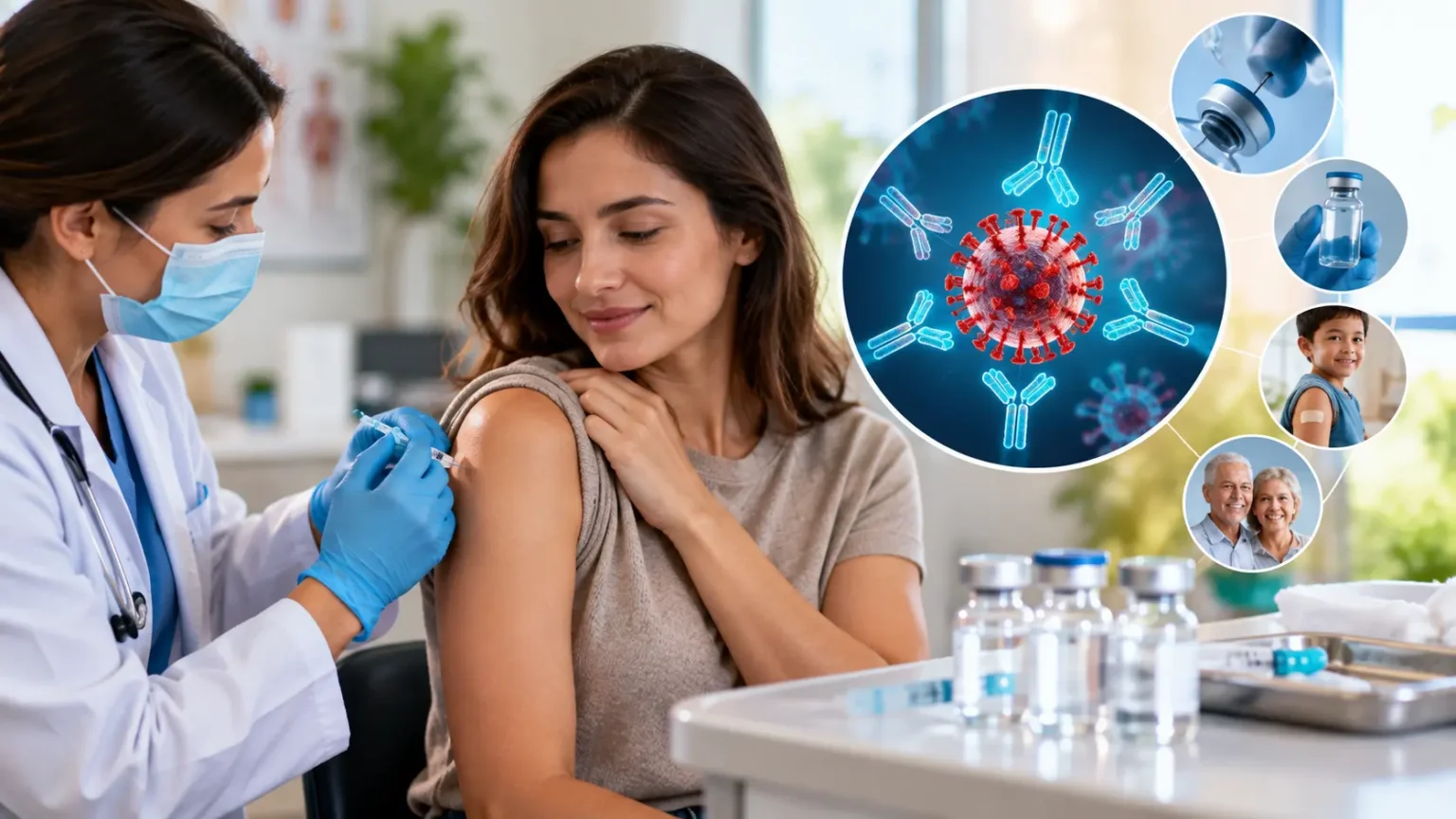
A vaccine is a biological preparation designed to train the immune system to respond to a particular infectious threat before that threat causes serious disease. The active target presented by a vaccine is often called an antigen, which may be a weakened germ, an inactivated germ, a purified component, or instructions that allow the body to briefly make a harmless target protein. Immune cells recognize that target as unfamiliar and begin coordinating a response. B cells can produce antibodies that bind to specific antigens, while T cells can help control infected cells and support other immune functions. The immune system then retains memory cells that can respond more quickly if the real pathogen appears later. This process is called immunization.
Vaccination works because the immune system is capable of learning from previous encounters. During a first exposure to a new pathogen, the body may need time to identify the threat, activate the right immune cells, and produce enough antibodies or cellular defenses to control it. A vaccine gives the immune system a safer preview, allowing many of those preparations to occur in advance. If the person later encounters the actual infection, immune memory can help the body react faster and more effectively. The level of protection varies by vaccine, age, health status, time since vaccination, and characteristics of the circulating pathogen. Some vaccines mainly prevent severe disease rather than blocking every infection.
Antibodies are an important part of vaccine-induced protection, but they are not the entire story. Certain vaccines also generate strong T-cell responses, which can recognize and destroy infected cells or coordinate other parts of immunity. Antibody levels may decline over time without meaning that all protection has disappeared, because memory B cells and T cells can persist after measurable antibodies fall. This is one reason a simple antibody test does not always show whether a person is adequately protected. Scientists study several immune markers when evaluating vaccine responses, and the most meaningful measure ultimately depends on whether vaccination reduces illness, complications, hospitalization, or other important outcomes. Immune protection is therefore more complex than a single laboratory number.
Vaccines usually do not work instantly because the immune response needs time to develop. Depending on the vaccine, meaningful protection may take days or weeks after a dose, and some vaccines require a series of doses to build a stronger or more durable response. A first dose may introduce the immune system to the antigen, while later doses reinforce immune memory and improve the quality of the response. Booster doses may be recommended when immunity decreases over time or when a pathogen changes enough to justify an updated vaccine. The ideal timing differs across diseases and vaccine platforms. Following the recommended schedule helps ensure that protection develops when the risk of infection or complications is most important.
Vaccination and natural infection can both create immune responses, but they do not carry the same risks. Becoming infected means accepting the possibility of pneumonia, neurological injury, organ damage, pregnancy complications, long-term symptoms, disability, hospitalization, or death depending on the disease. Vaccination aims to create protective immune memory without requiring the person to experience those disease complications first. Some vaccines can cause temporary fever, fatigue, or soreness because immune activation itself produces symptoms. These reactions are usually much milder and shorter than the illnesses vaccines are designed to prevent. For most recommended vaccines, health authorities assess whether the expected protection outweighs the known risks for the groups advised to receive them.
Major Types of Vaccines and What Makes Them Different
Live attenuated vaccines contain a weakened form of a virus or bacterium that can stimulate a strong immune response without causing the usual disease in healthy people. Examples include vaccines used against measles, mumps, rubella, and chickenpox in many immunization programs. Because the weakened organism can resemble a natural infection closely, these vaccines often produce durable antibody and cellular immunity. However, they are not appropriate for everyone, particularly some people with significantly weakened immune systems and certain pregnant individuals. Storage requirements can also be more demanding for some live vaccines. A healthcare professional can determine whether a live vaccine is suitable based on medical history, medication use, pregnancy status, and the specific product.
Inactivated vaccines use organisms that have been killed or otherwise made unable to replicate. Because the pathogen cannot reproduce, the vaccine cannot cause the infection it is designed to prevent. Inactivated vaccines generally create a different immune response from live vaccines and may require multiple doses or boosters to maintain strong protection. Several vaccines used against influenza, hepatitis A, polio, and other diseases have been made with inactivated technology, although available products can vary by country. These vaccines are often usable in people who cannot receive certain live vaccines, but individual recommendations still depend on age and health. Their long history of use has also helped scientists understand how dose schedules and immune responses change over time.
Protein subunit, recombinant, polysaccharide, and conjugate vaccines expose the immune system to selected pieces of a pathogen rather than the entire organism. These pieces may include proteins or sugars from the surface of bacteria or viruses that the immune system can learn to recognize. Conjugate technology links certain bacterial sugars to carrier proteins, helping young immune systems produce a stronger and more lasting response. Vaccines against hepatitis B, human papillomavirus, pneumococcal disease, shingles, and meningococcal disease may use one or more of these approaches depending on the product. Because only specific components are included, these vaccines cannot reproduce as the original pathogen would. Adjuvants may sometimes be added to strengthen the immune response and improve protection.
Toxoid vaccines protect against harmful bacterial toxins rather than primarily targeting the bacterium itself. The toxin is treated so it cannot cause its usual harmful effects while still remaining recognizable to the immune system. Tetanus and diphtheria vaccines are classic examples of this approach, because much of the disease damage comes from toxins produced by the bacteria. Immunity against these toxins can decrease over time, which is why booster doses are often part of long-term protection strategies. Combination vaccines may include toxoid components alongside protection against other diseases, reducing the number of separate injections required. Toxoid vaccines demonstrate that vaccination can target a dangerous disease mechanism even when the immune system is not being trained against the whole organism.
mRNA and viral vector vaccines use genetic instructions to help the body temporarily produce a harmless antigen that the immune system can recognize. With mRNA vaccines, the messenger RNA remains in the cell’s cytoplasm, delivers instructions for a limited period, and is then broken down through normal cellular processes. It does not need to enter the cell nucleus to perform its function. Viral vector vaccines use a modified carrier virus to deliver genetic information for the target antigen, while the vector is engineered for vaccine purposes. These technologies became especially familiar during the COVID-19 pandemic, although research on genetic vaccine platforms began much earlier. Their flexibility can make it easier to redesign vaccines when scientists need to respond to changing pathogens.
Benefits of Vaccination for Individuals and Communities
The most direct benefit of vaccination is reducing the risk that a person will develop a vaccine-preventable disease or experience its most serious complications. Protection is not identical for every vaccine, and breakthrough infections can occur, but effectiveness should not be judged only by whether infection happens at all. For many diseases, preventing hospitalization, disability, severe complications, or death is an especially important outcome. Vaccines can also reduce the duration or severity of illness in some people who become infected despite vaccination. This matters most for infections capable of causing meningitis, paralysis, pneumonia, cancer, birth defects, or other lasting health problems. Personal benefit therefore includes more than simply avoiding a few days of symptoms.
Vaccination also helps protect people who cannot mount a strong immune response or cannot receive certain vaccines. When enough people in a community have immunity to a contagious pathogen, transmission can become less efficient, making it harder for the infection to reach vulnerable individuals. This concept is often called community immunity or herd immunity, although the level needed varies substantially from one disease to another. Community protection is strongest when a vaccine meaningfully reduces infection or transmission and when coverage remains high in relevant populations. It should not be treated as a fixed percentage that applies to every disease. For highly contagious infections, small declines in vaccination coverage can create opportunities for outbreaks to return.
Routine immunization has helped reduce or eliminate several diseases in places where vaccination programs are strong. Smallpox was eradicated globally through coordinated vaccination, while polio has been pushed out of most countries even though transmission has not disappeared everywhere. Measles, diphtheria, rubella, and other infections can also become uncommon when coverage is sustained, but they may return when vaccination rates fall or infected travelers introduce the disease into susceptible communities. This pattern shows that successful vaccination can make a disease seem less threatening precisely because people encounter it less often. Maintaining protection is therefore important even when a disease has become rare locally. Low visibility does not necessarily mean the pathogen has disappeared worldwide.
Some vaccines provide benefits that extend beyond preventing an acute infection. Human papillomavirus vaccination can reduce the risk of several HPV-related cancers, while hepatitis B vaccination helps prevent chronic infection that can later contribute to liver disease and liver cancer. Vaccination during pregnancy against selected infections can also protect the pregnant person and transfer antibodies to the baby, providing temporary protection during early life when the infant may be especially vulnerable. Other vaccines are targeted to older adults because aging can increase the risk of complications from infections such as influenza, shingles, pneumococcal disease, or respiratory syncytial virus. This can bridge a vulnerable period before babies are old enough for some vaccinations. These examples show why vaccine recommendations differ across life stages rather than ending after childhood.
Vaccination can also reduce pressure on families, healthcare systems, schools, and workplaces by preventing illnesses that would otherwise require medical visits, hospitalization, caregiving, or time away from normal activities. The economic value is not limited to the cost of treating an infection because serious disease can create rehabilitation needs, long-term disability, missed work, and ongoing care. During outbreaks, vaccination may help prevent disruption by reducing the number of susceptible people available for a pathogen to infect. Benefits are greatest when vaccination programs are accessible, trusted, and matched to local disease patterns. Fewer severe cases can also preserve hospital capacity during periods of intense transmission. Public-health value therefore depends not only on having effective vaccines but also on delivering them at the right time to people who can benefit.
How Vaccines Are Developed, Tested, and Approved
Vaccine development begins long before a product is offered to the public. Researchers first identify a pathogen, antigen, toxin, or biological mechanism that could be targeted safely to produce useful immunity. Laboratory studies examine candidate designs, immune responses, formulation, stability, and potential toxicity before human testing begins. Preclinical work may include cell-based experiments and animal studies when they are scientifically appropriate. Regulators review evidence before allowing a vaccine candidate to move into clinical trials involving people. Although the exact pathway differs by country and vaccine technology, the core objective is to gather enough evidence to understand manufacturing quality, immune response, effectiveness, and safety before broad use is recommended.
Early clinical trials usually involve relatively small groups and focus heavily on safety, tolerability, dosing, and whether the vaccine produces the expected immune response. Later phases enroll larger and more diverse groups so researchers can evaluate protection and identify more common side effects. Phase 3 trials may include thousands or tens of thousands of participants, depending on the disease, expected event rate, and trial design. Researchers typically compare outcomes between vaccinated participants and an appropriate control group while following predefined protocols. Independent monitoring can be used to review safety information while studies are underway. Clinical development is designed to answer specific questions systematically rather than relying on individual experiences or uncontrolled observations.
Regulatory review includes more than examining whether a vaccine appeared effective in a clinical trial. Authorities evaluate the quality of the manufacturing process, consistency between production batches, purity, potency, stability, labeling, storage requirements, and safety data alongside evidence of benefit. Manufacturing facilities may be inspected, and companies must meet standards for producing biological products reliably at scale. Regulators can request additional information, require changes, or decline authorization when evidence is insufficient. Emergency pathways may shorten administrative timelines during major public-health threats, but they still require regulators to evaluate available evidence under defined legal standards. Faster review does not mean that quality control, manufacturing oversight, and safety evaluation disappear.
Clinical trials cannot detect every possible adverse event because even very large studies include far fewer people than will eventually receive a widely recommended vaccine. A reaction occurring once in hundreds of thousands or millions of doses may not appear until vaccination expands to much larger populations. That is why post-authorization safety monitoring is a normal part of vaccine science rather than evidence that testing was incomplete or meaningless. Healthcare systems, regulators, researchers, and manufacturers use several methods to identify unexpected patterns after rollout. Reports can generate a safety signal, but a signal does not automatically prove causation. Investigators compare observed events with expected background rates and examine timing, medical records, biological plausibility, and additional datasets.
If a genuine safety concern emerges, recommendations can be changed as evidence develops. Authorities may update product information, identify groups at higher risk, change dose intervals, issue clinical guidance, restrict a vaccine’s use, or in unusual circumstances pause or withdraw a product. This ability to respond is an important feature of safety surveillance because scientific conclusions should change when strong new evidence appears. Vaccine effectiveness is also monitored after authorization because circulating strains, population immunity, age, and time since vaccination can influence real-world performance. Updated vaccines may be developed when pathogens evolve, as happens regularly with influenza and has also occurred with COVID-19. Vaccine policy is therefore an ongoing process rather than a one-time decision.
Vaccine Safety, Side Effects, and Rare Reactions
Most vaccine side effects are mild and temporary, often reflecting the immune system’s response to vaccination or the body’s reaction to an injection. Common examples include soreness, redness, or swelling at the injection site, along with fatigue, headache, muscle aches, chills, or a mild fever. These symptoms often begin within a short period after vaccination and improve without treatment within a few days. Not every person experiences side effects, and the absence of symptoms does not mean the vaccine failed to work. Different vaccine types and age groups can have different expected reactions. Product information and healthcare professionals can explain which symptoms are common after a specific vaccine and which signs deserve further evaluation.
Serious adverse reactions can occur with vaccines, just as they can with medicines, foods, and other biological exposures, but they are much less common than routine temporary reactions. Severe allergic reactions such as anaphylaxis are an example of a rare event that vaccination providers are trained to recognize and treat. Certain vaccines have also been associated with specific uncommon complications that vary by product, age, sex, dose, or underlying health factors. Good vaccine communication should acknowledge these risks rather than claiming that serious reactions never happen. At the same time, risk needs context because the infection itself may cause the same complication more often or produce other severe outcomes. Decisions are based on comparing realistic risks and expected benefits.
An adverse event that happens after vaccination is not automatically an adverse reaction caused by the vaccine. People experience heart attacks, seizures, infections, miscarriages, autoimmune symptoms, and many other medical problems every day, including on days shortly after receiving vaccines. When millions of doses are administered, some health events will occur afterward by coincidence. Safety systems are designed to identify whether an event appears more frequently than expected, occurs in a consistent time window, has a plausible mechanism, or follows a repeatable pattern. Researchers may use large health databases and controlled epidemiological studies to test suspected associations. Distinguishing timing from causation is essential for understanding vaccine safety accurately.
Vaccine ingredients are another common source of concern, especially when chemical names appear unfamiliar. Vaccines may include antigens, stabilizers, preservatives, adjuvants, salts, sugars, lipids, or tiny residual amounts of substances used during manufacturing, depending on the product. Each ingredient has a function related to immune response, stability, sterility, delivery, or production, and regulators evaluate the complete formulation rather than judging substances only by their names. Toxicity depends heavily on dose and route of exposure, so the presence of a chemical does not by itself demonstrate danger. Ingredient lists differ considerably between vaccines, making broad claims that all vaccines contain a particular substance unreliable. People with known severe allergies should review the specific product with a clinician.
After vaccination, most mild symptoms can be managed with rest, fluids, and routine comfort measures when appropriate, but medical advice should be sought when symptoms are severe, unusual, or persistent. Immediate emergency care is appropriate for signs of a serious allergic reaction, such as difficulty breathing, swelling of the face or throat, severe weakness, or collapse. Other warning signs depend on the vaccine and the person’s medical history, so official after-care instructions should be followed. People who believe they experienced an important adverse event should report it through the relevant national safety system or ask a healthcare professional to report it. When in doubt, contacting a clinician promptly is the safer choice. Reports contribute valuable information, even though an individual report alone cannot prove that vaccination caused the event.
Vaccine Schedules, Boosters, and Special Situations
Vaccination schedules are designed around the ages when people are most vulnerable to particular diseases and when their immune systems are likely to respond effectively. Childhood schedules begin early because infants can face serious complications from infections that adults may tolerate more easily. Doses are timed to build protection before likely exposure while accounting for how maternal antibodies and immune development can influence responses. Missing a scheduled dose does not usually mean the entire series must be restarted, but the correct catch-up plan depends on the vaccine and age. National schedules can differ because disease patterns, available products, public-health priorities, and regulatory decisions vary between countries. Current local guidance is therefore more reliable than a generic schedule found online.
Adults also need vaccines because immunity can fade, risk changes with age, and some vaccines were not available during earlier childhood. Routine adult recommendations may include vaccines against influenza, tetanus, COVID-19, shingles, pneumococcal disease, or other infections depending on age and country. People with diabetes, heart disease, chronic lung conditions, kidney disease, immune suppression, or other health conditions may have additional recommendations because infections can be more dangerous for them. Occupational exposure can matter as well, especially for healthcare workers, laboratory staff, educators, or people working with animals. Vaccination needs can therefore change substantially across the course of adult life. A vaccination review during routine medical care can identify missed childhood doses and determine whether newer age-based vaccines are appropriate.
Booster doses are used when immune protection decreases or when an additional exposure can strengthen and refresh immune memory. Some vaccines provide long-lasting protection after a completed series, while others require periodic boosters because antibody levels decline or exposure risk remains ongoing. Influenza vaccination is generally updated regularly because influenza viruses change and the strains expected to circulate can differ from one season to the next. COVID-19 recommendations have also evolved as population immunity, circulating variants, and vaccine formulations have changed. The need for an updated dose can vary by age, risk status, prior vaccination, and national policy. This is why older vaccine cards alone may not show whether someone is currently up to date.
Pregnancy is a special vaccination situation because some infections can harm both the pregnant person and developing baby, while maternal antibodies can protect the infant after birth. Certain non-live vaccines are recommended during pregnancy in many countries because evidence shows meaningful benefits at specific times. In contrast, some live vaccines are generally avoided during pregnancy and may instead be recommended before conception or after delivery when appropriate. Recommendations are vaccine-specific, so broad statements that all vaccines are either safe or unsafe during pregnancy are misleading. Breastfeeding is also compatible with many vaccines, but individual products and medical circumstances should be reviewed. Pregnant people should use current guidance from their clinician or national immunization program.
People with weakened immune systems may need customized vaccine plans because both disease risk and vaccine response can differ from those of healthy adults. Some may benefit especially from non-live vaccines but produce a weaker immune response, making timing around immune-suppressing treatment important. Certain live vaccines can be unsafe when immune suppression is substantial, although the exact restrictions depend on the condition, medication, and vaccine. Travel can create another set of special recommendations, including vaccines that are not routinely needed at home but are advised or required for specific destinations. Travelers should ideally review health requirements before departure rather than immediately before a trip. Personalized scheduling helps maximize protection while avoiding vaccines that are inappropriate for a particular medical situation.
Common Vaccine Myths and How to Evaluate Health Claims
One common misconception is that receiving several vaccines overwhelms the immune system. In reality, the immune system encounters enormous numbers of antigens from food, surfaces, respiratory droplets, skin organisms, and everyday infections throughout life. Modern vaccine schedules are studied to determine whether recommended products can be given safely together or within specified intervals. Combination vaccines may actually reduce the number of injections while protecting against multiple diseases. Temporary immune activation after vaccination is expected, but it is not the same as exhausting or permanently weakening immunity. For people with particular immune disorders, scheduling may need modification, yet that is a medical exception rather than evidence that routine vaccination overwhelms healthy immune systems.
Another persistent claim is that vaccines cause autism, but large bodies of research have not supported a causal relationship between routine vaccination and autism. The original publication that helped popularize concern about the measles, mumps, and rubella vaccine was later retracted after serious problems with the research were identified. Subsequent studies involving large populations have repeatedly failed to show that MMR vaccination causes autism. Autism is a neurodevelopmental condition with complex genetic and biological contributors, and signs often become noticeable during the same early-childhood period when several vaccines are routinely given. Timing can therefore create an understandable impression of connection without establishing cause. Reliable evidence requires controlled comparisons rather than individual timelines alone.
Some people believe natural infection is always better because it can sometimes produce strong immunity. The missing part of that argument is the cost of obtaining immunity through disease. Measles can cause pneumonia or encephalitis, polio can cause paralysis, hepatitis B can become chronic and contribute to liver cancer, and influenza can cause severe respiratory complications. Even when most cases are mild, it is impossible to know in advance who will experience the worst outcome. Vaccination aims to obtain useful immune memory while avoiding as much of the disease risk as possible. In some situations, people who have recovered from an infection may still be advised to receive vaccination because protection can become broader, stronger, or more predictable.
Another misleading idea is that a vaccine must be ineffective whenever a vaccinated person becomes infected. Vaccine effectiveness is a reduction in risk, not a guarantee that exposure can never lead to infection. Seat belts do not prevent every injury, yet they remain valuable because they reduce the probability and severity of harm; vaccines can be understood in a similar risk-reduction framework. Effectiveness can also vary against infection, symptomatic illness, hospitalization, and death, so a single outcome does not describe the full benefit. Age, immune status, time since vaccination, and changes in a pathogen can influence performance. Evaluating vaccines requires comparing outcomes between appropriately vaccinated and unvaccinated groups rather than focusing only on individual breakthrough cases.
Health information about vaccines is easiest to evaluate when claims can be traced to high-quality evidence and clear definitions. Personal stories can reveal experiences worth investigating, but they cannot determine how frequently an event occurs or whether vaccination caused it. More reliable evidence comes from well-designed clinical trials, large observational studies, transparent safety-monitoring systems, systematic reviews, and guidance that explains both benefits and known uncertainties. Be cautious when a source promises absolute safety, absolute danger, or a single hidden explanation for many unrelated illnesses. Scientific guidance can change as new evidence appears, and that willingness to update recommendations is a strength rather than proof of deception. Good decisions come from comparing evidence, personal risk factors, and current medical guidance.
Frequently Asked Questions About Vaccines
Can vaccines cause the disease they are designed to prevent?
Most vaccines cannot cause the disease they are designed to prevent because they use inactivated organisms, purified components, genetic instructions, or other non-disease-causing approaches. Some live attenuated vaccines contain weakened organisms, but they are specifically designed not to cause the usual disease in healthy people and are avoided in certain people with significant immune suppression.
Why do some vaccines require more than one dose?
Multiple doses can help build a stronger, more durable immune response because the first exposure introduces the immune system to the antigen and later doses reinforce immune memory. The number and timing of doses depend on the vaccine technology, age, disease, and how long protection is expected to last.
Are vaccine side effects normal?
Mild side effects such as arm soreness, fatigue, headache, muscle aches, or a low fever can occur because vaccination activates the immune system. Serious reactions are possible but uncommon, and urgent medical care is appropriate for severe allergic symptoms or other concerning reactions.
Can I receive more than one vaccine at the same visit?
Many vaccines can be given during the same appointment when recommended, and schedules are developed with coadministration in mind. Whether particular vaccines should be given together can depend on age, product, health history, and current national guidance, so a clinician or pharmacist can confirm the appropriate combination.
Do adults still need vaccines if they were fully vaccinated as children?
Yes, many adults need vaccines because some childhood protection fades, new risks appear with age, and certain vaccines are recommended only during adulthood. Adults may also need catch-up doses, seasonal or updated vaccines, travel vaccines, or additional protection because of pregnancy, occupation, chronic illness, or immune status.