
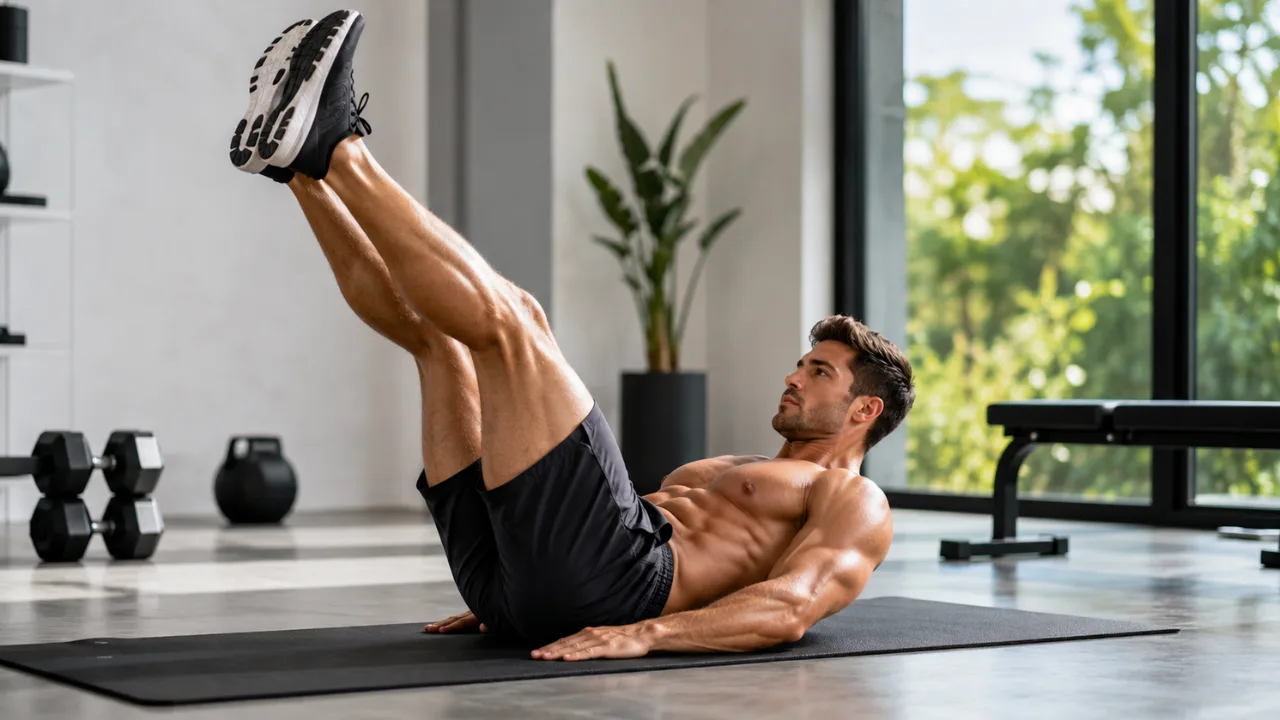

Lower Ab Exercises: 10 Moves for a Stronger Core
Lower Ab Exercises are popular because many people want a stronger, more stable midsection. The right movements can improve control around your pelvis and spine, support compound exercises, and make everyday activities such as lifting, walking, and climbing stairs feel more coordinated.
However, the “lower abs” are not a completely separate abdominal muscle. The rectus abdominis runs from the rib area toward the pelvis, while deeper core muscles work with it to stabilize your trunk. Certain exercises simply create more noticeable tension in the lower portion of this system.
An effective lower abs workout does not require hundreds of repetitions or complicated gym equipment. Slow reverse crunches, dead bugs, heel taps, and controlled leg movements can be challenging when you maintain good form and prevent your lower back from lifting excessively.
This guide explains 10 effective lower ab exercises, how to perform them safely, and how to build them into a realistic routine. You will also learn why lower abdominal fat cannot be managed through crunches alone and which mistakes commonly lead to back or hip discomfort.
What Do People Mean by the Lower Abs?
When people mention the lower abs, they usually mean the area between the navel and the pelvis. This region includes the lower portion of the rectus abdominis, but it is also influenced by the transverse abdominis, internal obliques, external obliques, hip flexors, diaphragm, and pelvic floor.
You cannot completely isolate only the bottom section of the rectus abdominis. When the muscle contracts, different areas work together, although changing the position of your pelvis and legs may increase the challenge felt closer to the lower abdomen.
Movements such as reverse crunches emphasize bringing the pelvis toward the rib cage. Leg-lowering exercises create a longer lever that challenges the core to prevent excessive arching through the lumbar spine.
Understanding this anatomy can improve your expectations. The goal is not to locate one tiny muscle and exhaust it, but to train your entire core to transfer force, stabilize your spine, and control the relationship between your ribs and pelvis.
Benefits of Lower Ab Exercises
Lower abdominal exercises can improve core strength and endurance. A stronger core helps your trunk remain stable while your arms and legs move, which is valuable during running, lifting, carrying, sports, and many everyday tasks.
These movements may also improve pelvic control. Learning to gently tilt and stabilize the pelvis can help you recognize when your lower back is excessively arching during leg raises, planks, squats, or overhead exercises.
A balanced core workout can support better movement efficiency, but it should not be treated as an automatic cure for back pain. Back discomfort can have many causes, and certain abdominal exercises may aggravate symptoms when performed with poor technique or inappropriate intensity.
Lower ab training can also make advanced exercises easier. Dead bugs, reverse crunches, and hollow holds build control that may transfer to hanging knee raises, pull-ups, loaded carries, and more demanding athletic movements.
What to Know Before Starting
Begin each workout with a short warm-up that increases body temperature and gently moves your hips and spine. Walking, marching in place, controlled pelvic tilts, and relaxed breathing can prepare your body without exhausting your core before the main exercises.
Focus on control rather than speed. A slower repetition often creates more abdominal tension because it prevents momentum from carrying the legs or pelvis through the movement.
Exhale during the most difficult part of each repetition and avoid holding your breath for long periods. A gentle exhalation can help coordinate the abdominal wall while reducing unnecessary tension in your neck, jaw, and shoulders.
Stop if you experience sharp pain, numbness, dizziness, unusual pelvic pressure, or worsening back discomfort. People recovering from surgery, childbirth, a hernia, or an abdominal injury should obtain appropriate professional guidance before beginning an intense routine.
1. Pelvic Tilts
The pelvic tilt is a beginner-friendly movement that teaches you how to control the position of your pelvis. This skill is important because many lower ab exercises become less effective when the lower back arches away from the floor.
Lie on your back with your knees bent, feet flat, and arms relaxed beside you. Exhale gently as you tighten your abdominal muscles and tilt your pelvis so that your lower back moves slightly closer to the floor.
Hold the position briefly without squeezing your glutes aggressively or pushing through your feet. Inhale as you return to a comfortable neutral position, then repeat for approximately 10 to 15 controlled repetitions.
The movement should remain small and smooth. Avoid forcefully flattening your spine or lifting your hips into a bridge, because the goal is to learn abdominal and pelvic control rather than create a large range of motion.
2. Alternating Heel Taps
Alternating heel taps strengthen the core while keeping your knees bent, making them more accessible than straight-leg lowering exercises. They also teach you to move one leg without losing control of your pelvis.
Lie on your back and lift your legs into a tabletop position, with your hips and knees bent at approximately 90 degrees. Gently brace your core and keep your lower back in a comfortable, stable position.
Lower one heel toward the floor while exhaling, then return the leg to tabletop. Repeat on the opposite side and continue alternating for 8 to 12 repetitions per leg.
Reduce the range if your back begins to arch or your abdominal muscles push outward noticeably. You can make the movement easier by keeping the heel closer to your body or harder by tapping farther away.
3. Dead Bugs
The dead bug is one of the most useful deep core exercises because it challenges opposite-arm and leg movement while the trunk remains stable. It can help improve coordination without requiring high-impact movement.
Lie on your back with both arms extended toward the ceiling and your legs in tabletop position. Gently tighten your abdomen while maintaining a comfortable connection between your lower back and the floor.
Slowly lower one arm behind your head while extending the opposite leg away from your body. Stop before your back arches, then return to the starting position and repeat on the other side.
Perform approximately 6 to 10 repetitions per side with deliberate control. Beginners can move only the legs or only the arms, while advanced exercisers can straighten the legs farther toward the floor.
4. Reverse Crunches
The reverse crunch emphasizes controlled pelvic movement rather than pulling the shoulders toward the hips. When performed slowly, it can create strong abdominal tension without requiring a large range of motion.
Lie on your back with your knees bent and lifted above your hips. Place your arms beside you for support, then gently draw your ribs and pelvis toward one another.
Exhale as you curl your tailbone a few centimeters away from the floor. Pause without swinging your legs, then slowly lower your pelvis until it returns to the starting position.
Aim for 8 to 15 repetitions while keeping the movement smooth. Avoid throwing your knees toward your chest, because momentum shifts work away from the abdominal muscles and may create unnecessary pressure through the back.
5. Bent-Knee Leg Raises
Bent-knee leg raises provide a useful step between heel taps and straight-leg raises. Bending the knees shortens the lever, allowing you to practice core control with less demand on the hip flexors and lower back.
Lie on your back with your knees bent and feet on the floor. Brace your abdomen, then lift both feet until your knees move above your hips and your lower legs become roughly parallel to the floor.
Slowly lower your feet toward the ground while maintaining a stable pelvis. Tap the floor lightly or stop just above it, then bring the legs back to the starting position.
Complete approximately 8 to 12 repetitions without rushing. Make the exercise easier by lowering one foot at a time or limiting the distance that your feet travel toward the floor.
6. Straight-Leg Raises
Straight-leg raises create a greater challenge because the extended legs act as a long lever. This exercise is better suited to people who can already perform bent-knee movements without losing control of their lower back.
Lie on your back with your legs extended and your arms resting beside you. Tighten your core, then raise both legs until they point upward or reach the highest comfortable position.
Lower the legs slowly while keeping your back stable. Stop the repetition as soon as your back begins to arch, your abdomen loses tension, or you feel excessive pulling through your hip flexors.
Perform 6 to 12 quality repetitions rather than chasing a high number. Bend your knees, shorten the lowering range, or lift one leg at a time when the full version feels too difficult.
7. Flutter Kicks
Flutter kicks challenge abdominal endurance by requiring the core to stabilize the pelvis while the legs alternate. They can feel intense quickly, so short, controlled sets are usually more effective than long, uncontrolled ones.
Lie on your back with your legs extended. Raise them to an angle where you can keep your back comfortable, then alternate small up-and-down kicks without allowing your heels to rest.
Keep the movement compact and controlled rather than making large kicks. Exhale steadily, relax your shoulders, and avoid lifting your head unless you can do so without creating neck strain.
Begin with 15 to 20 seconds and gradually increase the duration. Raise your legs higher or bend your knees when your lower back arches, as a lower leg position is not automatically more effective.
8. Mountain Climbers
Mountain climbers combine core stabilization with movement through the hips and shoulders. They can also increase your heart rate, especially when performed at a faster pace after you have learned the correct position.
Begin in a high plank with your hands beneath your shoulders and your body forming a long line. Brace your abdomen and bring one knee toward your chest without allowing your hips to rise or rotate excessively.
Return the leg and repeat on the other side. Start slowly to maintain control, then increase speed only when you can keep your shoulders stable and your back from sagging.
Perform 20 to 40 seconds per set or count 8 to 15 repetitions per side. Place your hands on a bench or sturdy elevated surface to make the movement more accessible.
9. Plank Knee Tucks
Plank knee tucks train the abdominal muscles to resist extension while the knee moves toward the torso. They also involve the shoulders, chest, hip flexors, and muscles that stabilize the spine.
Start in a high plank with your feet slightly apart. Tighten your core, then slowly draw one knee toward your chest while keeping your pelvis as level as possible.
Pause briefly before returning the foot to the floor and switching sides. Avoid rounding aggressively, bouncing forward, or allowing your shoulders to collapse toward your ears.
Complete 8 to 12 repetitions per side. Beginners can perform the exercise with their hands elevated, while advanced exercisers can use sliders for controlled double-knee tucks.
10. Hollow Body Holds
The hollow body hold is an advanced core exercise that teaches the body to maintain tension through an extended position. It is frequently used in gymnastics-style training but can be modified for many fitness levels.
Lie on your back with your knees bent and arms beside you. Gently lift your shoulders, tilt your pelvis, and find a position where your lower back remains stable against the floor.
Hold that position while extending one leg, both legs, or your arms as your strength allows. The farther your limbs move from your center, the more difficult the exercise becomes.
Begin with holds of 10 to 20 seconds and rest before repeating. Stop or reduce the lever when your lower back lifts, your neck becomes painful, or you can no longer breathe steadily.
A 15-Minute Lower Abs Workout
Start with two sets of 10 pelvic tilts to establish control and prepare your abdominal muscles. Follow them with two sets of eight heel taps per side, resting for approximately 30 seconds between sets.
Next, complete two sets of eight dead bugs per side and 10 reverse crunches. Move slowly enough that you can feel your pelvis and ribs remain controlled throughout every repetition.
Finish the circuit with 20 seconds of mountain climbers and a 15-second hollow hold. Beginners can replace the hollow hold with bent-knee leg raises or perform the plank exercises with their hands on an elevated surface.
Complete the circuit two or three times according to your fitness level. Quality should remain consistent from the first round to the last, so reduce repetitions when fatigue causes arching, swinging, or breath-holding.
How to Progress Your Lower Abs Workout
Progress does not always require adding more repetitions. You can make an exercise harder by slowing the lowering phase, pausing at the most challenging point, increasing the range, or reducing external support.
For leg-based exercises, gradually straightening the knees increases the lever length. Moving your legs closer to the floor also increases difficulty, but only when you can maintain a stable spine and controlled breathing.
You may eventually add resistance using a light ankle weight, cable, medicine ball, or resistance band. External load should be introduced carefully because a small increase can create a large difference during long-lever abdominal exercises.
Change only one factor at a time so that you can assess your response. Progressing the range, duration, resistance, and number of sets simultaneously may overload your core or cause your hip flexors and lower back to compensate.
Common Lower Ab Exercise Mistakes
Arching the lower back is one of the most common mistakes during leg raises, flutter kicks, and dead bugs. This usually means the exercise range or lever is too demanding for your current control.
Using momentum is another frequent problem. Swinging the legs or rocking the pelvis may help you complete more repetitions, but it reduces controlled abdominal tension and makes the movement harder to evaluate.
Many people also hold their breath while bracing. Excessive breath-holding can create unnecessary pressure and may be inappropriate for people with certain cardiovascular, pelvic floor, or abdominal conditions.
Training the abs every day without sufficient recovery can also slow progress. Your abdominal muscles need time to recover from challenging resistance work, just like the muscles in your legs, chest, or back.
Do Lower Ab Exercises Burn Lower-Belly Fat?
Lower ab exercises can strengthen and develop the muscles beneath the abdominal fat. They may improve firmness, control, and muscular definition, but they cannot guarantee that fat will disappear specifically from the lower stomach.
Some research has suggested that local exercise may influence nearby fat use under certain controlled conditions. However, the effect is not dependable enough to make targeted fat-loss promises, and individual fat distribution remains strongly influenced by genetics, hormones, age, and overall energy balance.
Reducing abdominal fat generally requires a broader plan involving regular physical activity, strength training, suitable nutrition, sleep, and long-term consistency. The body determines where stored fat is lost first and where it remains longest.
Do lower ab exercises because you want a stronger and more capable core. Treat visible definition as a possible result of muscle development and overall fat loss rather than the guaranteed outcome of one specific workout.
Cardio, Strength Training and Nutrition
A well-rounded fitness plan includes more than abdominal exercises. Full-body strength training develops major muscle groups and usually creates a greater overall training stimulus than repeatedly working one small region.
Walking, cycling, swimming, running, dancing, and other cardiovascular activities can support heart health and total energy expenditure. Choose activities that match your fitness level and that you can perform consistently.
Nutrition also affects body composition, energy, and recovery. A sustainable eating pattern typically includes adequate protein, fiber-rich carbohydrates, vegetables, fruit, healthy fats, and portions that suit your personal needs.
Avoid extreme diets promising rapid removal of lower-belly fat. They are difficult to maintain and may reduce energy, workout quality, muscle mass, and nutritional intake without providing lasting results.
Lower Ab Exercises and Back Pain
Some lower ab exercises can be useful for building trunk control, but others may worsen existing back pain. Straight-leg raises and low flutter kicks create substantial leverage and may feel uncomfortable when core strength is limited.
Begin with pelvic tilts, heel taps, bridges, or modified dead bugs if you are sensitive to back strain. Keep the range small and stop before your lower back arches or discomfort increases.
Pain that travels into a leg, causes numbness or weakness, wakes you repeatedly at night, or follows a significant injury requires appropriate assessment. Exercise selection should be based on the cause and pattern of symptoms.
A physical therapist or qualified healthcare professional can help you choose movements suited to your condition. Generic core workouts should not replace individualized treatment for persistent or severe back pain.
Lower Ab Training After Pregnancy
Pregnancy and childbirth change the abdominal wall, breathing mechanics, connective tissue, and pelvic floor. Returning immediately to intense leg raises or planks may be inappropriate even when you exercised regularly before pregnancy.
Begin with breathing, gentle pelvic floor coordination, walking, and controlled abdominal engagement when medically appropriate. Recovery differs according to the pregnancy, delivery method, complications, sleep, pain, and previous fitness level.
Watch for abdominal doming, pelvic heaviness, urine leakage, pain, increased bleeding, or pressure around a cesarean incision. These signs suggest that the exercise may need to be modified or temporarily stopped.
A pelvic health physical therapist can assess diastasis recti, scar mobility, pelvic floor function, and exercise tolerance. Postpartum progress should focus on rebuilding strength and confidence rather than rushing to regain a particular appearance.
How Often Should You Train Your Lower Abs?
Most people can include focused core training two to four times per week, depending on workout intensity and recovery. Beginners may make progress with two short sessions performed alongside full-body strength training.
Allow approximately 48 hours of recovery after a particularly challenging abdominal workout. Light breathing drills or mobility exercises may be performed more frequently because they create less muscular fatigue.
You do not need a different lower ab routine every day. Repeating a small group of exercises makes it easier to improve technique, track repetitions, and recognize when you are ready for a harder variation.
Increase difficulty gradually when you can complete every repetition without swinging, arching, rushing, or holding your breath. Consistent, well-controlled training is usually more effective than occasional extreme workouts.
Final Thoughts
The best lower ab exercises challenge your abdominal muscles while allowing you to maintain control of your ribs, pelvis, spine, and breathing. Pelvic tilts, dead bugs, heel taps, and reverse crunches provide a strong foundation.
More advanced movements such as straight-leg raises, flutter kicks, plank knee tucks, and hollow holds can be added as your strength improves. Difficulty should come from better leverage and control rather than faster, less precise movement.
Lower ab training can strengthen your core, improve stability, and support exercise performance. It cannot promise isolated lower-belly fat loss, so combine it with full-body strength training, regular cardio, balanced nutrition, and adequate recovery.
Choose exercises that match your current ability and modify them when necessary. A shorter workout performed with excellent form is more valuable than a long routine that repeatedly causes pain or compensation.
Frequently Asked Questions
What is the most effective lower ab exercise?
Reverse crunches, dead bugs, and controlled leg raises are highly effective because they challenge pelvic stability. The best choice is the one you can perform without arching your lower back.
Can lower ab exercises flatten your stomach?
They can strengthen and develop abdominal muscles, but they do not guarantee targeted fat loss. A flatter appearance generally requires overall fat management alongside core training.
How many lower ab exercises should I do?
Choose three to five exercises and perform two or three controlled sets of each. More exercises are unnecessary when fatigue causes your technique to deteriorate.
Can I train my lower abs every day?
Daily intense training is usually unnecessary. Two to four weekly sessions with adequate recovery can build strength while reducing the risk of overuse and poor form.
Why does my back hurt during leg raises?
Your legs may be lowering beyond the range your core can control, causing your back to arch. Bend your knees, shorten the range, or switch to heel taps.