

Masago: What Is It, Taste, Uses & Nutrition
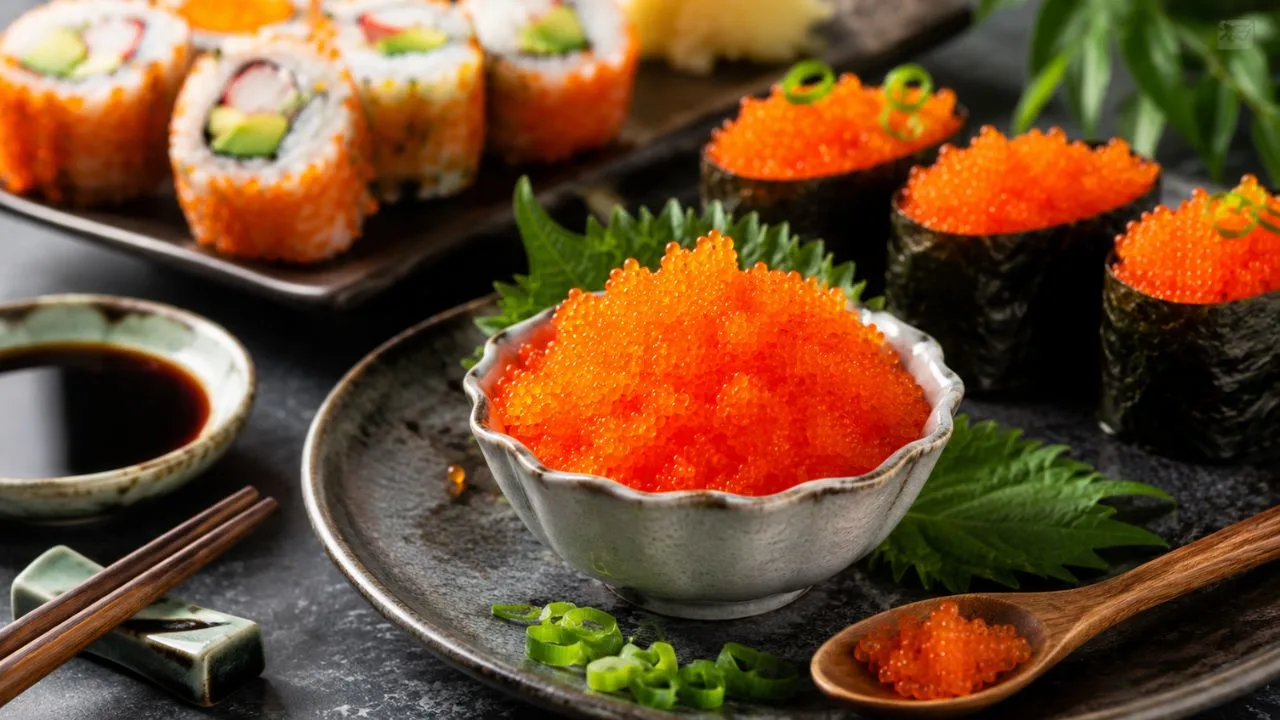
Masago is the small, brightly colored fish roe commonly found on sushi rolls, poke bowls, and Japanese-inspired seafood dishes. It has a slightly salty flavor, a delicate crunch, and an appearance that adds color and texture without overpowering the rest of the meal.
These tiny eggs come from capelin, a small cold-water fish belonging to the smelt family. Natural masago is usually pale yellow or light orange, but producers often color it bright orange, red, green, or black to create a more visually appealing ingredient.
Masago is frequently confused with tobiko, ikura, and traditional caviar because all four are types of fish eggs. However, they come from different fish, vary considerably in size and texture, and are sold at different price points.
This guide explains what masago is, how it tastes, how it is produced, and how restaurants use it. It also covers its nutrition, possible health benefits, sodium content, allergy risks, pregnancy considerations, storage, and differences from other popular types of roe.
What Is Masago?
Masago is the Japanese name commonly used for capelin roe. Roe refers to the eggs of fish and certain other marine animals. In this case, the eggs are collected from female capelin and prepared for use as a garnish, topping, or ingredient.
Capelin roe is extremely small compared with salmon roe or traditional sturgeon caviar. The individual eggs are usually around one millimeter in diameter, creating a fine, sandy-looking layer when they are spread across a sushi roll or mixed into a sauce.
Restaurants value masago because it adds saltiness, color, and a gentle popping texture. It is less crisp than tobiko and much smaller than ikura, so it can blend into rice, seafood mixtures, and creamy sauces without dominating the dish.
Masago is often used as an affordable alternative to more expensive fish roe. Its lower price makes it practical for casual sushi restaurants, takeaway rolls, poke shops, and home cooks who want the appearance and flavor of roe without paying for premium caviar.
Where Does Masago Come From?
Masago comes from capelin, a small forage fish found in cold northern waters. Capelin live in parts of the North Atlantic, Arctic, and North Pacific oceans and serve as an important food source for larger fish, marine mammals, and seabirds.
Adult capelin are relatively small and slender, commonly reaching only several inches in length. Because they occupy a lower position in the marine food chain, they grow and reproduce differently from larger predatory fish such as tuna, swordfish, and some species of shark.
The eggs used for masago are removed from mature female fish and then processed for food. Commercial production may involve cleaning, salting, seasoning, coloring, freezing, or combining the roe with additional ingredients to create a consistent product.
Although masago is strongly associated with Japanese cuisine, capelin may be harvested and processed in several northern fishing regions. The final product can then be exported to sushi restaurants, seafood distributors, and retail markets around the world.
Why Is It Called Masago?
The word “masago” is used in Japanese cuisine to refer specifically to capelin roe. On an English-language menu, the term helps distinguish these eggs from tobiko, ikura, kazunoko, and other types of seafood roe.
Restaurants may list the ingredient simply as masago without explaining which fish produced it. This can create confusion for diners who assume that every small orange fish egg used in sushi is tobiko.
Some commercial labels use broader phrases such as seasoned capelin roe, capelin caviar, or sushi roe. The word “caviar” may be used informally in marketing, although traditional caviar specifically refers to roe from sturgeon.
Checking the ingredient list is the easiest way to confirm what you are purchasing. A genuine masago product should identify capelin roe as the primary ingredient, although it may also contain salt, colorings, sweeteners, preservatives, flavor enhancers, or other seasonings.
What Does Masago Taste Like?
Masago has a mild ocean-like flavor with noticeable saltiness and a subtle savory quality. It tastes less intense than some larger fish eggs, making it suitable for people who want a seafood flavor without an especially strong or oily aftertaste.
The exact flavor depends on how the roe is processed. Salted masago may taste sharply briny, while seasoned varieties can have a slightly sweet, smoky, spicy, or citrus-like profile depending on the added ingredients.
Its texture is often described as gently crunchy or slightly popping. However, the eggs are so small that the sensation is more delicate than the pronounced burst produced by larger salmon roe.
When masago is mixed with mayonnaise, cream cheese, rice, or seafood, its flavor becomes softer. In these dishes, it mainly adds light saltiness, visual contrast, and texture rather than becoming the dominant ingredient.
How Is Masago Made?
Masago production begins with collecting roe from female capelin. The eggs are separated from surrounding tissues, cleaned, and prepared for preservation. Commercial processing methods differ according to the manufacturer and the intended final product.
Fresh fish roe spoils quickly, so masago is normally salted, cured, chilled, or frozen. Salt helps develop flavor and extend shelf life, but it also contributes to the product’s relatively high sodium content.
Manufacturers may add sugar, soy-based ingredients, flavor enhancers, preservatives, or other seasonings. Some products are sold plain, while others are prepared specifically for sushi restaurants or flavored seafood sauces.
The finished roe is typically packed in sealed containers and kept frozen until needed. Restaurants thaw smaller portions under refrigeration and use them within a limited period to maintain food quality and reduce the risk of spoilage.
Why Is Masago Usually Orange?
Natural capelin roe is generally pale yellow, beige, or light orange rather than the vivid orange commonly seen at sushi restaurants. Food coloring is often added to make the product brighter and more visually consistent.
Orange masago is the most familiar variety because it resembles other popular sushi roe. Its bright appearance creates contrast against white rice, dark seaweed, avocado, cucumber, salmon, and creamy sauces.
Masago may also be colored green, black, red, or yellow. Green varieties are sometimes flavored with wasabi, while black masago may use squid ink or food coloring to create a darker appearance.
Color does not necessarily indicate quality or freshness. Two products with similar appearances may contain different amounts of salt, sugar, flavoring, preservatives, and artificial coloring, so the label provides more useful information than color alone.
Masago Nutrition
Masago is usually eaten in small portions, often one or two teaspoons at a time. This means it does not contribute a large number of calories to most meals, even though it contains protein and fat.
Fish roe naturally provides protein, omega-3 fatty acids, vitamin B12, selenium, and other nutrients. The precise amounts in masago depend on the serving size, brand, preparation method, and additional ingredients.
Because the typical portion is small, masago should not be treated as a major source of every nutrient found in fish. A teaspoon sprinkled over sushi provides much less protein and omega-3 fat than a full serving of salmon, sardines, or another oily fish.
Sodium is one of the most important nutritional considerations. Masago is commonly salted or cured, so even a small serving can contain a noticeable amount of sodium compared with its size.
Is Masago Healthy?
Masago can be part of a balanced diet when it is eaten in moderate portions. It provides flavor and texture without requiring a large amount, making it an easy way to enhance sushi, rice bowls, and seafood dishes.
Its protein and marine fats add some nutritional value, while vitamin B12 and selenium support several normal body processes. However, the benefit from a small garnish should be kept in perspective.
Masago is most nutritious when it accompanies a balanced meal containing vegetables, a suitable protein source, and an appropriate portion of rice or another carbohydrate. The overall dish matters more than the small spoonful of roe on top.
A meal containing fried seafood, heavy sauces, refined rice, and large amounts of sodium does not automatically become healthy because it includes masago. Nutrition depends on the complete meal, portion size, and how often it is eaten.
Potential Benefits of Masago
Masago contains complete protein, meaning it provides the essential amino acids the body cannot make on its own. Protein supports muscles, tissues, enzymes, hormones, and many other structures in the body.
Fish roe can also contain omega-3 fatty acids, which are involved in heart, brain, eye, and inflammatory functions. However, masago servings are usually small, so it should not replace regular servings of nutrient-rich fish.
Vitamin B12 is another nutrient naturally present in animal-based seafood products. It contributes to red blood cell formation, neurological function, and DNA production, although the amount obtained depends on how much masago is consumed.
Masago’s strongest practical benefit may be culinary rather than medicinal. A small quantity can add enough flavor and texture to make a meal more enjoyable without requiring large portions of rich sauces or additional cooking fat.
Is Masago High in Sodium?
Masago can be high in sodium because salt is commonly used during curing and preservation. The exact amount varies considerably between brands, recipes, and restaurant preparations.
A small serving may fit comfortably into most people’s diets, especially when the rest of the meal is not heavily salted. However, sodium can add up quickly when masago is combined with soy sauce, imitation crab, pickled ginger, spicy mayonnaise, and other seasoned ingredients.
People who have been advised to limit sodium should check packaged labels and ask restaurants about preparation when possible. Ordering sauce and soy sauce on the side can provide greater control over the meal’s total salt content.
Rinsing masago is generally not recommended because it may affect flavor, texture, color, and food safety. Choosing a smaller portion or a lower-sodium product is usually a more practical approach.
Does Masago Contain Mercury?
Capelin are small fish with relatively short lives, so they generally accumulate less mercury than large predatory fish that eat many other fish over a long period. This makes capelin-based foods different from high-mercury species such as swordfish or some large tuna.
However, mercury exposure cannot be evaluated only by the size of one fish. Fishing region, environmental conditions, processing, testing practices, and overall seafood consumption can influence exposure.
Most people eat masago in very small portions, which further limits the amount obtained from a single meal. The larger nutritional concern for frequent consumption is often sodium rather than mercury.
Pregnant people and anyone following condition-specific seafood advice should consider their total weekly seafood intake. A healthcare professional can provide personalized guidance when there are concerns about mercury, food safety, allergies, or pregnancy.
Masago Allergy and Seafood Reactions
Masago can cause an allergic reaction in people who are sensitive to fish or fish roe. Symptoms may include itching, hives, swelling, stomach pain, vomiting, wheezing, dizziness, or difficulty breathing.
A person who tolerates fish flesh may still react to roe because fish eggs contain proteins that are not identical to those in muscle tissue. Previous tolerance of salmon, tuna, or cooked white fish therefore does not guarantee that masago will be safe.
Cross-contact is another concern in sushi restaurants. Masago may touch shellfish, fish, sauces, cutting boards, gloves, and utensils used throughout the kitchen, making it difficult to avoid allergens completely.
Seek emergency help for throat tightness, breathing difficulty, faintness, or rapidly developing swelling. Anyone with a known seafood allergy should discuss fish roe with an allergist rather than testing it casually at a restaurant.
Is Masago Safe During Pregnancy?
Masago may be eaten during pregnancy when it comes from a reputable source, has been processed and stored safely, and fits current medical guidance. However, not every restaurant or packaged product uses the same preparation method.
Salting or curing does not automatically make seafood free from harmful bacteria or parasites. Pregnant people should ask whether the roe has been pasteurized or otherwise treated and should avoid products that have been stored improperly or left unrefrigerated.
The foods served with masago also matter. A sushi roll may contain raw fish, undercooked seafood, unpasteurized ingredients, or refrigerated items that carry additional food-safety concerns during pregnancy.
Because personal health, local food standards, and pregnancy guidance vary, a maternity professional is the best source of individualized advice. Choosing cooked seafood rolls from reputable restaurants is generally more cautious than assuming all masago sushi is safe.
Masago vs. Tobiko
Masago and tobiko are both small fish eggs used in Japanese cuisine, but they come from different species. Masago comes from capelin, while tobiko comes from flying fish.
Tobiko eggs are usually larger than masago and have a firmer, more noticeable crunch. Masago feels finer and softer because its eggs are smaller and less springy.
The flavor of tobiko is often described as slightly sweeter, smokier, and more pronounced. Masago usually has a milder, saltier taste that blends easily into sauces and mixed fillings.
Tobiko is generally more expensive, so restaurants sometimes substitute masago or combine the two. The smaller egg size and softer texture can help an experienced diner identify the difference.
Masago vs. Ikura
Ikura is salmon roe and looks very different from masago. Salmon eggs are large, translucent, and typically deep orange or reddish orange, while masago consists of thousands of tiny grains.
When bitten, ikura produces a strong pop and releases a rich, salty liquid. Masago provides a much lighter crunch and spreads its flavor more evenly across the food.
Ikura is usually served in more visible portions, such as inside a seaweed-wrapped sushi cup or over rice. Masago is more commonly sprinkled across rolls, mixed into fillings, or blended into sauces.
The price also differs. Salmon roe is generally more expensive because of its larger size, richer flavor, and the way it is harvested and prepared.
Masago vs. Traditional Caviar
Traditional caviar comes from sturgeon, not capelin. Varieties may come from beluga, osetra, sevruga, or other sturgeon species and can be sold at significantly higher prices than masago.
Sturgeon caviar eggs are generally larger and have a soft but distinct pop. Their flavor may be buttery, nutty, briny, or complex, depending on the fish, curing method, and quality.
Masago is brighter, smaller, less expensive, and commonly used in casual sushi dishes. Its flavor is straightforward and salty, making it suitable as an everyday garnish rather than a luxury food.
Products labelled “capelin caviar” are using the word caviar in a broad marketing sense. They may be enjoyable fish roe, but they are not traditional sturgeon caviar.
Masago vs. Imitation Roe
Imitation roe is designed to resemble fish eggs but may be made from seaweed, starch, gelatin, plant ingredients, flavorings, and coloring. Some versions are created for vegetarian diets, while others may still contain fish or seafood flavoring.
Real masago consists primarily of capelin eggs, even when color and seasoning are added. Its tiny eggs have a natural structure and texture that imitation products attempt to reproduce.
The appearance alone may not reveal whether a product contains genuine roe. Packaged ingredient labels and restaurant staff can provide more reliable information, although cross-contact remains possible.
People choosing imitation roe for allergy, vegan, or religious reasons should read the entire label. A product that looks plant-based may still include fish extract, shellfish ingredients, egg, dairy, or shared-equipment warnings.
How Masago Is Used in Sushi
Masago is often sprinkled over the outside of inside-out sushi rolls, where the rice is exposed rather than wrapped completely in seaweed. The eggs add color and prevent the surface from looking plain.
It may also be mixed into spicy crab, tuna, salmon, or scallop fillings. When combined with mayonnaise and chili sauce, masago adds saltiness and a subtle crunch to the creamy mixture.
Some sushi restaurants place masago on top of nigiri, gunkan-style sushi, hand rolls, or sashimi arrangements. The amount is usually small because the flavor and color spread easily.
Masago can also be included for appearance rather than becoming a major flavor. A light sprinkle gives a roll an orange finish, while a thicker coating creates a more noticeable salty texture.
Other Ways to Eat Masago
Masago can be added to poke bowls containing rice, vegetables, seaweed, and cooked or raw seafood. A small spoonful provides color and creates contrast with softer ingredients such as avocado.
It can be stirred into mayonnaise, yogurt-based sauce, or cream cheese to create a seafood spread. The mixture can then be used with sushi, sandwiches, crackers, seafood cakes, or baked dishes.
Some cooks add masago to pasta, scrambled eggs, rice dishes, seafood salads, and savory pancakes. It should normally be added near the end so its texture remains noticeable.
Because masago is already salty, taste the dish before adding extra salt, soy sauce, or fish sauce. A small portion may provide enough seasoning for the entire serving.
Can You Eat Masago Raw?
Masago is commonly served without additional cooking after it has been commercially processed, salted, cured, or frozen. Diners may therefore describe it as raw, even though the product has undergone preparation before reaching the restaurant.
Commercial curing does not necessarily make the roe equivalent to a fully cooked food. Processing methods vary, and the product still requires proper refrigeration, hygienic handling, and protection from cross-contamination.
People with reduced immunity, pregnancy-related food restrictions, or increased vulnerability to foodborne illness should ask how the product was processed. When the answer is unclear, choosing a fully cooked alternative is the safer option.
Cooking masago is possible, but high heat may change the texture and cause the eggs to lose their delicate pop. It is often used as a garnish after cooking rather than exposed to prolonged heat.
How to Buy Masago
Masago may be available from Asian grocery stores, Japanese seafood markets, specialty fish suppliers, restaurant wholesalers, and online frozen-food retailers. It is commonly sold in small tubs or larger frozen trays.
Check that the package is sealed, clearly labelled, and kept at the correct temperature. Avoid containers that are leaking, damaged, swollen, thawed unexpectedly, or covered in excessive frost that suggests repeated temperature changes.
Read the ingredient list for salt, sugar, artificial coloring, flavor enhancers, preservatives, soy, wheat, or other potential allergens. Flavored varieties may contain more ingredients than plain orange masago.
Choose a package size you can use safely after thawing. Buying a large restaurant container may not save money when most of it must be discarded before it can be eaten.
How to Store Masago
Unopened frozen masago should be stored according to the package directions. Keep it consistently frozen and avoid leaving it at room temperature during transport from the store.
Thaw only the amount you expect to use, preferably in the refrigerator. Slow refrigerated thawing keeps the product at a safer temperature and helps protect its texture.
Once opened or thawed, keep masago in a tightly sealed container in the coldest appropriate part of the refrigerator. Follow the manufacturer’s use-by instructions because storage times can differ between processed products.
Discard masago that develops an unpleasant sour smell, slimy texture, unusual liquid, or signs of temperature abuse. Do not taste questionable seafood to decide whether it is safe.
Can You Freeze Masago Again?
Refreezing previously thawed masago may reduce its quality and cause the eggs to become softer or release liquid. Whether it can be done safely depends on how the product was thawed and how long it remained refrigerated.
A product thawed safely in the refrigerator may sometimes be refrozen, but the package instructions should guide the decision. Restaurant products and previously opened containers may have stricter limitations.
Repeated freezing and thawing creates more opportunities for temperature abuse and contamination. Dividing frozen masago into small portions before the first thaw can reduce waste and simplify storage.
When you are unsure how long the roe has been thawed, discarding it is safer than refreezing it. Seafood-related illness is not worth the small amount of money saved.
Is Masago Sustainable?
The sustainability of masago depends on the capelin population, fishing region, harvest limits, environmental conditions, bycatch, and management practices. A species cannot be labelled universally sustainable without considering the specific fishery.
Capelin play an important ecological role because many larger marine animals depend on them for food. Removing too many capelin could affect predators and the wider marine food web, even when the fish themselves reproduce quickly.
Climate conditions can also influence capelin populations and spawning success. Responsible fishery management therefore requires regular monitoring and adjustments rather than relying only on historical catch levels.
Consumers can look for information about the fishery, country of origin, supplier policies, and recognized seafood certifications. Restaurants may not always know the source, but asking encourages greater transparency within the supply chain.
Should You Add Masago to Your Diet?
Masago is worth trying when you enjoy seafood flavors and want a colorful, mildly crunchy sushi topping. Its gentle taste makes it more approachable than strongly flavored or larger types of roe.
It can contribute small amounts of protein, omega-3 fats, vitamin B12, selenium, and other nutrients. However, typical servings are too small for masago to replace full portions of fish or other nutrient-rich foods.
People watching sodium intake should use modest portions and consider the salt already present in soy sauce, sushi fillings, and prepared seafood. Those with fish or roe allergies should avoid it unless an allergist says otherwise.
The decision ultimately depends on taste, budget, dietary needs, and food-safety considerations. Masago can enhance a balanced meal, but it is not an essential food or a supplement that needs to be eaten for health.
Final Thoughts
Masago is the roe of capelin, a small cold-water fish. It appears as tiny orange eggs and is commonly used on sushi rolls, poke bowls, seafood mixtures, and Japanese-style sauces.
Its flavor is mildly salty and ocean-like, while its texture provides a delicate crunch. It is smaller, softer, and usually less expensive than tobiko, ikura, and traditional sturgeon caviar.
Masago offers some protein, marine fats, vitamin B12, and selenium, but serving sizes are normally small. Sodium, added coloring, allergens, processing methods, and safe refrigeration are the most important factors to consider.
Choose a clearly labelled product from a reliable source, store it properly, and enjoy it in moderate portions. When pregnancy, seafood allergy, reduced immunity, or a low-sodium diet is a concern, obtain personalized advice before eating it.
Is masago real fish eggs?
Yes. Masago is genuine fish roe collected from female capelin. Commercial products may also contain salt, coloring, sugar, preservatives, or other seasonings.
Is masago the same as tobiko?
No. Masago comes from capelin, while tobiko comes from flying fish. Tobiko is generally larger, crunchier, and more expensive than masago.
Does masago taste fishy?
Masago has a mild salty and ocean-like flavor, but it is not usually overwhelmingly fishy. Its taste becomes softer when mixed with rice, mayonnaise, avocado, or seafood.
Is masago cooked or raw?
Masago is commonly salted, cured, frozen, or otherwise processed rather than fully cooked. Preparation methods vary, so people with food-safety concerns should ask the supplier or restaurant.
Is masago healthy to eat?
Masago can fit into a balanced diet and provides small amounts of protein and useful nutrients. Its high sodium content and small serving size mean it is best treated as a garnish.