
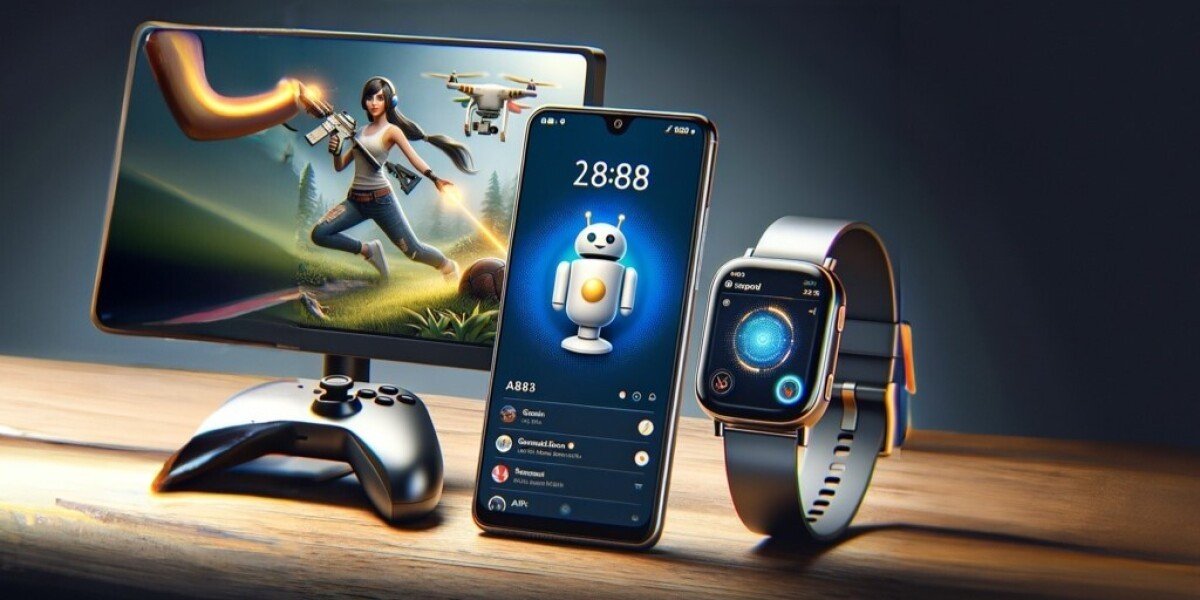

Introduction to Consumer Electronics Innovations
Consumer electronics, encompassing a broad range of electronic devices designed for daily use, play a pivotal role in modern society. From smartphones to smart home devices, these innovations continuously redefine how individuals interact with technology. The sector is characterized by rapid advancements that cater to evolving consumer preferences, making innovation a cornerstone of progress in this field.
Over the years, innovations in consumer electronics have increasingly focused on enhancing user experience through improved functionality, convenience, and integration of artificial intelligence. For instance, the advent of touchscreen interfaces transformed traditional devices into interactive platforms that facilitate seamless user engagement. Consumers now demand products that not only perform specific tasks efficiently but also offer enhanced connectivity and integration with other devices.
Furthermore, innovation within consumer electronics has led to significant developments in areas such as energy efficiency and portability. The introduction of energy-efficient components has resulted in devices that consume less power while delivering superior performance. Similarly, the miniaturization of technology has created portable gadgets that empower users to enjoy rich functionalities on the go, meeting the demands of an increasingly mobile lifestyle.
To qualify as innovative, products within the consumer electronics sphere must not only meet current consumer needs but also anticipate future trends and challenges. This anticipation leads to creative solutions addressing issues such as digital privacy, security, and sustainability. As technology continues to advance, understanding the essence of innovation in consumer electronics remains critical for both manufacturers and consumers alike.
Smartphones: The Hub of Modern Technology
In recent years, smartphones have evolved into essential devices, serving as the nucleus of modern technology. This transformation is largely attributed to significant innovations across several key areas, which have heightened user experience and expanded functionality.
One of the most notable advancements has been in camera capabilities. Manufacturers are incorporating multi-lens setups and advanced computational photography, enabling users to capture images with professional-grade quality. Enhanced low-light performance, image stabilization, and AI-powered editing features have made smartphones a primary tool for photography enthusiasts and casual users alike.
In addition to photographic innovations, processing power has reached unprecedented levels, with many models now equipped with state-of-the-art processors that offer seamless multitasking and enhanced performance. A powerful processor ensures that applications run smoothly, improving the efficiency of everyday tasks while also facilitating complex gaming experiences, augmented reality (AR), and other resource-intensive functionalities.
Display technology has also seen remarkable progress, with manufacturers focusing on higher resolutions and improved color accuracy. Innovations such as OLED and AMOLED technology provide vibrant visuals and deeper contrast ratios, enhancing the overall viewing experience. Alongside display advancements, battery life has become a central focus, leading to the development of batteries with extended longevity and faster charging capabilities, ensuring users can depend on their devices throughout the day.
Furthermore, the integration of 5G connectivity is revolutionizing how smartphones operate, facilitating faster download speeds and improved streaming capabilities. As 5G networks become more widespread, users can expect to experience real-time interaction and enhanced performance for applications requiring rapid data transfer.
Foldable smartphones represent another exciting innovation, combining the functionality of a smartphone with the display area of a tablet. This new form factor offers flexibility and portability, catering to consumers who desire larger screens without compromising on convenience.
Lastly, the incorporation of artificial intelligence in smartphones is enhancing the user experience significantly. AI is utilized in various ways, from personal assistants that promote efficiency to smarter camera features that analyze scenes for optimal photography settings. These innovations are setting the stage for a future where smartphones are not just tools, but intelligent companions catering to individual needs.
Wearable Technology: Health and Fitness Revolution
In recent years, wearable technology has emerged as a pivotal innovation in the consumer electronics sector, primarily transforming how individuals monitor their health and fitness. Devices such as smartwatches and fitness trackers have gained immense popularity, offering users the ability to track various health metrics in real-time. This growth can be attributed to advancements in technology, making it possible for manufacturers to create more sophisticated devices equipped with multiple features.
Wearable technology plays a significant role in health monitoring by collecting biometric data, including heart rate, steps taken, and calories burned. This data-driven approach enables users to gain insights into their physical activity, helping them make informed health choices. Moreover, innovations in health monitoring have extended to more advanced features such as ECG monitoring, which allows users to assess their heart health easily. This capability has empowered consumers with information that was once only available in clinical settings, demonstrating how wearables bridge the gap between technology and healthcare.
Additionally, the integration of wearable devices with smartphones has enhanced the overall health tracking experience. By syncing with mobile devices, users can access a comprehensive overview of their health data, receiving personalized insights through dedicated applications. Features like sleep tracking have also gained attention, allowing users to monitor their sleep patterns and improve their overall well-being. The impact of these developments on consumer choices cannot be understated, as individuals increasingly seek technologies that contribute to healthier lifestyles.
In conclusion, the rise of wearable technology signifies a revolution in how consumers approach health and fitness. The convenience, accessibility, and advanced features offered by smartwatches and fitness trackers continue to influence consumer preferences, paving the way for future innovations in this dynamic sector.
Smart Home Devices: Enhancing Living Spaces
The advancement of smart home devices has revolutionized how individuals interact with their living environments, enhancing convenience and security. Innovations in this sector include a range of products such as smart speakers, security systems, and comprehensive home automation solutions. Smart speakers, such as Amazon Echo and Google Home, serve as the central hub for controlling various smart devices through voice commands. This interaction is not only convenient but also provides users with a hands-free approach to managing their home settings.
Moreover, smart security systems ensure that homeowners can effortlessly monitor their premises in real time. Features such as remote access to cameras, automated locking systems, and alert notifications via mobile applications provide peace of mind. The integration of smart technology into security systems allows for personalized settings tailored to individual preferences, contributing to an overall fortified home environment.
The connection between smart home devices and the Internet of Things (IoT) further accelerates this evolution. IoT enhances device interconnectivity, allowing different products to communicate and function cohesively. For instance, a smart thermostat can adjust temperature settings based on user behavior and preferences, contributing to energy savings. Additionally, home automation allows for programmable routines, enabling users to initiate actions like turning off lights or locking doors when leaving home. Such functionalities not only increase convenience but also actively promote energy efficiency, which is crucial in today’s environmentally conscious society.
Overall, the innovations in smart home technology exemplify a significant leap in how consumers manage their living spaces, offering seamless integration of convenience and safety, while also contributing to energy sustainability. These advancements mark a pivotal transformation in residential environments, tailoring them according to modern lifestyle demands.
Virtual and Augmented Reality: New Dimensions of Interaction
The landscape of consumer electronics has been profoundly influenced by the advancements in virtual reality (VR) and augmented reality (AR) technologies. These innovations offer unprecedented immersive experiences that are transforming user interactions across various sectors, particularly in gaming, education, and training. With the rapid development of hardware capabilities, VR and AR have become more accessible and appealing to mainstream consumers.
In the gaming industry, VR gaming headsets and AR applications have introduced players to expansive digital worlds that promote deeper engagement. Users can now enjoy a sense of presence and immersion that was previously unattainable. Games leveraging VR technology allow players to navigate virtual spaces through physical movements, creating a much more physical experience. Similarly, AR has innovated gameplay by superimposing digital elements in real-world settings, allowing for interactive gameplay that blends seamlessly with the user’s environment.
Education is another domain significantly benefited by the integration of VR and AR technologies. Educational institutions are rapidly adopting these tools to enhance learning outcomes. Virtual field trips, for example, enable students to explore historical sites or complex systems in an interactive manner, fostering greater retention of knowledge. AR applications facilitate practical training in fields such as medicine and engineering, allowing students to practice skills in a risk-free environment, thus reinforcing theoretical knowledge with practical application.
Furthermore, the implications of VR and AR technologies extend into training fields across various industries. Companies are now using these technologies for employee training programs that simulate real-life scenarios. This not only reduces training costs but also provides employees with hands-on experience that enhances their skill development. As the consumer electronics market continues to evolve, the fusion of VR and AR will likely usher in even more innovative solutions, expanding the fundamental ways we interact with technology.
Television Technology: The Next Level of Home Entertainment
The realm of television technology has evolved rapidly, significantly enhancing home entertainment experiences. Among the most notable advancements are OLED (Organic Light Emitting Diode) and QLED (Quantum Dot Light Emitting Diode) displays, which have transformed how consumers perceive image quality. OLED technology offers immense contrast levels and vibrant colors by allowing individual pixels to emit light. This results in deeper blacks and a broader color spectrum, creating an exceptionally immersive viewing experience. Conversely, QLED displays harness the power of quantum dots, producing astonishing brightness and color accuracy, making them an appealing option for well-lit environments.
Furthermore, the introduction of 8K resolution has changed the landscape of screen clarity. With four times the pixel resolution of 4K, 8K televisions present unparalleled picture detail, ensuring that viewers can appreciate the minutiae of their favorite films and shows. While the availability of native 8K content is currently limited, the technology is primed for the future, with streaming services and content providers gradually expanding their libraries to include higher resolutions.
In addition to advancements in display technology, High Dynamic Range (HDR) technology has emerged as a critical player in television performance. HDR enhances the contrast and color range of video content, allowing for more realistic images that capture the essence of the creator’s vision. As a result, consumers can enjoy a richer viewing experience that mirrors real life more closely.
The proliferation of smart TVs has further influenced viewing habits by integrating streaming services and connectivity options. These devices allow consumers to access an extensive array of content at their convenience, drastically altering traditional viewing patterns and preferences. With platforms like Netflix, Hulu, and Disney+, viewers can tailor their entertainment choices to suit their individual tastes, leading to more personalized viewing experiences. Such innovations in television technology not only enhance visual enjoyment but also redefine how consumers engage with media in their homes.
Audio Innovations: The Evolution of Sound Quality
The landscape of audio technology has undergone a significant transformation in recent years, leading to remarkable advancements in sound quality. One notable innovation is the rise of wireless earbuds, which combine convenience with high-definition audio. These compact devices have made it easier for users to enjoy their favorite music or podcasts without the constraints of tangled wires, while also integrating essential features such as touch controls and voice assistants.
Another pivotal development is the advent of noise-cancellation technology. This advanced feature is now widely prevalent in headphones and earbuds, enabling listeners to immerse themselves in an uninterrupted auditory experience. By actively measuring and counteracting ambient noise, users can focus solely on the sounds they wish to hear, whether that be during travel, in a bustling café, or at home. The efficacy of this technology has fundamentally changed personal audio experiences, allowing for a more personalized listening environment.
Additionally, the concept of spatial audio has taken center stage, further enhancing sound quality. By using advanced algorithms and multi-channel audio setups, spatial audio replicates the way sound waves interact with the human ear, providing an immersive experience that mimics real-world acoustics. This innovation has found its way into home theater systems and personal devices alike, enhancing the consumption of music, movies, and gaming experiences.
The impact of streaming services cannot be overlooked in this evolution. High-quality streaming platforms now offer lossless audio formats, catering to consumers who demand superior sound quality. This shift has encouraged manufacturers to develop more sophisticated playback devices, ensuring that audio fidelity remains uncompromised. As the synergy between innovation and consumer demand continues to evolve, the future of audio technology appears promising, redefining how we engage with sound.
Sustainable Innovations in Consumer Electronics
The consumer electronics industry has witnessed a significant paradigm shift towards sustainability, driven by both regulatory frameworks and increasing consumer awareness. This evolving landscape emphasizes the importance of producing devices that are not only technologically advanced but also environmentally responsible. As a result, manufacturers are focusing on innovations that enhance energy efficiency and reduce waste throughout the product lifecycle.
One key area of sustainable innovation is energy-efficient technologies. Devices such as smart appliances and energy-saving electronics have gained traction, allowing consumers to reduce their energy consumption significantly. For instance, the integration of energy-efficient components, like LED screens and low-power processors, helps minimize the ecological footprint of everyday gadgets. These innovations not only benefit the environment but also result in lower electricity bills for consumers, creating a win-win situation.
Another critical aspect is the use of recyclable materials within product designs. Many manufacturers are now prioritizing the implementation of recyclable plastics, metals, and electronic waste (e-waste) solutions in their devices. By analyzing product designs and adopting modular structures, companies can ensure that their electronics are easier to disassemble and recycle, reducing landfill waste and promoting a circular economy.
Furthermore, eco-friendly manufacturing processes are transforming production methodologies. Companies are increasingly committed to reducing resource use and minimizing pollution. They are using renewable energy sources, such as solar and wind power, to decrease their carbon footprint during production. This shift not only supports environmental sustainability but also reflects shifting consumer preferences toward green brands.
In driving these significant changes, consumers play an essential role as well. By advocating for sustainable products and making informed purchasing decisions, consumers can influence manufacturers to prioritize sustainability. As awareness continues to grow, future trends will likely see even more innovations aimed at creating a greener consumer electronics landscape, demonstrating that the intersection of technology and environmental responsibility is not only possible but essential for the future.
Future Trends in Consumer Electronics Innovations
The consumer electronics industry is on the brink of transformative changes driven by advancements in technology. One prominent trend is the integration of artificial intelligence (AI) into various devices, enhancing their functionality and user experience. AI-driven features such as voice recognition, smart assistants, and personalized recommendations are becoming increasingly prevalent, enabling devices to learn user preferences and anticipate needs. This shift towards intelligent technology will likely continue to evolve, with the potential introduction of even more sophisticated systems that can perform complex tasks autonomously.
Furthermore, improvements in connectivity are set to play a crucial role in the future landscape of consumer electronics. The rollout of 5G technology promises to enhance user experiences by providing faster data speeds and more reliable connections. This revolution in connectivity will not only improve existing devices but also pave the way for the development of new technologies, such as augmented reality (AR) and virtual reality (VR), which rely heavily on low-latency connections to deliver immersive experiences. Consequently, the widespread adoption of 5G will fundamentally reshape how consumers interact with their devices.
In addition, the ongoing emphasis on sustainability within the consumer electronics market is likely to influence future innovations. As consumers become increasingly environmentally conscious, manufacturers will be pressured to produce eco-friendly devices that minimize energy consumption and are built with recyclable materials. This paradigm shift towards sustainability could result in the emergence of innovative products designed with a focus on reducing ecological footprints, thereby responding to consumer demand for greener options.
Overall, the future of consumer electronics is poised for exciting developments as AI, improved connectivity, and sustainability converge to redefine the market. The horizon holds the promise of new devices and technologies that will not only enhance daily life but also address contemporary challenges faced by consumers.