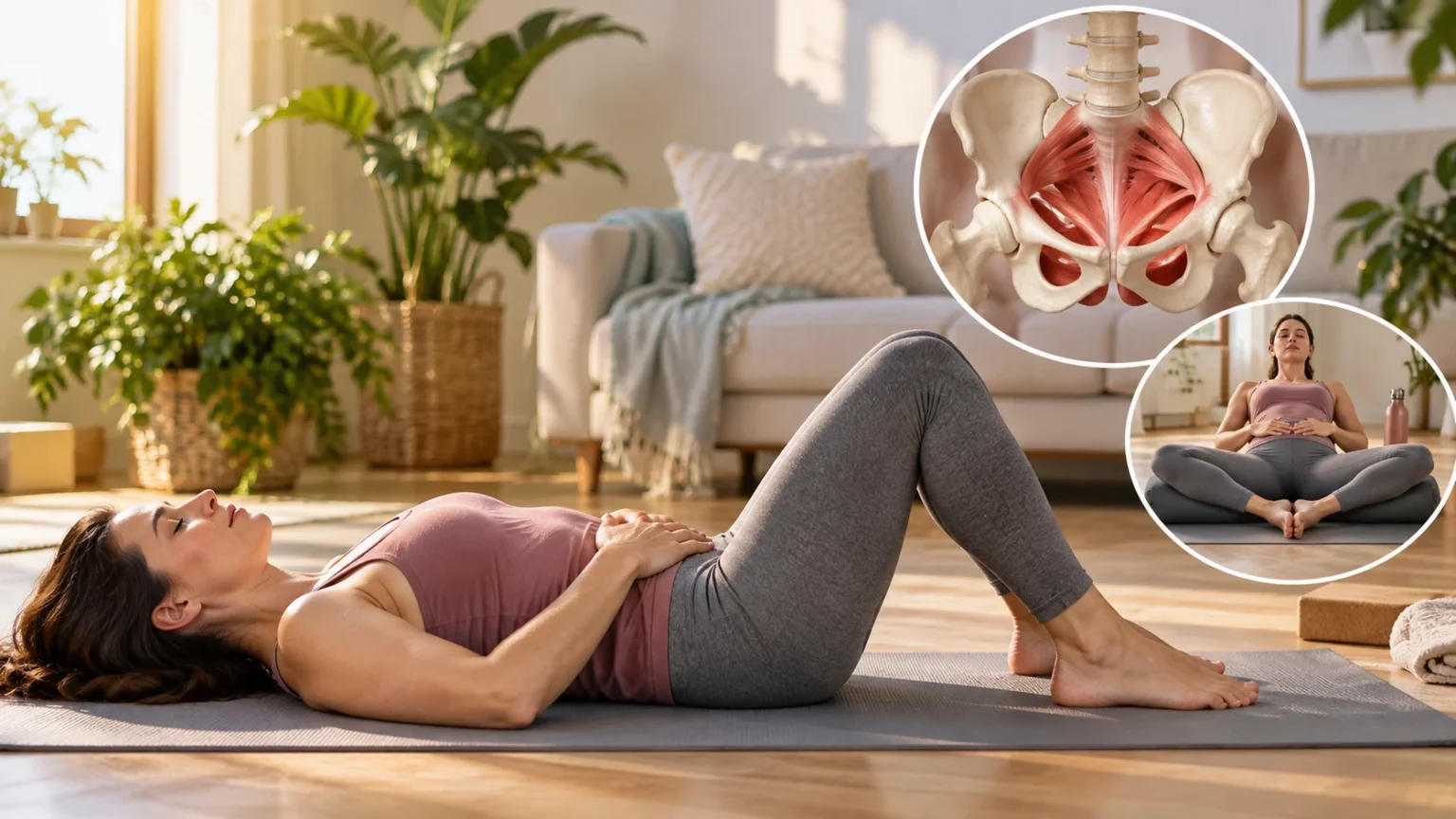

Pelvic floor relaxation exercises can help people become more aware of tension held in the muscles around the pelvis. While pelvic floor strengthening often gets more attention, some people need to learn how to release, lengthen, and coordinate these muscles rather than constantly tightening them. Gentle breathing, supported positions, and mindful movement can make relaxation feel more natural.
The pelvic floor works together with the diaphragm, abdominal muscles, hips, and lower back. Stress, pain, prolonged sitting, certain exercise habits, and unconscious muscle guarding may contribute to a feeling of tightness or difficulty relaxing. Learning to notice these patterns can be an important first step toward improving comfort and movement.
Relaxation exercises should feel gentle rather than forceful. The goal is not to push the muscles downward or create an intense stretch, but to reduce unnecessary gripping while allowing normal movement with breathing. If pelvic pain, urinary symptoms, bowel problems, or sexual discomfort persist, professional assessment can help identify the most appropriate approach.
What Are Pelvic Floor Relaxation Exercises?
Pelvic floor relaxation exercises are movements and breathing techniques designed to encourage the pelvic muscles to soften instead of contract. They may involve diaphragmatic breathing, gentle stretching, supported yoga poses, and body-awareness techniques. These exercises are sometimes called pelvic floor down-training because they focus on reducing excessive muscle activity rather than building more strength.
The pelvic floor forms a supportive layer of muscles at the bottom of the pelvis. These muscles help support pelvic organs and participate in bladder control, bowel function, sexual function, posture, and pressure management. Like other muscles, they need both the ability to contract and the ability to release fully.
A healthy pelvic floor is not simply a strong pelvic floor. Good function also depends on coordination, flexibility, and the ability to relax when needed. If the muscles remain tense for long periods, repeatedly performing strengthening exercises without addressing relaxation may not be appropriate for every individual.
Benefits of Relaxing the Pelvic Floor
One potential benefit of pelvic floor relaxation is improved awareness of unnecessary muscular tension. Some people unconsciously tighten the abdomen, glutes, inner thighs, or pelvic muscles when stressed or concentrating. Practicing slow relaxation can help you notice these habits and gradually develop better control over when your muscles contract and when they release.
Relaxation may also support more comfortable movement through the hips, pelvis, and lower back. Because the pelvic floor works with nearby muscle groups, reducing excessive gripping may make certain stretches, sitting positions, or everyday movements feel easier. Benefits vary, however, and persistent discomfort should not automatically be assumed to come from pelvic floor tension.
Pelvic floor down-training can also be useful as part of a broader strategy for managing stress-related muscle guarding. Slow breathing and supported positions may help the entire body settle, not just the pelvic region. The goal is usually better coordination and comfort rather than achieving an extreme feeling of looseness or flexibility.
How to Tell If Your Pelvic Floor May Be Tense
A tense pelvic floor can sometimes feel like difficulty allowing the pelvic area to relax completely. Some people notice pressure, tightness, aching, or a persistent sense of holding around the pelvis, hips, lower abdomen, or tailbone. These sensations can have many possible causes, so symptoms alone cannot confirm that pelvic floor tension is responsible.
Other possible signs may include discomfort with prolonged sitting, difficulty starting urination or bowel movements, or feeling unable to release the muscles after contracting them. Some people may also experience discomfort during certain activities or movements. Because similar symptoms can occur with other conditions, individualized evaluation is important when symptoms are frequent or worsening.
You may also notice subtle tension patterns during normal daily activities. For example, you might constantly squeeze your glutes, hold your stomach inward, clench your jaw, or restrict your breathing. These habits do not necessarily mean you have pelvic floor dysfunction, but they can be useful cues to practice whole-body relaxation and breathing awareness.
Diaphragmatic Breathing for Pelvic Floor Relaxation
Diaphragmatic breathing is one of the simplest techniques for practicing pelvic floor relaxation. Lie comfortably on your back with your knees bent or supported by pillows, then place one hand on your abdomen. Breathe slowly and allow your ribs and belly to expand naturally instead of forcing a large breath or pushing your stomach outward.
As you inhale, imagine the lower abdomen, sides of the ribs, and pelvic floor gently expanding together. During the exhale, allow the breath to leave without deliberately squeezing the pelvic muscles. The movement should be subtle and comfortable, with no bearing down, straining, or attempt to force the pelvic floor into a deeper stretch.
Practice for several minutes while keeping your jaw, shoulders, abdomen, and glutes relaxed. If counting helps, you can use a comfortable rhythm such as inhaling for four seconds and exhaling for five or six. Stop counting if it creates tension, because the purpose of the exercise is relaxed coordination rather than perfect breathing performance.
Child’s Pose for Gentle Pelvic Floor Release
Child’s Pose can provide a comfortable position for breathing into the back, hips, and pelvic region. Begin on your hands and knees, then gradually move your hips toward your heels while allowing your torso to lower forward. Keep your knees apart if that feels more comfortable, and support your chest or forehead with pillows when needed.
Once you are supported, slow your breathing and notice how your ribs, abdomen, and pelvic area respond during each inhale. Try to let your inner thighs, glutes, and lower abdomen soften rather than actively stretching them. You should feel supported enough that maintaining the position does not require constant muscular effort.
Not everyone finds Child’s Pose comfortable, particularly when knee, hip, or ankle problems are present. Use cushions, reduce the depth of the position, or choose another exercise if necessary. People with significant knee or thigh discomfort may also find it useful to understand conditions such as quadricep tendonitis before choosing kneeling-based stretches.
Happy Baby Pose for Pelvic Floor Relaxation
Happy Baby is another gentle position that may help open the hips while encouraging the pelvic floor to relax. Lie on your back and bring your knees toward your chest, keeping them comfortably apart. Hold behind your thighs or around your lower legs rather than pulling aggressively on your feet.
Allow the weight of your legs to create a mild stretch while keeping your lower back and pelvis comfortable. Take slow breaths and imagine the muscles at the base of your pelvis softening during each inhale. Avoid rocking forcefully or trying to pull your knees toward the floor, because more stretch does not automatically create better relaxation.
If the pose feels too intense, place your feet against a wall or support your legs with pillows. You can also keep one foot on the floor and work with one leg at a time. The best version is the one that allows you to breathe comfortably without pain, shaking, or holding unnecessary tension elsewhere.
Deep Squat Modifications for Pelvic Floor Release
A supported deep squat may help some people feel a gentle stretch through the hips and pelvic floor. Stand with your feet comfortably apart and slowly lower while holding a stable surface, such as a countertop or sturdy chair. Place a yoga block, low stool, or firm cushion beneath you if you cannot comfortably remain in the position.
Keep your feet supported and your breathing steady instead of forcing your hips toward the floor. Let your abdomen soften and avoid bearing down through the pelvis. A useful squat for relaxation should feel stable and calm, not like a mobility test or strength challenge that requires significant effort.
Deep squats are not appropriate for everyone, especially when ankle, knee, hip, or balance problems are present. A supported seated position with the knees comfortably apart can provide a gentler alternative. Adjusting the exercise is not a setback; modification often makes relaxation more effective because the body does not need to guard against discomfort.
Pelvic Floor Drop Technique and Proper Form
A pelvic floor drop is a subtle relaxation exercise that focuses on letting the muscles lengthen naturally. Begin in a supported lying or seated position and take several relaxed diaphragmatic breaths. Imagine the pelvic muscles gently widening or softening as you inhale, similar to allowing tension to melt rather than deliberately pushing downward.
Avoid straining, bearing down, or trying to create a dramatic physical movement. Pelvic floor relaxation is often much smaller than people expect, and excessive pressure may create discomfort rather than release. Keep your glutes, inner thighs, and abdominal muscles relaxed so they do not compensate by tightening while you focus on the pelvic floor.
It may help to use simple imagery, such as imagining the sitting bones widening slightly or the base of the pelvis becoming heavy and relaxed. Different cues work for different people, so do not worry if one visualization feels ineffective. The most important signs of good form are comfortable breathing, minimal effort, and the absence of pain.
How Stress and Breathing Affect Pelvic Floor Tension
Stress can influence muscle tension throughout the body, including the jaw, shoulders, abdomen, hips, and pelvic region. When people feel anxious or pressured, they may unconsciously brace or shorten their breathing. Repeating this pattern throughout the day can make relaxation feel unfamiliar even when there is no immediate reason to stay tense.
Slow breathing may help interrupt that pattern by encouraging a calmer physical rhythm. Instead of constantly checking whether the pelvic floor feels relaxed, focus on comfortable breaths and notice whether other areas begin to soften naturally. Sometimes reducing tension in the jaw, hands, abdomen, and glutes makes pelvic relaxation easier as well.
Relaxation does not mean you must eliminate stress before your muscles can function normally. The goal is to develop better awareness and give your body repeated opportunities to release unnecessary tension. Short breathing breaks during the day may be more useful than relying only on one long exercise session when discomfort has already built up.
Common Mistakes During Pelvic Floor Relaxation Exercises
One common mistake is confusing relaxation with pushing or bearing down. Forcing pressure toward the pelvic floor may feel like movement, but it is different from allowing the muscles to soften naturally. If you notice straining, breath-holding, abdominal pressure, or discomfort, reduce the effort and return to gentle diaphragmatic breathing.
Another mistake is performing every stretch as deeply as possible. Aggressive hip opening can cause the body to guard against discomfort, which works against the goal of relaxation. Use pillows, blocks, or smaller ranges of motion so that your muscles feel supported instead of threatened by a position they cannot comfortably maintain.
People may also become frustrated when they do not immediately feel a clear release. Pelvic floor awareness often develops gradually, especially when someone has been holding tension unconsciously for a long time. Consistent, comfortable practice is more useful than repeatedly checking for instant results or forcing the body to change quickly.
Best Practices for a Pelvic Floor Relaxation Routine
Begin with a quiet environment and a position where your body feels supported. Spend two or three minutes noticing your natural breathing before adding stretches or specific relaxation techniques. Starting slowly gives you time to identify areas of tension without immediately trying to fix every sensation you notice.
A simple routine might include diaphragmatic breathing, Child’s Pose or another supported stretch, a gentle hip-opening position, and several minutes of quiet relaxation. Ten to fifteen minutes can be enough for many people. Consistency matters more than performing numerous exercises, so choose movements you can repeat comfortably several times each week.
Pay attention to how your body responds both during and after the session. Mild stretching sensations may be expected, but sharp pain, numbness, tingling, worsening pressure, or increased pelvic symptoms are reasons to stop. Exercises should be adapted to your body rather than copied exactly from someone else’s routine.
When to Seek Professional Guidance
Pelvic floor relaxation exercises are general self-care techniques and cannot determine the cause of pelvic symptoms. Consider professional evaluation if you experience persistent pelvic pain, difficulty urinating, painful bowel movements, sexual pain, unexplained pressure, or symptoms that interfere with everyday activities. These concerns can have multiple causes that require different forms of treatment.
A pelvic floor physical therapist or other qualified healthcare professional can assess how your muscles contract, relax, and coordinate with breathing and movement. They may recommend relaxation, strengthening, mobility work, or a combination depending on your individual findings. This is important because not every pelvic floor problem improves through relaxation alone.
Seek prompt medical attention for severe or sudden symptoms, particularly significant bleeding, fever, inability to urinate, severe abdominal or pelvic pain, or rapidly worsening symptoms. Self-directed exercises are not a replacement for medical evaluation in those situations. When symptoms are mild but persistent, early professional guidance can still help prevent unnecessary trial and error.
Conclusion
Pelvic floor relaxation exercises focus on helping the muscles at the base of the pelvis release unnecessary tension and coordinate more naturally with breathing. Gentle techniques such as diaphragmatic breathing, supported Child’s Pose, Happy Baby, and pelvic floor drops can make it easier to practice relaxation without forcing movement.
Proper form is more important than stretching deeply or completing a long routine. Keep your breathing comfortable, avoid bearing down, use props when necessary, and choose positions that do not create pain. Relaxation should feel controlled and gradual rather than intense, aggressive, or exhausting.
A short, consistent routine can be a useful part of overall pelvic health and body awareness. However, persistent pain, bladder or bowel changes, sexual discomfort, or unexplained pelvic symptoms deserve professional assessment. The right approach depends on the cause of your symptoms and how your pelvic floor functions as part of your whole body.
FAQs
How often should I do pelvic floor relaxation exercises?
Many people can practice gentle relaxation exercises daily or several times per week. Start with 5–15 minutes and adjust the frequency according to comfort, symptoms, and any recommendations from your healthcare professional.
How do I know if my pelvic floor is actually relaxing?
Relaxation may feel like reduced gripping, easier breathing, or a subtle softening around the pelvis. It can be difficult to identify at first, so professional pelvic floor assessment may help when you are unsure.
Are Kegels good for a tight pelvic floor?
Kegels strengthen pelvic floor contractions, so they may not be appropriate when excessive tension is the main problem. Some people need relaxation or coordination training before strengthening, which is why individualized guidance can be useful.
Can pelvic floor relaxation help with pelvic pain?
Relaxation exercises may help when muscular tension or guarding contributes to discomfort, but pelvic pain can have many causes. Persistent or worsening pain should be evaluated rather than managed only with home exercises.
How long does it take to relax a tight pelvic floor?
There is no fixed timeline because symptoms, muscle coordination, stress, and underlying causes differ between people. Regular gentle practice may gradually improve awareness, but ongoing symptoms should be discussed with a qualified healthcare professional.