
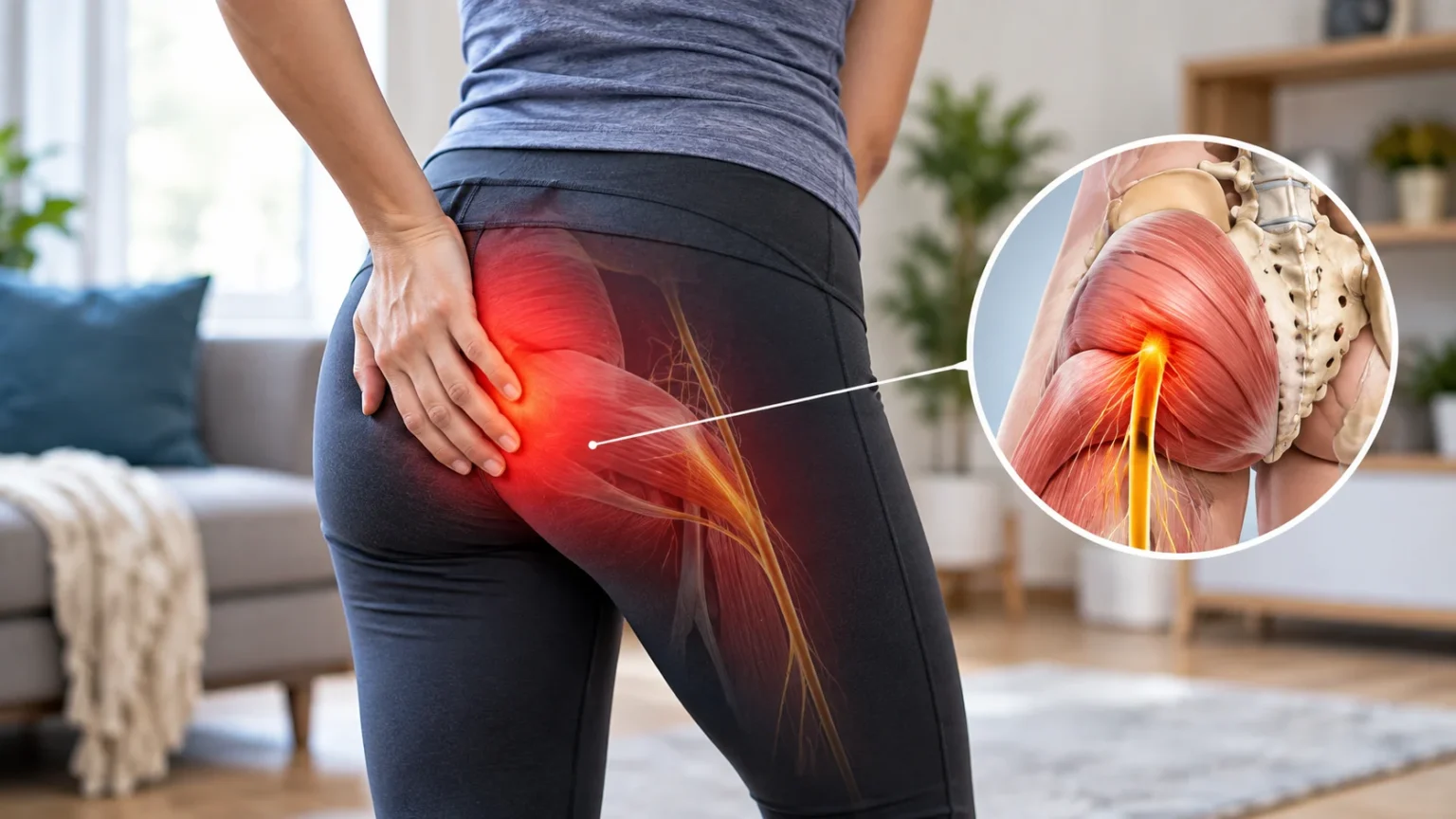

Pain in the right buttock cheek can range from a mild ache to a sharp, burning, or pulling sensation that makes sitting, walking, bending, or exercising uncomfortable. The pain may stay in one spot or spread into the hip, lower back, or back of the thigh. In many cases, the cause is related to irritated muscles, joints, or nerves.
Because several structures meet around the buttock and pelvis, the location alone does not always reveal what is causing the discomfort. Recent exercise, prolonged sitting, lifting, running, previous injuries, and lower-back problems can all contribute. Paying attention to when the pain appears and which movements make it better or worse can provide useful clues.
Mild muscular pain often improves with activity modification and gradual movement, while persistent or severe symptoms may need professional evaluation. The sections below explain common causes of pain in the right buttock cheek, practical relief strategies, and warning signs that should not be ignored.
What Does Pain in the Right Buttock Cheek Feel Like?
Right buttock pain can feel different depending on which muscles, nerves, or joints are involved. Some people notice a deep, dull ache after sitting for a long time, while others experience sharp pain when standing, climbing stairs, or bending. Tenderness may also be noticeable when pressing directly on the painful area.
The discomfort can remain localized in the center or outer part of the buttock, but it may also travel downward. Pain extending into the back of the thigh can sometimes involve muscles such as the hamstrings or irritation of nearby nerves. Burning, tingling, or electric sensations deserve extra attention because they can suggest nerve involvement.
Timing can also provide useful information. Pain that appears after a workout may be related to muscle overload, while discomfort that worsens after sitting may involve pressure-sensitive tissues or the lower back. Sudden severe pain after lifting, sprinting, or falling may indicate an injury rather than ordinary muscle tension.
Common Causes of Right Buttock Pain
Muscle strain is one of the more common explanations for one-sided buttock pain. The gluteal muscles can become irritated after running, lifting, squatting, climbing hills, or suddenly increasing activity. Symptoms often include tenderness, stiffness, and pain when contracting or stretching the affected muscle.
Another possibility is irritation from prolonged sitting. Staying seated for many hours can increase pressure around the buttock and hip while keeping some muscles in shortened positions. Poor chair support, sitting unevenly, or repeatedly leaning toward one side may make discomfort more noticeable on the right side.
Pain can also come from structures outside the buttock itself. Problems involving the lower back, sacroiliac joint, hip, hamstring attachment, or nearby nerves may produce discomfort that is felt in the buttock. This is why recurring pain sometimes requires assessment of the entire lower back, pelvis, hip, and leg rather than only the painful spot.
Can Sciatica Cause Pain in the Right Buttock?
Sciatica refers to symptoms associated with irritation of the sciatic nerve or the nerve roots that contribute to it. Pain often begins in the lower back or buttock and can travel down the back or side of the leg. The sensation may be aching, burning, shooting, or electric rather than simply tender muscle soreness.
Some people with sciatica also experience numbness, tingling, or weakness in the leg or foot. Symptoms may become worse with sitting, coughing, bending, or certain spinal movements. However, buttock pain alone does not automatically mean you have sciatica, because several other conditions can create pain in a similar area.
If your pain consistently travels below the knee or comes with altered sensation or weakness, professional evaluation is useful. A healthcare provider can check strength, reflexes, sensation, spinal movement, and hip function. These findings can help distinguish nerve-related symptoms from local muscle or joint pain.
Can Piriformis Muscle Irritation Cause Buttock Pain?
The piriformis is a small muscle located deep within the buttock. It helps control hip rotation and stability during walking and other lower-body movements. When the area becomes irritated or overloaded, some people experience deep buttock pain that is particularly noticeable during prolonged sitting, running, or certain hip movements.
Because the sciatic nerve passes close to the piriformis, symptoms in this region can sometimes resemble sciatica. Discomfort may stay deep in the buttock or occasionally spread down the leg. However, several different conditions can create similar symptoms, so it is difficult to identify the exact source based on location alone.
Gentle movement and temporary reduction of aggravating activities may help when the area is mildly irritated. Aggressive stretching is not always beneficial, especially if it increases symptoms. If pain repeatedly returns or produces numbness, tingling, or weakness, a physical therapist or clinician can assess whether the piriformis or another structure is involved.
Can Hamstring Problems Cause Pain Near the Buttock?
The hamstring muscles attach high on the back of the thigh near the lower part of the pelvis. Strain or irritation near this attachment can cause pain close to the buttock crease, especially during running, bending forward, or sitting on firm surfaces. Sprinting and sudden acceleration are common situations in which the hamstring may become overloaded.
Mild hamstring-related pain may feel like tightness or pulling, while a more significant strain can produce sudden sharp discomfort. Bruising, weakness, or difficulty walking can occur with more serious injuries. If you are returning to lower-body training, a gradual hamstring workout can help you understand how these muscles are loaded and strengthened.
Do not aggressively stretch a freshly injured hamstring simply because it feels tight. Early excessive stretching can sometimes aggravate sensitive tissue. Gradual strengthening, controlled movement, and appropriate activity progression are generally more useful than repeatedly pushing into painful ranges.
Can Sitting Too Long Cause Right Buttock Pain?
Long periods of sitting can make the buttock muscles feel stiff, compressed, or achy. Pressure from the chair can irritate sensitive tissues, especially when you remain in one position for several hours. People who work at a desk, drive for long periods, or frequently sit on hard surfaces may notice this pattern.
Sitting unevenly can make one-sided discomfort more likely. Crossing the same leg repeatedly, leaning toward one armrest, or keeping a wallet in a back pocket can change pressure across the pelvis. These habits do not always cause pain by themselves, but they can aggravate an already sensitive area.
Try changing position regularly instead of searching for one perfect sitting posture. Stand up, walk briefly, or gently move your hips every 30 to 60 minutes when possible. A supportive chair and a workstation that allows you to sit comfortably can also reduce unnecessary strain on the lower back and buttocks.
How to Relieve Mild Right Buttock Pain at Home
Reducing activities that clearly aggravate the pain is a practical first step. You do not necessarily need complete bed rest, but temporarily limiting heavy lifting, sprinting, deep squats, or long periods of sitting may help. Continue light daily movement if it feels comfortable and does not cause symptoms to steadily worsen.
Heat can feel soothing when the buttock feels stiff or tight. A warm shower or heating pad may make gentle movement more comfortable, particularly with muscular tension. Cold packs may also feel useful after a recent strain or activity-related flare, although neither approach fixes the underlying cause by itself.
Gentle walking is often easier to tolerate than prolonged sitting. Start with a short duration and assess how you feel afterward. If symptoms remain stable, slowly increase your activity rather than making sudden jumps in walking distance, exercise intensity, or training volume.
Gentle Stretches for Buttock and Hip Discomfort
A gentle figure-four stretch may help some people with tightness around the buttock. Lie on your back, place the right ankle across the opposite thigh, and slowly bring the legs toward your chest until you feel a mild stretch. Stop if the movement causes sharp pain, tingling, or symptoms traveling farther down the leg.
Hip flexor stretching can also be useful when long sitting contributes to stiffness. Use a half-kneeling position and gently move your pelvis forward while keeping your torso upright. The stretch should be felt around the front of the hip rather than as pressure in the lower back or pain deep in the buttock.
Stretching should remain comfortable and controlled. Pain is not a sign that the stretch is working better, and pushing deeper can irritate sensitive tissue. If a particular stretch consistently worsens symptoms, remove it and focus on easy movement until you better understand the source of the pain.
Strengthening Exercises That May Help
Glute bridges are a simple starting exercise for improving hip strength. Lie on your back with your knees bent, gently tighten your abdominal muscles, and lift your hips without excessively arching the lower back. Lower slowly and stop if the movement produces sharp pain or increases symptoms afterward.
Side-lying hip abduction can strengthen muscles that help stabilize the pelvis. Lie on your left side and slowly lift the right leg while keeping your toes facing forward. Avoid rolling the pelvis backward, and use a small range if a larger movement makes the outer hip or buttock uncomfortable.
Bodyweight sit-to-stands are another functional option. Begin from a chair, lean slightly forward, and stand using both legs evenly before sitting back down with control. Strengthening should feel challenging but manageable, and resistance can be increased gradually as the painful area becomes more tolerant of activity.
How to Prevent Buttock Pain From Returning
Gradual training progression is important when pain is related to exercise. Increasing running mileage, weight, repetitions, or training frequency too quickly can overload muscles and tendons before they have adapted. Small, consistent increases are usually easier for the body to tolerate than occasional dramatic jumps in workload.
Regular lower-body strength training can improve the ability of your hips, glutes, hamstrings, and legs to handle everyday demands. Include movements such as bridges, squats, step-ups, and hip-strengthening exercises that match your current ability. Good technique and gradual progression matter more than using heavy resistance immediately.
Daily habits are equally important. Break up long periods of sitting, change positions often, and avoid repeatedly loading only one side of the body. Adequate sleep, recovery between demanding workouts, and sensible activity levels can also reduce the likelihood that minor irritation turns into persistent discomfort.
When Should You See a Doctor for Right Buttock Pain?
Seek medical attention after a major fall, collision, or injury if the pain is severe or you cannot comfortably bear weight. Significant bruising, swelling, visible deformity, or sudden loss of strength also deserves evaluation. These symptoms may indicate a more substantial muscle, tendon, bone, or joint injury.
Urgent medical care is particularly important if buttock or back pain is accompanied by new bowel or bladder control problems, numbness around the groin or saddle region, or rapidly worsening weakness in the legs. These symptoms can indicate serious nerve compression and should not be treated solely with home stretches.
You should also consider professional assessment if pain continues for several weeks, becomes progressively worse, or frequently returns despite activity changes. Persistent numbness, tingling, fever, unexplained weight loss, or pain that repeatedly wakes you from sleep are additional reasons to speak with a healthcare professional.
Conclusion
Pain in the right buttock cheek can come from several sources, including muscle strain, prolonged sitting, hamstring irritation, lower-back problems, or nerve-related conditions such as sciatica. The location of the pain provides useful clues, but symptoms such as radiation, weakness, numbness, and activity triggers can help narrow down the possibilities.
Mild discomfort often responds to temporary activity modification, gentle walking, comfortable stretching, heat, and gradual strengthening. Avoid repeatedly pushing through sharp pain or returning too quickly to demanding exercise. A steady increase in movement is usually easier to tolerate than alternating between complete rest and intense activity.
Persistent or severe buttock pain should not be ignored, particularly when it comes with neurological symptoms or follows a major injury. Professional assessment can help identify the actual source and guide appropriate treatment. Understanding your symptom pattern makes it easier to choose safer relief strategies and return to normal activity gradually.
FAQs
Why Does Only My Right Buttock Hurt?
One-sided buttock pain can result from muscle strain, uneven sitting, hip or lower-back irritation, hamstring problems, or nerve involvement. The likely cause depends on your activities, pain location, and additional symptoms.
Can Sciatica Cause Pain Only in the Buttock?
Yes. Sciatica can sometimes begin mainly in the buttock before spreading farther down the leg. However, localized buttock pain can have many other causes, so location alone cannot confirm sciatica.
Is Walking Good for Buttock Pain?
Gentle walking can be helpful when it does not significantly increase symptoms. Start with short distances and reduce the duration if pain becomes sharper, spreads farther down the leg, or remains worse afterward.
How Long Does Buttock Muscle Pain Take to Heal?
Mild muscle irritation may improve within days, while strains or persistent overuse problems can take several weeks. Recovery time varies depending on the cause, severity, activity level, and whether aggravating movements continue.
When Is Buttock Pain Serious?
Seek medical attention for severe pain after injury, major weakness, inability to bear weight, bowel or bladder changes, or numbness around the groin. Persistent or worsening unexplained pain should also be evaluated.