
Best Vagus Nerve Stimulation Device
The best vagus nerve stimulation device depends on the health problem you are trying to manage. A prescription neck device designed for migraine is not interchangeable with an ear clip marketed for stress, and neither can replace an implanted system used for drug-resistant epilepsy. Each category has different evidence, risks, costs, and regulatory requirements.
For certain migraine and cluster headache patients, gammaCore is currently one of the most established non-invasive vagus nerve stimulation devices. People with treatment-resistant epilepsy or depression may instead be evaluated for an implanted VNS Therapy system. Vivistim is another implanted device, but it is specifically paired with rehabilitation for selected stroke survivors.
The answer becomes less clear when someone wants a vagus nerve device for anxiety, sleep, long COVID, digestive symptoms, inflammation, or general wellness. Consumer neckbands and transcutaneous auricular vagus nerve stimulation devices are widely advertised for these goals, but their research and regulatory status vary considerably.
This guide compares the main vagus nerve stimulation devices, explains which options have established medical uses, and discusses the limits of consumer wearables. It also covers safety, regulatory terminology, side effects, cost, contraindications, and the questions you should ask before purchasing or requesting a prescription.
What Is Vagus Nerve Stimulation?
Vagus nerve stimulation, commonly shortened to VNS, uses electrical impulses to influence signals traveling through the vagus nerve. The vagus nerve extends from the brainstem through the neck and communicates with areas involved in heart rate, breathing, digestion, mood, pain processing, and other automatic functions.
Traditional VNS requires a small pulse generator to be surgically implanted beneath the skin of the chest. A lead travels from the generator to the vagus nerve in the neck, delivering programmed stimulation at intervals selected by a specialist.
Non-invasive vagus nerve stimulation does not require surgery. A handheld cervical device may deliver stimulation through the skin on the side of the neck, while a transcutaneous auricular vagus nerve stimulation device applies electrical impulses to a selected part of the outer ear.
These approaches should not be treated as identical. They stimulate different locations, use different electrical settings, and have been studied for different medical conditions. Evidence supporting an implanted epilepsy device cannot automatically be used to prove that a consumer ear clip treats insomnia or anxiety.
Quick Answer: Which Vagus Nerve Device Is Best?
For migraine, cluster headache, hemicrania continua, or paroxysmal hemicrania, gammaCore is the most established prescription non-invasive cervical VNS option in the United States. It is applied to the side of the neck and used according to condition-specific instructions from a healthcare professional.
For drug-resistant partial-onset epilepsy, LivaNova VNS Therapy is the best-established implanted category. It is not purchased as an ordinary wearable; a neurologist evaluates eligibility, a surgeon implants the device, and clinicians program it during follow-up appointments.
For selected adults with chronic or recurrent treatment-resistant depression, an implanted VNS Therapy system may be considered as an additional long-term treatment. It is generally reserved for people who have not responded adequately to multiple established depression treatments.
For chronic ischemic stroke survivors with moderate to severe arm impairment, Vivistim is the condition-specific implanted option. For general stress, sleep, anxiety, digestion, or “vagal tone,” no consumer device currently deserves to be called the universal best choice.
Main Types of Vagus Nerve Stimulation Devices
Implanted VNS systems deliver stimulation through an electrode placed directly around the vagus nerve in the neck. They provide consistent, programmable therapy but require surgery, specialist follow-up, battery management, and attention to MRI and medical-procedure restrictions.
Cervical non-invasive vagus nerve stimulation devices are held against the side of the neck. They send electrical signals through the skin toward the cervical vagus nerve and are usually used for a short period according to a prescribed treatment schedule.
Transcutaneous auricular VNS devices use an electrode attached to the outer ear. The goal is to stimulate an area supplied partly by the auricular branch of the vagus nerve. These devices are widely studied, but protocols and products differ substantially.
Other products use vibration, sound, breathing guidance, or electrical neck stimulation while describing themselves as vagus nerve devices. Some are general wellness products rather than clinically cleared VNS systems, and their effects should not be assumed to match true cervical or implanted stimulation.
Best Non-Invasive Device for Migraine and Cluster Headache
GammaCore Sapphire is a handheld prescription device that delivers non-invasive vagus nerve stimulation through the side of the neck. It is one of the few non-invasive VNS products with specific FDA-cleared headache indications rather than broad wellness claims.
Its indications include acute and preventive migraine treatment in eligible adolescents and adults. It is also cleared for acute episodic cluster headache, preventive cluster headache treatment in adults, hemicrania continua, and paroxysmal hemicrania.
The device is portable and does not require surgery, injections, or daily medication exposure. A user applies conductive gel, positions the device on the neck, and adjusts the stimulation according to the training and dosing instructions provided for the diagnosed condition.
GammaCore is not guaranteed to work for every headache patient. Clinical evidence suggests that effectiveness varies by headache type and treatment goal, so it is best considered with a neurologist or headache specialist rather than purchased as a general stress device.
What to Know Before Choosing gammaCore
The strongest reason to consider gammaCore is that its intended uses are clearly defined. A clinician can match the device to a diagnosed headache disorder, review existing treatments, teach correct placement, and explain when stimulation should be delivered.
It may appeal to people who cannot tolerate some migraine medicines, want a non-drug option, or need an additional treatment. However, it should not automatically replace rescue medication, preventive medicine, oxygen for cluster headache, or another prescribed therapy.
Access may depend on your country, prescription rules, insurance coverage, healthcare system, and specific diagnosis. The device may also use a treatment-day or refill system, meaning the long-term cost can involve more than the initial device.
Before requesting it, keep a detailed headache diary recording attack frequency, duration, symptoms, triggers, and medication use. This information helps a clinician confirm the headache type and decide whether cervical nVNS is likely to fit the treatment plan.
Best Implanted Device for Drug-Resistant Epilepsy
LivaNova VNS Therapy is an implanted system used as an additional treatment for eligible patients with partial-onset seizures that remain uncontrolled despite antiseizure medications. It does not normally replace medication, although treatment plans may be adjusted over time.
A pulse generator is implanted beneath the skin in the chest and connected to the left vagus nerve through a lead in the neck. The system automatically delivers stimulation at programmed intervals, and selected models may respond to changes associated with seizure activity.
A neurologist and epilepsy team evaluate whether the seizures are drug-resistant, whether surgery targeting the seizure source is appropriate, and whether VNS offers a reasonable balance of potential benefits and risks. Implantation is performed under anesthesia.
Improvement may occur gradually rather than immediately after the device is activated. Some patients experience fewer, shorter, or less severe seizures, while others have limited benefit. Ongoing medication, programming appointments, and seizure monitoring generally remain necessary.
Best Implanted Device for Treatment-Resistant Depression
Implanted VNS Therapy also has an indication for selected adults with chronic or recurrent depression who are experiencing a major depressive episode and have not responded adequately to multiple appropriate antidepressant treatments.
This is not an early treatment for temporary sadness, everyday stress, or mild anxiety. It is considered in complex treatment-resistant depression after a detailed psychiatric assessment and review of medication, psychotherapy, electroconvulsive therapy, transcranial magnetic stimulation, and other appropriate options.
The implanted generator stimulates the vagus nerve according to settings programmed by a specialist. Benefits may develop gradually over months, and the device is intended as an additional long-term therapy rather than a rapid rescue treatment.
Potential candidates should discuss the limits of current evidence, surgical risks, follow-up requirements, costs, battery replacement, and possible voice or throat symptoms. Immediate help is still essential for suicidal thoughts or an acute mental health crisis because VNS does not provide instant stabilization.
Best Device for Stroke Rehabilitation
Vivistim is an implanted paired vagus nerve stimulation system used with rehabilitation for certain people who have chronic arm and hand impairment after an ischemic stroke. It is not a general-purpose recovery device for every type or stage of stroke.
During rehabilitation, a therapist activates stimulation while the patient performs specific upper-limb movements. Pairing stimulation with meaningful practice is intended to support the brain’s ability to strengthen or reorganize motor pathways involved in arm function.
The system includes an implanted pulse generator and lead, along with external components used by the therapy team. After the supervised rehabilitation phase, suitable patients may receive instructions for continuing approved exercises and stimulation at home.
Eligibility depends on the type of stroke, time since the event, severity of arm impairment, current health, and ability to participate in structured therapy. A stroke rehabilitation specialist can determine whether Vivistim is more appropriate than standard therapy alone or another rehabilitation approach.
Best Consumer Device for Stress and Sleep
There is currently no single consumer vagus nerve stimulation device that can reliably be ranked as the best for stress or sleep. Products may advertise relaxation, increased heart rate variability, nervous-system regulation, or improved sleep, but these outcomes are not equally supported.
Ear-based taVNS devices have a biologically plausible mechanism and are being studied for several neurological and psychological conditions. However, small studies using research equipment do not necessarily prove that a commercially available device produces the same current, placement, adherence, or outcome.
Neck-worn wellness devices may deliver electrical stimulation near important nerves, muscles, and blood vessels. Their claims, regulatory category, safety instructions, and clinical evidence must be evaluated for the exact model rather than inferred from vagus nerve research in general.
People seeking help for chronic insomnia, panic attacks, depression, post-traumatic stress, or autonomic symptoms should begin with a medical assessment. A wearable should not delay treatments with better-established evidence or hide symptoms of an untreated condition.
What Is Transcutaneous Auricular Vagus Nerve Stimulation?
Transcutaneous auricular vagus nerve stimulation, or taVNS, uses a small electrode placed on a selected region of the outer ear. Researchers choose ear locations thought to contain sensory fibers associated with the auricular branch of the vagus nerve.
A controlled electrical current is delivered through the skin without surgery. Depending on the device and protocol, users may feel tingling, tapping, pressure, or mild muscle sensations. Stimulation should not cause intense pain, burning, or severe dizziness.
TaVNS has been investigated for depression, epilepsy, migraine, chronic pain, sleep disorders, tinnitus, inflammatory conditions, stroke rehabilitation, long COVID, and autonomic disorders. Results are promising in some areas, but many applications remain experimental.
The field also lacks complete standardization. Studies use different ear locations, pulse widths, frequencies, intensities, treatment lengths, sham methods, and outcome measures, making it difficult to identify one ideal commercial device or universal protocol.
Are Ear-Based Vagus Nerve Devices Effective?
Ear-based devices may influence brain and autonomic activity, but the strength of evidence depends on the condition. Some systematic reviews report potential benefits, while others find small, inconsistent, or uncertain effects because available trials are limited.
A research paper demonstrating an effect with a laboratory taVNS system does not validate every device sold online. Electrode placement, electrical waveform, intensity limits, training, session duration, and participant selection can all affect the outcome.
Placebo effects and treatment expectations are particularly important for subjective outcomes such as stress, mood, fatigue, pain, and sleep. Well-designed sham-controlled trials are necessary to determine whether stimulation itself creates a clinically meaningful improvement.
A consumer should therefore look for studies using the exact device, not merely studies containing the phrase “vagus nerve stimulation.” Independent replication, meaningful comparison groups, sufficient participants, and published adverse-event data strengthen credibility.
What About Neck-Worn Wellness Devices?
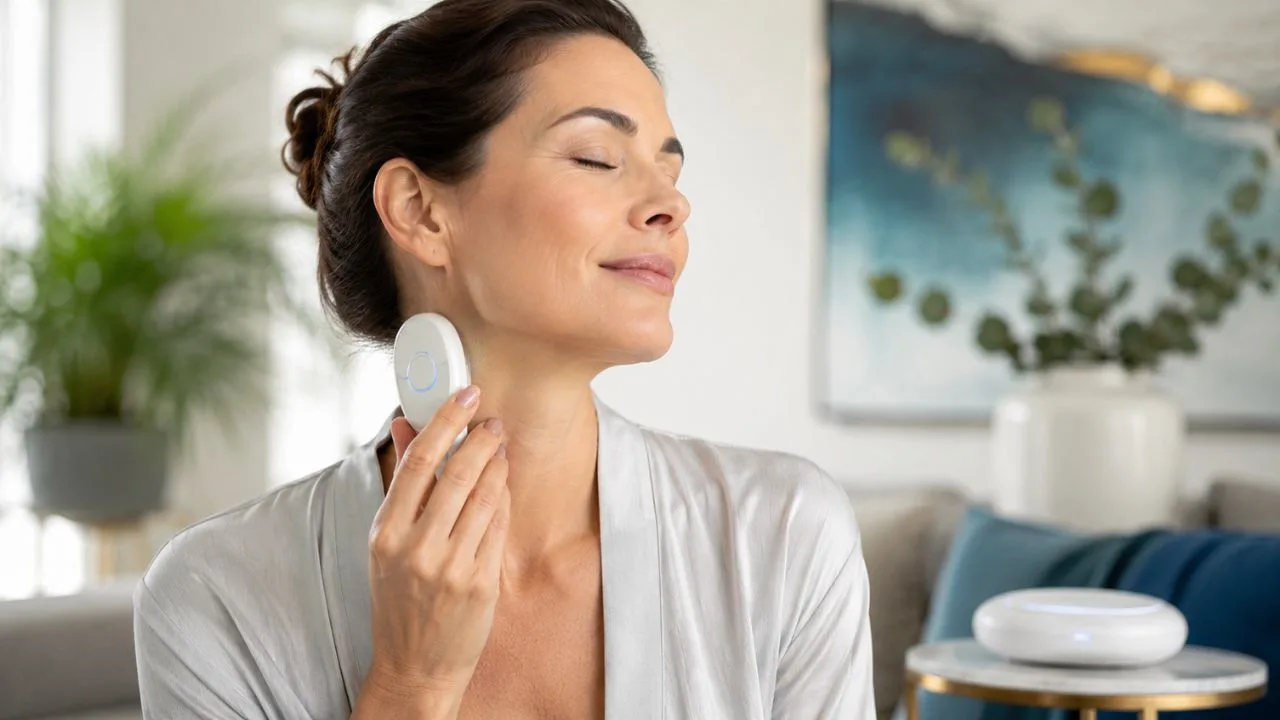
Consumer neck devices are often marketed as a quick way to activate the parasympathetic nervous system. They may offer programs labelled for stress, sleep, anxiety, burnout, pain, or recovery and may connect to a mobile application.
The neck contains the vagus nerve, but it also contains the carotid arteries, muscles, airway structures, and other nerves. A device’s ability to produce a sensation in the neck does not prove that it safely or selectively stimulates the vagus nerve.
Some products may be sold as wellness equipment rather than devices cleared to treat a medical condition. This distinction affects the level of evidence required, the claims the company can legally make, and how the product is reviewed before sale.
Do not place an ordinary TENS unit on your neck to copy a commercial VNS product. A general-purpose electrical stimulator may use unsuitable waveforms, electrode placement, or current levels and has not necessarily been tested for cervical vagus nerve stimulation.
FDA-Approved, FDA-Cleared and Wellness Devices
FDA approval generally applies to higher-risk medical devices that undergo the premarket approval process. Implantable VNS systems for epilepsy, depression, and stroke rehabilitation fall into this more closely regulated category because they require surgery and directly stimulate a nerve.
FDA clearance usually means a device has been found substantially equivalent to an appropriately marketed device for specific intended uses. GammaCore is described as FDA-cleared, not broadly FDA-approved for every condition associated with the vagus nerve.
A CE mark relates to European regulatory requirements and should not be interpreted as automatic FDA authorization in the United States. Regulatory pathways, intended uses, evidence requirements, and permitted claims differ between regions.
Wellness products may support general relaxation or healthy lifestyle goals without clearance to diagnose, cure, treat, or prevent a disease. Do not assume that registration, manufacturing certification, a patent, or a clinical study automatically equals authorization for a claimed medical treatment.
How to Compare Vagus Nerve Stimulation Devices
Start with the intended purpose. A device should clearly state whether it is designed for migraine, cluster headache, epilepsy, depression, stroke rehabilitation, or general wellness. Avoid products that claim to treat a long list of unrelated conditions with one setting.
Next, verify the regulatory status of the exact product and model in your country. Look for the official indication, prescription requirement, manufacturer, clearance or approval number, contraindications, and whether the product appears in current warning or import databases.
Review research involving the actual device. Stronger evidence comes from randomized controlled trials, appropriate sham stimulation, clinically meaningful outcomes, independent researchers, transparent funding, and publication in peer-reviewed medical journals.
Finally, consider usability and ongoing cost. Examine electrode replacement, conductive gel, subscriptions, refill cards, application access, charging, warranty, return policies, training, clinician support, and whether the device remains useful without paid digital services.
Do Not Rely Only on Heart Rate Variability Claims
Heart rate variability, or HRV, measures changes in the timing between heartbeats. It can provide information about autonomic regulation, but it is influenced by breathing, posture, exercise, sleep, illness, age, medication, alcohol, stress, and measurement quality.
A device may claim that an increase in HRV proves vagus nerve activation. One short-term change does not necessarily demonstrate that the device improves health, treats a disease, or produces lasting changes in the autonomic nervous system.
Different watches, chest straps, applications, and research devices calculate HRV differently. Measurements taken at inconsistent times or during different breathing patterns may create apparent improvements that do not come from the stimulation itself.
Clinical benefits matter more than one biomarker. A migraine device should reduce meaningful headache outcomes, while a stroke device should improve function. A wellness device should not rely entirely on HRV screenshots while providing little evidence of improvements people can actually feel or use.
Potential Side Effects of Non-Invasive VNS
Non-invasive cervical stimulation may cause tingling, pulling, temporary muscle contractions, skin discomfort, throat sensations, coughing, voice changes, headache, or dizziness. Correct placement and intensity can influence how strongly these effects are experienced.
Ear-based stimulation may cause local redness, itching, pressure, discomfort, headache, dizziness, fatigue, or nausea. Poor electrode contact can create a sharp or burning sensation rather than the intended comfortable stimulation.
Stop using the device when stimulation causes chest pain, fainting, severe shortness of breath, significant palpitations, new weakness, intense headache, persistent numbness, or a serious skin reaction. These symptoms should not be dismissed as the nervous system “adjusting.”
Report suspected device injuries to a healthcare professional and the appropriate regulatory reporting system. Contact the manufacturer as well, but do not rely only on customer-service reassurance when symptoms may involve the heart, breathing, or nervous system.
Risks of Implanted VNS
Implanted VNS requires surgery and therefore carries risks such as pain, infection, bleeding, scarring, lead problems, and complications related to anesthesia. The generator battery may eventually require replacement through another procedure.
Stimulation can cause hoarseness, voice changes, coughing, throat discomfort, difficulty swallowing, shortness of breath, or neck sensations. Some effects occur mainly while the device is actively stimulating and may improve after programming adjustments.
MRI scans and certain medical procedures require special planning because implanted generators and leads have model-specific safety conditions. Every healthcare provider should be told about the implant before imaging, surgery, electrical treatment, or another procedure.
An implanted device can also malfunction, deliver inappropriate stimulation, or require revision. Long-term care includes programming appointments, battery monitoring, safety checks, and awareness of manufacturer advisories or device recalls.
Who Should Ask a Doctor Before Using a Device?
Medical advice is essential for people with a pacemaker, defibrillator, cochlear implant, deep brain stimulator, implanted VNS system, or another electronic medical device. Electrical products may interfere with one another or create unpredictable current pathways.
People with heart rhythm disorders, fainting episodes, very low blood pressure, carotid artery disease, previous neck surgery, abnormal neck anatomy, or serious cardiovascular conditions should also obtain professional guidance before cervical stimulation.
Pregnant people, children, and individuals with active cancer, severe respiratory disease, neurological disorders, recent stroke, or reduced sensation should follow device-specific medical advice. Safety data may be limited for populations excluded from clinical trials.
A clinician should also review use when symptoms have not been diagnosed. Palpitations, dizziness, fainting, swallowing difficulty, unexplained weight loss, severe headaches, seizures, or neurological changes require investigation rather than unsupervised stimulation.
How to Use a Non-Invasive Device Safely
Use only the placement, intensity, session length, and frequency described in the official instructions. Do not move an ear electrode to the neck, place a neck device over the chest, or modify the settings based on a protocol designed for another product.
Begin at the lowest recommended intensity and increase only as instructed. A comfortable tingling or mild pulling sensation may occur, but stronger stimulation does not automatically create a better therapeutic effect.
Keep electrodes and contact surfaces clean and inspect the skin before each session. Do not apply stimulation over cuts, infection, severe irritation, swelling, or a new unexplained lump.
Avoid using the device while driving, bathing, sleeping, operating equipment, or performing an activity in which sudden dizziness would create danger. Keep a record of sessions, symptoms, benefits, and side effects to review with a healthcare professional.
How Long Does Vagus Nerve Stimulation Take to Work?
The timeline depends on the device and condition. A headache device may be used during an attack or on a preventive schedule, so some outcomes are assessed within minutes while others require several weeks of consistent treatment.
Implanted VNS for epilepsy or depression generally does not produce its full benefit immediately. Clinicians gradually adjust settings, and improvement may develop over months rather than after the first stimulation.
Stroke rehabilitation systems depend on pairing stimulation with repeated movement practice. The device is not expected to restore arm function while the user remains inactive, because rehabilitation exercises are a central part of the treatment.
Set measurable goals before starting. Track headache days, seizure frequency, sleep quality, validated symptom scores, functional ability, medication use, or another outcome relevant to the reason for treatment.
Cost and Insurance Considerations
Prescription and implanted VNS treatments may be expensive, but insurance or public healthcare coverage may be available for eligible patients. Coverage often depends on diagnosis, previous treatments, clinician documentation, and the policies of the payer.
GammaCore access may involve a prescription, device supply, treatment-day authorization, refill system, or other recurring costs. Ask for a complete estimate rather than focusing only on the first shipment.
Implanted systems involve the device, surgical procedure, hospital or facility charges, anesthesia, programming, rehabilitation, imaging review, and future battery replacement. Insurance authorization may require detailed evidence that standard treatments were unsuccessful.
Consumer wearables are frequently paid for out of pocket. Before buying, review the return window, restocking fees, warranty, subscription requirements, replacement electrodes, international shipping, customs rules, and whether the company provides support in your country.
Common Marketing Claims to Question
Be cautious when a company says its device “resets” the nervous system within minutes. The autonomic nervous system is complex and continuously adapts to posture, activity, breathing, emotion, illness, food, temperature, and many other influences.
Claims that one device treats anxiety, insomnia, digestive disease, inflammation, migraine, chronic pain, long COVID, tinnitus, and weight problems should be examined carefully. A shared biological pathway does not prove effectiveness for every condition connected to it.
Testimonials can be helpful for understanding comfort and usability, but they cannot establish medical effectiveness. Reviewers may experience placebo effects, natural symptom fluctuation, other treatment changes, or financial incentives that are not clearly disclosed.
Also question references to dozens of “VNS studies” when only a few used the company’s exact product. A large research field does not validate every commercial waveform, electrode, placement, application, or advertised treatment program.
When to Stop Using a Vagus Nerve Device
Stop stimulation immediately if you develop chest pain, severe dizziness, fainting, breathing difficulty, throat swelling, sudden weakness, confusion, or a new abnormal heartbeat. Seek urgent medical care when symptoms are severe or do not resolve promptly.
Discontinue use for significant skin burning, blistering, persistent numbness, marked ear swelling, or pain that continues after the electrodes are removed. Allowing the skin to rest is not enough when an electrical burn or infection may be present.
A worsening medical condition also requires reassessment. More frequent seizures, a sudden severe headache, new neurological symptoms, escalating depression, or suicidal thoughts should never be managed by increasing the stimulation intensity.
Contact the prescribing clinician when the device no longer appears effective, causes repeated side effects, or cannot be used correctly. A change in placement, settings, treatment plan, or device may be needed.
Final Thoughts
There is no single best vagus nerve stimulation device for every person. The correct choice depends on the diagnosed condition, regulatory indication, quality of evidence, health history, treatment goals, and level of clinical supervision required.
GammaCore is the most established non-invasive prescription option for its cleared migraine and headache indications. LivaNova VNS Therapy is the established implanted category for selected patients with drug-resistant epilepsy or treatment-resistant depression.
Vivistim is specifically designed to pair implanted stimulation with rehabilitation for eligible chronic ischemic stroke survivors. Consumer ear and neck devices for stress or sleep remain harder to rank because evidence and regulatory status vary.
Before spending money, verify the exact model in official regulatory databases, review device-specific studies, and discuss important health risks with a clinician. The best device is not the one making the broadest claims; it is the one with evidence and authorization matching your actual medical need.
What is the best non-invasive vagus nerve stimulation device?
GammaCore is one of the most established non-invasive prescription VNS devices for specific migraine and cluster headache indications. It is not cleared as a universal treatment for anxiety, sleep, digestion, or general wellness.
Do vagus nerve devices work for anxiety?
Research on non-invasive VNS for anxiety is developing, but no consumer device can guarantee relief. Persistent or severe anxiety should be assessed and treated through established medical and psychological approaches.
Are ear vagus nerve stimulators safe?
Research-grade taVNS is generally considered tolerable for many participants, but commercial devices vary. People with heart conditions, implanted electronics, pregnancy, fainting, or neurological disorders should seek medical advice first.
Can I use a TENS unit to stimulate my vagus nerve?
An ordinary TENS unit should not be placed on the ear or neck as a homemade VNS device. Its waveform, intensity, electrodes, and safety controls may not be suitable for vagus nerve stimulation.
Is vagus nerve stimulation FDA-approved?
Certain implanted VNS systems are FDA-approved for specific epilepsy, depression, or stroke rehabilitation uses. GammaCore is FDA-cleared for specific headache indications, while many consumer wellness products do not have the same authorization.