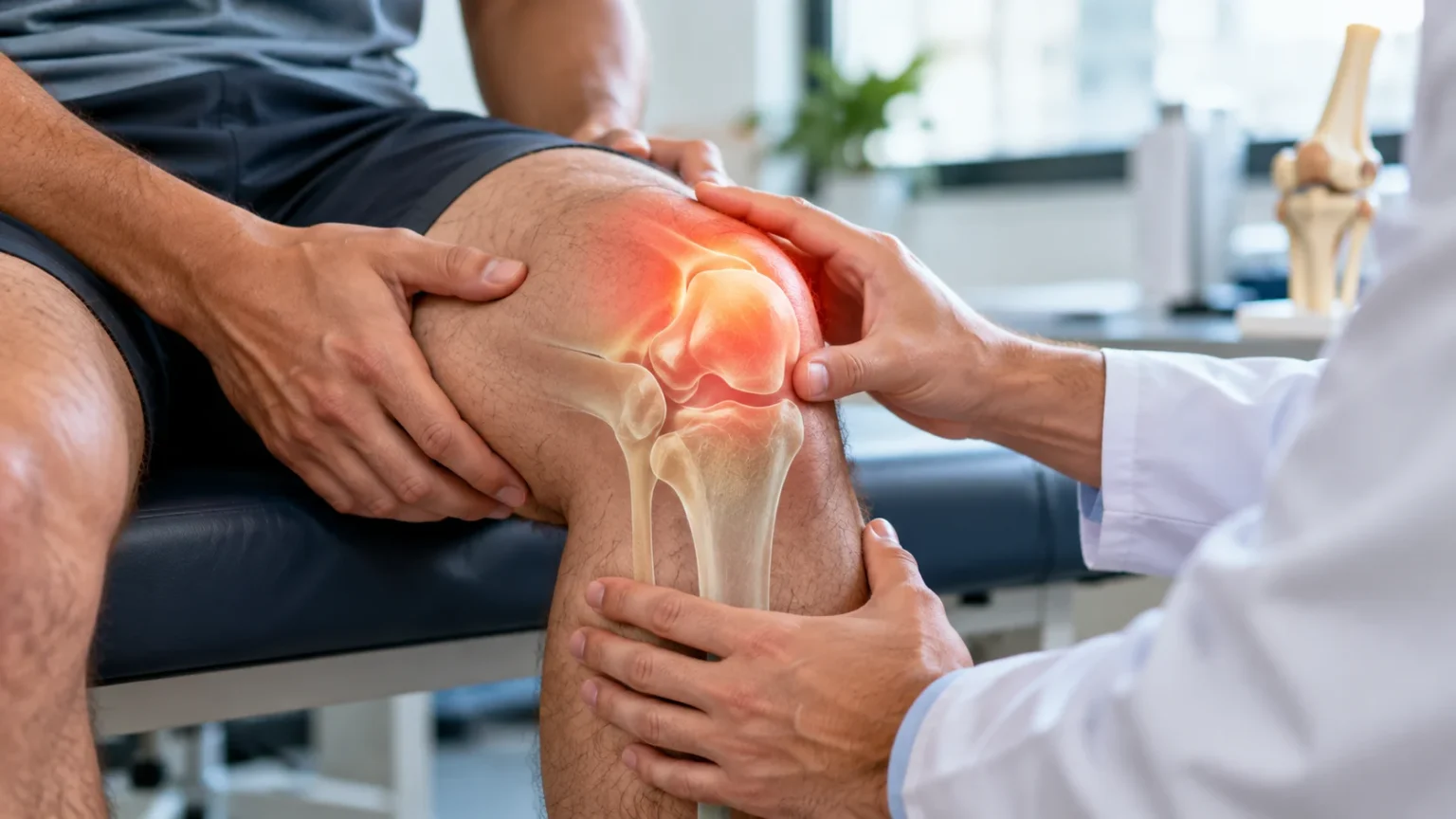

Suprapatellar joint effusion refers to an abnormal buildup of fluid in the area above the kneecap, usually within the knee joint’s suprapatellar pouch. People may notice swelling, tightness, stiffness, or difficulty bending the knee. The condition is often described simply as “fluid on the knee,” but several injuries and health conditions can cause it.
Some cases develop after exercise or trauma, while others are related to arthritis, inflammation, infection, or internal knee damage. Treatment depends on the underlying cause and the amount of swelling present. Understanding the symptoms, possible triggers, and available treatment options can help you know when home care may be reasonable and when medical evaluation is important.
What Is Suprapatellar Joint Effusion?
The suprapatellar pouch is an extension of the knee joint located above the patella, or kneecap. A small amount of lubricating synovial fluid is normally present inside the joint to help the bones move smoothly. When irritation, injury, or inflammation increases fluid production, that fluid can collect in the suprapatellar region and make the knee appear swollen.
Suprapatellar effusion is not a disease by itself. Instead, it is a physical finding that can occur because of several underlying problems affecting the knee. These may include ligament injuries, cartilage damage, osteoarthritis, inflammatory arthritis, infection, or repetitive stress that irritates structures inside the joint.
The amount of fluid can vary significantly from person to person. A mild effusion may cause only slight fullness around the knee, while a larger collection may produce obvious swelling and limited movement. Identifying why the fluid developed is important because treatment should address the underlying cause rather than swelling alone.
Common Causes of Suprapatellar Joint Effusion
One of the most common causes is an acute knee injury. A sudden twist, fall, direct impact, or sports-related movement can damage ligaments, cartilage, bone, or other joint structures. The body responds to that damage with inflammation, which may increase fluid inside the knee and create visible swelling above or around the kneecap.
Arthritis is another frequent cause of knee effusion. Osteoarthritis can irritate the joint lining as cartilage gradually wears down, while inflammatory conditions such as rheumatoid arthritis can cause more widespread joint inflammation. Crystal-related conditions, including gout, may also produce sudden swelling, tenderness, and significant discomfort around the knee.
Less commonly, an infection inside the knee joint can cause fluid accumulation. Septic arthritis requires prompt medical care because the infection can damage joint structures if left untreated. Other possible causes include overuse, certain bursae or tendon problems, meniscus injuries, and medical conditions that affect inflammation throughout the body.
Symptoms of Suprapatellar Joint Effusion
Swelling is usually the most noticeable symptom. The area above the kneecap may appear fuller than the opposite knee, and the entire joint can sometimes look enlarged. Depending on the cause, the swelling may develop quickly after an injury or appear gradually over several hours or days.
People often describe a feeling of pressure or tightness inside the knee. Bending the leg fully may become uncomfortable because additional fluid takes up space within the joint. Walking, climbing stairs, squatting, standing from a chair, or participating in sports may also become difficult when swelling limits normal movement.
Pain is possible but not always severe. Some people experience only stiffness, while others develop significant tenderness, warmth, or throbbing discomfort. Symptoms such as redness, fever, severe pain, inability to bear weight, or rapid swelling deserve more urgent assessment because they can indicate infection or a significant injury.
How Suprapatellar Joint Effusion Is Diagnosed
A healthcare professional usually begins by asking when the swelling started and whether an injury occurred. They may also ask about pain, stiffness, fever, previous knee problems, arthritis, recent illnesses, or activities that could have overloaded the joint. Comparing both knees can help determine how much swelling and movement restriction is present.
During a physical examination, the knee may be checked for tenderness, warmth, range of motion, instability, and signs of fluid accumulation. Certain examination techniques can help a clinician determine whether an effusion is present. These findings are interpreted alongside the person’s symptoms rather than being used alone to determine the exact cause.
Imaging may be recommended when structural damage is suspected. X-rays can show fractures or arthritic changes, while ultrasound can help identify fluid and guide certain procedures. MRI scans may be useful when doctors suspect meniscus, ligament, cartilage, or other soft-tissue injuries that cannot be fully evaluated with a standard X-ray.
Knee Injuries That Can Cause Joint Effusion
Ligament injuries can cause significant knee swelling, especially when damage occurs suddenly. Tears involving the anterior cruciate ligament, commonly called the ACL, may lead to rapid fluid accumulation and difficulty bearing weight. Other ligament injuries can also produce swelling, instability, tenderness, and reduced confidence when walking or changing direction.
Meniscus injuries are another potential source of suprapatellar effusion. The menisci are cartilage structures that help distribute pressure across the knee, and they can become damaged through twisting movements or gradual degeneration. Symptoms may include swelling, joint-line pain, clicking, catching, or difficulty fully straightening or bending the knee.
Bone and cartilage injuries can also trigger excess joint fluid. Fractures around the knee require medical assessment, while cartilage damage may lead to inflammation even when no fracture is present. Because several knee injuries cause similar symptoms, persistent or substantial swelling should not automatically be treated as a simple strain without proper evaluation.
Arthritis and Inflammatory Causes
Osteoarthritis develops when protective cartilage within the joint gradually breaks down. As the knee becomes irritated, its synovial lining may produce more fluid, resulting in recurrent swelling or stiffness. Symptoms often become more noticeable after prolonged walking, standing, climbing stairs, or other activities that place repeated stress on the knee.
Inflammatory arthritis can produce a different pattern. Conditions such as rheumatoid arthritis affect the immune system and may cause inflammation in several joints rather than only one knee. Swelling may be accompanied by prolonged morning stiffness, warmth, fatigue, or symptoms in the hands, feet, wrists, or other areas.
Gout and similar crystal-related conditions can also affect the knee. These conditions may produce sudden episodes of intense pain, swelling, redness, and sensitivity around the joint. Because infections can sometimes resemble inflammatory arthritis or gout, a rapidly swollen and painful knee should be medically evaluated rather than diagnosed based on appearance alone.
Treatment for Suprapatellar Joint Effusion
Treatment depends primarily on what caused the fluid buildup. A mild overuse-related effusion may settle with activity modification and conservative care, while ligament tears, fractures, inflammatory conditions, or infections may require more specific treatment. Reducing swelling without identifying an important underlying injury can provide temporary relief while leaving the main problem untreated.
A clinician may recommend medication when appropriate. Anti-inflammatory medicines can sometimes reduce pain and swelling, although they are not suitable for everyone because of potential stomach, kidney, cardiovascular, medication-interaction, or other health concerns. The safest choice depends on individual medical history, so people with existing conditions should seek professional guidance before using them regularly.
In some cases, excess fluid may be removed from the joint through aspiration, also called arthrocentesis. The collected fluid can sometimes be examined for infection, crystals, blood, or other clues about the cause. Aspiration may reduce pressure, but fluid can return if the underlying condition continues to irritate the knee.
Home Care for a Swollen Knee
Resting from activities that worsen symptoms can help an irritated knee settle. This does not necessarily mean complete inactivity, but running, jumping, deep squatting, or other painful movements may need to be temporarily reduced. Gentle everyday movement within a comfortable range can help prevent unnecessary stiffness while the cause of the swelling is being addressed.
Cold therapy may help reduce discomfort after an injury or activity-related flare. An ice pack wrapped in a cloth can be applied for short periods rather than placed directly against the skin. Compression and elevation may also help some people manage swelling, provided the compression is comfortable and does not cause numbness, discoloration, or increased pain.
Monitor how the knee responds over the following days. Swelling that continues to increase, repeatedly returns, or prevents normal walking deserves medical assessment. Home measures are most appropriate for mild symptoms without serious warning signs and should not delay evaluation when an injury, infection, fracture, or inflammatory joint disease may be responsible.
Exercises and Rehabilitation After Knee Effusion
Exercise can be useful during recovery, but timing matters. Starting demanding strengthening exercises while the knee remains significantly swollen can increase irritation and make movement more difficult. Rehabilitation often begins with comfortable range-of-motion work and gradual muscle activation before progressing toward heavier strengthening, balance exercises, and activity-specific movements.
The quadriceps, hamstrings, gluteal muscles, and calves all contribute to lower-limb control and knee function. Strengthening these areas gradually may improve stability and help someone return to everyday activities after the underlying problem has been treated. Exercise selection should reflect the actual diagnosis because rehabilitation for arthritis differs from rehabilitation after a ligament or meniscus injury.
Correct technique matters in any targeted strengthening program because poorly performed movements may place unnecessary stress on surrounding structures. The same principle applies to other rehabilitation areas, and people building a broader exercise routine may find this guide to pelvic floor exercises helpful. For knee rehabilitation, however, exercises should remain specific to the condition causing the effusion.
How Long Does Suprapatellar Effusion Take to Go Away?
Recovery time varies because suprapatellar effusion has many possible causes. Mild swelling caused by temporary overuse may improve within days when aggravating activity is reduced. An effusion associated with a significant ligament injury, arthritis flare, cartilage damage, or another medical condition can last considerably longer and may return without appropriate treatment.
The size of the effusion does not always predict recovery time. A relatively small amount of fluid can persist when ongoing inflammation remains inside the joint, while substantial swelling after a minor injury may gradually decrease once irritation settles. Improvement should therefore be judged by swelling, pain, movement, walking ability, and the underlying diagnosis together.
Returning to normal activity should usually be gradual. Increasing exercise too quickly can cause swelling to return, particularly when the knee has not regained comfortable movement and strength. If the joint repeatedly becomes swollen after activity, a healthcare professional or physical therapist can help identify whether rehabilitation needs to be modified.
When Should You See a Doctor?
Seek medical evaluation when swelling is severe, develops after a significant injury, or prevents you from walking normally. A popping sensation followed by rapid swelling or instability may indicate an internal knee injury that needs assessment. Persistent swelling that does not improve with reasonable activity modification should also be investigated rather than repeatedly managed at home.
More urgent assessment is important when the knee becomes hot, red, and extremely painful, particularly when fever, chills, or feeling unwell are present. These symptoms may indicate infection inside the joint, which can require immediate medical treatment. Sudden severe swelling without a clear explanation also deserves prompt attention.
Medical advice is also appropriate when episodes keep returning. Recurrent effusion can indicate arthritis, meniscus damage, inflammatory disease, mechanical irritation, or another ongoing problem. Finding the underlying reason can guide more effective treatment and reduce the risk of repeatedly treating only the visible swelling without addressing what is causing it.
Conclusion
Suprapatellar joint effusion means excess fluid has collected inside the knee joint, particularly in the pouch located above the kneecap. It can result from injuries, arthritis, inflammation, overuse, crystal-related disease, infection, or other knee problems. Common symptoms include swelling, stiffness, pressure, pain, and difficulty bending or straightening the knee.
Treatment depends on the cause rather than the fluid alone. Activity modification, cold therapy, appropriate medication, rehabilitation, or joint aspiration may be used in certain situations, while significant structural injuries and infections require more specific care. Identifying the reason for persistent or recurring swelling is an important part of successful treatment.
A mildly swollen knee may improve with conservative care, but severe, unexplained, or recurrent effusion should be assessed professionally. Seek prompt medical attention for fever, redness, intense warmth, severe pain, inability to bear weight, or major swelling after an injury. Early evaluation can help determine the cause and guide the safest recovery plan.
FAQs
Is suprapatellar joint effusion serious?
It is not always serious, but its importance depends on the cause. Mild overuse may settle quickly, while infection, fracture, ligament damage, or inflammatory disease can require prompt medical treatment.
Can knee effusion go away on its own?
Mild effusion caused by temporary irritation can sometimes improve with reduced activity and conservative care. Persistent, recurrent, painful, or unexplained swelling should be evaluated to identify the underlying cause.
Is walking good for knee effusion?
Gentle walking may be reasonable when it does not worsen pain or swelling. If walking causes significant discomfort, instability, or increased swelling, reduce activity and seek professional advice before progressing.
What does fluid above the kneecap mean?
Fluid above the kneecap commonly indicates excess joint fluid collecting within the suprapatellar pouch. It can occur because of injury, arthritis, inflammation, infection, or other conditions affecting the knee.
Can you exercise with suprapatellar effusion?
Light movement may be appropriate in some cases, but strenuous exercise should usually be avoided when the knee is significantly swollen. The safest exercise plan depends on the cause and severity of the effusion.