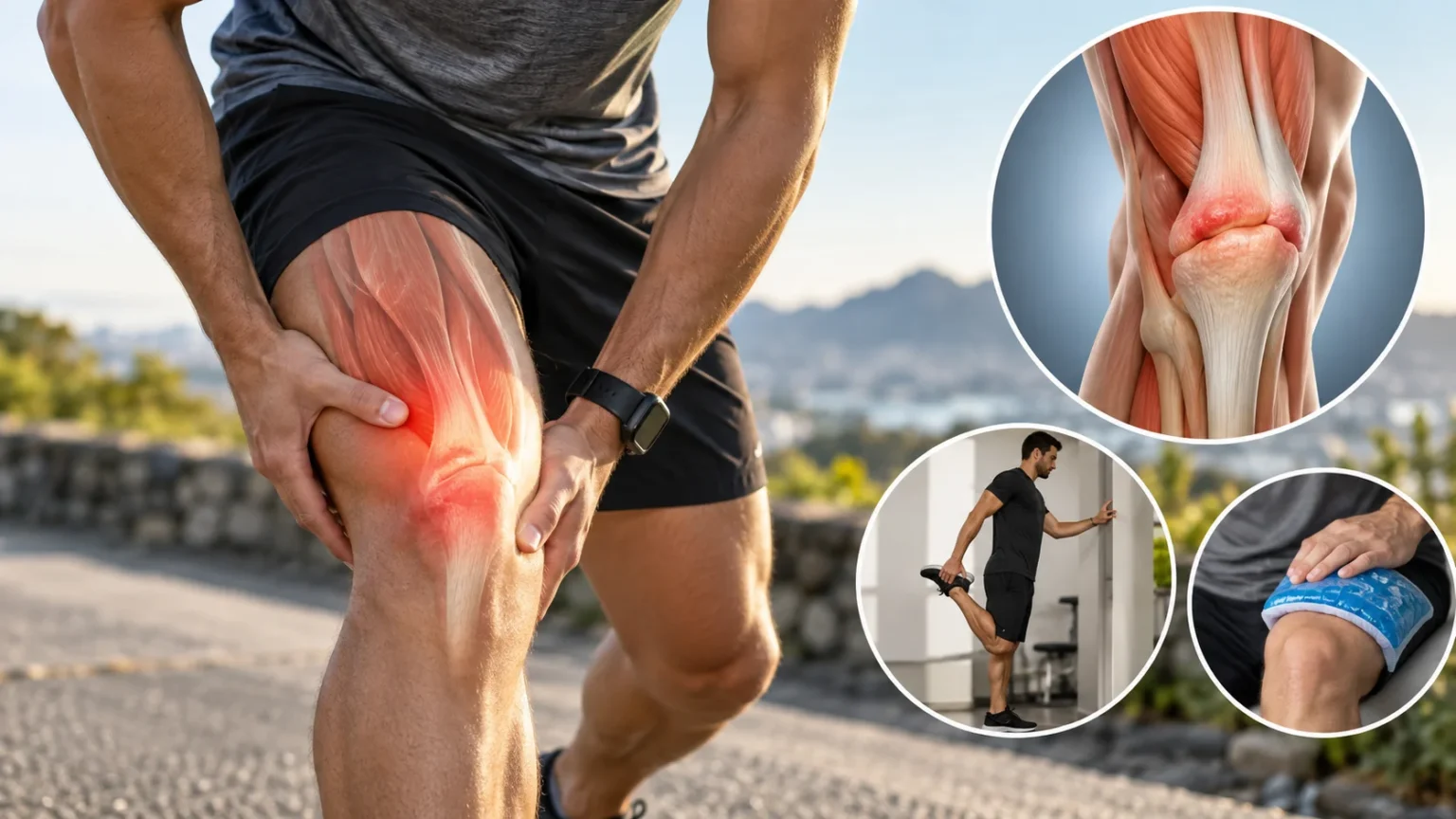

Quadricep tendonitis can make everyday movements such as climbing stairs, squatting, running, or getting up from a chair surprisingly uncomfortable. The condition affects the strong tendon that connects the quadriceps muscles at the front of the thigh to the top of the kneecap. Pain is typically felt just above the patella, especially when the tendon is loaded.
The problem is particularly common among active people whose sports or workouts involve jumping, running, rapid direction changes, or repeated knee bending. However, quadriceps tendon pain can also develop after sudden increases in activity or when the tendon does not get enough time to recover between sessions. Symptoms may begin gradually rather than after one obvious injury.
Early management usually focuses on reducing irritating activity while gradually rebuilding the tendon’s ability to tolerate load. Rest alone is not always the complete solution, especially when symptoms have lasted for several weeks. Understanding the causes, symptoms, treatment options, and recovery process can help you respond to quadricep tendonitis more effectively.
What Is Quadricep Tendonitis?
Quadricep tendonitis refers to pain and irritation involving the quadriceps tendon just above the kneecap. This tendon connects the four quadriceps muscles in the thigh to the patella and helps transfer force when you straighten your knee. It plays an important role during walking, running, jumping, squatting, and climbing stairs.
The term “tendonitis” traditionally suggests inflammation, particularly during the early stages of tendon irritation. When symptoms become persistent, healthcare professionals may instead use the term quadriceps tendinopathy because long-term tendon problems often involve changes in tendon structure rather than ongoing inflammation alone. Both terms are commonly used when discussing pain in this area.
Quadriceps tendonitis is different from patellar tendonitis, although the two conditions can produce similar symptoms. Quadriceps tendon pain occurs above the kneecap, while patellar tendon problems generally cause pain below it. Identifying the location of the discomfort can help a healthcare professional determine which structure is most likely involved.
What Causes Quadricep Tendonitis?
Repeated stress is one of the most common causes of quadricep tendonitis. Running, jumping, squatting, cycling, and strength training repeatedly place tension through the quadriceps tendon. If the amount of exercise increases faster than the tendon can adapt, irritation may develop and make normal movements increasingly uncomfortable.
A sudden increase in training volume or intensity can be particularly troublesome. Someone who quickly adds more running mileage, heavier squats, additional basketball sessions, or frequent hill workouts may expose the tendon to more stress than it is prepared to tolerate. Poor recovery between sessions can increase the problem because the tissue has less time to adapt.
Direct trauma is another possible cause, although it is less typical than repetitive overload. A fall or impact around the front of the knee can irritate the tendon and surrounding tissues. Pain beginning suddenly after a forceful injury should be assessed carefully because partial or complete quadriceps tendon tears require different management from ordinary overuse-related tendon pain.
Common Risk Factors for Quadriceps Tendon Pain
Athletes who participate in sports involving jumping and repeated knee extension are more likely to experience quadriceps tendon overload. Basketball, volleyball, football, running, and weightlifting can all place substantial demand on the tendon. Risk usually depends on training load, movement patterns, recovery, strength, and previous injuries rather than participation in one particular sport alone.
Limited mobility or weakness elsewhere in the lower body may also influence how force travels through the knee. Reduced ankle movement, poor hip control, weak gluteal muscles, or limited quadriceps capacity may change movement patterns during squatting, landing, or running. These factors do not guarantee tendonitis, but they can sometimes contribute to excessive stress.
Age, previous knee problems, and returning too quickly after time away from exercise may also increase risk. Tendons generally need gradual exposure to loading to become stronger and more tolerant. Someone returning to exercise after several inactive weeks may therefore need to rebuild training volume progressively rather than immediately returning to their previous routine.
Quadricep Tendonitis Symptoms to Watch For
The most common symptom is pain or tenderness immediately above the kneecap where the quadriceps tendon attaches. The discomfort may initially appear only during demanding activities such as running, jumping, deep squatting, or heavy leg exercises. As the problem becomes more irritated, symptoms may also occur during stairs, prolonged sitting, or normal daily movement.
Some people experience stiffness around the front of the knee when they first begin moving after resting. The tendon may feel uncomfortable at the start of exercise, temporarily improve as the body warms up, and then become sore again afterward. Tenderness when pressing above the kneecap can also occur, although symptoms vary considerably between individuals.
Swelling is possible, particularly when irritation develops suddenly, but significant swelling is not present in every case. Sudden weakness, an inability to straighten the knee, a visible gap above the kneecap, or severe pain after an injury may indicate a tendon tear rather than uncomplicated tendonitis. These symptoms require prompt medical assessment.
How Is Quadricep Tendonitis Diagnosed?
Diagnosis usually begins with a discussion about your symptoms, recent activity levels, training changes, and previous knee injuries. A healthcare professional may ask where the pain occurs and which movements make it better or worse. They may also examine tenderness around the quadriceps tendon and observe how your knee moves during different activities.
Strength testing, squatting, stepping, or resisted knee extension may help determine whether loading the quadriceps tendon reproduces your symptoms. The clinician may also assess your hip, ankle, thigh, and overall movement patterns because several conditions can produce pain around the front of the knee. Location alone is not always enough to make a diagnosis.
Imaging is not required for every case of quadriceps tendon pain. Ultrasound or MRI may sometimes be recommended when symptoms are severe, persistent, unusual, or associated with a suspected tear. X-rays do not show the tendon clearly but may occasionally help identify other causes of knee pain when the diagnosis remains uncertain.
Quadricep Tendonitis Treatment Options
Early treatment often involves reducing activities that repeatedly trigger significant pain rather than completely avoiding movement. Running, jumping, deep squats, or heavy leg exercises may temporarily need to be reduced or modified. The goal is to lower excessive tendon stress while maintaining as much comfortable activity as possible during the recovery period.
Cold packs may temporarily reduce soreness after activity, particularly when symptoms have recently become irritated. Some people use over-the-counter pain medication, but these products are not appropriate for everyone and should be used according to professional or label guidance. Medication may reduce symptoms temporarily but does not rebuild the tendon’s strength or load tolerance.
Physical therapy can be particularly useful when symptoms continue or repeatedly return. Rehabilitation normally involves gradually strengthening the quadriceps and surrounding muscles while carefully increasing tendon loading. Your treatment plan may also address hip strength, ankle mobility, running technique, training habits, or other individual factors contributing to excessive knee stress.
Exercises for Quadricep Tendonitis Recovery
Isometric quadriceps exercises are sometimes used early in rehabilitation because they strengthen the muscles without requiring large amounts of knee movement. A therapist may recommend controlled wall sits, leg-extension holds, or other variations depending on symptom severity. The correct exercise and intensity should be based on what your tendon can tolerate rather than copying someone else’s program.
As symptoms improve, rehabilitation usually progresses toward slow, controlled strengthening exercises. Squats, split squats, step-ups, leg presses, and knee-extension movements may gradually be introduced or made more challenging. The objective is to increase the quadriceps tendon’s ability to tolerate force while avoiding sudden increases in pain or training volume.
Eventually, athletes may progress toward faster and more demanding activities such as running, jumping, landing, and changing direction. These movements should generally be reintroduced gradually after basic strength and daily activities become easier. Returning directly to high-intensity sport without rebuilding capacity can overload the tendon again and delay long-term recovery.
Managing Knee Pain During Daily Activities
Everyday movements may need temporary adjustment while an irritated quadriceps tendon settles. Taking elevators instead of repeatedly using stairs, reducing deep knee bends, and avoiding long periods of kneeling may help decrease unnecessary aggravation. This does not mean keeping the knee completely still because normal comfortable movement usually remains important during rehabilitation.
Pay attention to symptoms throughout the entire lower limb rather than assuming every discomfort comes from your knee. Training changes can sometimes cause unrelated muscle tightness, foot discomfort, or issues such as toe cramps. Recognizing separate symptoms can make it easier to describe your overall condition accurately to a healthcare professional.
Pain response can also help guide activity levels. Mild discomfort during rehabilitation may sometimes be acceptable, while sharp or progressively worsening pain suggests the activity may be too demanding. Symptoms that remain noticeably worse the following day can also indicate that your previous workout placed more load through the tendon than it currently tolerates comfortably.
What Should You Avoid With Quadricep Tendonitis?
Avoid repeatedly performing movements that create substantial pain simply because you want to maintain your usual training schedule. Continuing heavy squats, sprinting, jumping, or other aggravating exercises without modification can keep exposing the tendon to more stress than it can manage. Reducing load temporarily often allows rehabilitation exercises to become more effective.
Complete and prolonged rest is not always the best approach either. Although a brief reduction in activity can calm an irritated tendon, weeks of avoiding nearly all loading may reduce muscle strength and tendon capacity. A more useful strategy is often relative rest followed by progressive strengthening based on symptoms and professional guidance.
Aggressive stretching should also be approached carefully. Stretching the quadriceps may feel helpful for general muscle tightness, but forcing the knee into deep bending can sometimes compress or irritate a sensitive tendon. Keep stretching gentle and stop if it clearly increases pain above the kneecap during or after the movement.
How Long Does Quadricep Tendonitis Take to Heal?
Recovery time varies considerably depending on how long symptoms have been present, how severe they are, and how well activity is modified. Mild cases that are addressed early may begin improving within several weeks. Long-standing quadriceps tendinopathy can require a much longer rehabilitation period because rebuilding tendon strength and tolerance happens gradually.
Trying to return to full training as soon as pain decreases can create setbacks. Feeling better during everyday activities does not necessarily mean the tendon is ready for maximum running, jumping, or heavy strength training. Rehabilitation should progressively expose the tendon to increasing demands so that its capacity begins matching the activities you plan to perform.
Progress is not always completely linear. You may experience occasional increases in soreness after adding a new exercise, increasing weight, or returning to sport. Small symptom fluctuations do not automatically mean you have damaged the tendon again, but repeated or significant setbacks suggest that your current activity level may need adjustment.
How to Prevent Quadricep Tendonitis
One of the most useful prevention strategies is increasing training volume gradually. Large jumps in running distance, workout frequency, jumping volume, or resistance can overwhelm tissues that have not adapted to the higher demand. Progressive training allows your muscles and tendons time to become stronger before you expose them to substantially heavier workloads.
Strength training can also help build resilience around the knee. Exercises targeting the quadriceps, hamstrings, calves, gluteal muscles, and hips can improve the lower body’s ability to absorb and produce force. Sport-specific movements such as landing, accelerating, and changing direction should also be developed gradually when they are relevant to your activity.
Recovery matters alongside exercise. Adequate sleep, rest between demanding sessions, appropriate nutrition, and adjusting workouts when your legs remain unusually sore can support consistent training. Rather than relying on stretching alone, combine sensible workload management with strength, mobility, technique, and enough recovery to prepare your body for repeated activity.
When Should You See a Doctor?
Consider seeking professional advice when pain above your kneecap persists despite reducing aggravating activities or repeatedly returns when you exercise. A physiotherapist, sports medicine professional, or doctor can assess whether the quadriceps tendon is actually responsible. Several knee conditions can produce similar pain, so persistent symptoms deserve proper evaluation rather than self-diagnosis.
Prompt medical attention is particularly important after a sudden injury accompanied by severe pain or immediate weakness. Difficulty straightening the knee, being unable to bear weight, a visible indentation above the kneecap, or major swelling may indicate a more serious injury. A quadriceps tendon rupture needs urgent assessment and should not be treated like ordinary exercise-related tendonitis.
You should also seek medical care if knee pain is accompanied by marked redness, warmth, fever, unexplained swelling, or other unusual symptoms. These signs may point toward a problem that requires a different form of treatment. When symptoms are uncertain or worsening, professional assessment is safer than continuing to train through the discomfort.
Conclusion
Quadricep tendonitis typically causes pain and tenderness above the kneecap where the quadriceps tendon connects to the patella. Repetitive loading, sudden increases in exercise, insufficient recovery, and demanding sports can all contribute to irritation. Symptoms often become noticeable during squatting, jumping, running, climbing stairs, or other movements that strongly load the quadriceps.
Treatment usually involves temporarily modifying painful activities while progressively rebuilding strength and tendon capacity. Controlled rehabilitation exercises, careful workload management, and addressing contributing movement or strength issues can support recovery. Complete rest may help briefly, but gradually restoring appropriate loading is often an important part of returning to normal activity.
Recovery can take anywhere from several weeks to considerably longer depending on symptom duration and severity. Avoid rushing back to intense exercise simply because the knee begins feeling better. Persistent pain, significant weakness, sudden injury, or an inability to straighten the knee should be assessed by a qualified healthcare professional.
FAQs
Can you walk with quadricep tendonitis?
Many people can continue walking if it causes little or no significant pain. If walking noticeably worsens symptoms or causes limping, reduce the distance and seek professional advice about appropriate activity levels.
Where is quadricep tendonitis pain usually felt?
Pain is typically located immediately above the kneecap where the quadriceps tendon attaches to the patella. It may become more noticeable during squatting, running, jumping, stairs, or resisted knee extension.
Should I stretch quadricep tendonitis?
Gentle stretching may be comfortable for some people, but aggressive knee bending can irritate a sensitive tendon. Stop if stretching increases pain and prioritize an appropriate strengthening program when advised by a professional.
Can quadricep tendonitis heal on its own?
Mild symptoms may improve after reducing aggravating activity, but recurring or persistent cases often benefit from progressive strengthening and workload management. Continuing the same painful training routine can make recovery more difficult.
Is quadricep tendonitis the same as patellar tendonitis?
No. Quadriceps tendonitis generally causes pain above the kneecap, while patellar tendonitis usually causes discomfort below it. Both involve the knee extensor mechanism but affect different tendons.