
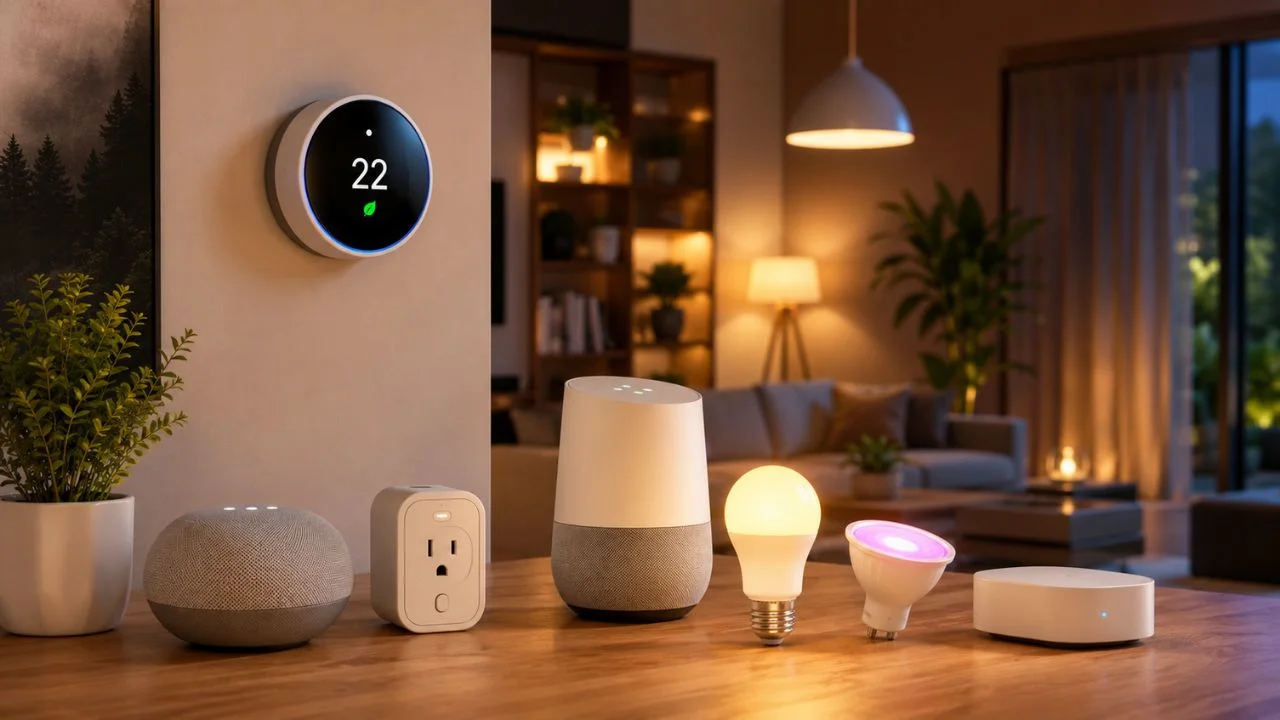

Smart home technology can make daily life more convenient, but convenience alone does not guarantee lower energy bills. A connected device saves energy only when it reduces unnecessary operating time, manages a major household load, or helps people change wasteful habits. Choosing the right technology is therefore more important than filling a home with app-controlled gadgets.
The most useful energy-saving devices focus on heating, cooling, lighting, water heating, electronics, appliances, and electric vehicle charging. These areas often provide better opportunities than small devices that use little electricity. Smart controls can schedule equipment, respond to occupancy, identify unusual consumption, and move flexible energy use to lower-cost periods.
Homeowners should also consider the energy consumed by the smart device itself. Wi-Fi radios, displays, hubs, sensors, and cloud connections can draw standby power throughout the day. A useful product should save more energy than its connected features consume, remain functional when internet service is interrupted, and continue receiving security updates.
This guide explains the best smart devices for saving energy without assuming that every household needs the same products. The recommendations focus on practical savings, ease of use, installation requirements, compatibility, and long-term value. They also include options for homeowners, renters, families, remote workers, and electric vehicle owners.
What Makes a Smart Device Energy Efficient?
An energy-efficient smart device should perform a useful control or monitoring function instead of simply offering remote access. Turning a lamp on through a phone may be convenient, but it does not automatically save electricity. Savings begin when the system switches the lamp off after everyone leaves, dims it when daylight is available, or prevents it from remaining on overnight.
The strongest devices control equipment that already consumes a meaningful amount of energy. Heating and cooling generally offer greater potential than charging a small phone accessory. Water heaters, air conditioners, clothes dryers, pool pumps, and electric vehicles can also create significant loads, so intelligent scheduling or efficient operation may produce noticeable results.
Independent certification is another valuable buying signal. ENERGY STAR-certified products meet efficiency requirements established by the U.S. Environmental Protection Agency, while certified smart thermostats must demonstrate savings using real-world field data. Connected ENERGY STAR products may also provide energy reporting, waste alerts, demand-response functions, and consumer control over shared data.
Compatibility matters because disconnected apps often create more effort than useful automation. A thermostat, lighting system, plug controller, and energy monitor become more valuable when they can coordinate an away mode or respond to the same occupancy information. ENERGY STAR’s Smart Home Energy Management Systems framework therefore combines a certified thermostat, connected lighting, and plug-load monitoring or control.
Smart Thermostats: The Best Overall Energy-Saving Device
A smart thermostat is usually the best starting point for households with central heating or air conditioning. It can create temperature schedules, respond to household routines, and reduce unnecessary heating or cooling while the property is empty. Many models also provide remote control, humidity information, geofencing, maintenance reminders, and detailed energy-use reports.
ENERGY STAR-certified smart thermostats are independently certified to reduce heating and cooling system runtime. Average savings are approximately eight percent of heating and cooling bills, although the actual result depends on climate, comfort preferences, occupancy patterns, insulation, and HVAC equipment. Households that already manage temperatures carefully may save less than those with inefficient schedules.
Remote room sensors can improve comfort when the main thermostat is positioned in an unusually warm or cool location. A system may prioritize an occupied bedroom at night and a living area during the day. Occupancy detection can also prevent an empty part of the home from determining how long the entire heating or cooling system operates.
Before buying, homeowners should confirm HVAC compatibility, wiring requirements, and support for heat pumps, multi-stage systems, boilers, or zoned equipment. Some heat pumps require carefully designed control strategies because aggressive temperature setbacks may activate less efficient backup heating. Professional guidance may be worthwhile when the existing system is complex or when installation requires electrical changes.
Smart Plugs and Power Strips: The Best Low-Cost Option
Smart plugs are affordable devices that sit between an electrical outlet and an appliance. They allow users to create schedules, set automatic shutoff times, measure consumption, or turn devices off remotely. They are particularly useful for lamps, entertainment systems, printers, coffee makers, chargers, and home-office equipment that may remain powered unnecessarily.
Many electronics continue drawing electricity while waiting for a remote control, maintaining network access, showing a clock, or remaining in standby mode. This wasted consumption is often called standby power, phantom load, or vampire power. Smart plugs and advanced power strips can disconnect selected equipment completely when it is not required.
An advanced power strip can manage several connected products together. A television may act as the control device, allowing the strip to disconnect speakers, game consoles, and other accessories when the television is turned off. Other strips use occupancy sensors or timers, while smart versions provide individual outlet control and energy monitoring through an app.
Not every appliance belongs on a smart plug. Refrigerators, medical equipment, security systems, routers, and devices that need uninterrupted power should normally remain connected. Buyers must also check the plug’s electrical rating before using it with heaters, air conditioners, motors, or other high-load equipment. A low-cost smart plug is valuable only when it is used safely and consistently.
Smart LED Bulbs and Switches: The Best Lighting Upgrade
Replacing inefficient bulbs with LED lighting usually matters more than adding connected controls. ENERGY STAR explains that LED products can produce light up to 90 percent more efficiently than incandescent bulbs. Once efficient bulbs are installed, smart schedules, dimming, motion detection, and daylight-based controls can reduce their operating time even further.
Smart bulbs work well in lamps or rooms where individual colour, brightness, and scheduling controls are useful. A household can automatically switch lights off at bedtime, dim them during evening hours, or use geofencing to turn them off after everyone leaves. Some systems can also coordinate lighting with a whole-home away mode.
Smart switches are often a better choice for ceiling fixtures controlled by several people. The wall switch continues working normally, so family members and guests do not need an app. Occupancy and vacancy sensors are especially useful in bathrooms, corridors, storage rooms, garages, and utility spaces where lights are frequently forgotten.
Buyers should compare lumens rather than relying only on the wattage equivalent printed on the package. They should also confirm dimmer compatibility, neutral-wire requirements, hub requirements, and standby consumption. A smart lighting setup should remain easy to operate manually; otherwise, users may bypass or disable automations that feel inconvenient.
Home Energy Monitors: The Best Device for Finding Waste
A home energy monitor helps people understand when and where electricity is being consumed. Some systems connect to the electrical panel, while others obtain information from a smart meter or monitor individual outlets. Their dashboards may show real-time demand, daily patterns, estimated costs, and changes that occur when appliances switch on.
Energy monitoring does not reduce consumption by itself. Its value comes from revealing behaviour and equipment that would otherwise remain invisible. A sudden increase may point to an electric heater, an old refrigerator, excessive air-conditioning runtime, or a pump that is operating longer than expected. The user can then investigate and correct the underlying cause.
Whole-home monitors may try to identify individual appliances from their electrical patterns, but those estimates are not always perfect. Direct circuit monitoring or plug-level measurement can provide clearer information for priority loads. Buyers should therefore decide whether they need an overall household trend, circuit-level detail, or precise measurements for selected devices.
An ENERGY STAR Smart Home Energy Management System combines energy feedback with control rather than treating the monitor as an isolated display. Certified systems are designed to manage consumption through a smart thermostat, lighting, and monitored or controlled plug loads. This coordinated approach can turn information into automatic action.
Smart Heat Pump Water Heaters: The Best Major Upgrade
Water heating can be a substantial household energy expense, particularly in homes using conventional electric resistance tanks. A connected heat pump water heater uses heat-pump technology to move heat into the tank and may include schedules, vacation settings, operating modes, usage reports, and remote temperature controls.
Smart controls allow households to match hot-water production to normal routines. A system may reduce unnecessary reheating during long absences or prepare additional hot water before a predictable period of heavy use. Some connected units can also move part of their electricity demand away from expensive peak periods while maintaining an adequate supply.
The Department of Energy notes that IoT-enabled heat pump water heaters may offer controls for changing temperature, selecting operating modes, and toggling the system. DOE material also reports that heat pump water heaters can use substantially less electric water-heating energy than conventional resistance models, although installation conditions affect real-world performance.
This option makes the most sense when an existing water heater needs replacement because the purchase and installation costs are much higher than those of a plug or bulb. Homeowners must consider tank size, climate, available air volume, condensate drainage, noise, electrical requirements, and recovery time. Smart features should support an efficient water heater rather than compensate for an unsuitable installation.
Smart EV Chargers: The Best Choice for Electric Vehicle Owners
Electric vehicle charging can become one of the largest flexible electrical loads in a home. A smart EV charger can schedule charging, monitor electricity use, limit current, integrate with solar generation, or delay charging until off-peak hours. These functions may reduce costs for households using time-of-use electricity rates.
Some connected chargers can communicate with utility programmes that reward drivers for avoiding high-demand periods. The owner should retain the ability to override a schedule when the vehicle is needed urgently. Good software should therefore balance energy costs with the driver’s required departure time and minimum battery level.
ENERGY STAR reports that EV chargers typically spend much of their time in standby mode. Certified Level 1 and Level 2 chargers use less standby energy than comparable non-certified models, while some connected units support remote monitoring and control. ENERGY STAR also requires certified chargers to undergo recognized safety testing.
Installation should be completed or reviewed by a qualified electrician, especially for a 240-volt Level 2 charger. Buyers should check the electrical panel capacity, cable length, outdoor rating, connector compatibility, adjustable amperage, app support, warranty, and utility programme requirements. A reliable basic charger may be better than a feature-rich model with unstable software.
Connected Appliances: Best When Replacement Is Already Needed
Smart refrigerators, dishwashers, washing machines, dryers, room air conditioners, pool pumps, and other appliances can provide energy alerts and scheduling functions. A refrigerator may warn that its door has been left open, while a dishwasher or washer may delay its cycle until a preferred time. These features can reduce waste or shift electricity use.
Connected appliances may also participate in demand-response programmes with the owner’s permission. A utility signal might temporarily adjust a flexible function, such as moving a defrost cycle or delaying a non-urgent appliance cycle. The customer should be able to override the request when immediate use is more important than the potential saving.
However, replacing a functional appliance only to obtain Wi-Fi controls rarely provides the best financial or environmental return. The greatest savings usually come when an old or failing appliance is replaced with a genuinely efficient model. Connected functionality should be treated as a supporting benefit rather than the main reason for discarding working equipment.
When replacement becomes necessary, buyers should compare annual energy consumption, capacity, repairability, operating noise, warranty coverage, and certification before considering app features. A large smart refrigerator may consume more energy than a smaller efficient model that suits the household. The best connected appliance is still one that performs its primary job efficiently.
Smart Shades and Ceiling Fans: Useful Supporting Devices
Automated shades can respond to sunlight, temperature, or time of day. During hot weather, they can close on sun-exposed windows to reduce unwanted solar heat gain. In colder conditions, suitable window coverings may help retain indoor warmth at selected times while opening to benefit from useful sunlight.
The effectiveness of smart shades depends heavily on the window, climate, orientation, fabric, insulation, and automation schedule. DOE-supported work has shown that window attachments and automated shading can improve comfort and reduce heating or cooling demand when they are selected and operated appropriately. They should complement efficient windows and air sealing rather than replace them.
Smart ceiling fans can use occupancy sensors or schedules to stop running in empty rooms. They may also coordinate with a thermostat so occupants feel comfortable at a less energy-intensive air-conditioning setting. Fans cool people through air movement rather than lowering the room’s actual temperature, so leaving them on in an empty space wastes energy.
These devices normally provide supporting savings rather than the largest direct reduction. They become more valuable in homes with high cooling demand, strong afternoon sun, or rooms that are regularly occupied. Buyers should prioritize efficient fan motors, low standby use, quiet operation, reliable manual controls, and window coverings suited to their climate.
Which Smart Energy Device Should You Buy First?
For many homeowners, an ENERGY STAR-certified smart thermostat offers the strongest combination of potential savings and everyday convenience. Heating and cooling are major household loads, and temperature setbacks can occur automatically without requiring constant attention. The thermostat is particularly valuable when the home follows a predictable schedule or is often empty.
Renters and budget-conscious households may obtain better value from smart plugs, advanced power strips, and LED lighting. These products are relatively inexpensive, normally require no permanent property changes, and can move to a future home. They work best when attached to equipment that is frequently left on or kept in standby mode.
A home energy monitor is a logical next step for people who do not know what is driving their electricity bill. EV owners should consider a smart charger when off-peak rates or utility incentives are available. A smart heat pump water heater becomes a priority when the current water heater reaches the end of its useful life.
The decision should follow the household’s actual energy pattern rather than a general ranking. Someone living in a mild climate may gain little from a thermostat but much more from an EV charger. A family with heavy hot-water demand may benefit from a heat pump water heater, while a home office full of electronics may justify plug-load controls.
How to Choose Energy-Saving Smart Home Devices
Start by identifying the problem the device must solve. A high cooling bill requires a different solution from entertainment equipment that remains in standby. Utility bills, appliance labels, thermostat histories, smart-meter portals, and temporary plug-in meters can help reveal which loads deserve attention before money is spent.
Next, calculate whether the potential saving justifies the full cost. Include the purchase price, installation, subscriptions, replacement sensors, required hubs, and possible electrical work. A device that saves a small amount but requires a permanent monthly fee may deliver poor long-term value compared with a simpler local-control alternative.
Check compatibility with the home’s wiring, HVAC system, electrical panel, Wi-Fi coverage, smartphone platform, and existing automation system. Products that use widely supported standards may be easier to integrate, but compatibility should still be confirmed before purchase. Essential controls should continue working through physical buttons or local schedules when cloud access fails.
Privacy and security should also influence the decision. Look for clear update policies, multi-factor authentication, understandable data controls, and the ability to delete an account. Avoid devices from manufacturers that provide no visible support history. A cheap connected product can become expensive when its app stops working or an abandoned cloud service disables important features.
How to Get More Energy Savings From Smart Devices
Automation should reflect how people genuinely live. A schedule copied from a product demonstration may create discomfort and quickly be disabled. Begin with moderate temperature changes, realistic lighting routines, and plug schedules that do not interrupt needed equipment. Review results after several weeks and adjust settings gradually.
Use occupancy-based control where it makes sense, but provide manual overrides. Sensors can turn off lights, reduce HVAC use, or stop fans in empty areas, yet they may misread quiet occupants or unusual routines. Successful home automation remains nearly invisible because it saves energy without repeatedly frustrating the people using the space.
Households with time-of-use electricity prices can schedule flexible loads during cheaper periods. EV charging, dishwashing, laundry, and water heating may be suitable for shifting when safety, noise, and convenience permit. Utility demand-response programmes may provide additional incentives, but participants should understand how much control is shared and how to opt out.
Finally, compare energy consumption before and after installation. A smart device that never changes usage is not delivering its intended benefit. Monthly bills should be interpreted alongside seasonal weather, household occupancy, electricity prices, and changes in appliance use. Reliable measurement prevents users from assuming that attractive dashboards automatically represent meaningful savings.
Are Smart Energy Devices Worth the Money?
Smart energy devices are worth considering when they control a significant load, correct a repeated habit, or provide information that leads to action. A thermostat that prevents daily HVAC waste or a charger that consistently uses lower-cost hours can deliver practical value. Convenience can also make energy-saving behaviour easier to maintain.
The financial return may be weaker when the product controls an appliance that already uses little power. Adding a hub, subscription, and several Wi-Fi accessories to manage one efficient LED bulb may increase complexity without creating meaningful savings. Simple timers, manual switches, insulation, air sealing, or efficient equipment can sometimes produce better results.
Savings also vary among households. Climate, local energy prices, property size, equipment efficiency, occupancy, and personal comfort all affect the outcome. Claims based on average homes should be treated as useful reference points rather than guaranteed results. A short payback in one property may become a long payback in another.
The strongest strategy combines efficient equipment with intelligent control. A smart thermostat cannot fix leaking ducts, and an energy monitor cannot improve an inefficient water heater by itself. Smart devices work best as part of a broader plan that includes maintenance, insulation, sensible settings, efficient appliances, and informed household habits.
Conclusion
The best smart devices for saving energy are not necessarily the most expensive or technically advanced. A smart thermostat often offers the strongest overall opportunity, while smart plugs and advanced power strips provide an affordable way to control standby power. Smart LED lighting reduces waste through efficient bulbs, scheduling, dimming, and occupancy control.
Home energy monitors help reveal where electricity is going, while smart home energy management systems connect monitoring with automatic action. Heat pump water heaters can reduce water-heating demand when a major replacement is needed. Smart EV chargers can schedule a large flexible load around lower-cost periods and utility programmes.
Connected appliances, automated shades, and smart ceiling fans can also help, but their value depends on the household and climate. Consumers should focus first on efficiency, compatibility, safety, reliability, and repairability. An app should improve an already suitable product rather than distract from weak underlying performance.
A useful smart home does not require constant attention. Its devices should quietly reduce unnecessary runtime, notify users about genuine waste, and preserve comfort. When technology is chosen according to real household needs, it can lower energy consumption without making everyday life more complicated.
Frequently Asked Questions
What smart device saves the most energy?
A smart thermostat often provides the greatest savings because it controls heating and cooling, which are major household energy loads. Results depend on climate, HVAC equipment, occupancy, and existing thermostat habits.
Do smart plugs reduce electricity bills?
Smart plugs can reduce bills by switching off electronics and appliances that consume standby power or remain on unnecessarily. Savings are greatest when they control several frequently used or high-standby devices.
Are smart bulbs more energy efficient than regular LED bulbs?
Smart bulbs and standard LED bulbs can have similar lighting efficiency. Smart bulbs may create additional savings by using schedules, occupancy detection, dimming, geofencing, and remote shutoff.
Is a home energy monitor worth buying?
A monitor can be worthwhile when you need to identify hidden electricity use or understand unusual bills. It delivers value only when its information leads to equipment repairs, setting changes, or better habits.
Can smart appliances automatically use cheaper electricity?
Some connected appliances, water heaters, and EV chargers can schedule operation during off-peak periods or respond to utility programmes. Savings depend on whether your electricity plan uses time-based rates.



