
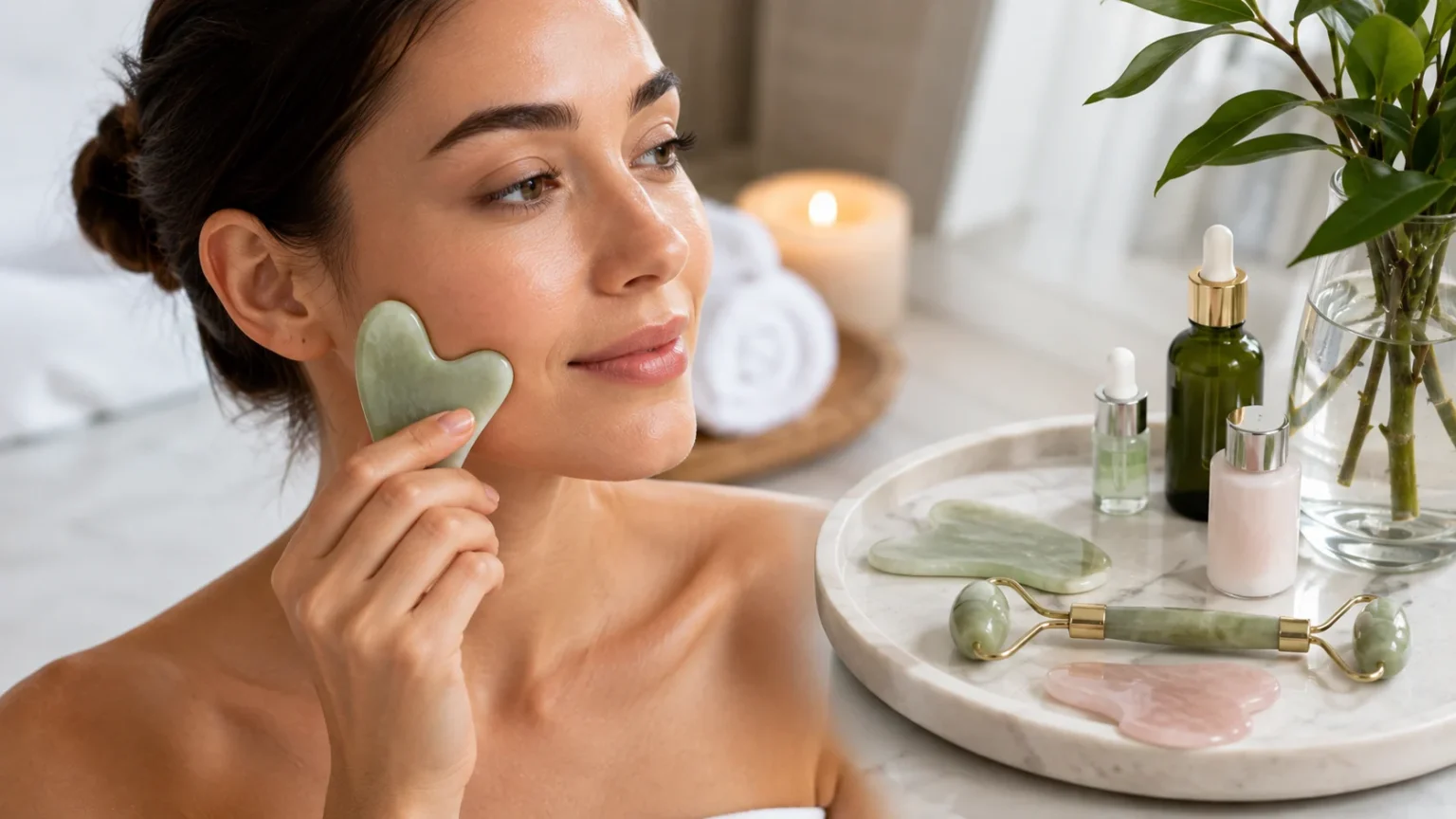

Gua Sha Tool: Benefits, Uses & How It Works
A gua sha tool has become a familiar part of modern skincare routines, appearing everywhere from beauty counters to social media tutorials. The smooth, curved tool is usually made from stone, stainless steel, ceramic, or another firm material and is gently moved across the face or body. Many people use facial gua sha to reduce temporary puffiness, relax tense facial muscles, improve the feel of their skincare routine, and create a short-term more defined appearance. Traditional gua sha practices, however, have a much longer history than the recent beauty trend suggests. Understanding how the technique works helps separate realistic gua sha benefits from exaggerated promises about permanently reshaping the face or eliminating wrinkles.
Traditional gua sha developed within East Asian healing practices and historically involved repeatedly scraping lubricated skin with a smooth-edged tool. Body gua sha can be considerably firmer than modern facial gua sha and may intentionally produce temporary red or purplish marks called petechiae or ecchymosis. Facial techniques are generally much gentler because facial skin is delicate and visible bruising is usually not the goal. Modern beauty routines commonly involve applying facial oil or serum before gliding the tool lightly along the jaw, cheeks, forehead, and neck. The lubrication reduces friction and allows the tool to move without pulling excessively on the skin. Pressure and technique matter much more than using an expensive stone.
Gua sha may temporarily influence superficial circulation and fluid movement in the area being massaged. This can help explain why someone sometimes notices a brighter-looking complexion or reduced facial puffiness immediately after a session. Gentle massage can also relax muscles that feel tight from facial expressions, jaw clenching, screen use, or everyday stress. These short-term effects can make the face look refreshed or subtly more sculpted. However, gua sha cannot permanently alter adult facial bones or selectively remove facial fat. Before-and-after photos taken immediately after treatment may therefore show genuine temporary changes without proving permanent facial restructuring.
Body gua sha is also used for muscular discomfort and stiffness, particularly around areas such as the neck, shoulders, and back. Some research on gua sha and similar manual techniques suggests possible short-term benefits for certain types of musculoskeletal discomfort, although evidence varies by condition and study quality. It should not be treated as a universal solution for chronic pain or serious injury. Forceful scraping can cause bruising, tenderness, broken capillaries, or skin damage if performed incorrectly. People taking blood-thinning medications or living with bleeding disorders, fragile skin, active infections, or certain medical conditions should be particularly cautious and may need professional guidance.
For most healthy people using facial gua sha, a gentle approach is more useful than aggressive pressure. The goal is to glide rather than scrape, keeping the tool relatively flat against well-lubricated skin and stopping if the technique causes sharp pain or significant irritation. Cleaning the tool after use is also important because facial oils, makeup, and microorganisms can accumulate on its surface. Gua sha should be considered an optional massage and skincare practice rather than an essential beauty treatment. This guide explains how a gua sha tool works, its potential benefits, how to use it correctly, common mistakes, possible side effects, and what results you can realistically expect.
What Is a Gua Sha Tool?
A gua sha tool is a smooth, handheld instrument designed to be moved across lubricated skin using controlled strokes. Traditional tools have been made from materials such as horn, stone, ceramic, metal, or other objects with rounded edges. Contemporary facial gua sha tools are commonly sold in jade, rose quartz, stainless steel, amethyst, resin, and other polished materials. Their shapes often include curved edges intended to fit areas such as the jawline or cheekbones. Although marketing sometimes assigns special healing properties to particular stones, the physical massage technique is generally more important than the specific decorative material. A comfortable shape and smooth, non-sharp edge are practical priorities.
The word gua roughly refers to scraping or stroking, while sha describes the temporary red marks that can appear during traditional body treatment. Those marks occur when stronger pressure affects tiny blood vessels close to the skin’s surface. This traditional approach differs substantially from the delicate facial technique promoted in modern skincare. Facial gua sha typically uses light or moderate pressure and should not require visible bruising to be effective as a massage. Confusing the two techniques can lead beginners to press much harder than necessary. Anyone following an online facial tutorial should therefore avoid assuming that redness or soreness proves the tool is working.
Facial gua sha tools often contain several edges because different contours can make the tool easier to maneuver. A broad curved side may work well along the cheeks and forehead, while a smaller indentation can sit comfortably around the jaw. Some tools include pointed ends marketed for pressure points, although sensitive areas should still be approached carefully. The tool should never have chipped or jagged edges because these can scratch or damage the skin. Ergonomics are more important than complicated shapes. A simple smooth tool that feels comfortable in the hand can perform the basic technique effectively.
Stone tools such as jade and rose quartz remain popular largely because they feel cool against the skin and have become strongly associated with beauty rituals. Stainless steel tools provide another option and are generally durable, easy to clean, and naturally cooling. The temperature may make a session feel refreshing, but keeping a tool extremely cold is unnecessary and could irritate sensitive skin. Claims that one mineral draws toxins from the body or transfers unique energies into facial tissues are not necessary to explain the physical effects of massage. Choosing a gua sha tool can therefore be based on comfort, durability, hygiene, shape, and personal preference.
It is also worth distinguishing gua sha from facial rollers. Both tools are used with gentle massage techniques, but a roller moves across the skin through a rotating cylinder while a gua sha tool is manually glided along the surface. Gua sha gives the user greater control over the angle, direction, and pressure of each stroke. Some people prefer this control for the jawline and neck, whereas others find rollers quicker and easier. Neither tool is required for healthy skin. They are best viewed as optional accessories that can make massage more structured and enjoyable when used correctly.
How Does Gua Sha Work?
The most straightforward explanation for facial gua sha is mechanical massage. Moving a smooth tool over lubricated skin gently compresses and releases superficial tissues. This action can temporarily increase local blood flow, which may contribute to the warm or slightly flushed appearance that sometimes follows treatment. Increased surface circulation should not be confused with permanently improved skin structure. The visible effect can fade as circulation returns toward normal. Even so, many users enjoy the refreshed look and relaxing sensation produced by a short facial massage.
Gua sha may also influence the movement of superficial fluid. The face can appear puffy after sleep, high-sodium meals, alcohol consumption, allergies, hormonal changes, crying, or other temporary factors. Gentle massage toward areas of natural lymphatic drainage may help move some accumulated fluid, creating a temporarily less swollen appearance. This is one reason facial contours can appear slightly more noticeable after a gua sha routine. The effect does not mean that facial fat has been dissolved or permanently removed. Fluid changes can return depending on sleep, hydration, diet, medical conditions, and other factors.
Muscle relaxation is another plausible reason people enjoy gua sha. Facial muscles work continuously during chewing, talking, squinting, smiling, and expressing emotion. People who clench their jaws may experience tightness around the masseter muscles, temples, and surrounding tissues. Slow massage can sometimes reduce the sensation of muscular tension and make the jaw or forehead feel more comfortable. Gua sha should not be expected to treat disorders such as severe temporomandibular joint disease on its own. Persistent jaw pain, locking, swelling, or difficulty opening the mouth requires appropriate dental or medical assessment.
Traditional body gua sha involves stronger mechanical stimulation than facial massage. Repeated strokes can produce visible skin changes and a temporary increase in superficial blood flow around the treated region. Small studies have explored whether this response may help some people experiencing neck pain, back discomfort, or muscle tension. Results are interesting but not strong enough to suggest gua sha should replace established medical assessment, physical therapy, or other evidence-based care. Manual treatments often provide short-term symptom relief without necessarily addressing the underlying cause. That distinction is especially important when pain follows injury or includes neurological symptoms.
Claims that gua sha removes unspecified toxins from facial tissues are much harder to support scientifically. The body’s liver, kidneys, lungs, digestive system, and other physiological processes continuously manage waste products and metabolic byproducts. Massage may influence circulation and superficial fluid movement, but this is different from pulling toxins through the skin. Similarly, gua sha does not need a detoxification explanation to be enjoyable or potentially useful. Massage, relaxation, temporary reduction in puffiness, and changes in local circulation are reasonable benefits on their own. Accurate explanations make it easier for consumers to set realistic expectations and avoid exaggerated wellness marketing.
Gua Sha Benefits for the Face and Skin
One of the most noticeable gua sha benefits is temporary reduction in facial puffiness. People often wake with mild swelling around the cheeks, jaw, or under-eye area because fluid distribution changes while lying down. Gentle facial massage can encourage movement of superficial fluid and make facial contours look slightly more defined for a period afterward. This effect explains why gua sha is frequently used before makeup, photographs, or morning skincare. Results tend to be temporary rather than permanent because normal fluid accumulation can recur. Consistent healthy sleep, hydration, nutrition, and management of allergies or underlying health problems remain important when facial swelling happens frequently.
Gua sha can also make skin appear brighter immediately after massage. Mechanical stimulation increases local circulation near the skin’s surface, which can create temporary warmth or a healthy-looking flush. Some people interpret this as improved skin health, although the visible effect alone does not prove structural changes in collagen or long-term skin quality. Regular gentle massage may still be a pleasant component of skincare. The main advantage is that it encourages people to slow down, apply moisturizer or facial oil carefully, and pay attention to their skin. A relaxing routine can have value even when cosmetic changes are subtle.
Another commonly reported benefit is reduced facial tension. People who unconsciously clench their jaw or tense their brow may find slow massage soothing, particularly around the temples, cheeks, and jaw muscles. Applying excessive pressure is unnecessary because facial muscles can often respond to gentle, repeated strokes. Gua sha may also provide a relaxing sensory ritual before bed, which some people find helpful for unwinding. However, severe jaw pain, clicking, locking, headaches, dental problems, or persistent facial pain deserve professional assessment. A massage tool can support comfort but cannot diagnose or correct every cause of muscular tension.
Gua sha is sometimes marketed as an anti-aging tool that lifts the face and removes wrinkles permanently. These claims require more caution. Temporary reduction in puffiness and relaxation of tense muscles can make facial features look smoother or more defined, which may be interpreted as lifting. Facial oils used during the routine can also temporarily improve surface hydration and reduce the appearance of fine lines. However, a handheld massage tool cannot produce the same structural changes as procedures designed to address substantial skin laxity or volume loss. Long-term skin aging is strongly influenced by genetics, sun exposure, smoking, skincare habits, and overall health.
A useful way to evaluate facial gua sha is to focus on how the skin looks and feels rather than expecting dramatic transformation. If gentle use leaves the face comfortable, temporarily less puffy, and relaxed without irritation, the routine may be worthwhile. If the skin repeatedly becomes bruised, painful, inflamed, or broken, the technique is too aggressive or unsuitable. Gua sha works best as an addition to foundational skincare rather than a replacement for it. Daily sunscreen, appropriate cleansing, moisturizing, and evidence-based treatments for specific concerns generally have a greater long-term influence on skin health. The tool should complement these habits, not compete with them.
How to Use a Gua Sha Tool Correctly
Begin a facial gua sha routine with clean hands, a clean tool, and freshly cleansed skin. Applying a facial oil, moisturizer, or slippery serum before using the tool is important because dry scraping can create unnecessary friction. The product should provide enough glide that the stone moves comfortably without tugging the skin. People who are acne-prone should choose a lubricant that suits their skin type rather than applying a heavy oil simply because it appears in tutorials. Several drops are often sufficient, depending on the product and size of the treatment area. Adding more lubrication during the session is preferable to dragging the tool over dry patches.
Hold the gua sha tool relatively flat against the face rather than using its edge vertically. A shallow angle spreads pressure across a wider area and usually feels more comfortable. Begin around the neck or lower face and use slow strokes that generally move outward rather than rapidly scraping backward and forward. Each stroke can be repeated several times with light, consistent pressure. There is no need to make the skin intensely red. Facial gua sha should usually feel smooth and relaxing rather than painful.
Around the jawline, position a curved edge so that it comfortably follows the shape of the jaw. Glide from the central chin area outward toward the ear while supporting the skin lightly with the opposite hand if needed. For the cheeks, move from the area beside the nose toward the outer face and ears without pressing aggressively over acne, inflamed skin, or painful areas. On the forehead, gentle upward or outward strokes can be used depending on personal preference. Pressure should generally become lighter around delicate regions. If a stroke causes sharp pain or pulls the skin noticeably, adjust the angle or add more lubrication.
The eye area requires particular caution because the skin is thinner and more delicate. Use extremely light pressure below the eyes and avoid moving the tool directly over the eyeball or irritating the eyelids. People with active eye infections, recent eye procedures, significant swelling, or unexplained eye symptoms should avoid experimenting with massage until medically appropriate. A cool tool may temporarily feel soothing around mild morning puffiness, but extreme cold is unnecessary. Facial tools should never be frozen and immediately pressed against delicate skin. Comfort should remain the guide throughout the routine.
A complete facial session does not need to be lengthy. Several minutes of controlled massage can provide the sensory and temporary cosmetic effects most users are seeking. Beginners may start with a few sessions per week and adjust according to skin tolerance rather than assuming daily use is mandatory. After finishing, wash the tool according to its material and allow it to dry before storage. Skincare products already applied can generally remain on the face unless irritation develops. Consistent gentle technique is more important than aggressive pressure, complicated sequences, or spending a long time on each area.
Common Gua Sha Mistakes to Avoid
Using too much pressure is one of the most common gua sha mistakes. Social media videos sometimes make vigorous scraping look more effective, but facial skin does not need to be bruised for massage to provide temporary benefits. Excess force can produce broken capillaries, tenderness, redness, irritation, or bruising. People with sensitive or reactive skin may experience these problems even with moderate pressure. The face should not feel significantly sore for hours afterward. If bruising repeatedly occurs during facial gua sha, pressure should be reduced substantially or the practice should be stopped.
Using gua sha on dry skin is another frequent problem. Without adequate lubrication, the tool can drag and stretch the skin rather than glide smoothly. This friction may increase irritation and make the session uncomfortable, particularly for people using retinoids, exfoliating acids, or other potentially sensitizing products. A simple moisturizer or compatible facial oil can provide enough slip for many users. The exact product matters less than whether it works well with the individual’s skin. People prone to acne should avoid automatically using thick, fragranced oils that may worsen congestion or irritation.
Poor hygiene can undermine an otherwise reasonable skincare routine. Gua sha tools collect facial oil, skincare products, dead skin, makeup residue, and microorganisms during use. Putting an unwashed tool directly back onto the face can reintroduce these materials, particularly if the tool is shared with someone else. Cleaning after each use is therefore a useful habit. Smooth nonporous materials may be easier to sanitize than certain porous or damaged stones. Cracked tools should be replaced because rough edges can scratch the skin and may become difficult to clean thoroughly.
Another mistake is scraping directly over active inflammatory conditions. Painful cystic acne, open wounds, sunburn, eczema flares, cold sores, bacterial skin infections, or recently treated cosmetic areas may become more irritated with repeated pressure. Gua sha should also be approached carefully after injectables, laser procedures, chemical peels, microneedling, surgery, or other treatments. The appropriate waiting period varies according to the procedure and clinician instructions. Moving a tool aggressively over recently treated tissue can increase swelling or interfere with healing. When in doubt after a procedure, follow the treating professional’s advice rather than a generic online tutorial.
Perhaps the biggest mistake is expecting permanent facial restructuring. Gua sha cannot shrink adult facial bones, permanently sharpen the jawline, remove buccal fat, or replace procedures that physically alter tissue. A temporarily sculpted appearance can occur when mild puffiness decreases or muscle tension relaxes, but these changes should not be confused with permanent anatomical remodeling. Dramatic before-and-after photographs can also be influenced by lighting, head position, camera distance, hydration, and facial expression. Appreciating realistic results prevents unnecessary disappointment. Gua sha can be useful without needing to transform someone’s natural facial structure.
Gua Sha Side Effects and When You Should Avoid It
Mild temporary redness can occur after facial gua sha because massage increases superficial circulation. This redness should generally fade rather than becoming progressively painful or inflamed. Significant bruising is more typical of traditional body gua sha performed with stronger pressure and is usually not the goal of a cosmetic facial routine. Tenderness, broken capillaries, or persistent irritation indicate that too much force may have been used. People whose skin bruises easily should be especially conservative. Stopping when discomfort begins is safer than assuming pain demonstrates effectiveness.
People taking anticoagulant or antiplatelet medications may have a higher tendency to bruise or bleed and should be cautious with vigorous gua sha. The same applies to individuals with bleeding disorders, very low platelet counts, or medical conditions that affect skin integrity. Professional guidance may be appropriate before using strong body-scraping techniques in these situations. Even facial massage should remain gentle. Medical treatment should never be interrupted simply to make gua sha safer. If medication increases bruising risk, the massage routine should adapt to the medical situation rather than the other way around.
Gua sha should generally not be performed over infected or damaged skin. Cellulitis, active herpes lesions, open cuts, unexplained rashes, severe acne lesions, burns, and fresh surgical wounds can all be irritated by repeated scraping. Moving a tool over an infected area may also spread microorganisms to neighboring skin or contaminate the tool. Anyone experiencing spreading redness, warmth, pus, fever, or substantial swelling should seek appropriate healthcare rather than attempting facial massage. The same principle applies to unexplained lumps or painful swelling. A massage tool cannot determine whether those symptoms are harmless.
Certain cosmetic procedures also require a temporary break from gua sha. Skin may be more vulnerable after resurfacing procedures, microneedling, strong chemical peels, or laser treatments. Facial fillers and other injectable procedures can involve temporary swelling and specific aftercare instructions, so clients should ask the treating clinician when massage is appropriate. Aggressively massaging an area simply because swelling is present may not be recommended. Healing times vary with the procedure and individual. Following procedure-specific instructions is more important than maintaining a daily beauty routine.
Anyone who develops persistent pain, numbness, unusual swelling, severe bruising, skin breakdown, or worsening symptoms after using gua sha should stop and seek appropriate advice. Likewise, chronic neck or shoulder pain should not be repeatedly scraped without understanding the underlying cause. Pain associated with weakness, numbness, fever, injury, chest symptoms, or neurological changes may require medical evaluation. Gua sha can be a comfort-focused practice, but it has limits. Knowing when not to use the tool is an important part of using it safely.
Choosing the Best Gua Sha Tool for Your Routine
Jade gua sha tools are among the most recognizable choices and are often marketed as traditional beauty accessories. Genuine jade can feel naturally cool and has an attractive smooth finish when properly polished. However, its reputation does not mean it produces superior physiological results compared with every other smooth material. Some inexpensive products marketed as jade may also be made from other stones or composites. For practical purposes, the edge quality, shape, durability, and ease of cleaning matter more than the stone’s marketing story. A well-made tool should glide smoothly without scratching.
Rose quartz is another popular material used in facial gua sha. Its pink appearance makes it visually appealing, and it usually feels cool when first placed against the skin. Claims that rose quartz carries special vibrations that directly stimulate collagen or heal skin conditions should not be confused with established biological effects. The benefits of facial massage do not require a particular crystal. Rose quartz can still be an enjoyable choice if someone likes its appearance and feel. Because stone tools can chip when dropped, users should inspect the edges periodically for damage.
Stainless steel gua sha tools have become increasingly popular because they are durable and simple to clean. Metal also conducts temperature efficiently, so it can feel cooler against the skin than some stone tools stored under the same conditions. This can be refreshing when facial puffiness is present, although chilling the tool excessively is unnecessary. Stainless steel is less likely to crack if dropped and can provide a smooth surface when manufactured correctly. Some people find it heavier than stone, while others prefer the extra weight because less hand pressure is required. Personal comfort remains an important factor.
Shape should be chosen according to how the tool will actually be used. A simple heart-shaped or wing-shaped gua sha often includes enough curvature for the jaw, cheeks, forehead, and neck. Complicated tools with numerous teeth, points, and grooves may look impressive but are not automatically more effective. Beginners generally benefit from broad, smooth edges that make controlling pressure easy. The tool should fit comfortably in the hand without requiring awkward wrist positions. If a design repeatedly pinches or scratches, it is not a good match regardless of price.
Price is also a poor measure of effectiveness. An expensive crystal tool does not necessarily move superficial fluid or massage muscles better than a reasonably priced, smooth, durable alternative. Consumers should focus on material quality, comfortable edges, hygiene, and seller transparency. Buying multiple stones for different supposed energetic properties is unnecessary for achieving the mechanical effects of facial massage. A single reliable tool can be sufficient for years when cared for properly. Technique, lubrication, patience, and consistency matter considerably more than luxury branding.
How Often Should You Use Gua Sha and When Will You See Results?
There is no universal schedule that every person must follow for facial gua sha. Some people enjoy a brief daily routine, while others use the tool two or three times per week. Skin tolerance should guide frequency more than social media recommendations. Someone with sensitive or reactive skin may benefit from less frequent sessions, particularly when also using retinoids or exfoliating products. If the face feels irritated or tender after treatment, taking a break is sensible. More frequent scraping does not guarantee stronger or longer-lasting results.
Temporary changes can sometimes be visible immediately. Mild facial puffiness may decrease after a few minutes of gentle massage, making the jaw or cheek area appear slightly more defined. Skin may also look temporarily brighter because of increased superficial circulation. These effects can be noticeable enough to make gua sha appealing before an event or at the beginning of a morning routine. However, they commonly fade as fluid redistributes and circulation normalizes. Immediate improvement should therefore be understood as a short-term massage effect rather than permanent facial transformation.
Muscle relaxation may also be noticeable during or shortly after a session. Someone who carries tension around the jaw, forehead, or temples may feel more comfortable after controlled massage. Consistency can make the practice feel more effective because users become better at recognizing tense areas and controlling pressure. Even so, recurrent significant pain should not simply be massaged indefinitely. Jaw clenching, headaches, neck pain, and facial discomfort can have causes that require targeted treatment. Gua sha works best as supportive self-care rather than a substitute for diagnosis.
Long-term claims about dramatic wrinkle reduction, collagen rebuilding, or permanent lifting remain less certain. Regular massage may improve how the skin temporarily looks and feels, while the moisturizer or oil used during treatment can improve hydration. However, sun protection, smoking avoidance, appropriate topical ingredients, good nutrition, and established dermatological treatments have stronger roles in long-term skin aging. Someone using gua sha consistently may enjoy subtle cosmetic and relaxation benefits without developing a completely different facial structure. Realistic expectations tend to produce greater satisfaction than waiting for dramatic transformation.
The best routine is ultimately one that feels comfortable, does not damage the skin, and can be maintained without becoming stressful. A five-minute massage performed gently can be more useful than an aggressive 30-minute routine designed around unrealistic promises. Gua sha is optional, and skipping a day does not harm skin health. People should view it as one possible component of self-care rather than another beauty obligation. When approached this way, the tool can provide relaxation, temporary de-puffing, and an enjoyable method of applying skincare while maintaining healthy expectations about what massage can accomplish.
Frequently Asked Questions About Gua Sha Tools
What does a gua sha tool actually do?
A gua sha tool provides controlled massage that may temporarily increase superficial circulation, move some accumulated facial fluid, and relax tense muscles. These effects can make the face look temporarily brighter, less puffy, or slightly more defined, but the tool does not permanently reshape facial bones.
Does gua sha really work for the jawline?
Gua sha may temporarily make the jawline appear more defined by reducing mild puffiness and relaxing surrounding muscles. It cannot permanently remove facial fat or change the underlying shape of the jawbone.
Should you use gua sha every day?
Some people can comfortably use facial gua sha every day when pressure is gentle and the skin is well lubricated. People with sensitive, irritated, or acne-prone skin may prefer less frequent use and should reduce frequency if redness or tenderness persists.
Do you need facial oil with gua sha?
A facial oil is not absolutely required, but the skin needs enough slip to prevent dragging and excessive friction. A suitable moisturizer, serum, balm, or facial oil can provide lubrication depending on your skin type and skincare routine.
Can gua sha cause bruising?
Yes, excessive pressure can cause bruising, broken capillaries, tenderness, or irritation, especially on delicate facial skin. Facial gua sha should generally be gentle, and significant bruising should not be considered proof that the technique is working.