
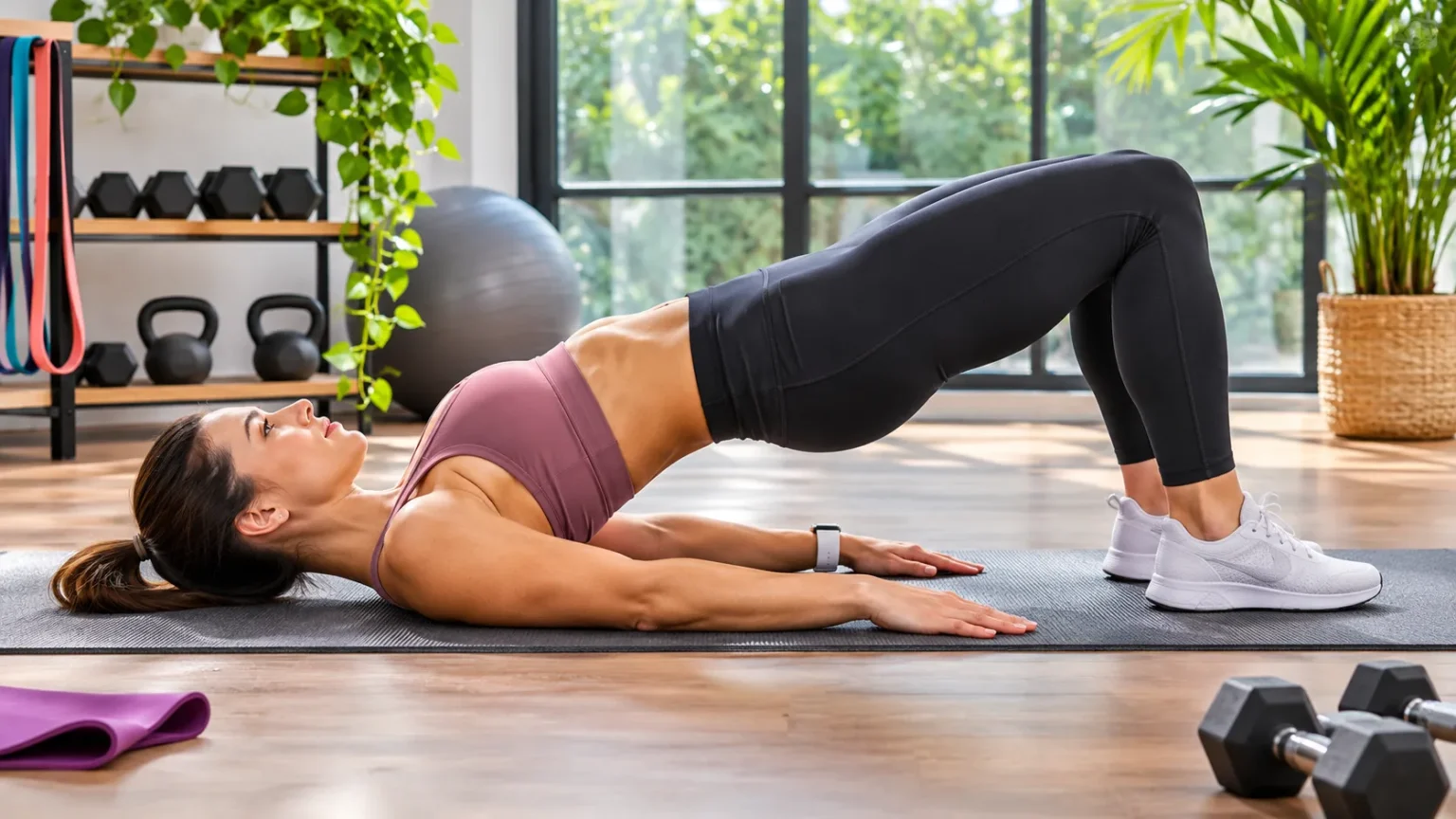

A bridge workout is a simple and effective exercise that helps strengthen your glutes, core, and lower-body muscles. It requires little space, no expensive equipment, and can be adjusted for different fitness levels. Whether you are beginning a fitness routine or looking for ways to improve your movement, the bridge exercise can be a useful addition to your workouts.
The bridge workout focuses on controlled hip movement while engaging muscles that support the pelvis, hips, and lower back. When performed correctly, it can improve muscular strength, stability, and coordination. This guide explains proper bridge exercise form, important benefits, common mistakes, useful variations, and practical tips for incorporating bridges into a balanced fitness routine.
What Is a Bridge Workout?
A bridge workout involves lifting your hips from the floor while keeping your shoulders and feet supported. The most common version is the glute bridge, which is performed while lying on your back with your knees bent. This movement primarily targets the gluteal muscles. It also engages the hamstrings, abdominal muscles, and other structures that help stabilize the pelvis.
The exercise is popular because it uses a relatively simple movement pattern that can be learned gradually. Unlike some strength exercises, basic glute bridges do not require weights or complicated equipment. You can perform them on an exercise mat or another comfortable, stable surface. The movement can also be modified to match different abilities and training goals.
Bridge exercises are commonly included in general fitness programs, strength training routines, and some rehabilitation plans. They can help improve awareness of hip movement and muscular control. However, their suitability depends on individual health and physical limitations. Anyone experiencing significant back, hip, or knee discomfort should seek professional guidance before beginning unfamiliar exercises.
What Muscles Does the Bridge Exercise Work?
The primary muscles involved in a glute bridge are the gluteus maximus muscles, located around the buttocks. These muscles help extend the hips and support movements such as standing, climbing stairs, and walking. During a bridge, they contract to lift the pelvis upward. Controlled repetitions can help strengthen these muscles over time.
The hamstrings also contribute to hip extension during the exercise. These muscles run along the back of the thighs and assist with several lower-body movements. Their involvement can vary depending on foot position and individual technique. If the hamstrings are doing most of the work, adjusting your setup may help improve muscular engagement.
Your abdominal muscles and other stabilizers also participate by helping maintain pelvic and spinal control. The exercise involves coordinated activity rather than isolating one muscle completely. This makes bridges useful for practicing controlled lower-body movement. However, developing comprehensive strength requires additional exercises that challenge the body through different movement patterns.
How to Do a Glute Bridge With Proper Form
Begin by lying on your back on a comfortable exercise mat with your knees bent and feet resting flat on the floor. Place your feet approximately hip-width apart and keep your arms relaxed beside your body. Your knees should point generally in the same direction as your toes. Find a comfortable position before beginning the movement.
Gently engage your abdominal and gluteal muscles, then press through your feet to lift your hips. Raise your pelvis until your shoulders, hips, and knees form a roughly straight line. Avoid pushing your hips so high that your lower back arches excessively. Keep your neck relaxed and allow your shoulders to remain supported by the floor.
Pause briefly at the top while maintaining comfortable breathing and muscular control. Slowly lower your hips toward the starting position without dropping suddenly. Repeat the movement at a manageable pace, focusing on technique rather than speed. Stop if you experience sharp pain, dizziness, or discomfort that does not feel like normal muscular effort.
Benefits of Bridge Workouts for Glute Strength
One of the main benefits of bridge workouts is strengthening the gluteal muscles through repeated hip extension. The glutes play important roles in walking, standing, climbing stairs, and other everyday activities. Developing their strength can support comfortable movement and lower-body function. Bridges provide a practical way to train these muscles without complicated equipment.
Stronger glutes can also contribute to better control during exercises involving the hips and legs. They work alongside the hamstrings, quadriceps, and other muscles to support movement. However, bridges should not replace all other lower-body exercises. A balanced strength program usually includes several movement patterns to develop different muscles and abilities.
Another advantage is that bridge exercises can be adapted as your strength and confidence improve. Beginners may start with basic bodyweight movements, while experienced exercisers can explore appropriate variations. Gradual progression helps maintain a suitable challenge. Consistent practice, comfortable technique, and adequate recovery are more important than attempting difficult variations too quickly.
How Bridge Exercises Support Core Stability
Bridge exercises involve the abdominal muscles because they help stabilize the pelvis and trunk during hip movement. Maintaining control prevents unnecessary shifting and excessive arching of the lower back. This makes the exercise useful for practicing coordination between the core and lower body. The goal is controlled movement rather than simply lifting the hips as high as possible.
Core stability supports many everyday tasks, including lifting objects, changing positions, and maintaining balance. Bridges can contribute to this ability when included in a broader exercise routine. However, they do not train every core function equally. Other movements involving rotation resistance, controlled bending, and balance may provide additional benefits.
To improve core engagement during bridges, focus on maintaining a comfortable spinal position and steady breathing. Avoid holding your breath or forcefully tightening your abdomen. Gentle muscular control is usually sufficient for a basic bodyweight bridge. If your lower back becomes uncomfortable, reduce the movement range and review your technique before continuing.
Bridge Workout Benefits for Lower Back Support
The bridge exercise is sometimes included in programs designed to strengthen muscles supporting the lower back and pelvis. Gluteal strength and hip control can contribute to comfortable everyday movement. When performed appropriately, bridges may help improve muscular coordination. However, they are not a universal treatment for lower back pain or spinal conditions.
Lower back discomfort can develop from many different causes, including muscle irritation, joint problems, and other medical conditions. An exercise that helps one person may worsen symptoms for someone else. Therefore, people with ongoing back pain should seek individualized guidance when necessary. Exercise selection should reflect the underlying condition, physical abilities, and response to movement.
For people who can perform bridges comfortably, slow repetitions may help build awareness of pelvic movement. Keeping the rib cage and pelvis reasonably aligned can reduce unnecessary spinal extension. Stop if symptoms increase or spread into the legs. A physical therapist can recommend suitable exercises when back discomfort affects daily activities or limits normal movement.
How to Breathe During a Bridge Workout
Breathing is an important part of performing bridge exercises comfortably and with control. Beginners sometimes hold their breath while lifting their hips, especially when concentrating on technique. However, steady breathing can make the movement feel more natural. It also helps avoid unnecessary tension in the neck, shoulders, and upper body.
A simple approach is to breathe out gently as you lift your hips and breathe in while lowering them. The exact breathing pattern does not need to feel forced or complicated. Focus on keeping your breath comfortable throughout the exercise. If you find yourself straining, reduce the difficulty or pause before beginning another repetition.
Breathing becomes particularly important during more challenging bridge variations. Heavier resistance may encourage excessive bracing or breath-holding. People with certain medical conditions may need specific guidance about exercise intensity and breathing techniques. For general fitness, controlled movement and relaxed, continuous breathing provide a useful foundation.
Common Glute Bridge Mistakes to Avoid
One common bridge workout mistake is lifting the hips too high and excessively arching the lower back. This can shift the movement away from the intended hip extension pattern. Instead, focus on lifting until your torso and thighs form a comfortable alignment. The goal is to engage the glutes while maintaining controlled spinal positioning.
Another mistake involves placing the feet too far away from or too close to the hips. An unsuitable position can make the movement uncomfortable or increase unwanted strain. Experiment with small adjustments until your feet feel stable and your knees move comfortably. Avoid allowing your knees to collapse inward during the exercise.
Moving too quickly can also reduce control and make it harder to recognize improper technique. Some people rush through repetitions without fully controlling the lowering phase. Slower movement allows you to notice how your muscles respond. Prioritizing comfortable form over repetition counts can help make the exercise more effective and enjoyable.
Bridge Workout for Beginners: How to Get Started
Beginners can start with a simple bodyweight bridge performed on a comfortable, stable surface. Before lifting, practice finding a relaxed position with your knees bent and feet planted. Focus on a small, controlled hip lift rather than attempting the greatest possible range. Gradually increase the movement as your coordination and comfort improve.
A beginner might begin with one or two comfortable sets of approximately eight to twelve controlled repetitions. However, these numbers are only general examples rather than requirements. Some people may benefit from fewer repetitions or additional rest. The appropriate amount depends on individual fitness, experience, and response to the exercise.
During your first sessions, pay attention to your breathing, foot position, and lower back comfort. Stop before your technique deteriorates or the movement becomes painful. You can gradually adjust repetitions as the exercise becomes easier. Consistency and suitable progression are more useful than completing a large number of repetitions immediately.
Single-Leg Bridge Exercise: Form and Benefits
The single-leg bridge is a more challenging variation of the traditional glute bridge. It involves lifting the hips while one foot remains on the floor and the other leg is raised. This increases the stability demands on the supporting side. It may be useful for people who already perform standard bridges comfortably.
To try the movement, begin in a regular bridge position and raise one foot slightly from the floor. Keep your pelvis as level as possible while lifting your hips through the supporting leg. Move slowly and avoid twisting your trunk. Lower yourself with control before switching sides, and stop if you cannot maintain comfortable alignment.
Single-leg bridges place greater demands on the glutes, hamstrings, and stabilizing muscles. They can help develop unilateral strength and coordination when performed with appropriate technique. However, they are not necessary for every fitness routine. Beginners should build confidence with basic bridges before attempting more demanding variations.
Glute Bridge vs. Hip Thrust: What’s the Difference?
Glute bridges and hip thrusts both involve extending the hips against resistance. The main difference is their usual starting position and available movement range. A glute bridge is commonly performed on the floor with the upper back supported by the ground. A hip thrust usually involves positioning the upper back against an elevated bench.
Hip thrusts often allow a larger range of hip movement and can accommodate additional resistance. Glute bridges may feel simpler because they require less equipment and a more stable starting position. Both exercises can strengthen the gluteal muscles when performed appropriately. Neither is automatically better for every individual or training goal.
Choosing between the movements depends on comfort, available equipment, and personal preferences. Beginners may find floor bridges easier to learn, while experienced exercisers might include hip thrusts in their strength programs. Proper technique remains important for both exercises. If either movement causes discomfort, adjust the setup or seek appropriate professional guidance.
Bridge Exercise Variations for Different Fitness Levels
Bridge workouts can include several variations that change the difficulty or movement demands. A basic floor bridge provides a starting point for learning controlled hip extension. Some people may also practice short holds at the top of the movement. These options allow gradual progression without immediately introducing external resistance.
More challenging variations include marching bridges and single-leg bridges. A marching bridge involves maintaining the lifted position while briefly raising one foot at a time. This increases the need for pelvic stability. However, the movement should remain controlled, and the hips should not rotate excessively from side to side.
Resistance-based variations may involve exercise bands or additional weights under appropriate supervision. These methods can increase muscular demands but require greater attention to setup and technique. Adding resistance is not necessary for everyone. Choose variations that match your experience and allow you to maintain comfortable movement throughout the exercise.
How Often Should You Do Bridge Workouts?
The ideal frequency for bridge exercises depends on your fitness goals, training experience, and overall exercise routine. Bridges can be included in lower-body strength sessions or used as part of a general mobility program. Beginners may benefit from practicing them on a few nonconsecutive days each week. Allowing suitable recovery supports comfortable progress.
If bridges are part of a more demanding strength workout, consider the total amount of lower-body exercise you perform. Other activities such as squats, walking, and resistance training also challenge the muscles around your hips. Excessive repetition without adequate recovery can contribute to discomfort. A balanced program should account for your overall activity level.
Progress does not require completing bridge exercises every day. Improving technique and gradually increasing suitable challenges can be more useful than simply adding repetitions. Pay attention to fatigue, soreness, and changes in performance. A qualified exercise professional can help create a personalized routine when you have specific fitness needs or limitations.
How to Add Bridges to Your Workout Routine
Bridge exercises can fit naturally into a general strength training session. Some people use basic bridges early in a workout to practice hip movement before other exercises. Others include them as a lower-body strengthening activity alongside squats and controlled leg movements. Their flexibility makes them useful in many different exercise routines.
A simple balanced workout might include a gentle warm-up, bridge repetitions, comfortable lower-body strengthening movements, and a short cool-down. The exact structure should reflect your experience and available time. Avoid assuming that bridges alone provide complete fitness training. Different exercises are necessary to support cardiovascular health, strength, flexibility, and coordination.
You can also use bridges to practice movement quality on days when you prefer a shorter routine. Focus on steady breathing and comfortable repetitions without rushing. If you already follow a structured training plan, consider how bridges fit within your existing workload. The most effective routine is one that remains practical, safe, and sustainable.
Safety Tips for Bridge Workouts
Although basic bridges are accessible for many people, they are not suitable for every physical condition. Individuals recovering from surgery, managing significant joint pain, or experiencing certain spinal problems may need modified exercises. Avoid using the movement to diagnose or treat unexplained symptoms. Medical or physical therapy guidance can help determine whether bridges are appropriate.
During the exercise, discomfort should not be ignored. Sharp pain, tingling, unusual weakness, or increasing symptoms are reasons to stop and seek advice. Normal muscular effort may feel challenging, but it should not involve uncontrolled strain. Maintaining a comfortable range of motion and stable foot placement helps make the movement more manageable.
A safe bridge workout also depends on gradual progression and realistic expectations. Avoid comparing your ability with others or forcing advanced variations before you are ready. Start with movements that feel controlled and build gradually as your strength improves. Taking breaks, using suitable equipment, and listening to your body’s response support a positive exercise experience.
Conclusion
A bridge workout is a practical exercise for strengthening the glutes, engaging supporting muscles, and improving awareness of hip movement. Its simple setup makes it accessible for many beginners, while different variations provide opportunities for gradual progression. Learning proper technique helps ensure the movement remains controlled and comfortable.
The benefits of bridge exercises depend on consistent practice, appropriate difficulty, and integration into a balanced fitness routine. Proper foot positioning, steady breathing, and controlled hip movement are important parts of good form. Avoid excessive lower back arching, rushing through repetitions, or continuing when the exercise causes pain.
Whether you are beginning strength training or expanding an existing workout routine, bridges can provide a useful lower-body exercise option. Start with manageable repetitions, focus on comfortable movement, and progress gradually according to your abilities. With thoughtful practice, bridge exercises can support muscular strength, coordination, and everyday physical function.
Frequently Asked Questions
What muscles does a bridge workout strengthen?
A bridge workout primarily strengthens the gluteal muscles while also engaging the hamstrings and core stabilizers. These muscles help support hip movement, pelvic control, and everyday lower-body activities.
Are bridge exercises good for beginners?
Yes, basic glute bridges can be suitable for many beginners because they require little equipment and allow gradual progression. Start with comfortable repetitions and focus on controlled movement.
How many glute bridges should I do?
Beginners may start with one or two sets of approximately eight to twelve comfortable repetitions. The appropriate amount depends on fitness level, technique, recovery, and individual physical limitations.
Can bridge exercises help with lower back pain?
Bridges may support muscle strength and movement control in some people, but they are not appropriate for every cause of back pain. Seek professional guidance for persistent or worsening symptoms.
What is the difference between a glute bridge and a hip thrust?
A glute bridge is usually performed with the upper back on the floor, while a hip thrust uses an elevated support. Both exercises train hip extension and glute strength.