

Pelvic floor dysfunction can affect bladder control, bowel movements, pelvic comfort, and everyday activities. The pelvic floor muscles support important organs and work together with the abdomen, diaphragm, and surrounding muscles. When these muscles become weak, overly tense, or poorly coordinated, uncomfortable symptoms may develop. Understanding pelvic floor dysfunction exercises can help people learn about movement strategies that support muscle function and pelvic health.
Not every pelvic floor problem requires strengthening exercises. Some people have weak pelvic floor muscles that benefit from appropriate training, while others have overly tight muscles that need relaxation and improved coordination. Performing the wrong exercises may increase discomfort rather than improve symptoms. Identifying the underlying problem is therefore an important part of choosing a suitable approach.
This guide explains common pelvic floor dysfunction exercises, their potential benefits, proper form, and important safety considerations. You will learn about Kegel exercises, diaphragmatic breathing, gentle mobility movements, and other approaches used in pelvic floor rehabilitation. The information is educational and does not replace an individualized assessment from a qualified pelvic floor physical therapist or healthcare professional.
What Is Pelvic Floor Dysfunction?
Pelvic floor dysfunction occurs when the muscles supporting the pelvic organs do not function as expected. These muscles help coordinate bladder and bowel control while contributing to stability and pressure management. They must contract, relax, and respond appropriately during different activities. Problems can develop when the muscles cannot perform these actions effectively.
Some individuals experience pelvic floor weakness, which may contribute to urinary leakage or difficulty maintaining bowel control. Others experience excessive muscle tension, sometimes called a hypertonic pelvic floor. Tight muscles may have difficulty relaxing completely and can contribute to pelvic pain or difficulties with urination. Weakness and excessive tension can also occur together.
Pelvic floor dysfunction can affect people of different ages and genders. Its causes may include changes in muscle function, pregnancy and childbirth, surgery, constipation, or certain neurological conditions. Symptoms alone cannot reliably identify whether muscles are weak or overly tense. A healthcare professional can assess muscle function and recommend an appropriate management plan.
Common Symptoms of Pelvic Floor Dysfunction
Pelvic floor dysfunction can produce different symptoms depending on the muscles involved and the underlying condition. Some people experience urinary leakage during coughing, laughing, or physical activity. Others report difficulty emptying the bladder or frequent urges to urinate. These symptoms may interfere with daily routines and reduce confidence during ordinary activities.
Bowel-related symptoms can include constipation, difficulty coordinating bowel movements, or problems controlling gas and stool. Some individuals also experience pelvic pressure or discomfort in the lower abdomen. Persistent muscle tension may contribute to discomfort when sitting or performing certain movements. The combination and severity of symptoms vary significantly between individuals.
Because these symptoms overlap with other medical conditions, they should not automatically be attributed to pelvic floor dysfunction. Urinary infections, digestive disorders, and other health problems may require different treatments. A proper assessment helps identify contributing factors and appropriate care. New or persistent symptoms deserve medical attention, especially when they affect normal bladder or bowel function.
Benefits of Pelvic Floor Dysfunction Exercises
Appropriate pelvic floor exercises can help improve muscle strength, endurance, coordination, and awareness. Strengthening programs may benefit individuals with confirmed pelvic floor weakness, particularly certain forms of urinary incontinence. Relaxation-focused exercises can support people who have difficulty releasing excessive muscle tension. The most appropriate approach depends on an individual’s symptoms and clinical assessment.
Pelvic floor rehabilitation also focuses on improving the relationship between breathing, abdominal pressure, and muscle activity. Learning how to coordinate these functions may support everyday activities such as walking, lifting, and using the bathroom. Some people benefit from improved awareness of unnecessary muscle gripping. These skills can become useful parts of a broader rehabilitation program.
Benefits usually develop gradually rather than appearing after a single exercise session. Progress depends on muscle function, consistency, symptom severity, and the underlying condition. Supervised training is particularly valuable because incorrect technique can reduce effectiveness. Exercise programs should remain comfortable and be adjusted when symptoms increase or new problems develop.
Kegel Exercises for Pelvic Floor Muscle Strength
Kegel exercises are commonly used to strengthen pelvic floor muscles when weakness has been identified. They involve gently contracting and then completely relaxing the muscles responsible for supporting pelvic organs and maintaining continence. Proper technique is essential because excessive effort can involve surrounding muscles unnecessarily. Kegels are not automatically suitable for people with pelvic pain or excessive pelvic floor tension.
A commonly taught technique involves imagining a gentle lifting sensation in the pelvic floor without tightening the buttocks or holding the breath. The contraction should be controlled rather than forceful. Complete relaxation between contractions is equally important. A pelvic floor physical therapist can determine suitable contraction durations and repetitions based on individual muscle function.
Kegel exercises should not be practiced repeatedly while urinating because interrupting normal bladder emptying can create problems. People who experience pain, pressure, or increased urinary difficulties should avoid continuing unsupervised strengthening exercises. Proper assessment helps establish whether strengthening is actually needed. Individualized pelvic floor muscle training can be more effective than following a generic routine.
Diaphragmatic Breathing for Pelvic Floor Relaxation
Diaphragmatic breathing is a gentle technique often included in pelvic floor rehabilitation programs. The diaphragm and pelvic floor normally move in coordination during breathing. When breathing becomes shallow or the abdomen remains constantly tense, this relationship may be less comfortable. Slow, relaxed breathing can help people become more aware of muscle movement and unnecessary gripping.
To practice, sit or lie in a comfortable supported position and allow the shoulders to relax. Breathe gently through the nose while allowing the lower ribs and abdomen to expand naturally. Exhale without forcing the air out or tightening the abdominal muscles. Avoid straining or deliberately pushing downward into the pelvic floor.
This exercise may be especially useful for people whose treatment plan emphasizes relaxation and awareness. A few comfortable breaths can be more helpful than repeatedly forcing deep inhalations. Stop if breathing causes dizziness, discomfort, or increased symptoms. Diaphragmatic breathing is a supportive technique rather than a stand-alone treatment for every pelvic floor disorder.
Pelvic Tilts for Gentle Mobility and Coordination
Pelvic tilts are gentle movements that may help improve awareness of the pelvis and lower back. They are commonly included in rehabilitation programs for individuals who benefit from controlled movement. The exercise involves small changes in pelvic position rather than large or forceful movements. Its usefulness depends on the person’s symptoms and overall treatment goals.
A comfortable starting position is lying on the back with knees bent and feet supported. Gently move the pelvis through a small, comfortable range while allowing natural breathing. The lower back may slightly flatten and then return toward its resting position. Avoid pressing aggressively into the floor or holding the abdominal muscles rigidly.
Pelvic tilts are not a direct substitute for pelvic floor muscle training or relaxation therapy. Their main role may involve movement awareness and comfortable coordination with nearby muscles. People with back pain, pelvic discomfort, or mobility limitations may need modified positions. A therapist can help determine whether this exercise belongs in an individualized rehabilitation program.
Child’s Pose for Gentle Pelvic Floor Relaxation
Child’s Pose is a common yoga position sometimes used to encourage gentle relaxation around the hips, back, and pelvic region. It may be included in programs for people experiencing muscular tension. However, the position does not directly treat every cause of pelvic pain. Comfort and symptom response should guide whether it is appropriate.
The movement typically begins from a supported kneeling position, with the body gradually resting backward toward the heels. The upper body can remain supported by pillows or cushions when necessary. Breathing should stay relaxed throughout the position. Avoid forcing the hips or lower back into an uncomfortable stretch.
Some people find this position calming, while others experience discomfort because of knee, hip, or pelvic limitations. It is appropriate to skip the exercise if symptoms increase. A modified resting position may provide similar opportunities for relaxation. Gentle movements should support comfort rather than create additional strain.
Happy Baby Pose and Pelvic Floor Mobility
Happy Baby Pose is another movement sometimes included in gentle pelvic mobility routines. It involves positioning the hips and knees in a comfortable, supported range while lying on the back. The position may create a stretching sensation around the hips and inner thighs. It should not be used as an aggressive pelvic floor stretching technique.
The movement is generally performed while lying comfortably with the knees bent toward the body. Individuals may support their thighs rather than reaching for their feet. The lower back should remain comfortable, and breathing should continue naturally. Avoid pulling forcefully or trying to achieve a particular range of motion.
Happy Baby Pose may be unsuitable for individuals with certain hip conditions, back problems, or painful pelvic symptoms. Pregnancy-related limitations can also require modifications. A physical therapist can recommend safer alternatives when needed. The purpose of gentle mobility work is to promote comfortable movement rather than force muscles into relaxation.
Bridge Exercises for Supporting Muscle Coordination
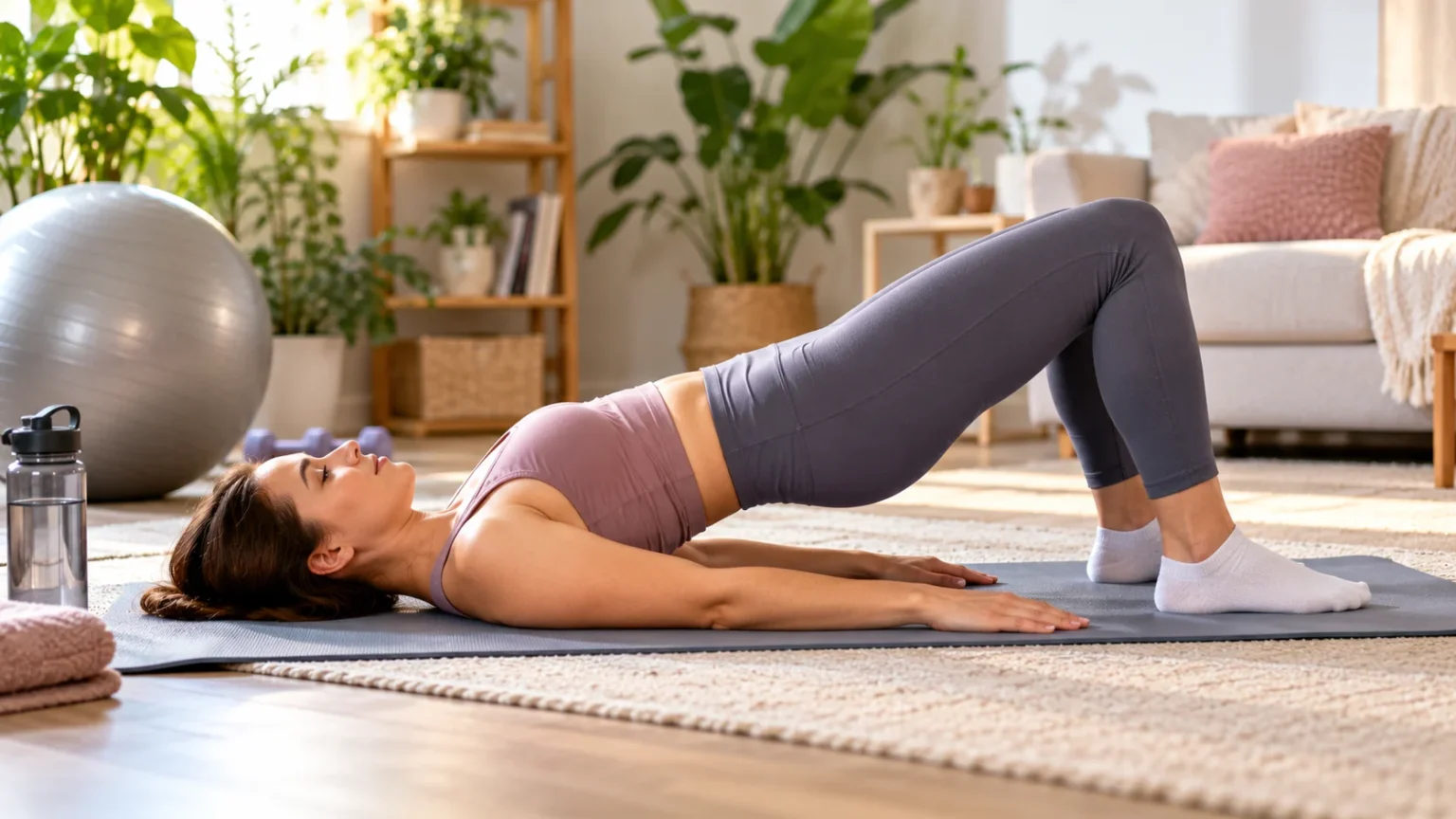
Bridge exercises are commonly used to strengthen the hips and gluteal muscles. These muscle groups contribute to movement and stability around the pelvis. In some rehabilitation programs, bridges are included alongside pelvic floor training to support broader muscular coordination. However, stronger gluteal muscles do not automatically correct pelvic floor dysfunction.
A basic bridge involves lying on the back with knees bent and feet supported. The hips are gently raised through a comfortable range while breathing continues naturally. The movement should remain controlled without excessive arching of the lower back. Avoid gripping the pelvic floor or holding the breath throughout the exercise.
For people with excessive pelvic floor tension, strengthening movements may sometimes increase symptoms if performed without appropriate guidance. Bridges should therefore be selected according to individual needs rather than added automatically. A therapist may modify the range of motion or recommend alternative exercises. Comfort and coordinated movement are more important than performing difficult repetitions.
Deep Squats and Pelvic Floor Awareness
Squatting is a natural movement used during many daily activities. Certain supported squat positions can help people explore hip mobility and pelvic floor coordination. However, deep squatting is not appropriate for everyone, particularly individuals with joint limitations or symptoms that worsen under pressure. Exercise selection should reflect individual comfort and physical ability.
A gentle supported squat can involve holding a stable surface while moving through a comfortable range. The knees and hips should move without forcing excessive depth. Breathing should remain relaxed, and the movement should stop if pelvic pressure or pain increases. There is no need to achieve a deep position to benefit from comfortable movement.
For individuals with pelvic organ prolapse symptoms or other pressure-related concerns, squatting may require additional modification. A pelvic health professional can explain how abdominal pressure and muscle coordination influence symptoms. Supported movement may be useful within a broader rehabilitation plan. Avoiding strain is especially important when learning new exercises.
Why Pelvic Floor Relaxation Matters as Much as Strength
Pelvic floor muscles need the ability to both contract and relax appropriately. Constant tension can interfere with normal muscle coordination and contribute to uncomfortable symptoms. Strengthening already overactive muscles without addressing relaxation may worsen certain problems. This is why pelvic floor rehabilitation should not focus exclusively on building strength.
Relaxation training often emphasizes breathing, body awareness, and reducing unnecessary muscle gripping. Some people unconsciously tighten their pelvic muscles during stress or everyday activities. Learning to recognize and release this tension may support more comfortable movement. A physical therapist can also identify whether other muscles are contributing to the problem.
The appropriate balance between strengthening and relaxation differs from person to person. Someone with urinary leakage caused by weakness may need a different approach from someone experiencing persistent pelvic pain. In some cases, treatment combines several techniques. Professional guidance helps ensure the program addresses actual muscle function rather than assumptions about symptoms.
Common Mistakes to Avoid During Pelvic Floor Exercises
One common mistake is performing Kegel exercises without confirming whether pelvic floor weakness is present. People with excessive tension may experience worsening discomfort when repeatedly contracting already tight muscles. Symptoms alone do not reliably distinguish these conditions. An assessment from a qualified healthcare professional can help prevent inappropriate exercise choices.
Another mistake is holding the breath or tightening the abdomen, buttocks, and thighs excessively during pelvic floor contractions. These habits may interfere with proper muscle coordination. Pushing downward instead of gently contracting can also produce unwanted pressure. Correct technique should emphasize controlled movement, comfortable breathing, and complete relaxation when appropriate.
Ignoring pain is another important mistake. Pelvic floor exercises should not cause sharp pain, increasing pelvic pressure, or worsening urinary or bowel symptoms. Continuing through discomfort can make it harder to identify the underlying problem. Exercise intensity and selection should be adjusted with professional guidance when symptoms appear or become more severe.
How Long Does Pelvic Floor Rehabilitation Take?
The time required to improve pelvic floor dysfunction varies according to the underlying condition and severity of symptoms. Some people notice gradual improvements within several weeks of appropriate treatment. Others require a longer rehabilitation program involving supervised exercises and behavioral strategies. There is no universal timeline that applies to every individual.
For certain forms of urinary incontinence, clinical guidelines recommend supervised pelvic floor muscle training for at least three months. Other conditions may require different approaches or longer treatment periods. People with excessive muscle tension may initially focus on relaxation rather than strengthening. Progress should be evaluated using meaningful changes in symptoms and everyday function.
Consistency is important, but performing more exercises does not necessarily produce faster improvement. Overtraining or using inappropriate techniques may increase discomfort. Regular follow-up allows healthcare professionals to modify exercises according to progress. A personalized rehabilitation plan is generally more useful than following an intensive routine without assessment.
When Should You See a Pelvic Floor Physical Therapist?
A pelvic floor physical therapist can help evaluate muscle strength, relaxation, coordination, and symptoms affecting bladder or bowel function. Assessment is particularly useful when discomfort persists or home exercises do not improve symptoms. Therapists use clinical findings to determine whether strengthening, relaxation, or other treatment strategies may be appropriate.
Pelvic floor physical therapy may include education, guided movement, breathing techniques, muscle training, and other individualized interventions. Some programs also use biofeedback to help people understand muscle activity. The treatment plan depends on the condition being addressed. Not every patient requires the same type of examination or therapeutic approach.
Seek prompt medical attention for new difficulty passing urine, severe pelvic pain, fever with urinary symptoms, or sudden neurological changes. Persistent urinary leakage, constipation, or pelvic pressure also deserves professional evaluation. Early assessment can help identify medical conditions that require different treatment. Exercise should support appropriate healthcare rather than delay necessary diagnosis.
Conclusion
Pelvic floor dysfunction exercises can support muscle strength, coordination, relaxation, and awareness when they are chosen appropriately. Kegel exercises may benefit certain people with weak pelvic floor muscles, while breathing and relaxation techniques may be more suitable for excessive tension. Gentle mobility exercises can also contribute to a broader rehabilitation program. The most effective approach depends on understanding the underlying condition.
Proper form is essential for avoiding unnecessary strain and improving the effectiveness of pelvic floor rehabilitation. Comfortable breathing, controlled movement, and appropriate muscle relaxation are important parts of many treatment plans. Exercises should not create pain or worsen existing symptoms. Professional assessment can help determine which movements are suitable for individual needs.
Improving pelvic floor function often requires patience, consistent care, and an individualized strategy. Rather than focusing on one exercise, rehabilitation may involve several techniques designed to support everyday comfort and function. A qualified pelvic floor physical therapist can guide progress and adjust treatment when necessary. With appropriate support, many people can improve their symptoms and better understand their pelvic health.
Frequently Asked Questions
What are the best exercises for pelvic floor dysfunction?
The best exercises depend on whether the pelvic floor muscles are weak, excessively tense, or poorly coordinated. Kegels may support weakness, while diaphragmatic breathing and gentle relaxation may help excessive tension.
Can Kegel exercises make pelvic floor dysfunction worse?
Yes, Kegels may increase discomfort in some people with overly tight or painful pelvic floor muscles. A healthcare professional can determine whether strengthening or relaxation is more appropriate.
How often should you do pelvic floor exercises?
Exercise frequency depends on the condition and individual treatment plan. A pelvic floor physical therapist can recommend suitable repetitions, rest periods, and progression while monitoring symptom changes.
How long does it take for pelvic floor exercises to work?
Some people notice improvement after several weeks, but structured rehabilitation often continues for three months or longer. Results depend on the underlying problem, exercise technique, and treatment consistency.
Can pelvic floor dysfunction improve without surgery?
Yes, many people benefit from non-surgical treatments such as supervised pelvic floor physical therapy, muscle training, relaxation techniques, and behavioral strategies. Treatment depends on the cause and severity of symptoms.