
Will Cyber Security Be Replaced by AI?
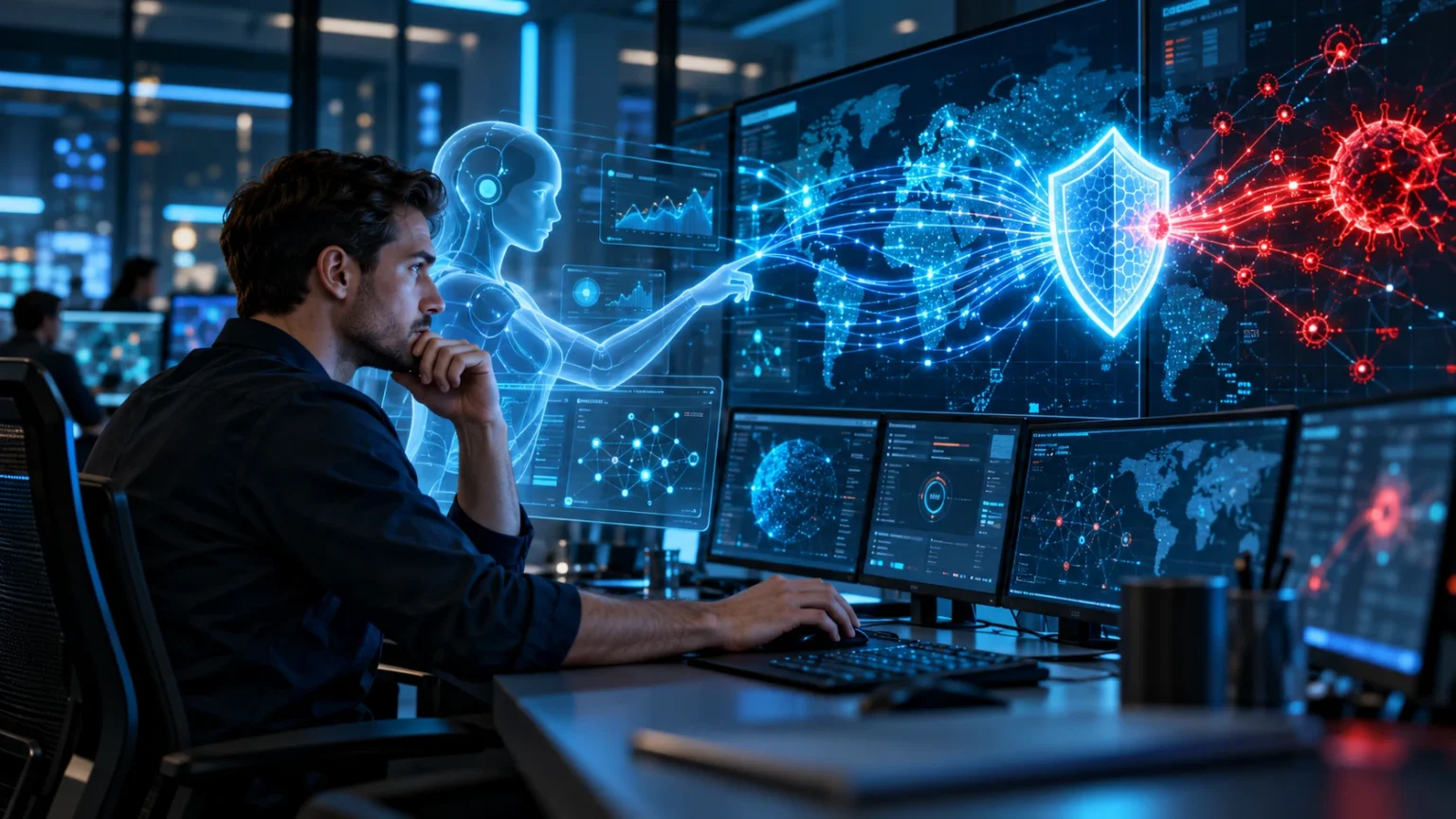
AI will change cyber security, but it is unlikely to replace the field or its professionals completely. It can analyze large volumes of data, flag suspicious activity, and automate some routine responses. People are still needed to understand context, make high-impact decisions, investigate complex incidents, and take responsibility for protecting systems.
The question is not simply whether AI can perform security tasks. It is also whether it can do them reliably, safely, and with enough understanding of an organization’s goals. A tool may identify a pattern that looks suspicious, for example, but a skilled analyst must decide whether it represents an attack or ordinary activity.
A realistic expectation is that AI will reshape many cyber security jobs. Some repetitive duties may become faster or more automated, while new work will involve checking AI outputs, managing security tools, and responding to unfamiliar threats. Understanding both the possibilities and limitations helps individuals and businesses prepare for that shift.
What AI Can Already Do in Cyber Security
AI can help security teams review activity across networks, devices, accounts, and applications. Machine learning systems can compare current behavior with patterns from past data and flag unusual events for review. This can help teams notice possible threats sooner, especially when an organization generates more alerts than its staff can examine manually.
Automation can also handle some routine actions once specific conditions are met. A system might quarantine a suspicious file, block a known harmful connection, or request additional identity verification after an unusual login. These actions can reduce response time, but teams need rules that prevent automated tools from disrupting legitimate work.
Other uses include sorting alerts, summarizing incident information, and helping analysts search technical records. Generative AI can assist with drafting reports or explaining unfamiliar security concepts. Its output still needs review: a fluent explanation may contain mistakes, overlook important details, or describe a risk with more certainty than the evidence supports.
How AI Helps Detect Threats Faster
Traditional security tools often rely on known indicators, such as a malicious file signature or a blocked internet address. AI can add another way to find problems by looking for unusual patterns, including unexpected account behavior or a device sending data at an unfamiliar time. These signals can help analysts focus their attention.
This approach is useful when threats do not match a familiar template. An attacker might use a legitimate account or change tactics to avoid simple filters. Pattern analysis can raise a warning when activity differs from the usual baseline, although unusual behavior is not proof of a cyberattack by itself.
The quality of detection depends on the information available to the tool and how it is configured. Incomplete data can hide relevant activity, while noisy data can produce too many alerts. Analysts need to assess each warning, connect it with other evidence, and decide whether to investigate, contain, or close the alert.
The Limits of AI in Cyber Security
AI does not understand every situation in the way a person does. It learns from data and instructions, so gaps or errors in those inputs can affect its conclusions. A tool may miss a new type of attack, mistake legitimate behavior for a threat, or produce a convincing but inaccurate explanation.
Cyber security decisions often depend on business context. Blocking a user account may protect a system, but it could also interrupt an essential service. Before taking action, someone may need to weigh the risk, the operational impact, legal responsibilities, and the possibility that the alert is a false alarm.
AI systems can also be targeted or manipulated. Attackers may try to poison the data used to train a model, hide harmful activity within normal patterns, or exploit weaknesses in the tool itself. Organizations must secure the AI systems they deploy and avoid treating an AI recommendation as automatically correct.
Why Human Judgment Still Matters
Security professionals investigate what happened, why it matters, and what the organization should do next. That work may involve comparing logs, speaking with affected employees, and determining which systems or records were exposed. AI can assist with searching and summarizing evidence, but people remain responsible for interpreting findings and coordinating a response.
Human judgment is especially important when decisions affect customers, employees, or public services. A security team may need to decide whether to shut down a system, notify people, preserve evidence, or involve other departments. Those choices require more than detecting a pattern; they require accountability and an understanding of consequences.
People also design security policies and explain them to others. They decide how much access different roles need, how to balance convenience with protection, and how to respond to new risks. AI can offer suggestions, but an organization must set the priorities and decide which safeguards fit its needs.
How AI Can Help Cyber Attackers
The same technology that helps defenders can also help attackers. Criminals may use AI to draft more convincing phishing messages, adapt scam language for different audiences, or automate parts of their research. This can make fraudulent messages look more polished and increase the number of attempts they can send.
AI may also help less experienced attackers understand technical material or modify existing tools. That does not mean every user of AI can launch a sophisticated attack, but it can lower the effort needed for some harmful activities. Organizations should expect familiar threats to evolve as attackers experiment with new tools.
Defenders can use AI to process reports, identify suspicious patterns, and improve response speed. Yet this creates an ongoing contest: as security teams adjust their safeguards, attackers may change their methods. That is one reason cyber security requires continuous monitoring, software maintenance, staff awareness, and regular review of defensive plans.
How Businesses Should Use AI Security Tools
Businesses should start with a specific security problem rather than adopting AI simply because it is available. A team might want to reduce repetitive alert review, spot unusual account activity, or speed up incident reporting. A clearly defined goal makes it easier to assess whether the tool is useful and whether it introduces new risks.
Before deployment, decision-makers should understand what data the tool collects, where that information goes, and who can access it. They should also learn how the tool produces alerts and what happens when it makes an error. Sensitive information may require additional controls, especially when an outside service processes it.
People should remain involved in consequential actions. A tool can recommend isolating a device, but staff may need to verify the risk before interrupting a critical service. Businesses should test tools in controlled settings, set boundaries for automated actions, and review performance as systems, data, and threats change.
How Cyber Security Jobs May Change
AI is likely to change the daily work of security professionals more than it eliminates the need for them. Analysts may spend less time sorting routine alerts and more time investigating difficult cases, validating automated decisions, and improving detection rules. The value of understanding systems and threats remains, even when some tasks become faster.
Some roles may place greater emphasis on AI oversight and security automation. Teams will need people who can configure tools, assess their reliability, protect the data they use, and explain their limitations to colleagues. Skills in incident response, risk management, communication, and secure system design will continue to matter.
For people entering the field, learning to work with AI tools can complement core security knowledge. It is still important to understand networks, operating systems, identity, vulnerabilities, and threat behavior. Practical problem-solving and clear communication help professionals assess tool outputs instead of relying on them without question.
Skills Cyber Security Professionals Can Build
A strong foundation in security principles is useful regardless of how much work becomes automated. Professionals benefit from learning how networks, applications, cloud services, and user accounts are protected. This knowledge makes it easier to recognize when a tool’s output is incomplete or does not fit the technical situation.
Cybersecurity professionals use analytical thinking to connect clues and prioritize risks. They also need strong communication skills to explain incidents, recommend safeguards, and guide colleagues toward safer practices.
As AI becomes more common, professionals can learn how security tools use data, how to test their results, and how to monitor for errors. They should also understand privacy and access concerns related to AI systems. Combining those skills with hands-on security experience can help workers adapt as responsibilities evolve.
A Practical Approach to AI and Cyber Security
Organizations can begin by identifying where AI might help without handing it unlimited authority. Repetitive tasks with clear rules may be good candidates for automation, while decisions with major financial, privacy, or operational consequences usually need careful human review. Start small and measure whether the tool improves the process.
Testing should include ordinary activity, unusual but legitimate cases, and examples of known threats. Teams can check whether alerts are accurate, how often they are wrong, and whether automated actions create disruption. A tool that saves time in one area may create extra work elsewhere if its output is poorly tuned.
Businesses should also plan for failure. Staff need to know what to do if the AI tool becomes unavailable, produces unreliable alerts, or is compromised. Keep access limited, review vendor and data practices, document human approval points, and revisit the system after meaningful changes to the business or technology.
What the Future of AI in Cyber Security May Look Like
AI tools will likely become more integrated into security products and everyday workflows. They may help teams review larger data sets, summarize investigations, and automate more well-defined responses. The pace of adoption will vary because organizations have different budgets, systems, regulations, and tolerance for operational risk.
As tools improve, security teams will still face new uncertainties. Models can behave differently as their data or settings change, and attackers may develop ways to evade detection. Organizations will need to test systems, monitor their performance, and keep people accountable for important decisions.
The most useful future is likely to combine automation with human oversight. AI can handle speed and scale in suitable tasks, while people provide context, creativity, and responsibility. Businesses that understand both sides can gain efficiency without assuming that a tool can replace a complete security program.
Conclusion
Cyber security will not simply be replaced by AI. AI can support threat detection, automate routine responses, and help teams handle large amounts of information, but it has limits. It can make mistakes, miss context, and introduce new risks that organizations must manage.
Human professionals will continue to guide investigations, set priorities, respond to complex incidents, and remain accountable for security decisions. Their roles may change as routine work is automated, making AI oversight and strong communication increasingly useful alongside core technical skills.
Businesses should adopt AI carefully, test its results, protect the data it uses, and keep people involved in high-impact decisions. For cyber security professionals, learning how to work with AI while strengthening foundational skills is a practical way to prepare for the changes ahead.
FAQs
Will AI replace cyber security jobs?
AI may automate some repetitive tasks, but cyber security still needs people to investigate incidents, interpret context, guide decisions, and manage risk. Many roles are more likely to change than disappear.
Can AI detect every cyberattack?
No. AI can identify suspicious patterns and known threats, but it may miss new attacks or flag legitimate behavior. Security teams need to review alerts and use other safeguards too.
How do cyber security teams use AI?
Teams use AI to analyze activity, prioritize alerts, detect unusual behavior, and automate selected responses. They also review AI recommendations because tools can produce errors or miss important context.
Is AI dangerous for cyber security?
AI can create risks if attackers use it to improve scams or if organizations deploy insecure tools. Careful testing, limited access, human oversight, and data protection help reduce those risks.
What should I learn for an AI-focused cyber security career?
Build a foundation in networks, operating systems, and security principles. Add skills in incident response, risk analysis, communication, and evaluating AI tools so you can verify outputs and make informed decisions.