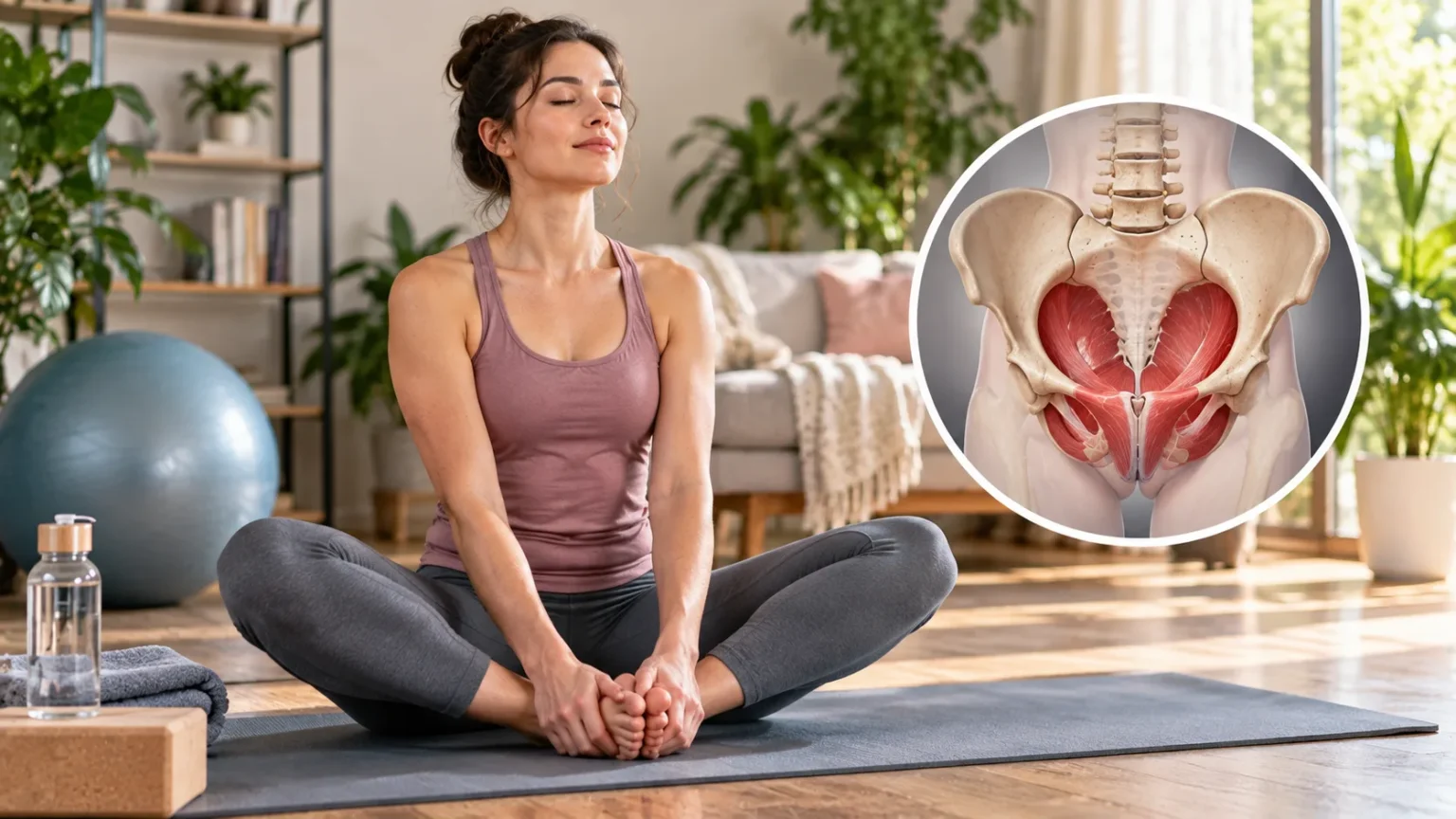

A pelvic floor that feels tight, tense, or difficult to relax can contribute to pelvic pressure, discomfort, urinary symptoms, constipation, or pain during certain activities. The goal of loosening the pelvic floor is not to force the muscles into a deeper stretch. Instead, relaxation usually involves breathing, gentle movement, improved body awareness, and reducing unnecessary muscle guarding.
Pelvic floor tension can have several causes, including stress, prolonged sitting, pain, repetitive muscle tightening, exercise habits, or coordination problems. Because symptoms can overlap with other pelvic health conditions, persistent or severe problems should be assessed by a qualified healthcare professional. The practical steps below can help you understand pelvic floor relaxation and explore gentle strategies that may support more comfortable movement.
What Does a Tight Pelvic Floor Mean?
The pelvic floor is a group of muscles and connective tissues that supports the bladder, bowel, and reproductive organs. These muscles normally tighten and relax throughout the day depending on activities such as urination, bowel movements, exercise, coughing, and sexual activity. Problems can occur when the muscles remain unnecessarily tense or have difficulty fully releasing.
A tight or overactive pelvic floor is sometimes described as a hypertonic pelvic floor. This does not necessarily mean the muscles are strong. Muscles that stay contracted for long periods can become tired, painful, sensitive, and poorly coordinated, which may interfere with their ability to contract and relax efficiently when needed.
Pelvic floor tightness can affect people of different ages and sexes. Symptoms vary widely, which is why self-diagnosis based on one sign can be misleading. Someone with urinary urgency, for example, may have pelvic muscle tension, but similar symptoms can also occur with bladder, urinary, neurological, or other medical conditions.
Signs Your Pelvic Floor May Be Too Tight
Possible signs of excessive pelvic floor tension include pelvic aching, pressure, difficulty relaxing during bowel movements, or a sensation of tightness around the pelvis. Some people notice discomfort when sitting for long periods or during exercise. Others experience symptoms around the hips, lower abdomen, tailbone, or lower back rather than directly within the pelvic area.
Urinary symptoms can sometimes occur with an overactive pelvic floor. These may include urgency, frequent urination, difficulty starting the urine stream, or feeling that the bladder has not fully emptied. However, these symptoms can also indicate urinary tract problems or other conditions, so persistent changes should not automatically be blamed on pelvic muscle tension.
Pain with penetration or discomfort during sexual activity can also occur when the pelvic floor does not relax appropriately. Constipation and straining may be another clue because bowel movements require coordinated pelvic muscle release. A pelvic floor physical therapist can assess muscle tone and coordination when symptoms make it difficult to understand what is happening.
Start With Diaphragmatic Breathing
Slow diaphragmatic breathing is one of the simplest ways to practice pelvic floor relaxation. Lie comfortably on your back, sit supported, or choose another position that does not increase symptoms. Place one hand on your lower ribs or abdomen and breathe slowly, allowing the belly and rib cage to expand naturally rather than keeping the stomach pulled inward.
As you inhale, imagine the pelvic floor gently softening and moving downward rather than actively pushing. On the exhale, allow everything to return naturally without deliberately squeezing the pelvic muscles. The movement may be subtle, and some people do not feel it clearly at first, so avoid forcing or bearing down.
Practice for several minutes while keeping the jaw, shoulders, buttocks, and abdomen relaxed. These areas often tense together when someone is stressed or concentrating heavily. Regular breathing practice can improve awareness of unnecessary tension and may make it easier to recognize when the pelvic floor is contracting during everyday activities.
Learn the Pelvic Floor Drop Technique
A pelvic floor drop, sometimes called a reverse Kegel, focuses on relaxing rather than contracting the muscles. Begin with slow breathing and imagine the muscles around the pelvis widening or softening during inhalation. The sensation should be gentle and controlled, not like pushing forcefully during a bowel movement.
Helpful imagery can make the technique easier. Some people imagine the sitting bones moving slightly apart, the pelvic floor opening like a flower, or the muscles melting downward. Choose an image that encourages relaxation without straining because the goal is to reduce muscle activity rather than create pressure.
If you cannot tell whether you are relaxing correctly, avoid repeatedly practicing stronger downward pushing. Bearing down can increase pressure through the pelvis and may aggravate certain symptoms. A pelvic floor therapist can provide feedback and teach you how to distinguish relaxation from straining when body awareness is difficult.
Try Gentle Pelvic Floor Relaxation Stretches
Gentle stretches can help reduce tension around the hips, inner thighs, and pelvis when stiffness contributes to pelvic floor guarding. Comfortable positions may include child’s pose, a supported deep squat, butterfly stretch, or lying on your back with the knees supported outward. Choose positions that allow relaxed breathing instead of trying to stretch as deeply as possible.
Hold each position comfortably while breathing slowly into the lower ribs and abdomen. Avoid bouncing, forcing the knees downward, or staying in a position that creates sharp pain, numbness, or increased pelvic pressure. Relaxation usually improves when the body feels supported rather than threatened by an intense stretch.
A consistent routine is more useful than occasional aggressive stretching. Practicing simple [pelvic floor relaxation exercises](Add link here) for a few minutes each day can help build awareness of how the hips, abdomen, and pelvic muscles respond to movement. The best exercises are those you can perform comfortably without triggering additional symptoms.
Relax Your Hips, Glutes, and Inner Thighs
The pelvic floor does not function independently from the rest of the body. Muscles around the hips, buttocks, abdomen, and inner thighs work closely with it during walking, sitting, lifting, and exercise. When these surrounding muscles remain tense, some people find it more difficult to allow the pelvic floor to relax fully.
Gentle hip mobility can therefore be useful as part of a broader relaxation routine. Slow hip rotations, supported stretches, and easy walking may help reduce general stiffness without placing excessive strain on sensitive tissues. Focus on comfortable movement rather than trying to dramatically increase flexibility in a short period.
Notice whether you habitually clench your buttocks or inner thighs while standing, sitting, or concentrating. Releasing these muscles can sometimes reduce tension throughout the pelvic region. Frequent small adjustments during the day may be more helpful than relying only on one long stretching session in the evening.
Stop Unnecessary Pelvic Floor Clenching
Some people unconsciously tighten their pelvic floor throughout the day, especially during stress, exercise, driving, or focused work. You may also clench the abdomen, glutes, or jaw at the same time. Becoming aware of this pattern is an important step because a muscle cannot relax properly if it is being repeatedly contracted without necessity.
Set occasional reminders to check whether your pelvic area feels tense. Take one slow breath, relax the shoulders and abdomen, and imagine the muscles around the pelvis becoming heavier or softer. This does not require pushing downward; simply stop actively holding or squeezing if you notice unnecessary tension.
Stress can increase muscle guarding without a person realizing it. Relaxation techniques such as slow breathing, gentle movement, stretching, or quiet breaks may help reduce overall body tension. If stress and pelvic symptoms repeatedly reinforce each other, professional support can help address both physical muscle patterns and the factors triggering them.
Avoid Too Many Kegel Exercises
Kegel exercises involve deliberately contracting the pelvic floor and can be useful for some conditions involving weakness or poor control. However, they are not appropriate for every pelvic problem. Someone whose muscles are already excessively tense may notice increased discomfort if they repeatedly perform strong contractions without learning how to relax afterward.
A tight pelvic floor can sometimes be mistaken for a weak one because both may be associated with urinary or pelvic symptoms. This is why performing hundreds of Kegels based solely on symptoms can be unhelpful. Proper pelvic floor function requires both contraction and relaxation rather than maximum tightness at all times.
If Kegels increase pelvic pressure, pain, urgency, constipation, or discomfort, stop and ask a qualified clinician or pelvic health therapist for guidance. An assessment can determine whether strengthening, relaxation, coordination training, or a combination is more appropriate. Treatment should match how your muscles are functioning rather than following a one-size-fits-all exercise routine.
Improve Sitting and Bathroom Habits
Long periods of sitting can contribute to stiffness around the hips, lower back, and pelvic region. Change positions regularly, stand briefly, and take short walks when possible. A supportive chair that allows your feet to rest comfortably can also help prevent unnecessary gripping through the legs, buttocks, and pelvic muscles.
Bathroom habits are equally important because straining can place unnecessary pressure through the pelvic floor. Give yourself enough time, avoid repeatedly forcing bowel movements, and respond to natural urges when practical. A small footstool that raises the knees slightly may create a more comfortable position for some people during bowel movements.
Hydration, fiber intake, and general bowel health also affect how much straining is required. Persistent constipation deserves attention because repeatedly pushing against a tight pelvic floor can reinforce symptoms. Speak with a healthcare professional if bowel movements remain difficult despite basic lifestyle changes or if constipation is accompanied by bleeding or significant pain.
Use Heat and Relaxation for Muscle Tension
Gentle warmth can help some people feel more relaxed when pelvic tension is associated with muscle tightness. A warm shower, bath, or carefully used heating pad around the lower abdomen, hips, or lower back may feel soothing. Heat should remain comfortable and never be hot enough to burn the skin.
Combine warmth with slow breathing rather than using heat while continuing to clench the muscles. Find a supported position, allow the abdomen to soften, and take several slow breaths. The purpose is to encourage overall relaxation rather than directly forcing the pelvic floor to change.
Heat will not treat every cause of pelvic pain, and it should not delay assessment of unexplained symptoms. Severe pelvic pain, fever, unusual bleeding, painful urination, or rapidly worsening symptoms need medical attention. Home relaxation strategies are most appropriate for mild muscle-related tension after more concerning causes have been considered.
Reduce Strain During Exercise
Exercise can support pelvic health, but certain training habits may increase pressure or muscle guarding. Heavy lifting, repeated breath-holding, high-impact exercise, or constantly bracing the abdomen can make some people tense the pelvic floor throughout a workout. Symptoms such as pressure, pain, or increasing urinary urgency may indicate that modifications are needed.
Practice breathing through movements rather than holding your breath unnecessarily. Reduce resistance or intensity when an exercise repeatedly causes pelvic symptoms, and allow the abdomen and pelvic floor to relax between repetitions. Good exercise technique should include periods of release instead of maintaining maximum muscular tension from beginning to end.
You do not necessarily need to stop exercising because your pelvic floor feels tight. A physiotherapist can help modify activities while preserving strength and fitness. Individual guidance is especially useful for athletes, people returning to exercise after childbirth, or anyone whose pelvic symptoms consistently worsen during specific movements.
When to See a Pelvic Floor Physical Therapist
A pelvic floor physical therapist is trained to assess muscle tone, coordination, movement, breathing, and surrounding structures. An evaluation can help determine whether the muscles are actually overactive, weak, poorly coordinated, or responding to pain elsewhere. This is often more reliable than trying to identify the problem based only on online symptom descriptions.
Treatment may include breathing training, movement exercises, manual therapy, relaxation techniques, education, and gradual strengthening when appropriate. Internal assessment or treatment may sometimes be offered, but it should only be performed with informed consent and when clinically appropriate. You can always discuss what an assessment involves before deciding what you are comfortable with.
Consider professional help when symptoms interfere with urination, bowel movements, sexual activity, exercise, sleep, or daily life. Persistent pelvic pain also deserves evaluation because muscle tension may be one part of a larger problem. Earlier assessment can help prevent months of repeatedly trying exercises that do not match the actual cause.
When Pelvic Floor Symptoms Need Medical Attention
Seek medical care if pelvic symptoms are severe, rapidly worsening, or accompanied by fever, unexplained bleeding, persistent vomiting, or significant abdominal pain. Painful urination, blood in the urine, or an inability to urinate may indicate a problem that requires medical assessment rather than muscle relaxation exercises alone.
Emergency evaluation is important for new loss of bladder or bowel control, numbness around the groin or inner thighs, or rapidly developing leg weakness. These symptoms can indicate serious neurological problems involving the lower spine. Do not attempt to treat these signs with stretching, massage, or pelvic floor exercises at home.
Persistent pelvic symptoms should also be discussed with a healthcare professional even when they are not emergencies. Pelvic pain can involve urinary, gastrointestinal, reproductive, musculoskeletal, or neurological factors. A proper assessment can identify conditions that need treatment and determine whether pelvic floor relaxation should be part of the overall plan.
Conclusion
Learning how to loosen the pelvic floor starts with recognizing that relaxation is a skill rather than a forceful stretch. Slow diaphragmatic breathing, pelvic floor drops, comfortable hip movements, and awareness of unnecessary clenching can help some people reduce muscle guarding. Regular gentle practice is usually more appropriate than aggressive stretching or repeated downward pushing.
It is also important to avoid automatically using Kegel exercises when your pelvic floor already feels tight. Healthy pelvic muscles need to contract and release appropriately, so stronger is not always better. Changing sitting habits, reducing straining, adjusting exercise, and relaxing nearby muscles can support more comfortable pelvic floor function.
If symptoms persist, interfere with daily activities, or include urinary, bowel, or sexual difficulties, consider seeing a pelvic floor physical therapist or other qualified healthcare professional. Seek prompt medical attention for severe pain, neurological changes, fever, unusual bleeding, or difficulty urinating. Identifying the cause gives you a safer and more effective path toward relief.
FAQs
How do I know if my pelvic floor is too tight?
Possible signs include pelvic pressure, pain, urinary urgency, difficulty emptying the bladder, constipation, or discomfort during penetration. Because these symptoms can have other causes, persistent problems should be professionally assessed.
How long does it take to relax a tight pelvic floor?
There is no fixed timeline. Mild muscle tension may improve relatively quickly, while long-standing pelvic floor overactivity can require weeks or months of consistent relaxation, movement changes, and individualized therapy.
Are reverse Kegels good for a tight pelvic floor?
Reverse Kegels may help some people practice pelvic floor relaxation when performed gently. They should involve softening rather than forceful bearing down, and professional guidance is useful if you are unsure about technique.
Should I stop doing Kegels if my pelvic floor is tight?
Repeated strengthening may aggravate some overactive pelvic floors. If Kegels increase pain, urgency, pressure, or other symptoms, stop and seek assessment before continuing a pelvic floor strengthening program.
Can stress make the pelvic floor tighter?
Yes. Stress can contribute to unconscious muscle guarding throughout the abdomen, hips, jaw, and pelvic floor. Breathing exercises, movement, relaxation strategies, and addressing stress triggers may help reduce this pattern.