
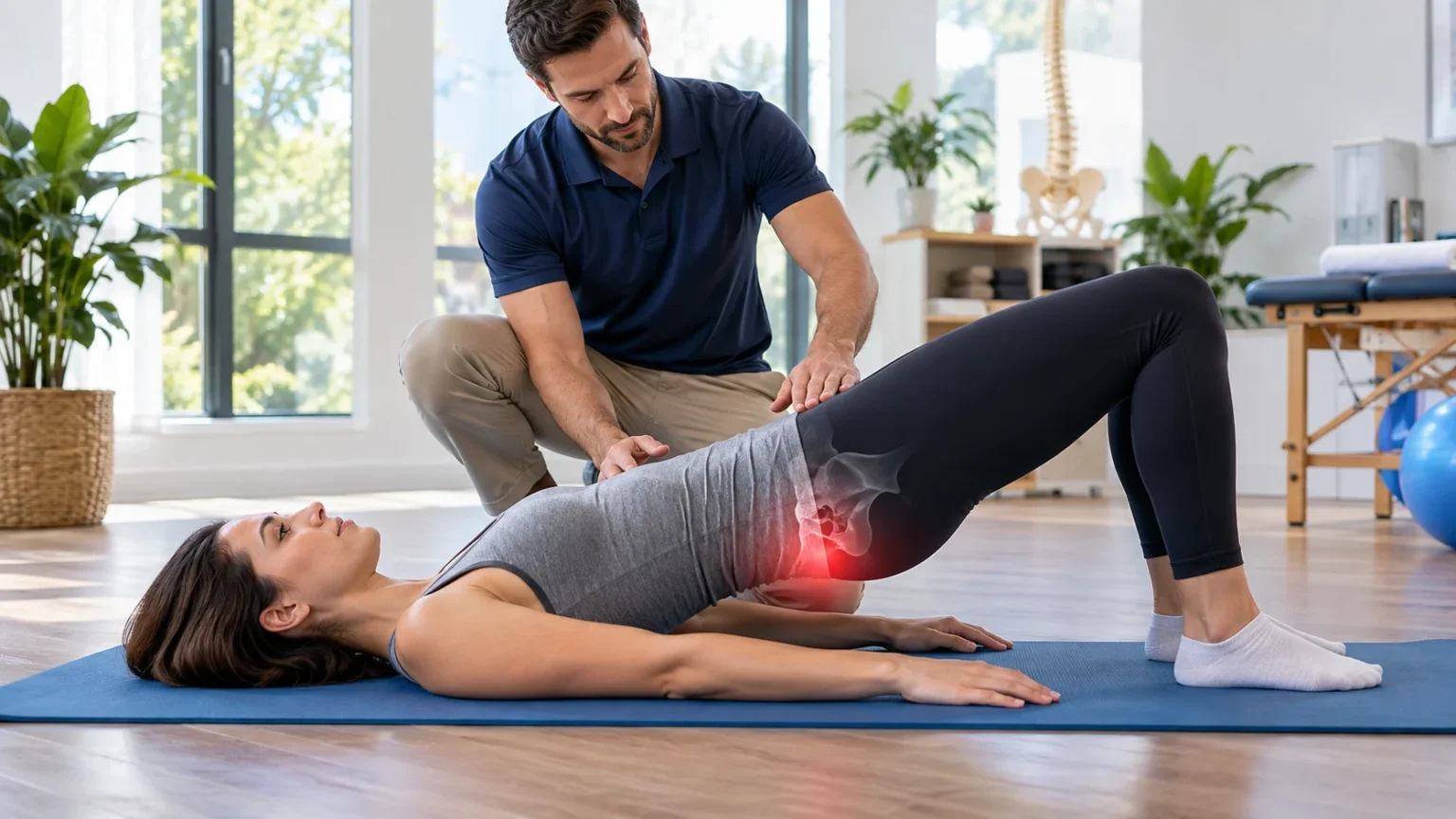

Sacroiliac joint discomfort can make ordinary movements such as walking, standing, climbing stairs, or getting out of a chair feel uncomfortable. The SI joints connect the lower spine to the pelvis, helping transfer force between your upper body and legs. When the surrounding muscles become weak, tight, irritated, or poorly coordinated, discomfort may develop around the lower back, buttocks, or hips.
Exercises for SI joint pain often focus on improving mobility, strengthening the muscles surrounding the pelvis, and developing better control during everyday movement. Gentle exercises may help some people feel more supported while reducing unnecessary strain around the sacroiliac region. However, exercise selection should depend on your symptoms, mobility, strength, and the reason the area feels painful.
The goal is not to force the SI joint through large movements or perform aggressive stretches. Instead, a gradual program usually emphasizes controlled movement, core stability, hip strength, and comfortable flexibility. Understanding proper form and knowing when to modify an exercise can help you build a safer, more sustainable routine.
Understanding SI Joint Pain Before Exercising
The sacroiliac joints sit on either side of the sacrum, where the base of the spine meets the pelvis. These joints move only a small amount, but they play an important role in absorbing forces during walking, running, bending, and changing positions. Pain can sometimes be felt on one side of the lower back, around the buttock, or near the back of the hip.
SI joint symptoms may be influenced by several factors, including changes in movement patterns, pregnancy, joint irritation, previous injuries, muscle weakness, or differences in how force travels through the pelvis. Similar symptoms can also come from the lumbar spine, hips, or surrounding muscles. Because several conditions can feel alike, persistent or severe pain deserves professional evaluation.
Exercise can be helpful when symptoms are related to stiffness, reduced muscular support, or poor movement control. The best approach usually involves gentle mobility combined with strengthening rather than simply stretching the painful area repeatedly. Exercises should remain within a comfortable range and should not produce sharp, increasing, or radiating pain.
Benefits of Exercises for SI Joint Pain
One major benefit of appropriate exercise is improved support around the pelvis. Muscles such as the glutes, abdominal muscles, hip rotators, and deep stabilizers help control movement around the sacrum and hips. Strengthening these areas may improve the way forces are distributed during standing, walking, lifting, and other daily activities.
Gentle mobility exercises may also reduce feelings of stiffness around the hips and lower back. When surrounding muscles become tight, people sometimes compensate by moving differently, which can place additional stress on neighboring areas. Improving comfortable movement can make everyday activities feel smoother without trying to force significant movement directly through the SI joint.
Exercise may also improve confidence in movement after a painful episode. Some people begin avoiding bending, walking, or exercising because they worry that movement will worsen their symptoms. Gradual, comfortable activity can help rebuild tolerance while supporting general strength, balance, coordination, and physical function.
Pelvic Tilts for Gentle Lower Back Control
Pelvic tilts are a simple starting exercise that encourages gentle movement around the pelvis and lower spine. Lie on your back with your knees bent and feet resting comfortably on the floor. Keep your shoulders relaxed and allow your spine to begin in a comfortable neutral position without forcing your lower back flat.
Slowly tighten your abdominal muscles and gently tilt your pelvis so your lower back moves slightly toward the floor. Hold the position briefly without holding your breath, then return to neutral. The movement should remain small and controlled rather than becoming a forceful flattening of the spine.
Try performing 8 to 12 slow repetitions while focusing on smooth breathing. If lying flat increases your symptoms, you can place a pillow beneath your knees or perform a similar gentle pelvic movement while standing against a wall. Stop if the exercise produces sharp pain or causes symptoms to spread into the leg.
Knee-to-Chest Stretch for Comfortable Mobility
A gentle knee-to-chest movement may help reduce tightness around the lower back, buttocks, and hips. Begin on your back with both knees bent, then slowly bring one knee toward your chest. Hold behind the thigh or around the shin without pulling aggressively or forcing the hip beyond a comfortable position.
Maintain the stretch for about 15 to 30 seconds while breathing slowly. Keep the opposite leg bent if straightening it creates tension through the pelvis or lower back. The goal is to feel a mild, comfortable stretch rather than strong pressure around the SI joint.
Repeat the movement two or three times on each side if it feels comfortable. Some people with irritated SI joint symptoms may prefer avoiding deep or uneven positions initially, particularly if bringing one knee toward the chest increases discomfort. A smaller range of motion can still provide useful mobility without aggravating sensitive tissues.
Figure-Four Stretch for the Hips and Glutes
The figure-four stretch targets the gluteal and deep hip muscles, which can become tight when movement around the pelvis is limited. Lie on your back with both knees bent and place one ankle across the opposite thigh. Keep your head, neck, and shoulders relaxed throughout the movement.
If that position already creates a comfortable stretch, remain there rather than pulling further. For additional movement, gently bring the supporting thigh toward your chest until you feel mild tension around the buttock or outer hip. Avoid pressing directly on the raised knee because excessive force may irritate the hip or pelvis.
Hold the position for approximately 20 to 30 seconds and repeat on both sides. Stretching should never reproduce sharp SI joint pain or create numbness and tingling. People dealing with both pelvic symptoms and lower-limb problems such as ankle pain may also need to consider how their walking pattern affects the hips and pelvis.
Glute Bridges for Pelvic Support
Glute bridges strengthen the buttock muscles and can help improve stability around the hips and pelvis. Lie on your back with your knees bent, feet approximately hip-width apart, and arms resting comfortably beside you. Your feet should remain flat and close enough that you can press through them without straining.
Gently tighten your abdominal muscles and squeeze your glutes before slowly lifting your hips from the floor. Raise only as high as you can while keeping the movement comfortable and avoiding excessive arching through the lower back. Pause briefly at the top, then slowly lower your hips again.
Begin with 8 to 10 repetitions and gradually increase as your strength improves. If the movement causes pain around the SI joint, reduce the lifting height or stop temporarily. Keeping equal pressure through both feet can help prevent unnecessary twisting through the pelvis during the exercise.
Clamshells for Hip Stability
Clamshell exercises strengthen the muscles along the outer hip, particularly the gluteus medius, which contributes to pelvic stability during walking and standing. Lie on your side with your hips and knees slightly bent. Keep your shoulders, hips, and feet stacked while maintaining a comfortable position through your spine.
Keep your feet together and slowly lift the top knee without rolling your pelvis backward. Imagine your pelvis staying completely still while the movement comes from the hip. Lift only as far as you can maintain good control, then slowly lower the knee to the starting position.
Perform approximately 10 to 15 repetitions before changing sides. If lying directly on the painful side is uncomfortable, begin with the opposite side or use extra cushioning beneath your hip. Resistance bands can be added later, but developing controlled form should come before increasing resistance.
Bird Dog for Core and Pelvic Stability
The bird dog develops coordination between the core, hips, shoulders, and back while encouraging the pelvis to remain stable. Begin on your hands and knees with your hands beneath your shoulders and knees beneath your hips. Maintain a comfortable spine and gently engage your abdominal muscles without holding your breath.
Slowly extend one leg behind you while keeping your pelvis level. If comfortable, extend the opposite arm forward at the same time and hold for several seconds. Avoid rotating your trunk, arching your lower back, or raising the leg excessively high, since control is more important than range.
Return to the starting position and repeat on the opposite side. Start with about 5 to 8 repetitions per side and progress gradually. If extending both an arm and leg feels difficult, practice moving only one limb at a time until your core control and balance improve.
Dead Bug for Deep Core Strength
The dead bug is another useful exercise for building abdominal control while keeping the spine supported against the floor. Lie on your back with your hips and knees bent, then raise your legs so your knees are positioned comfortably above your hips. Extend your arms toward the ceiling while keeping your shoulders relaxed.
Gently tighten your abdominal muscles and slowly lower one heel toward the floor without allowing your back to excessively arch. Bring the leg back to the starting position and repeat with the opposite side. More advanced variations involve lowering the opposite arm and leg together while keeping the pelvis stable.
Perform 6 to 10 controlled repetitions on each side. If your lower back begins lifting significantly or SI discomfort increases, shorten the movement or return your feet to the floor. Proper breathing and control are more valuable than completing a large number of repetitions.
Side-Lying Leg Raises for Glute Strength
Side-lying leg raises strengthen muscles along the outside of the hip that help keep the pelvis level during walking. Lie on one side with your lower leg slightly bent for support and your top leg straight. Keep your hips stacked rather than allowing your upper hip to roll backward.
Slowly raise the top leg several inches while keeping your toes facing forward or slightly downward. Avoid lifting extremely high because doing so can encourage the pelvis to tilt instead of strengthening the intended muscles. Pause briefly, then lower the leg slowly with control.
Begin with 8 to 12 repetitions on each side and gradually increase as your strength improves. You should primarily feel the exercise around the outer hip rather than in the lower back. If your SI region becomes uncomfortable, decrease the range or temporarily choose another hip-strengthening exercise.
Hip Flexor Stretch for Pelvic Mobility
Tightness in the front of the hips may influence how the pelvis moves during standing and walking. A gentle hip flexor stretch can be performed from a half-kneeling position with one knee on a padded surface. Keep the front foot flat and maintain an upright trunk throughout the movement.
Gently shift your body forward until you feel a mild stretch near the front of the hip on the kneeling side. Avoid aggressively arching the lower back or pushing the pelvis far forward. Slightly tightening your glutes can help keep the movement focused around the front of the hip.
Hold for approximately 20 to 30 seconds and repeat on both sides. If kneeling is uncomfortable, perform a standing variation using a staggered stance and support from a wall or chair. As with other SI joint stretches, the position should feel gentle rather than painful or unstable.
Best Practices When Exercising With SI Joint Pain
Start slowly, particularly when symptoms are currently sensitive. Performing a few comfortable repetitions with good form is generally better than pushing through a demanding workout that increases pain. Gradually increase repetitions, resistance, or exercise duration only after your body is consistently tolerating the current level.
Pay attention to how you feel during exercise and later the same day. Mild muscle fatigue can be expected when strengthening, but sharp pain, worsening joint discomfort, numbness, significant weakness, or symptoms spreading down the leg are reasons to stop. An exercise that consistently aggravates symptoms may need modification or professional guidance.
Consistency is usually more useful than occasional intense sessions. A short routine performed several times each week may help improve mobility and strength without overwhelming sensitive tissues. Walking, gentle cardiovascular activity, adequate recovery, and avoiding prolonged periods in one position may also complement your strengthening routine.
Common Exercise Mistakes to Avoid
One common mistake is aggressively stretching the painful area because it feels tight. SI joint discomfort does not always mean the joint needs more mobility, and repeatedly forcing large stretches may irritate symptoms in some people. Prioritize comfortable movement and stability rather than assuming that deeper stretching automatically produces better results.
Another mistake is progressing strengthening exercises too quickly. Heavy resistance, large ranges of movement, and high repetition counts may become useful later, but early rehabilitation should emphasize control. If your pelvis twists, your lower back compensates, or symptoms worsen, reduce the exercise difficulty rather than forcing yourself through poor form.
Ignoring surrounding areas can also limit progress. Hip strength, core control, walking mechanics, ankle mobility, and general lower-body strength can influence how forces travel through the pelvis. A balanced program should address overall movement rather than focusing exclusively on the exact location where discomfort is felt.
When to Seek Professional Help
Consider seeing a healthcare professional if SI region pain persists, repeatedly returns, or significantly interferes with walking, sleeping, working, or normal activities. A clinician or physical therapist can assess your lower back, hips, pelvis, strength, mobility, and movement patterns. This can help determine which exercises are most appropriate for your situation.
Seek prompt medical attention if pain follows a significant injury or is accompanied by severe weakness, loss of bladder or bowel control, numbness around the groin, fever, unexplained weight loss, or rapidly worsening neurological symptoms. These symptoms should not be managed through a general home exercise routine alone.
Professional advice is also valuable when every exercise seems to make symptoms worse. SI joint pain can resemble problems originating from the lumbar spine, hips, nerves, or other structures. Getting an accurate assessment can prevent you from repeatedly performing exercises that do not match the underlying reason for your symptoms.
Conclusion
Exercises for SI joint pain can help improve strength, mobility, coordination, and support around the pelvis when they are selected appropriately. Pelvic tilts, bridges, clamshells, bird dogs, dead bugs, hip stretches, and controlled leg exercises can all play useful roles. The right combination depends on your individual symptoms and physical abilities.
Focus on controlled movement rather than pushing through discomfort or trying to stretch as deeply as possible. Begin with simple exercises, monitor how your body responds, and progress gradually as movement becomes easier. Strengthening the core, glutes, and hips can provide a more balanced foundation for everyday activities.
Persistent or worsening pain should be evaluated rather than simply exercised through. A physical therapist or other qualified healthcare professional can assess your movement and create a more personalized program when necessary. With appropriate guidance and consistent practice, many people can build better strength and movement confidence around the pelvis.
Frequently Asked Questions
What exercises are best for SI joint pain?
Helpful exercises often include pelvic tilts, glute bridges, clamshells, bird dogs, dead bugs, and gentle hip stretches. The best choices depend on whether your symptoms respond better to mobility, strengthening, or improved movement control.
Should I stretch an SI joint that hurts?
Gentle stretching may help when surrounding muscles feel tight, but aggressive stretching can sometimes increase irritation. Keep stretches comfortable and avoid forcing the pelvis into large or painful ranges of motion.
Can walking help with SI joint pain?
Comfortable walking can help maintain mobility, circulation, and general activity tolerance. Start with shorter distances if necessary and gradually increase them, especially if long walks or uneven surfaces tend to aggravate your symptoms.
How often should I do exercises for SI joint pain?
Many gentle mobility and strengthening exercises can be performed several times per week. Frequency depends on symptom severity and exercise intensity, so allow sufficient recovery and reduce activity if pain consistently increases afterward.
When should I stop exercising with SI joint pain?
Stop if exercise causes sharp or rapidly increasing pain, significant weakness, numbness, tingling, or pain traveling down the leg. Persistent symptoms or major functional limitations should be assessed by a qualified healthcare professional.