
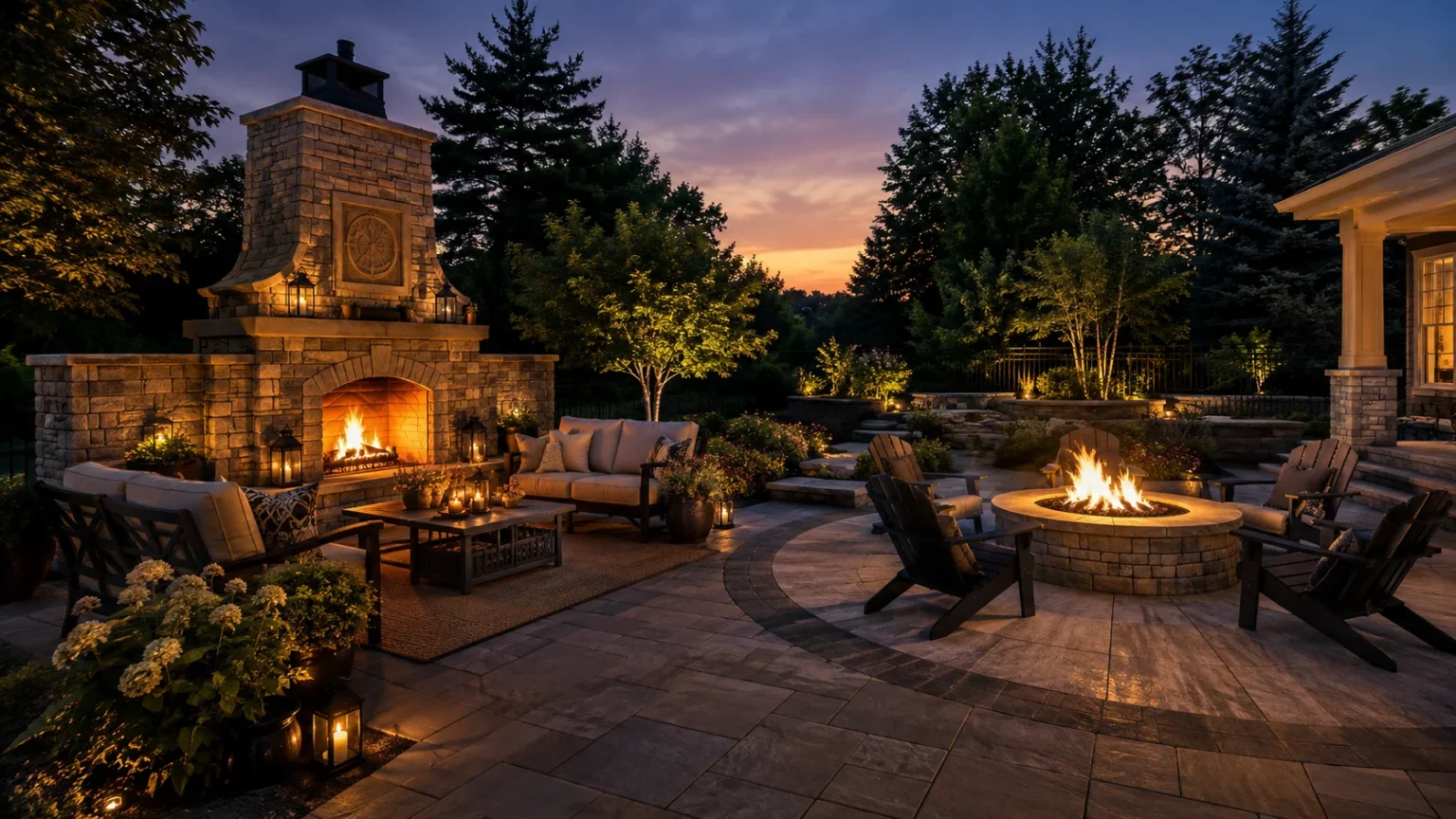

Outdoor Fireplace vs Fire Pit: What Is the Difference?
Choosing between an outdoor fireplace vs fire pit can completely change the way you use your backyard. Both features provide warmth, atmosphere, and a natural gathering point, but they create very different outdoor experiences. A fire pit encourages people to gather around an open flame, while an outdoor fireplace usually creates a more structured seating area facing one direction.
The better choice depends on your available space, budget, entertainment style, climate, and overall landscape design. A compact fire pit may work beautifully in a smaller patio, while a permanent stone fireplace can become the architectural centerpiece of a spacious outdoor living area. Neither option is automatically better for every homeowner.
There are also practical differences involving installation, smoke control, heat distribution, maintenance, and fuel options. Understanding these factors before construction can prevent expensive design mistakes. It also helps ensure your new backyard fire feature fits naturally with your patio, seating arrangement, outdoor kitchen, landscaping, and everyday lifestyle.
This guide explains the most important differences between outdoor fireplaces and fire pits so you can decide which one deserves a place in your backyard. We will compare appearance, warmth, cost, safety, installation, maintenance, cooking possibilities, and overall value in a simple, homeowner-friendly way.
What Is an Outdoor Fireplace?
An outdoor fireplace is a permanent or semi-permanent fire feature designed much like an indoor fireplace. It usually includes a firebox where the flame burns, a chimney or flue that directs smoke upward, and a decorative surrounding structure made from materials such as brick, stone, concrete, or manufactured masonry.
Because an outdoor fireplace has a vertical structure, it often becomes a major visual feature within a backyard. Many homeowners place one at the end of a patio or outdoor seating area so sofas, lounge chairs, and tables can face the fire. This arrangement creates a cozy outdoor-room feeling.
Outdoor fireplaces can burn wood, natural gas, or propane depending on their construction. Wood-burning fireplaces deliver the traditional crackling-fire experience, while gas fireplaces provide convenient ignition and easier cleanup. Built-in gas units can also create a cleaner, more modern appearance for contemporary patios and luxury outdoor spaces.
A well-designed backyard outdoor fireplace can also integrate features such as built-in seating, storage, television mounts, decorative mantels, or outdoor kitchen elements. Because it becomes part of the overall architecture, homeowners often choose fireplaces when they want a polished, permanent addition rather than a simple standalone fire feature.
What Is a Fire Pit?
A fire pit is an open fire feature where flames burn inside a low container, bowl, ring, or built-in structure. Unlike an outdoor fireplace, it does not usually have a chimney or tall surrounding wall. The open design allows people to gather around the fire from several directions.
Fire pits come in a wide variety of designs, ranging from simple portable metal bowls to professionally installed stone or concrete structures. They can be circular, rectangular, square, or custom shaped. This flexibility makes them suitable for everything from small patios to large landscaped entertainment areas.
Like fireplaces, fire pits can use wood, natural gas, or propane. Wood-burning fire pits create a traditional campfire atmosphere, while gas fire pits offer push-button convenience and less smoke. Gas models can also incorporate decorative lava rock, fire glass, ceramic logs, or other heat-resistant materials.
Because people can sit around the entire perimeter, a backyard fire pit naturally encourages conversation and social interaction. This makes it especially popular for casual entertaining, family gatherings, roasting marshmallows, or relaxing outdoors with friends after sunset.
Outdoor Fireplace vs Fire Pit: What Is the Main Difference?
The biggest difference between an outdoor fireplace and a fire pit is the direction of the flame and seating arrangement. A fireplace generally directs heat and visual attention toward one side, while a fire pit creates a central flame that people can gather around from multiple directions.
An outdoor fireplace functions more like an architectural wall or focal point. Furniture typically faces the fireplace, creating a defined outdoor living room. A fire pit feels more informal because seating surrounds the flame, which creates a circular or conversational arrangement similar to gathering around a campfire.
Smoke management is another important difference. A properly designed fireplace uses a chimney to carry smoke upward and away from the seating area. A wood-burning fire pit remains open, which means wind can occasionally push smoke toward people sitting nearby.
The amount of construction involved also differs considerably. Fire pits can range from affordable portable models to elaborate built-in installations, while masonry outdoor fireplaces usually require more materials, structural planning, professional labor, and space. These differences strongly influence budget and installation time.
Which One Provides More Heat?
Fire pits often provide more evenly distributed warmth because heat radiates outward in multiple directions. People sitting around the perimeter can feel the heat from different positions, making a fire pit especially comfortable for groups gathered closely together on cool evenings.
An outdoor fireplace directs much of its radiant heat toward the area immediately in front of the firebox. People sitting directly opposite the flames can feel substantial warmth, but those positioned beside or behind the fireplace may receive much less heat.
The fuel source also affects heat output. Wood fires often produce intense radiant heat and can create larger flames, while gas fire features provide more consistent and controllable heat. The size and design of the burner or firebox also determine how much warmth reaches the seating area.
If your main goal is warming several people sitting together, a fire pit for backyard entertaining can be an excellent choice. If you prefer a cozy seating arrangement where everyone faces the same focal point, an outdoor fireplace may provide a more comfortable and visually organized setting.
Which Option Is Better for Small Backyards?
A fire pit is often easier to incorporate into smaller outdoor spaces because many models have a compact footprint. Portable fire pits are particularly flexible because they can be repositioned or stored when they are not being used, helping homeowners maximize limited patio space.
Built-in fire pits can also work in smaller yards when carefully planned. A compact round or square design surrounded by appropriately sized seating creates a comfortable gathering area without requiring the large vertical structure associated with most outdoor fireplaces.
Outdoor fireplaces generally need more space because they include a tall chimney, substantial foundation, and dedicated seating area in front. They can still work in smaller yards, but proper proportions become especially important so the fireplace does not overwhelm the surrounding landscape.
Local setback requirements and fire safety rules may also influence your choice. Before installing any outdoor fire feature, homeowners should consider clearance from fences, structures, trees, rooflines, and combustible materials. Local codes may place additional restrictions on wood-burning or gas installations.
Outdoor Fireplace vs Fire Pit Cost Comparison
Cost is one of the biggest factors when comparing an outdoor fireplace vs fire pit. Fire pits generally offer the widest price range because homeowners can choose everything from simple portable units to custom-built stone installations with integrated gas lines and premium finishes.
A basic portable fire pit can be relatively affordable and requires little installation. Permanent built-in fire pits cost more because they may require excavation, masonry, gas plumbing, electrical work, drainage planning, and professional construction depending on the design.
Outdoor fireplaces usually cost more because they require considerably more materials and labor. A custom masonry fireplace may include a reinforced foundation, firebox, chimney, stone or brick veneer, gas connections, and specialized fire-resistant components. Complex designs can become major backyard investments.
When comparing prices, consider long-term value rather than installation cost alone. A professionally designed fireplace may become a major architectural feature, while a simpler fire pit can provide excellent entertainment value for less money. The best investment is the feature you will actually use frequently.
Which Creates a Better Entertainment Area?
A fire pit is ideal for homeowners who enjoy casual group conversations. Because chairs can be arranged around all sides of the flame, guests naturally face one another. This layout encourages interaction and creates a relaxed atmosphere similar to sitting around a traditional campfire.
Outdoor fireplaces produce a different style of entertaining. Furniture generally faces the fireplace, creating a structured outdoor lounge. This arrangement works particularly well with outdoor sofas, coffee tables, televisions, covered patios, and larger outdoor living rooms designed for relaxing or watching sporting events.
The type of gatherings you host should therefore influence your decision. Families who enjoy storytelling, roasting food, or gathering closely around a flame may prefer a fire pit. Homeowners who host sophisticated dinners or lounge-style gatherings may prefer an outdoor fireplace.
You can also combine fire features with surrounding landscape elements. Built-in benches, pergolas, outdoor kitchens, landscape lighting, privacy walls, and comfortable seating can transform either option into a complete outdoor entertainment area that extends the usefulness of your backyard beyond daylight hours.
Which Is Safer: Fire Pit or Outdoor Fireplace?
Both fireplaces and fire pits can be safely enjoyed when properly designed, installed, and maintained. However, their open-flame characteristics differ. Fire pits expose the flame from multiple directions, while fireplaces contain the fire within a firebox and surrounding structure.
The enclosed design of a fireplace can help reduce the movement of sparks and burning material, particularly when a proper screen and chimney are used. Wood-burning fire pits may release sparks more easily because the flames remain open and exposed to wind.
Location matters regardless of the design. Fire features should be positioned away from combustible materials, low tree branches, structures, outdoor fabrics, and flammable landscaping. They should also rest on appropriate heat-resistant surfaces rather than grass, wooden decking, or other vulnerable materials unless specifically designed for those installations.
Children and pets should always be supervised around any active fire feature. Homeowners should also keep appropriate fire-extinguishing equipment accessible and follow local fire restrictions. Gas lines, burners, valves, chimneys, and masonry should be professionally inspected whenever damage or operating problems appear.
Which Produces Less Smoke?
A properly constructed outdoor fireplace generally manages smoke better than an open wood-burning fire pit. Its chimney creates an upward draft that directs much of the smoke above the seating area instead of allowing it to move freely around guests.
A traditional wood-burning fire pit has no chimney, so smoke direction depends heavily on wind. Anyone who has sat around a campfire knows how quickly a small change in wind direction can send smoke directly toward one side of the seating circle.
Choosing dry, seasoned firewood can reduce excessive smoke in either wood-burning option. Wet or poorly seasoned wood tends to burn less efficiently and creates more visible smoke. Keeping the fire properly ventilated also supports cleaner combustion.
Gas-burning fireplaces and fire pits produce significantly less smoke than traditional wood fires because they do not burn logs. For homeowners who dislike smoky clothing, airborne ash, or frequent cleanup, a gas fire pit or outdoor fireplace may provide a more convenient experience.
Which Is Better for Cooking?
Fire pits generally offer more versatility for casual outdoor cooking. Wood-burning models can be equipped with cooking grates, tripods, skewers, or other accessories. They are especially popular for roasting marshmallows, making s’mores, cooking hot dogs, or preparing simple campfire-style meals.
Some permanent fire pits are specifically designed for cooking and may include adjustable grill grates or removable cooking surfaces. However, homeowners should confirm that the particular fire pit is approved for cooking before placing food directly over the flames.
Outdoor fireplaces can also support cooking, particularly when designed with built-in pizza ovens, grills, or specialized cooking inserts. These custom configurations can create impressive outdoor culinary spaces, although they generally require more planning and investment than standard fireplaces.
Gas fire features may not always be suitable for cooking. Food drippings can damage burners or decorative media, and some manufacturers specifically advise against cooking over their products. Always follow the manufacturer’s instructions when deciding whether a particular outdoor fire feature can safely prepare food.
Which Looks Better in Landscape Design?
Outdoor fireplaces usually have a stronger architectural presence. Stone, brick, stucco, or concrete fireplaces can visually anchor a patio and create a dramatic focal point. Their height also adds vertical interest that can help define an outdoor room within a larger backyard.
Fire pits generally create a lower-profile landscape feature. They blend more naturally into open patios and conversational seating areas without blocking surrounding views. This makes them particularly appealing for properties overlooking gardens, mountains, water, or scenic landscapes.
Design style also matters. A sleek linear gas fireplace can complement a modern home, while a rustic stone fireplace can enhance farmhouse or traditional landscaping. Fire pits are equally versatile, with options ranging from natural stone circles to minimalist concrete bowls and contemporary rectangular fire tables.
The most attractive option is usually the one that matches the architecture and scale of the property. Materials used on retaining walls, patios, outdoor kitchens, and home exteriors can be repeated around the fire feature to create a cohesive and professionally designed backyard.
Outdoor Fireplace vs Fire Pit Maintenance
Wood-burning fireplaces typically require periodic ash removal and chimney maintenance. Soot, debris, and creosote can accumulate inside the chimney, especially when fires are used frequently. Masonry joints and firebox materials should also be inspected for cracks or weather-related deterioration.
Wood-burning fire pits are often simpler to maintain because they do not have chimneys. Ash still needs to be removed regularly, while metal components may require protection against rust. Stone or concrete fire pits should be inspected for cracking caused by moisture, freezing conditions, or repeated heating.
Gas fire pits and fireplaces generally produce less mess but still require routine care. Burners should remain clear of debris, drainage should function properly, and gas connections should be inspected when necessary. Outdoor covers can protect certain units from rain, leaves, dirt, and seasonal weather.
Regular maintenance extends the lifespan of any outdoor fire feature. Following manufacturer instructions, protecting materials from harsh weather, keeping drainage areas clear, and repairing damage early can help preserve both appearance and safe operation for many years.
Wood-Burning vs Gas Fire Features
Wood-burning fire features provide the classic sensory experience many homeowners want. Crackling logs, glowing embers, natural flames, and the smell of burning wood create an unmistakable campfire atmosphere that gas systems cannot perfectly reproduce.
However, wood requires storage, preparation, cleanup, and ongoing fire management. Smoke and sparks can also become frustrating depending on wind conditions. Some communities restrict wood-burning fires during dry weather or because of local air-quality concerns.
Gas fire pits and fireplaces provide convenience. Flames can often be started quickly using an ignition system and turned off without waiting for logs to burn down. Gas systems also eliminate firewood storage and significantly reduce ash and debris.
Your preferred fuel should therefore reflect how you expect to use the space. Homeowners seeking authenticity may choose wood, while those prioritizing convenience may prefer natural gas or propane. Either fuel can create an attractive and functional outdoor living feature when correctly installed.
Pros and Cons of an Outdoor Fireplace
One major advantage of an outdoor fireplace is its dramatic appearance. It can create a strong architectural centerpiece while helping define a patio as a dedicated outdoor living room. The chimney can also manage smoke more effectively than an open fire pit.
Outdoor fireplaces can also provide greater privacy when strategically positioned. Their solid structure can block unwanted views, define property zones, or create a visual barrier around a seating area. Built-in mantels and decorative surfaces provide additional opportunities for customization.
The main disadvantages are cost and space requirements. A permanent masonry fireplace usually requires a larger budget, professional construction, and significant patio space. Its fixed location also means you cannot easily change your seating layout after installation.
Outdoor fireplaces also concentrate heat toward one side. This can be ideal for lounge seating but less effective for large groups positioned around the area. Homeowners should therefore plan furniture placement carefully before deciding where the fireplace will be constructed.
Pros and Cons of a Fire Pit
Fire pits are popular because they are social, flexible, and available at many price points. Seating can surround the fire, creating a natural conversation area where family members and guests can interact while enjoying warmth from the central flame.
They are also available in more portable options. Homeowners who rent, frequently rearrange their patios, or want a seasonal fire feature can choose portable models instead of committing to permanent masonry construction.
The primary disadvantage of wood-burning fire pits is smoke exposure. Because there is no chimney, changing winds can push smoke and sparks toward guests. Open flames also require careful seating distances and ongoing supervision.
Despite these drawbacks, fire pits offer excellent value for homeowners seeking a casual backyard gathering space. Their broad range of sizes, materials, fuel options, and designs makes them one of the most adaptable outdoor fire features available.
Outdoor Fireplace vs Fire Pit: Which One Should You Choose?
Choose an outdoor fireplace if you want a permanent architectural focal point that feels like part of an outdoor living room. It works especially well for larger patios, structured seating arrangements, privacy-focused layouts, and homeowners who value strong visual impact.
Choose a fire pit if you prefer casual gatherings where people can sit around the flame. Fire pits are also attractive for smaller budgets, flexible layouts, compact patios, and homeowners who want warmth distributed around a central seating circle.
Think about how you actually spend time outside before making a decision. If your evenings usually involve conversations with several friends, a fire pit may feel more natural. If you imagine relaxing on an outdoor sofa facing a beautiful stone feature, a fireplace may suit your lifestyle better.
Ultimately, the outdoor fireplace vs fire pit decision comes down to space, budget, design preferences, fuel choice, and entertainment style. Both can transform an ordinary patio into a welcoming destination where family and friends can comfortably enjoy more time outdoors.
Frequently Asked Questions
Is an outdoor fireplace better than a fire pit?
Neither option is universally better. An outdoor fireplace works well for structured outdoor living spaces, while a fire pit is ideal for social seating around a central flame. Your space, budget, and entertainment style should determine the choice.
Is a fire pit cheaper than an outdoor fireplace?
Fire pits are generally less expensive, especially portable or simple built-in designs. Custom masonry fireplaces typically require more materials, foundations, labor, and construction, which can significantly increase the overall installation cost.
Does an outdoor fireplace give off more heat than a fire pit?
A fireplace can produce strong heat directly in front of the firebox, while a fire pit usually distributes warmth in several directions. A fire pit may therefore feel warmer when several people are seated around the flame.
Can you put a fire pit on a patio?
Yes, but the fire pit must be suitable for the patio material and properly positioned away from combustible surfaces. Always follow manufacturer guidelines and local fire codes before installing or operating a patio fire pit.
Does an outdoor fireplace add value to a home?
A well-designed outdoor fireplace can increase the appeal and functionality of an outdoor living area. Its impact on resale value depends on construction quality, local buyer preferences, climate, overall landscaping, and how well it complements the property.