
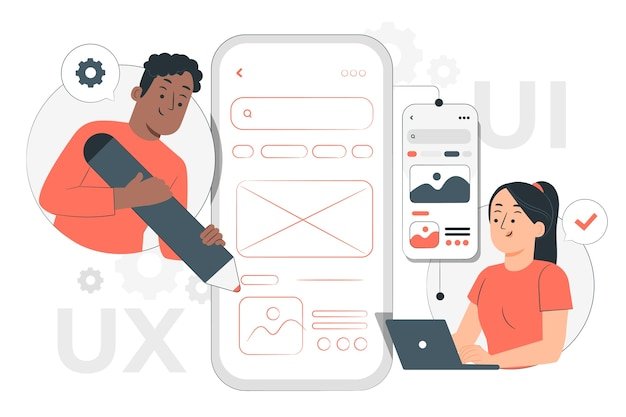

Introduction to UX Design and Its Importance
User Experience (UX) design is a multifaceted discipline that plays a vital role in the success of websites and digital products. As we navigate an ever-evolving digital landscape, the significance of UX design becomes increasingly apparent. It encompasses a broad range of activities, including research, prototyping, testing, and design, all aimed at enhancing the overall interaction between the user and the product. UX design is not merely about aesthetics; rather, it focuses on improving usability, accessibility, and user satisfaction.
A fundamental aspect of UX design is its commitment to understanding user needs and behaviors. Through user-centered design principles, UX designers seek to create products that cater to the preferences and expectations of their target audience. By prioritizing user satisfaction, a well-executed UX design can lead to increased engagement, higher conversion rates, and greater customer loyalty. This emphasis on the user experience is critical in today’s competitive online environment, where users have numerous choices at their disposal.
The relationship between UX design and website success is profound. Websites with a positive user experience are more likely to retain visitors and encourage them to return. Conversely, a poorly designed website can result in frustration, leading users to abandon their tasks and seek alternatives. Therefore, investing in UX design not only enhances the immediate user experience but also contributes to the long-term success of a website. In a world where digital interactions define brand perceptions, understanding the importance of UX design is essential for businesses aspiring to thrive in the online marketplace.
Understanding User Needs and Behavior
In the realm of UX design, grasping user needs and behavior is pivotal to crafting a successful website. Understanding what users seek from their online experience is fundamentally linked to their interactions with the site. Different users come with diverse expectations, and a thorough comprehension of these expectations is crucial for favorable user engagement.
To effectively gather insights regarding user needs, various methods can be employed. Surveys are one of the most commonplace approaches, allowing designers to collect quantitative data on user preferences and pain points. By crafting well-structured questionnaires, designers can target specific areas of interest that directly impact the user experience.
Interviews offer a more qualitative approach, enabling direct conversation with users. This method yields deeper insights into user motivations, behaviors, and frustrations, providing designers with a nuanced understanding of the user experience. Conversational exchanges can reveal subtleties that surveys might overlook, making interviews an invaluable tool in the discovery phase of UX design.
Usability testing further complements these approaches by observing users as they interact with a website. By analyzing task completion rates, user navigation patterns, and areas of confusion, designers can identify key obstacles that hinder user satisfaction. Such testing generates actionable feedback that directly informs design iterations, propelling a more user-centered approach in subsequent development stages.
A keen understanding of users not only enhances the design process but also fosters a positive relationship between users and websites. When users feel acknowledged and their needs are met, they are more likely to engage with the site, resulting in increased traffic and conversions. Therefore, focusing on user needs and behaviors is integral to delivering an exceptional user experience that ultimately drives website success.
The Principles of Effective UX Design
Effective user experience (UX) design is paramount in fostering positive interactions between users and websites. Several core principles govern this discipline, ensuring that websites are not only functional but also intuitive and enjoyable to use.
One of the fundamental principles of UX design is consistency. This principle emphasizes the importance of uniformity in design elements, such as colors, typography, and navigation across all pages of a website. A consistent design allows users to build familiarity, making it easier for them to navigate the site. For instance, a well-known e-commerce platform employs consistent button designs and color schemes, enabling users to confidently check out without second-guessing the site’s communication.
Simplification is another essential principle, guiding designers to create interfaces that are clear and devoid of unnecessary complexity. By prioritizing essential elements, users can focus on the tasks at hand without distractions. A notable example can be seen in the design of minimalist landing pages, where only crucial information is presented, leading to higher conversion rates as users are less overwhelmed.
Accessibility also plays a critical role in effective UX design, ensuring that websites cater to users with diverse needs, including those with disabilities. Adhering to accessibility guidelines, such as providing text alternatives for images, enhances the overall experience and broadens a website’s audience reach. For example, a website that incorporates features such as screen reader compatibility can successfully engage users who may rely on assistive technologies.
Finally, feedback is vital in creating a responsive user experience. Users should receive prompts or notifications reflecting their actions, confirming that their inputs have been acknowledged. For instance, when a user submits a form, a confirmation message signals that the submission was successful, reinforcing user trust in the website. Overall, these principles of UX design contribute significantly to a website’s success by enhancing user satisfaction and promoting retention.
The Role of UX Design in Enhancing Usability
Usability is a critical factor in the web experience, perfectly aligning with the objectives of UX design. It refers to how effectively users can navigate a website to achieve their intended goals. Good usability simplifies interactions with web interfaces, thereby fostering a more favorable user experience and ultimately influencing user retention. To illustrate, consider intuitive navigation as a foundational element of usability; effective UX design incorporates clear pathways for users to follow, making information retrieval seamless. When users encounter well-organized menus and straightforward navigation flows, they are more likely to stay on the site longer, ultimately leading to repeat visits.
Additionally, clear calls to action (CTAs) are integral to enhancing usability within UX design. A well-designed CTA not only stands out visually but also communicates a clear purpose, guiding users towards desired actions, whether it is signing up for a newsletter or completing a purchase. The clearer and more engaging these CTAs are, the higher the chances of user interaction and conversion. This principle underscores the importance of strategic placement and design of CTAs within a website to ensure that they resonate with users.
Moreover, responsive design is essential in the contemporary digital landscape, where users access websites across various devices. UX design focuses on ensuring a consistent experience, enabling seamless transitions from desktop to mobile interfaces. A responsive website not only maintains usability standards but also adapts to users’ needs, thereby improving satisfaction and engagement levels. In turn, enhanced usability fosters a positive user experience, encouraging users to return to the site. To summarize, UX design fundamentally enhances usability by prioritizing intuitive navigation, effective CTAs, and responsive design, which are all crucial in driving website success and encouraging user loyalty.
The Impact of UX Design on Conversion Rates
In the digital landscape, the significance of effective User Experience (UX) design in influencing conversion rates cannot be overstated. Conversion rates, which measure the percentage of users who complete a desired action, are acutely sensitive to the design and usability of a website. A well-crafted UX design not only enhances user satisfaction but also directly contributes to increased sales and engagement by guiding users through a seamless interaction with the site.
One fundamental aspect of impactful UX design is the streamlined checkout process. Research indicates that lengthy and confusing checkout experiences are among the top reasons behind cart abandonment. By employing UX strategies that minimize the steps involved in the checkout process, an organization can see significant improvement in conversion rates. For example, integrating features such as guest checkout options, auto-fill capabilities, and visual progress indicators can substantially smooth out transitions and enhance user comfort, ultimately driving more conversions.
Additionally, compelling content presentation is vital in capturing user attention and fostering engagement. Effective UX design focuses on organizing content in a way that is intuitively understood by users. This can be achieved through the use of clear headings, engaging visuals, and well-structured layouts. Key elements like typography and color schemes also play a critical role; they can evoke emotions and influence decisions, guiding users toward taking actions. A case study by a leading e-commerce platform found that after revamping its product pages with UX-driven content strategies, conversion rates jumped by more than 30% within a few months.
Moreover, UX design extends beyond aesthetics; it incorporates aspects such as speed and accessibility. Tools such as performance optimization and accessibility audits can further enhance user experiences. Websites that load quickly and cater to a diverse audience are more likely to experience positive conversion outcomes.
In conclusion, the correlation between effective UX design and increased conversion rates is evident. By implementing strategies that enhance user experiences, businesses can significantly impact their bottom line while fostering loyalty and engagement.
The Connection Between Brand Perception and UX Design
User experience (UX) design plays an integral role in shaping users’ perceptions of a brand. A strategically crafted UX can create a positive emotional response, thereby strengthening brand identity and fostering loyalty among customers. Essentially, the way users interact with a website heavily influences their overall impression of the brand it represents. Positive interactions can lead to increased trust and satisfaction, while negative experiences might drive users away, directly affecting brand reputation.
The psychological aspects of UX design, including emotional design, are pivotal in cultivating brand perception. Emotional design refers to the approach of creating products that resonate with users on an emotional level. Brands that successfully evoke positive emotions through effective UX design can instill a sense of affiliation and connection with their customers. This connection is further enhanced when the UX aligns seamlessly with the brand’s values and message, thereby reinforcing brand identity.
Moreover, the interplay between UX and brand perception highlights the importance of consistency. When users encounter consistent experiences across various touchpoints, it strengthens their understanding and recognition of the brand. This consistency is crucial in building customer trust over time; a user who has a seamless experience on a website is likely to associate those positive feelings with the brand itself. As a result, investing in UX design that mirrors brand values not only creates an enjoyable experience but also contributes to a solid foundation of customer loyalty.
In conclusion, recognizing the profound relationship between UX design and brand perception is essential for businesses aiming to bolster their online presence. By focusing on emotional design and maintaining consistency, brands can enhance user experiences and cultivate lasting relationships with their customers.
Challenges in Implementing Effective UX Design
Implementing effective UX design is paramount for enhancing a website’s usability and engagement rates; however, various challenges often arise during the process. One significant obstacle is budget constraints. Companies frequently allocate limited funds for UX design, which can restrict the resources available for research, prototyping, and testing. This financial limitation can lead to a compromised design process, ultimately affecting the user experience. To address this issue, organizations should prioritize the allocation of budgets that align adequately with their user experience goals, ensuring that a thorough design process is achievable.
Another challenge in UX design implementation is maintaining effective collaboration among cross-functional teams. Designers, developers, product managers, and other stakeholders must communicate clearly and work together to create a cohesive user experience. Unfortunately, differences in perspectives and priorities can lead to conflicts and misalignments, hindering the design process. The establishment of transparent communication channels fosters a collaborative environment, where team members can share ideas, provide feedback, and align their efforts towards common objectives.
Furthermore, striking a balance between user needs and business goals presents another significant challenge in UX design. While it is essential to create a satisfying experience for users, businesses must also consider their objectives, such as revenue generation or brand positioning. This balance can be difficult to achieve, as prioritizing one often compromises the other. Employing user-centered design methods, such as personas and user journey mapping, allows teams to understand users’ needs better while aligning these insights with business goals. By integrating user feedback into the design process, organizations can develop solutions that benefit both users and the business, leading to a successful website.
Future Trends in UX Design
As technology continues to evolve at an unprecedented pace, so too does the field of User Experience (UX) design. Designers must stay attuned to emerging trends to create platforms that not only meet user expectations but also provide an exceptional experience. Three significant trends shaping the future of UX design include personalization, voice user interface (VUI) technology, and artificial intelligence (AI)-driven UX.
Personalization has emerged as a cornerstone of effective UX design. Today’s users anticipate websites that cater to their specific needs and preferences. By employing data analytics, UX designers can harness insights into user behavior, allowing them to deliver content that resonates with individual users. Personalized experiences can range from customized recommendations to tailor-made interfaces that adapt to user interaction patterns. This level of customization not only enhances user satisfaction but also fosters greater user engagement and loyalty.
Voice user interface design is another trend revolutionizing the way users interact with digital products. As smart speakers and voice-activated devices gain traction, UX designers face the challenge of creating interfaces that facilitate seamless voice interactions. Effective VUI design prioritizes clarity and simplicity, enabling users to navigate websites and applications through spoken commands. Understanding natural language processing and the nuances of conversational interactions is essential for designers aiming to capitalize on this trend, ensuring that the user experience remains intuitive and accessible.
Lastly, AI-driven UX is set to transform user interactions substantially. With advancements in machine learning and predictive analytics, designers can create dynamic experiences that learn from user behavior in real-time. By leveraging AI, UX can become more responsive, anticipating user needs and delivering content accordingly. This trend not only streamlines navigation but also enhances the overall usability of websites, enabling designers to create interfaces that evolve alongside user preferences.
In conclusion, keeping abreast of trends such as personalization, voice user interfaces, and AI-driven experiences is vital for UX designers aiming to stay competitive. These innovations present remarkable opportunities to enhance user engagement and satisfaction within the evolving digital landscape.
Conclusion: The Indispensable Role of UX Design
In an increasingly digital marketplace, the significance of user experience (UX) design is paramount for any website aspiring to achieve success. A well-structured UX contributes not only to user satisfaction but also enhances website functionality, making it easier for visitors to accomplish their desired tasks. This positive interaction builds trust and encourages visitors to return, thus facilitating stronger customer retention and brand loyalty.
Effective UX design places the needs and preferences of the user at the forefront, often leading to an intuitive interface that simplifies navigation. When users can easily find information and complete actions—such as making purchases or signing up for newsletters—they are more likely to engage positively with the brand. This process of engagement is critical, as it directly impacts conversion rates, transforming casual visitors into paying customers. In fact, countless studies underscore the correlation between high-quality UX design and increased sales volume.
Investing in superior UX design is, therefore, not just an added bonus but a necessity for businesses aiming for longevity in the digital arena. Prioritizing UX helps identify pain points and eliminate barriers, which in turn enhances overall functionality. While the initial costs associated with implementing quality UX design may seem substantial, the long-term benefits—including improved user satisfaction, increased conversions, and heightened brand loyalty—far outweigh these initial investments.
For companies mindful of maintaining a competitive edge, fostering a user-centric approach through consistent and effective UX design is crucial. As technology evolves, so too do user expectations, making it imperative for businesses to adapt and innovate continuously. Maintaining a focus on outstanding UX design is essential for driving sustainable website success in today’s fast-paced digital landscape.